Visual perception Measurement Worksheets for Ages 4-7
4 filtered results
-
From - To
Boost your child's visual perception skills with our engaging measurement worksheets designed for ages 4-7! These worksheets help young learners develop essential skills like spatial awareness, pattern recognition, and object identification through fun, interactive activities. Each worksheet provides age-appropriate challenges that encourage exploration and creativity while supporting foundational math concepts. With vibrant illustrations and practical tasks, children will enjoy honing their visual skills in a playful manner. Perfect for classroom use or home schooling, our Visual Perception Measurement Worksheets foster cognitive development and prepare your little one for future learning success. Start your journey in enhancing visual perception today!
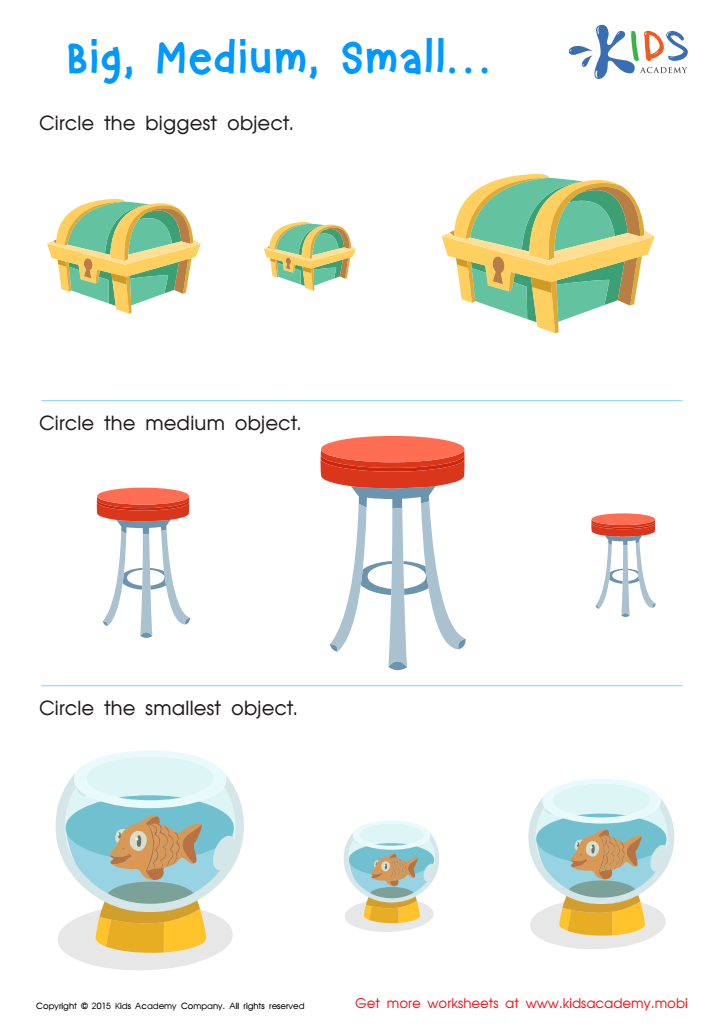
Big Medium Small Worksheet
 Assign to My Students
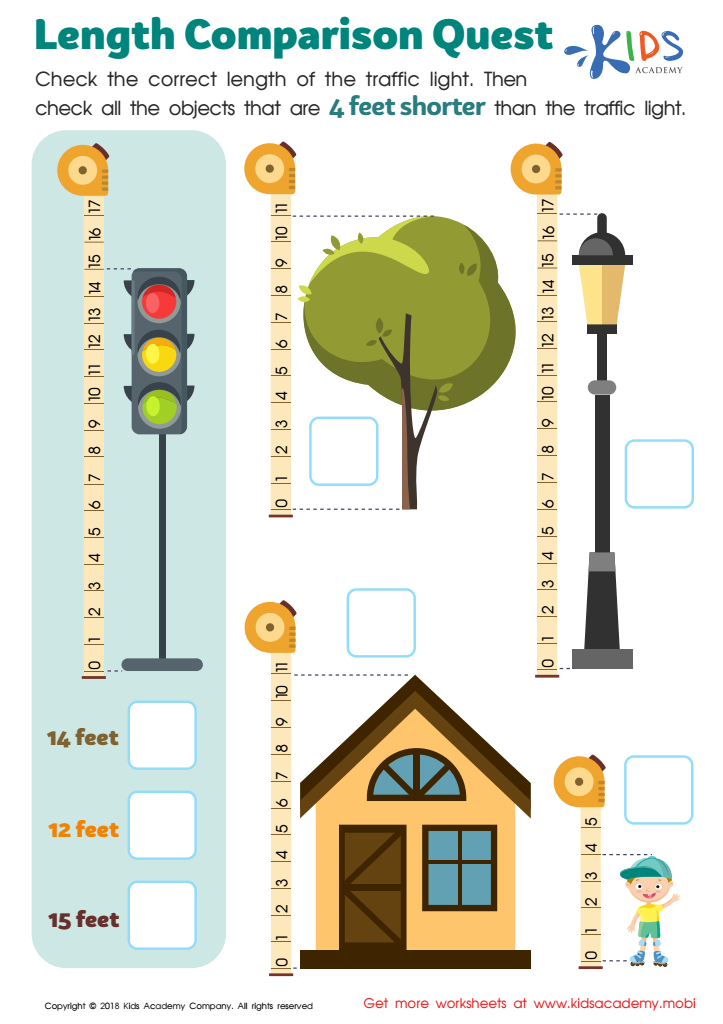
Length Comparison Quest Worksheet
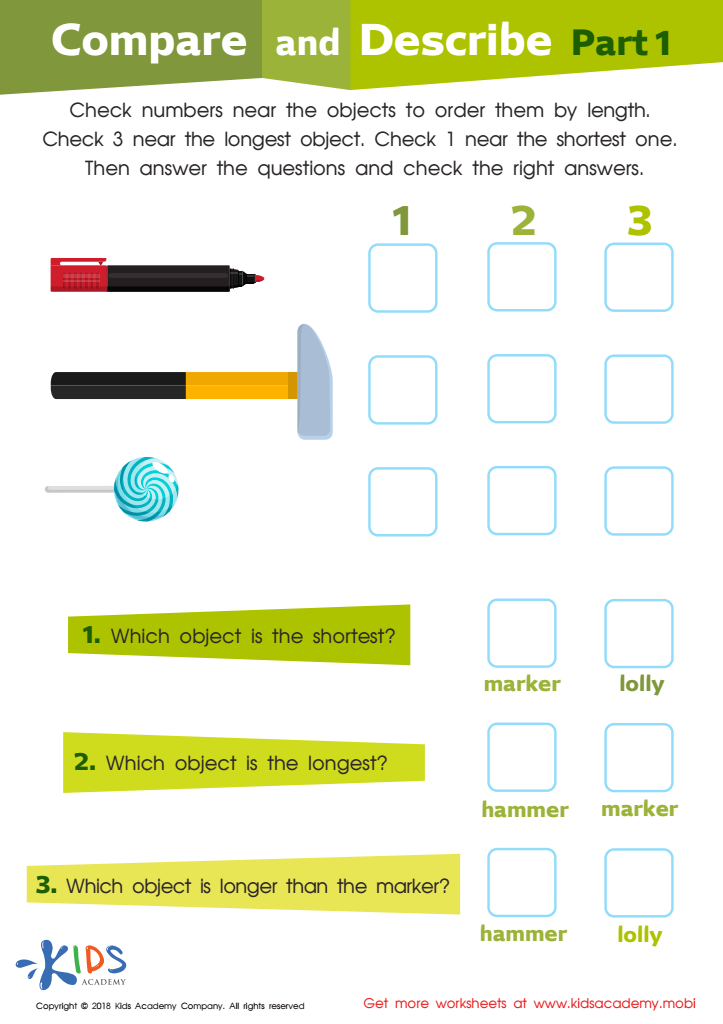
Compare and Describe: Part 1 Worksheet
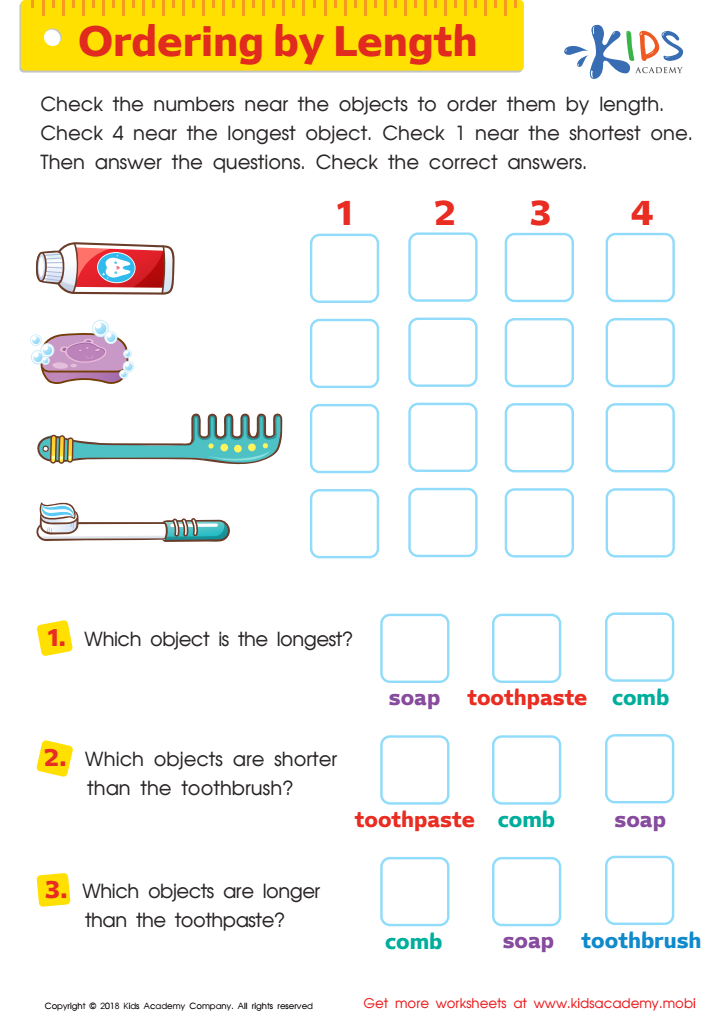
Ordering by Length Worksheet








Visual perception is a crucial skill that significantly impacts a child's learning and development, particularly for those aged 4-7. During these formative years, children are developing foundational cognitive abilities that influence their academic performance and daily functioning. Visual perception encompasses the ability to interpret and make sense of visual information, which is essential for reading, mathematics, and even fine motor skills.
Parents and teachers should particularly care about visual perception measurement because early identification of visual perception issues can lead to timely interventions. By understanding a child's strengths and weaknesses in visual processing, educators can tailor their teaching strategies to meet individual needs, ensuring that each child has the support necessary to thrive. For instance, children with poor visual perception may struggle with letter recognition or following directions in the classroom, impacting their overall learning experience.
Moreover, early intervention fosters self-confidence and a positive attitude toward learning, mitigating long-term educational challenges. Simple assessments can highlight areas needing support, resulting in targeted activities that enhance visual skills. Ultimately, investing in visual perception measurement not only enriches a child's current educational journey but also lays a solid groundwork for future academic success and lifelong learning. Recognizing and nurturing these skills is essential for holistic child development.








