
Basic counting skills Numbers 0–10 Worksheets for Ages 4-7
5 filtered results
Difficulty Level
Grade
Age
-
From - To
Subject
Activity
Standards
Our Basic Counting Skills Numbers 0–10 Worksheets are designed especially for children aged 4-7, providing a fun and engaging way to learn foundational math skills. These worksheets help young learners practice counting, recognizing, and writing numbers from 0 to 10 through various activities. With colorful illustrations and creative exercises, children can build confidence in their counting abilities while enjoying the learning process. Perfect for use at home or in the classroom, our worksheets lay a strong groundwork for future math success, ensuring kids develop essential numeral literacy and counting proficiency. Explore and watch your child thrive in early math!
Favorites
With answer key
Interactive
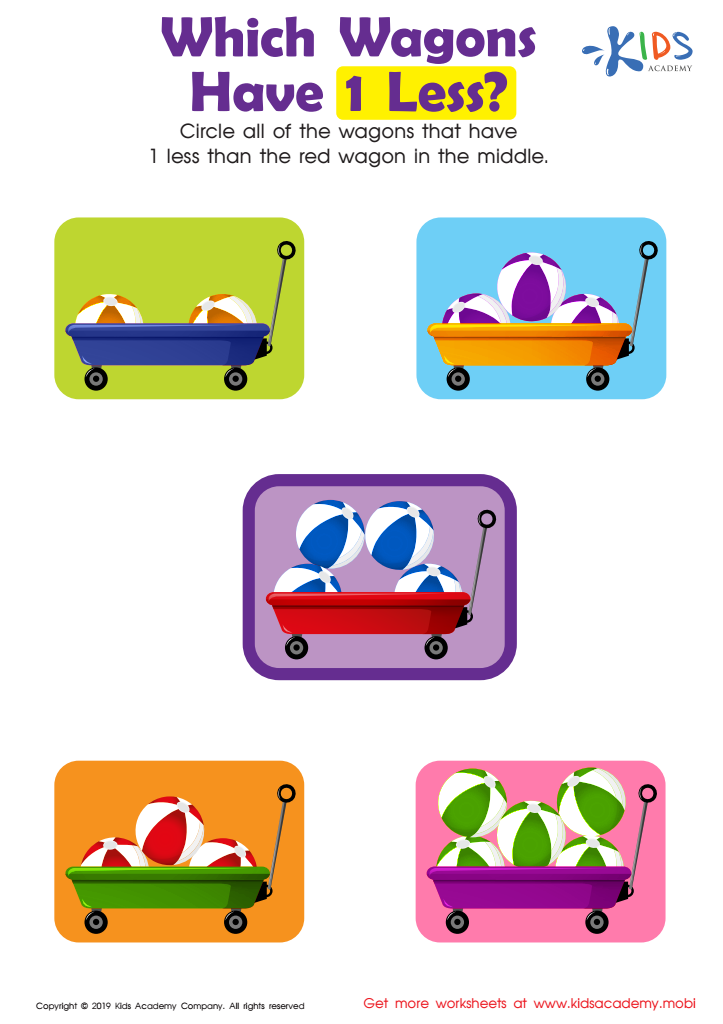
Which Wagons Have 1 Less? Worksheet
Test your kid's counting skills with a simple exercise. Ask them to count the balls in the five wagons shown and to circle the wagons with one less than the red wagon in the middle. This will give their brains a simple task that tests their knowledge of numbers.
 Assign to My Students
Which Wagons Have 1 Less? Worksheet
Worksheet
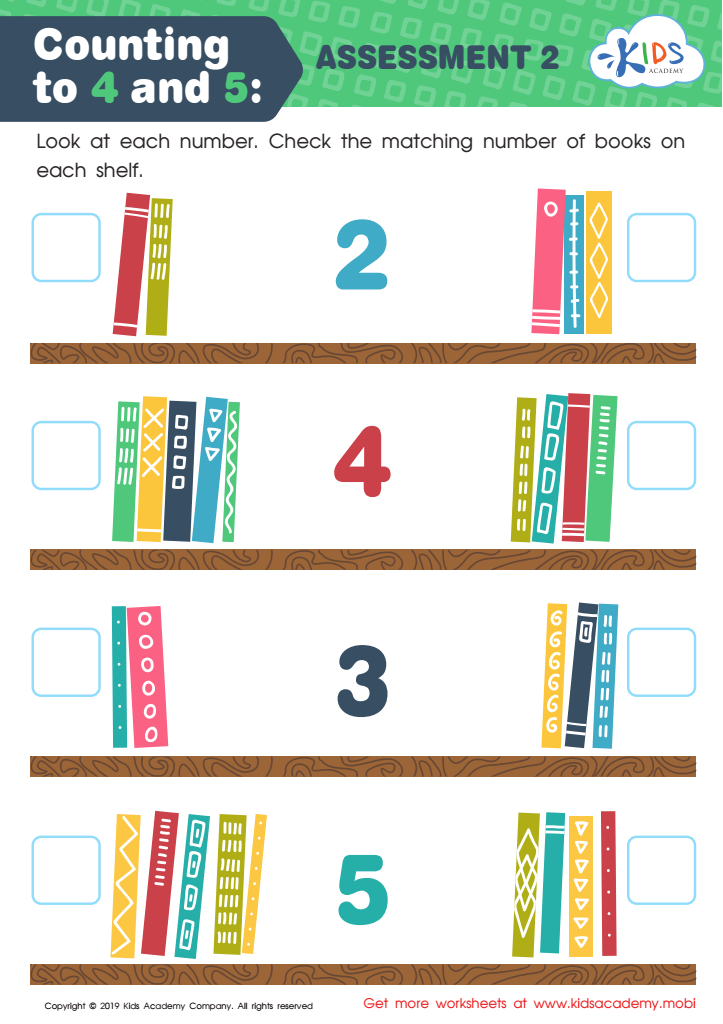
Counting to 4 and 5: Assessment 2 Worksheet
Counting is a key skill for math success. Help your kids get off to a good start by counting the books on each shelf in the pictured printout. Point to each set of books, counting aloud, and then look for the matching number in the centre. With this simple worksheet, your kids can get the practice they need before taking on more advanced math skills.
Counting to 4 and 5: Assessment 2 Worksheet
Worksheet
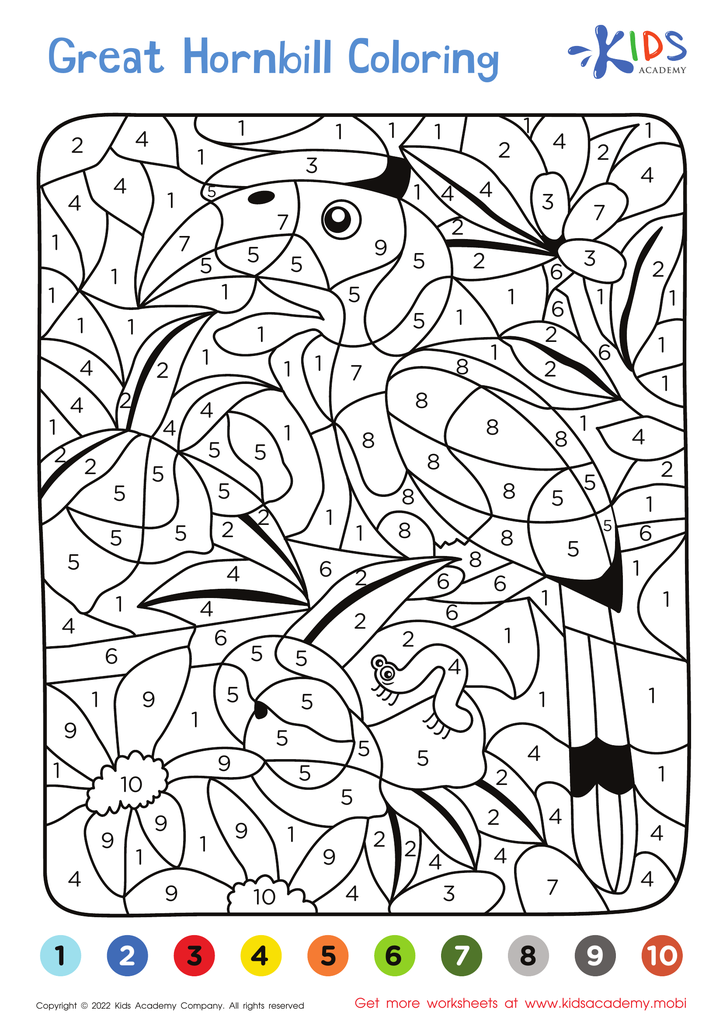
Great Hornbill – Coloring by Numbers
Download our free PDF page, featuring a hornbill for you to color in! Numbers are provided so you can follow along, making the picture come to life. Fun for all ages!
Download our free PDF page and have fun coloring a hornbill according to the numbers! You'll bring the picture to life with every stroke of your creativity. Perfect for all ages!
Great Hornbill – Coloring by Numbers
Worksheet
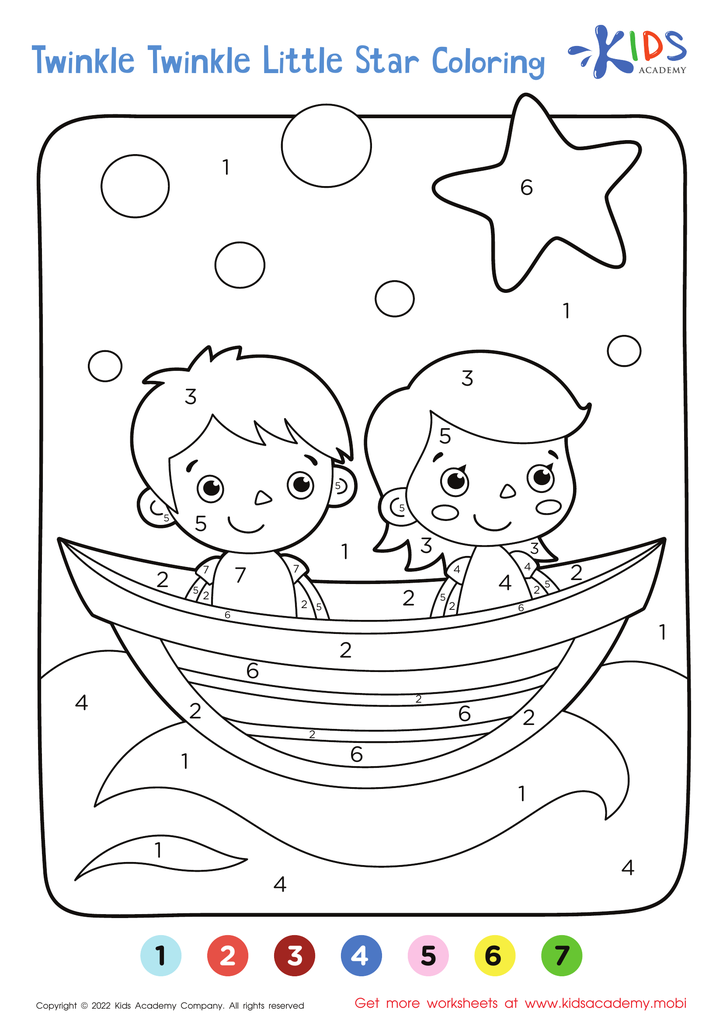
Twinkle, Twinkle, Little Star – Coloring by Numbers
Color a scene from Twinkle Twinkle Little Star with our free coloring page. Download the PDF and use the numbers to bring the nursery rhyme to life. Have fun! (80 words)
Twinkle, Twinkle, Little Star – Coloring by Numbers
Worksheet
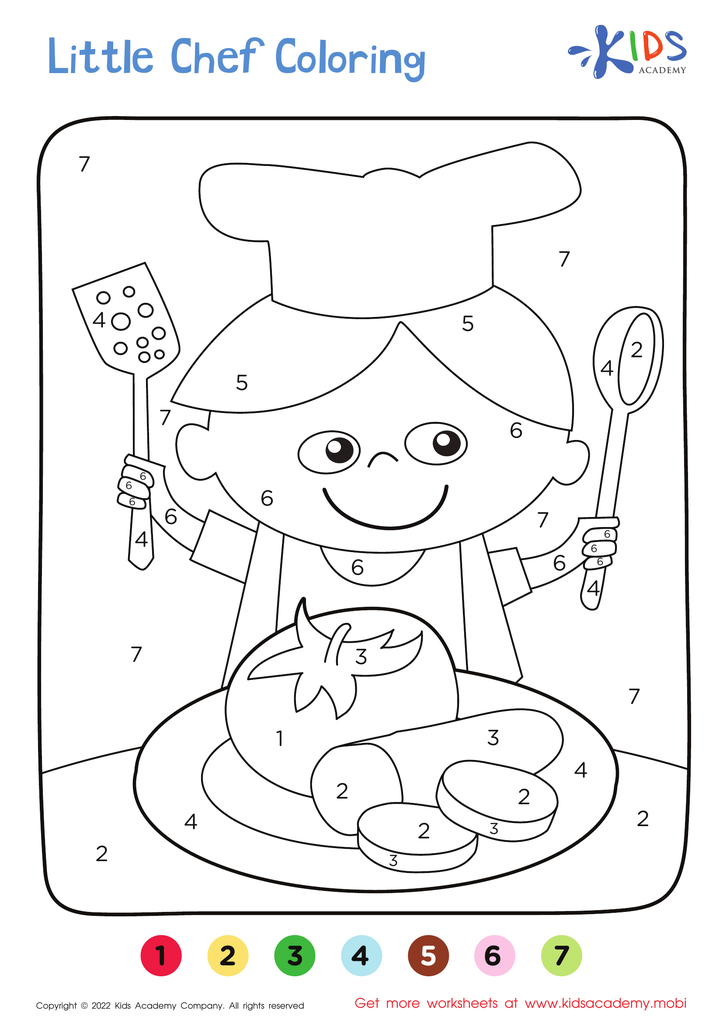
Little Chef – Coloring by Numbers
This PDF page lets you color in a cute little chef! Download it for free and explore your artistic side by using numbers to color in the picture. Let your creativity flow and have some fun!
Little Chef – Coloring by Numbers
Worksheet
Join Kids Academy for Free
Who is primarily going to use this learning content?








Basic counting skills and understanding numbers from 0-10 are foundational for children's cognitive development and future success in more complex mathematical concepts. At the ages of 4-7, children are in a critical period for developing these essential skills. Mastery of numbers and counting enhances their ability to comprehend and participate in daily activities, such as recognizing quantities, telling time, and managing money, which builds their confidence and independence.
Counting also strengthens their understanding of number relationships and prepares the child's brain for higher-level mathematical operations like addition, subtraction, and problem-solving skills. This early math literacy is linked with improved academic performance across other subjects, given that many learning areas integrate numerical concepts, including science and geography.
From a developmental perspective, counting boosts memory, attention span, and fine motor skills when paired with physical activities such as counting objects. This formative period of learning also provides a foundation for logical thinking, pattern recognition, and the ability to make predictions based on observed patterns.
Parents and teachers play a crucial role in nurturing these skills by creating engaging, supportive, and numerically rich environments. Simple, fun activities like counting games, using number-related everyday activities, and praising efforts can foster a positive attitude towards math, making foundational learning an enjoyable and integral aspect of growing up.








