Number Recognition Skip Counting Worksheets for Ages 4-7
3 filtered results
-
From - To
Enhance your child's math skills with our engaging Number Recognition Skip Counting Worksheets, specially designed for ages 4-7! These interactive worksheets foster essential number recognition and counting abilities, making learning fun and effective. Children will practice skip counting by 2s, 5s, and 10s, helping them identify patterns and improve their overall numeracy. Our colorful illustrations and playful activities keep young learners motivated and excited about math. Perfect for home or classroom use, these worksheets make it easy to incorporate important learning objectives. Watch your child's confidence soar as they master skip counting and build a strong foundation for future mathematical success!
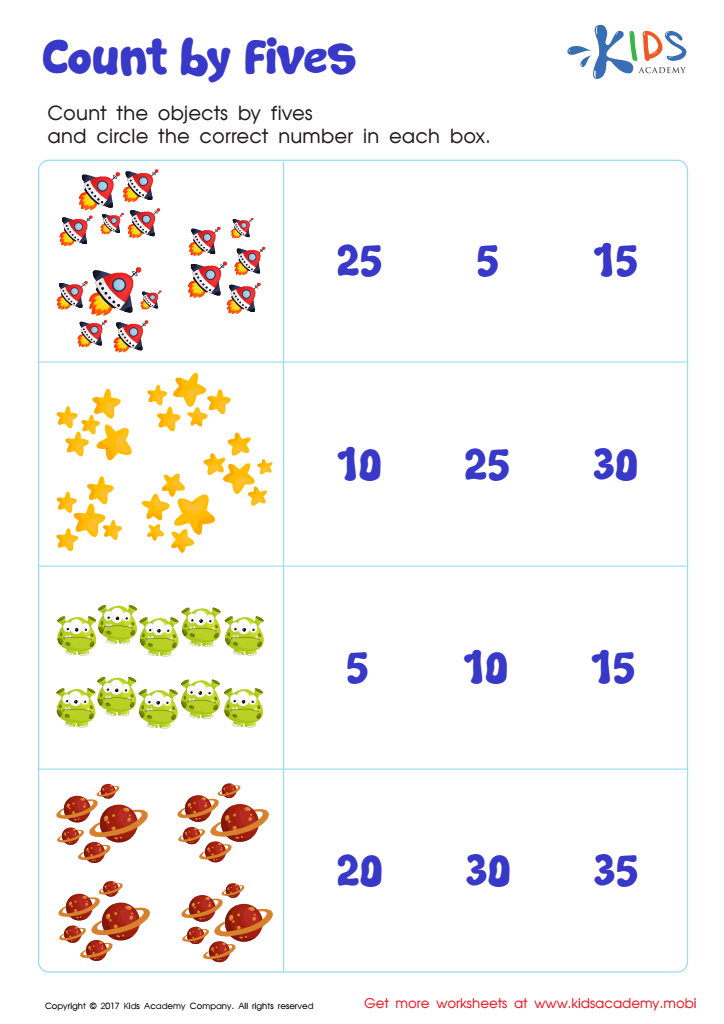
Skip Counting by 5s: Space Math Printable
 Assign to My Students
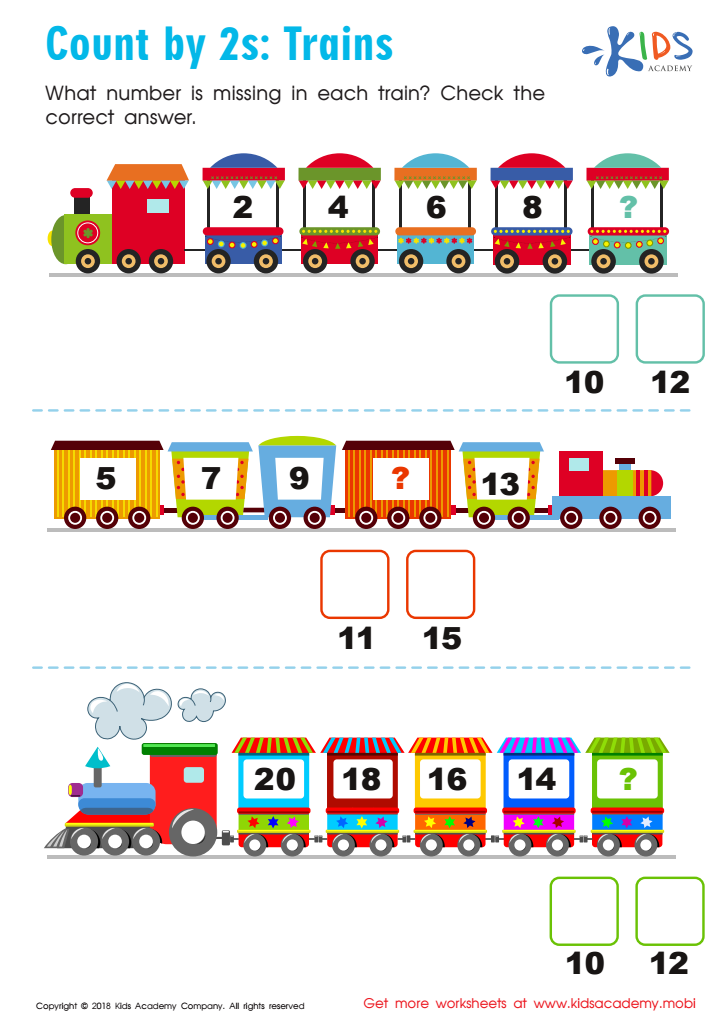
Count by 2's: Trains Worksheet
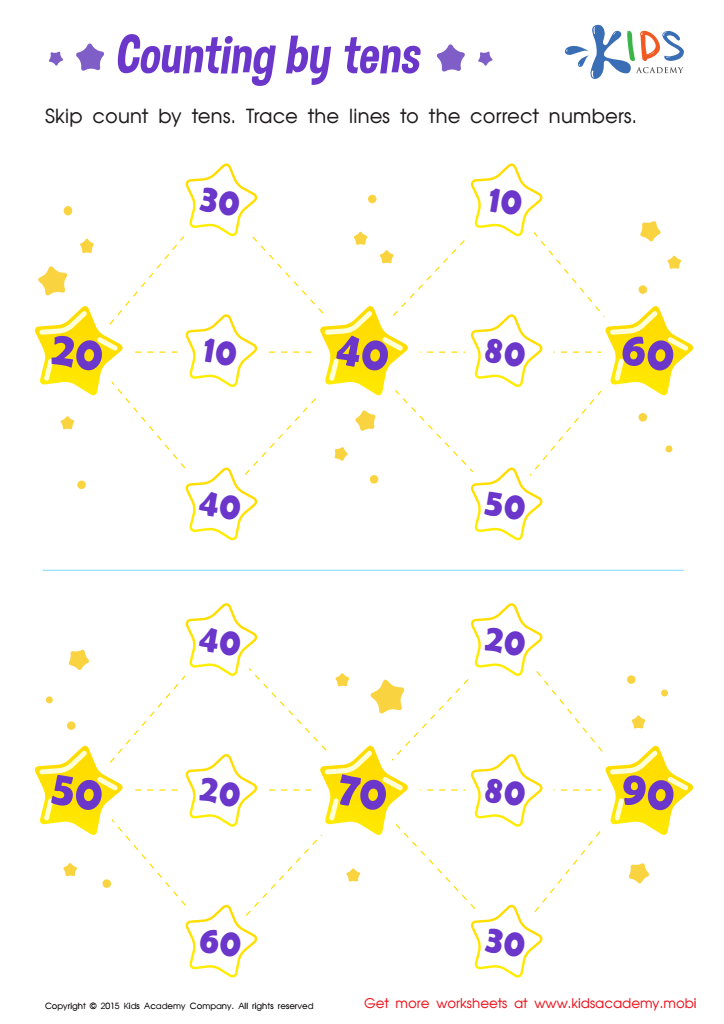
Learn Dozens: Counting by Tens Printable


%20(1).jpg)

.jpg)



Number recognition and skip counting are foundational skills for children aged 4-7, crucial for their mathematical development. First, recognizing numbers allows young learners to identify quantities, making them aware of the value of numbers in everyday life. This fosters a greater understanding of math concepts, which is essential as they progress to more complex calculations.
Additionally, skip counting, which involves counting by 2s, 5s, or 10s, develops a familiarity with numerical patterns and enhances children's ability to solve problems efficiently. This skill not only supports addition and multiplication later on but also builds overall cognitive abilities, such as sequencing and logical thinking.
Furthermore, these skills help nurture confidence in young learners. When children master recognition and counting techniques, they experience a sense of accomplishment that encourages continued learning and curiosity. Parents and teachers play a vital role in facilitating engaging activities and games that incorporate these skills, making math fun and interactive.
Ultimately, by emphasizing number recognition and skip counting in early education, we equip children with essential tools for academic success and everyday functionality in a world that increasingly relies on mathematical understanding. Therefore, prioritizing these skills is an investment in a child’s lifelong learning journey.








