Categorization skills Sorting Worksheets for Ages 4-7
5 filtered results
-
From - To
Discover engaging "Categorization Skills Sorting Worksheets for Ages 4-7" designed to enhance young learners' understanding of categorizing and organizing. These fun and educational worksheets help children develop crucial cognitive abilities by sorting objects based on various attributes such as size, shape, color, and type. Perfect for home or classroom use, these activities support the development of logical thinking and attention to detail. Download our high-quality printables from Kids Academy and watch your child's problem-solving skills flourish as they sort and classify items with confidence and joy. Ideal for both beginner and advanced levels to suit every young mind.
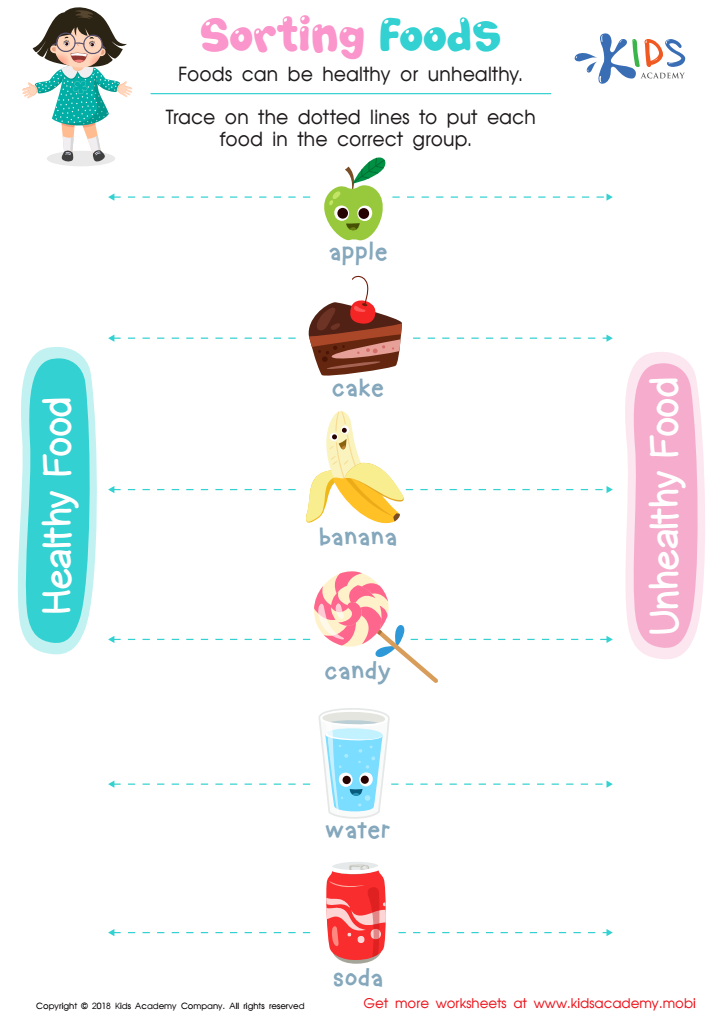
Sorting Food Worksheet
 Assign to My Students
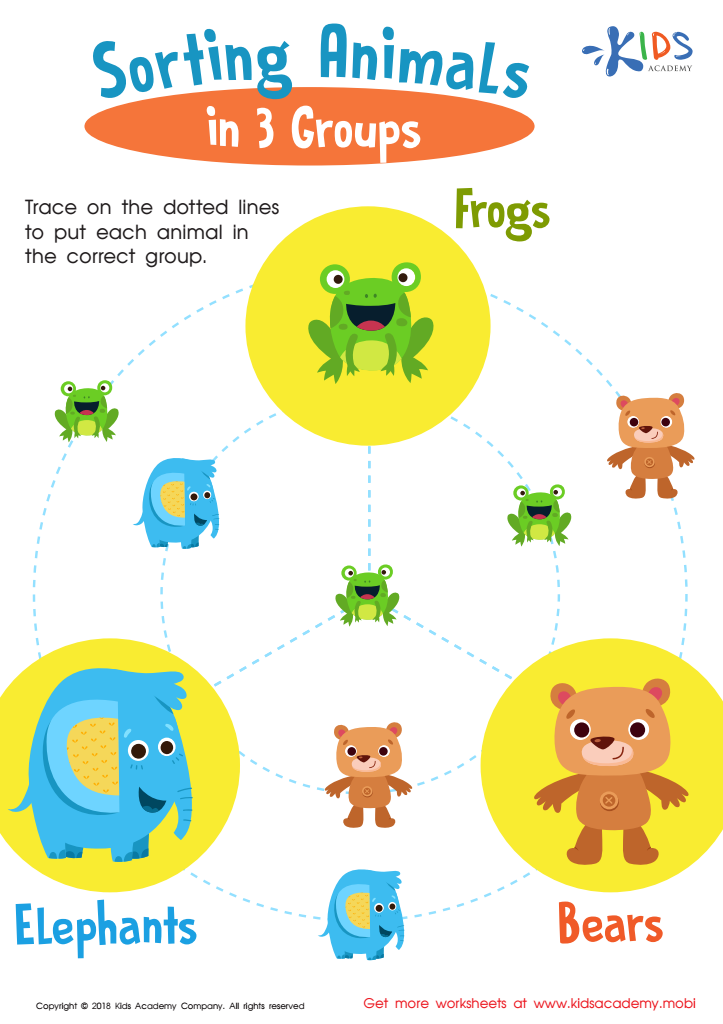
Sorting Animals in 3 Groups Worksheet
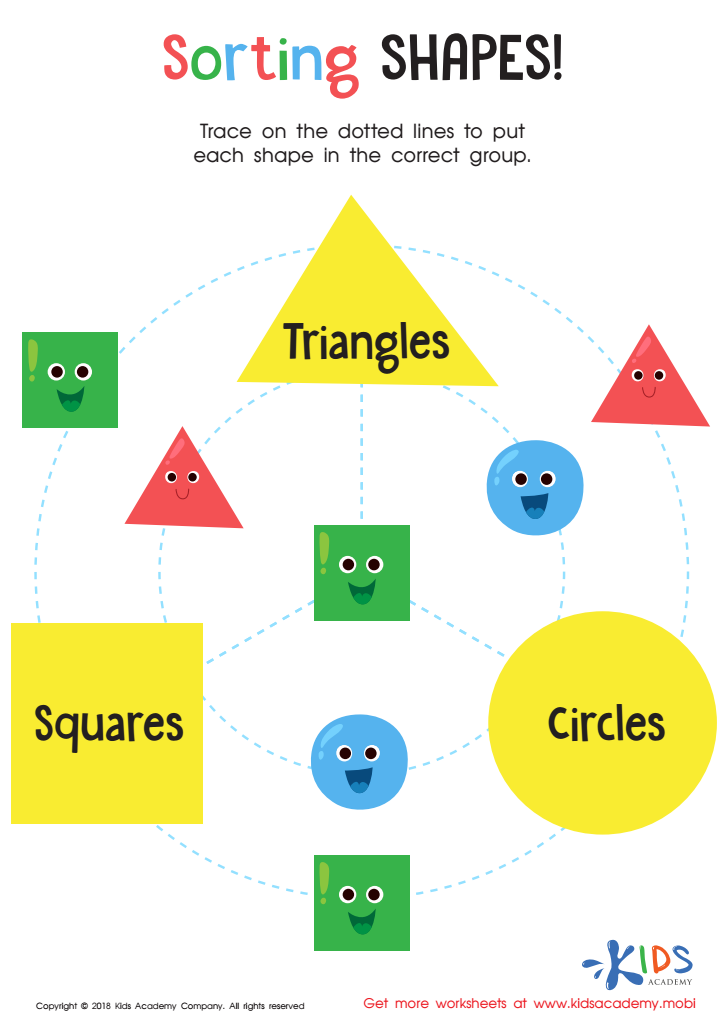
Sorting Shapes - Part 3 Worksheet
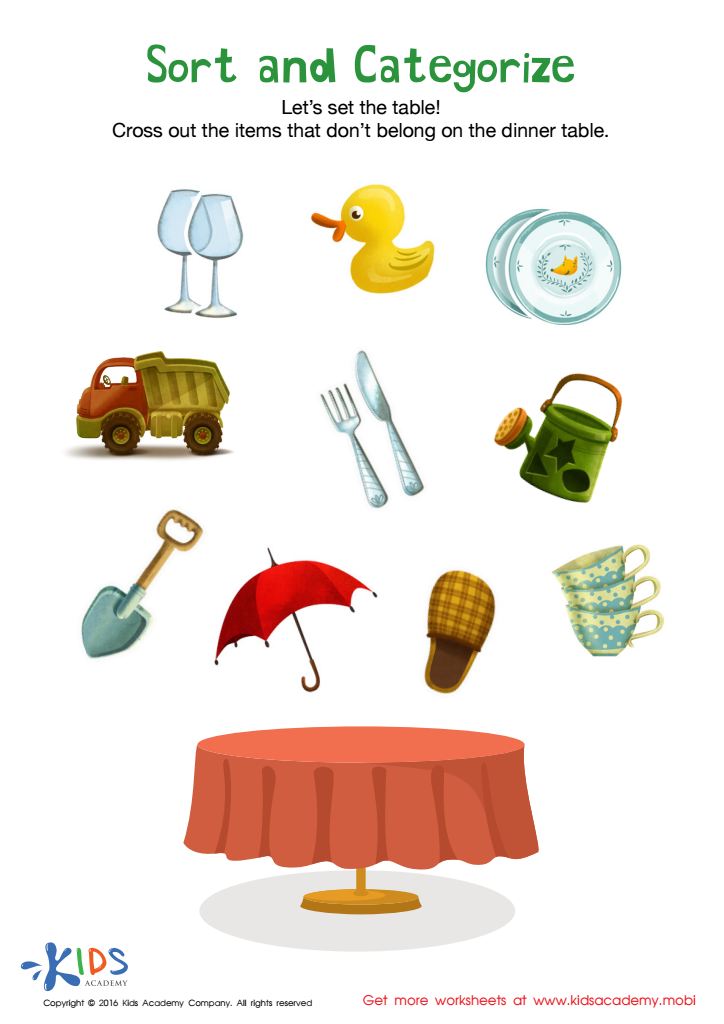
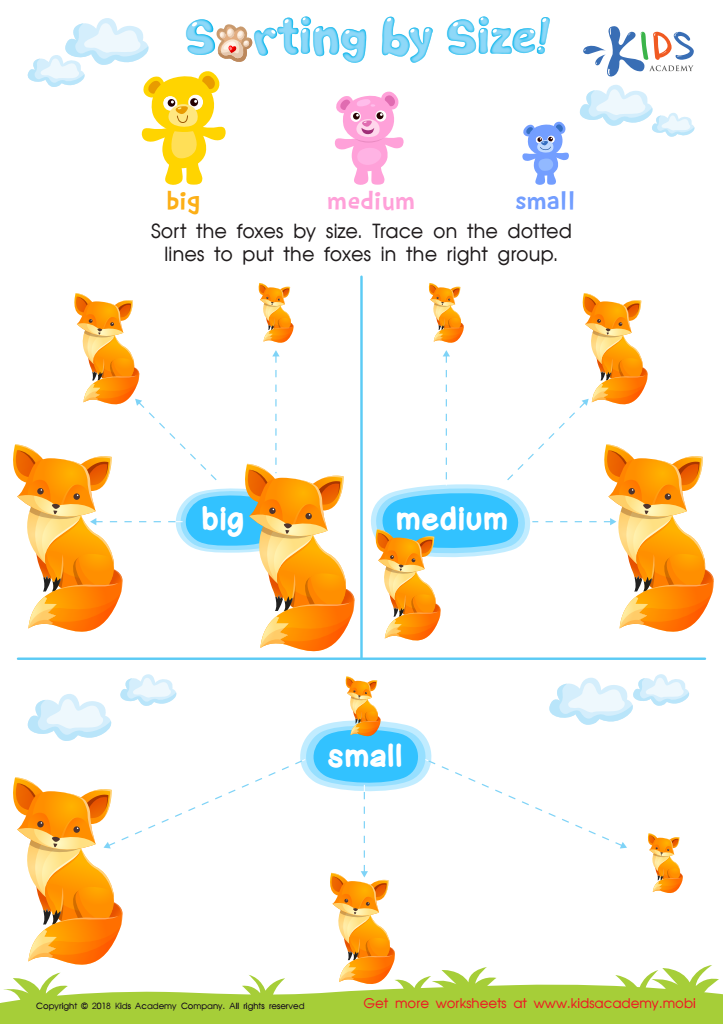
Sorting by Size Worksheet








Categorization skills and sorting are foundational cognitive abilities that significantly benefit children aged 4-7. These skills help children make sense of the world around them by understanding how different items are related, making it easier for them to process information. For parents and teachers, fostering these abilities translates to numerous educational and developmental advantages.
Firstly, categorization enhances critical thinking and problem-solving. When children group objects by attributes like color, shape, or size, they practice observation and analytical skills which are vital for more complex decision-making later. Secondly, these activities bolster language development. As kids learn to describe why items belong together, their vocabulary expands and their communication skills improve.
Moreover, categorization is integral to early mathematics and science. Sorting objects can teach basic arithmetic concepts such as grouping and counting, while also introducing principles of classification crucial for scientific inquiry. Socially, sorting activities often involve group interaction, promoting cooperative play and social learning.
Lastly, these tasks boost organizational skills and attentiveness—qualities that help in classroom settings and everyday life. Enthusiastically encouraging these activities ensures that children build a solid foundation for future learning, making parents' and teachers' roles essential in nurturing these cognitive milestones.








