Visual discrimination Sorting Worksheets for Ages 4-7
3 filtered results
-
From - To
Welcome to our collection of "Visual Discrimination Sorting Worksheets" designed specifically for children aged 4-7! These engaging, printable activities help young learners develop critical visual perceptual skills by focusing on the ability to distinguish differences and similarities among various objects. Through sorting exercises, children will enhance their observation, categorization, and fine motor skills while having fun! Our worksheets are colorful, interactive, and suited for home or classroom use. Perfect for early education environments, these resources will support the foundations of math and critical thinking for your little ones. Excite your child's imagination while building important cognitive skills today!
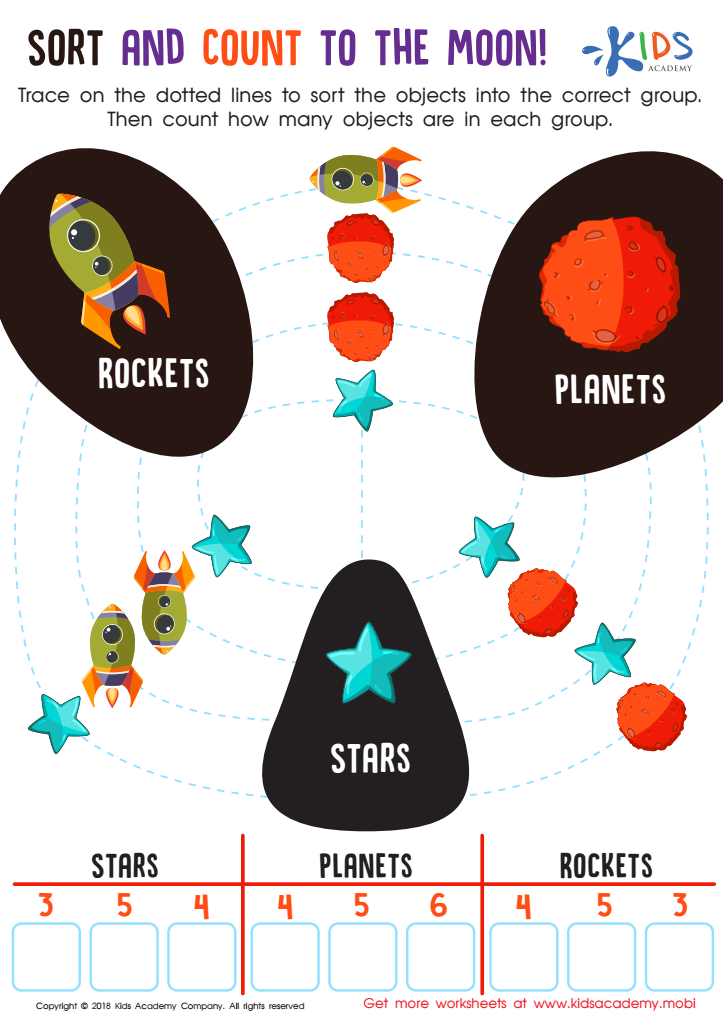
Sort and Count to the Moon Worksheet
 Assign to My Students
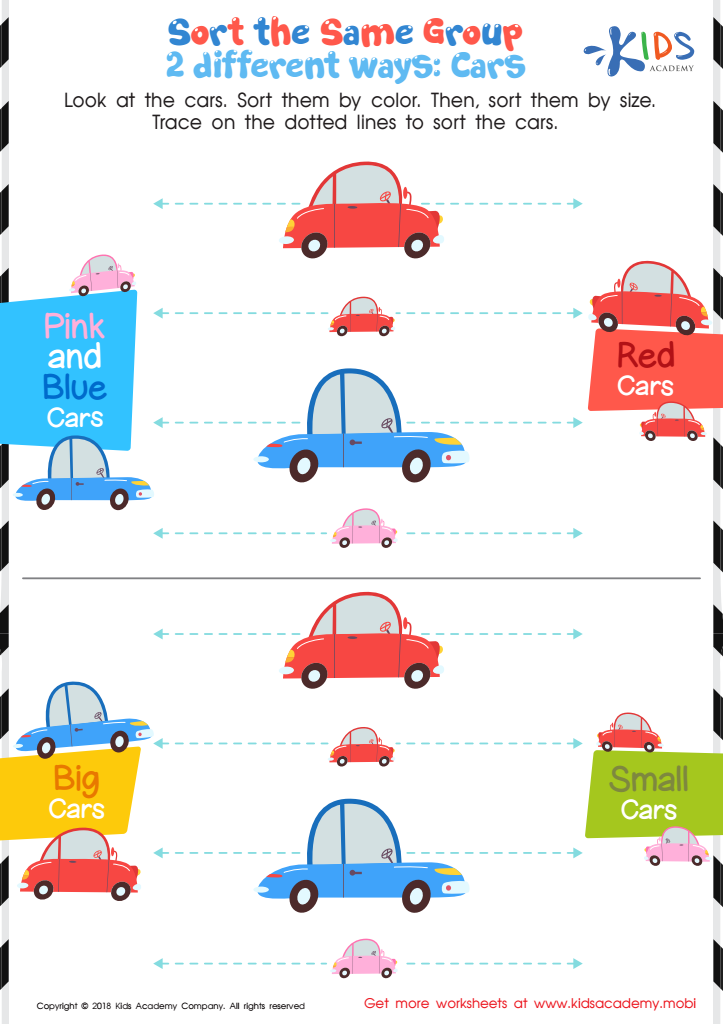
Sort the Same Group 2 Different Ways: Cars Worksheet
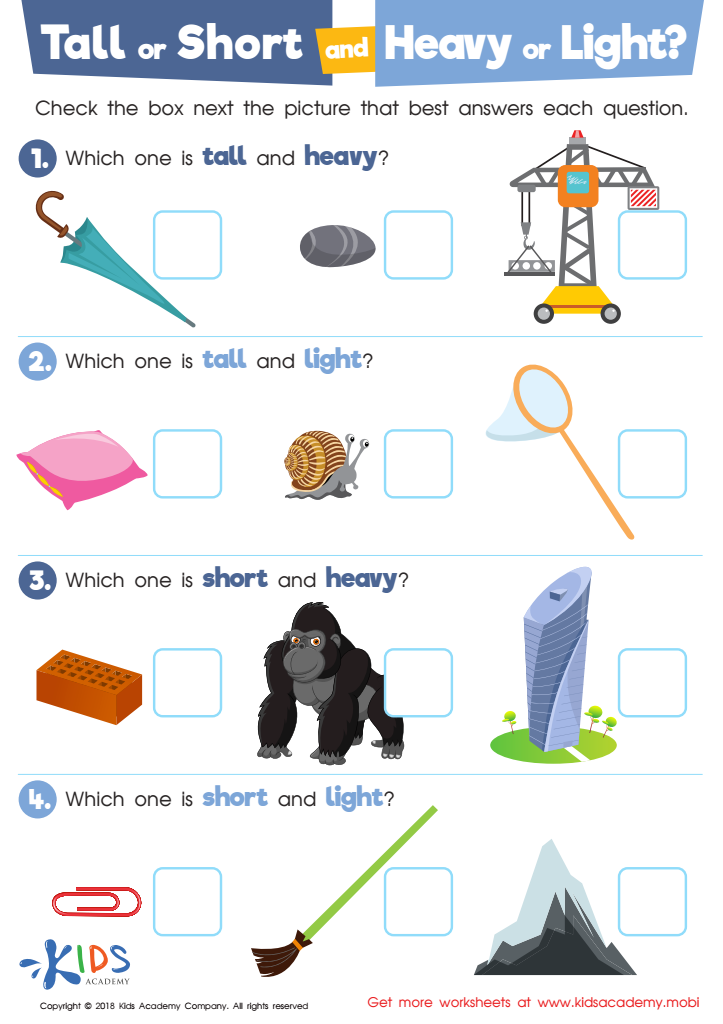
Tall or Short and Heavy or Light? Worksheet








Visual discrimination sorting is a critical skill for children aged 4-7, and it is essential for both parents and teachers to prioritize this developmental milestone. It involves the ability to identify differences and similarities among various objects, which forms the foundation for many cognitive tasks, including reading, math, and problem-solving.
Parents and teachers should care about visual discrimination sorting because it significantly impacts early literacy and numeracy skills. For example, recognizing letters and numbers requires discerning differences in shapes and patterns, making this skill key for reading and arithmetic success. Furthermore, visual discrimination also aids in enhancing critical thinking as children learn to categorize and sort items based on specific attributes.
By engaging children in activities that promote sorting—such as classifying shapes, colors, or objects—they foster focus, attention to detail, and organizational skills. These activities not only make learning fun but also support fine motor development and encourage independence.
Ultimately, honing visual discrimination sorting in young learners equips them with foundational skills that will serve them well in their educational journey and beyond. Active involvement in nurturing this skill shows a commitment to their overall cognitive and academic growth.








