Hand-eye Coordination Word Problems Worksheets for Ages 4-7
3 filtered results
-
From - To
Enhance your child's hand-eye coordination and early math skills with our engaging Hand-eye Coordination Word Problems Worksheets for Ages 4-7. These specially designed activities combine fun, interactive problems with the essential practice your child needs to develop strong foundational abilities. Each worksheet presents colorful and relatable scenarios that encourage young learners to think critically and improve their motor skills. Perfect for home or classroom use, these worksheets ensure your child gets targeted practice in a playful, supportive manner. Empower your early learner today with practical exercises that make math both enjoyable and accessible. Visit us for more interactive educational resources!
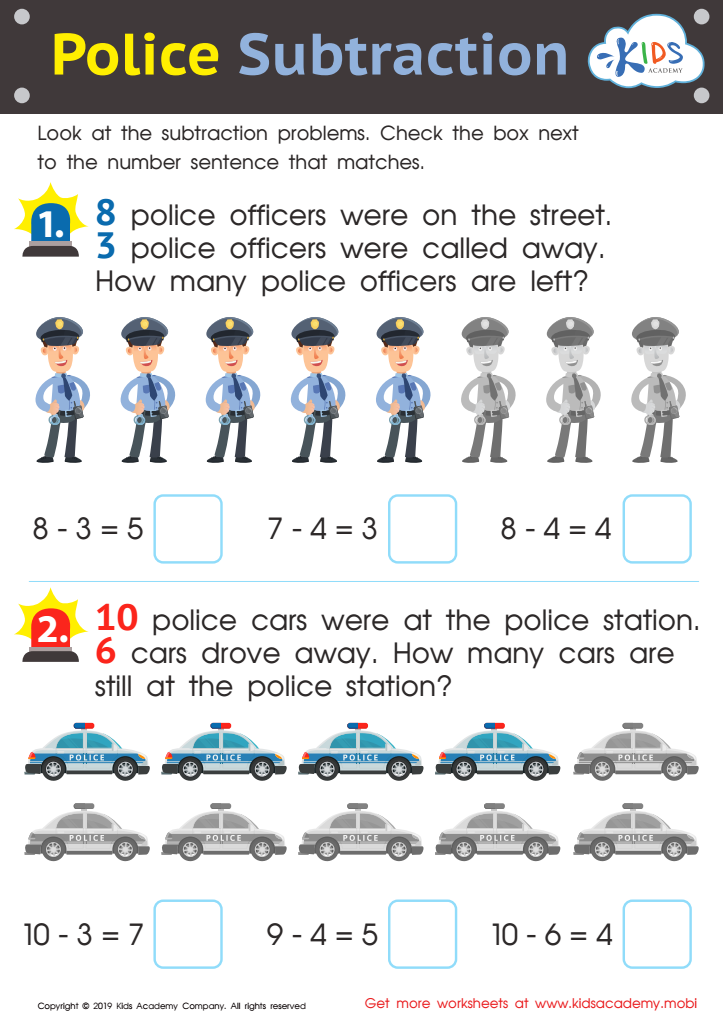
Police Subtraction Worksheet
 Assign to My Students
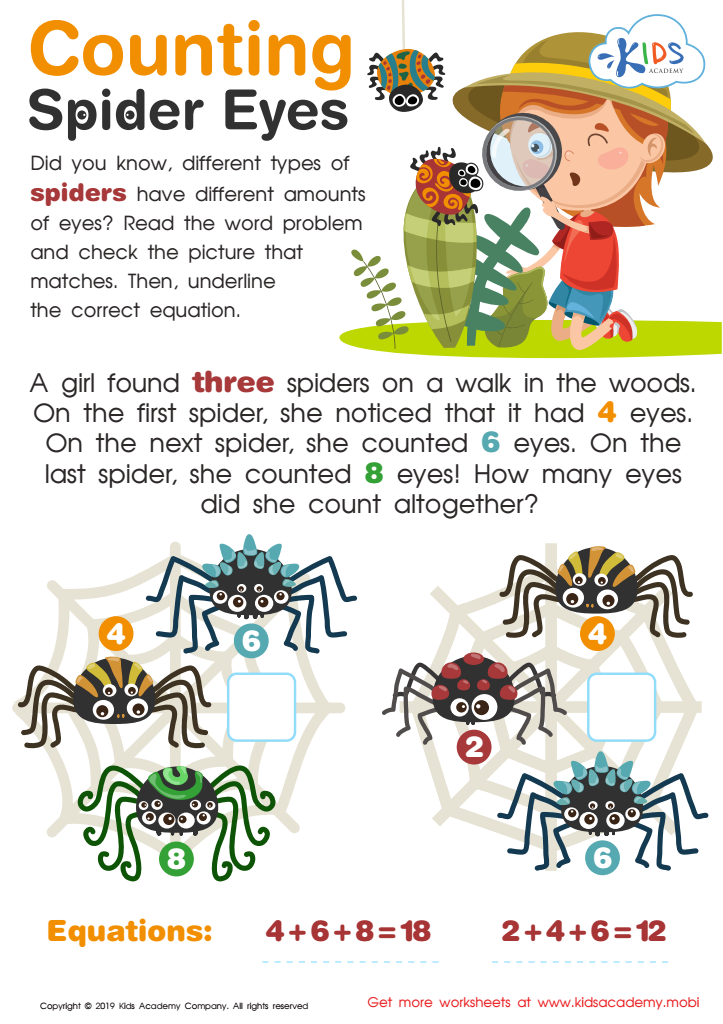
Counting Spider Eyes Worksheet
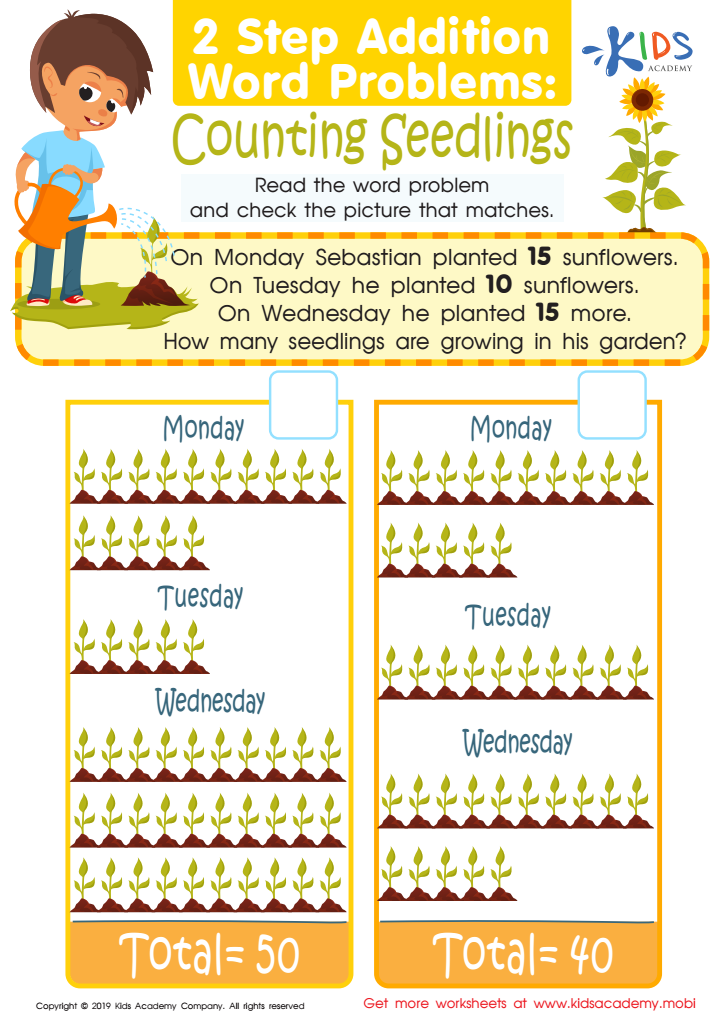
Counting Seedlings Worksheet








Parents and teachers should place significant emphasis on hand-eye coordination word problems for children aged 4-7 because these activities lay critical foundations for both physical and cognitive development. Hand-eye coordination is essential for a variety of life skills, including writing, typing, playing musical instruments, and participating in sports. Engaging in word problems that require children to draw or trace shapes, match objects, or complete simple tasks aligns cognitive processes with physical actions, thereby enhancing motor skills and spatial awareness.
Furthermore, these activities naturally promote critical thinking and problem-solving abilities. When children work on word problems, they need to follow instructions, recognize patterns, and make decisions, which fosters analytical thinking. This dual action of cognitive and physical exercise can boost a child's ability to concentrate, improving their academic performance in other subject areas as well.
Additionally, early development of hand-eye coordination has been shown to correlate with better language and literacy skills. Activities like tracing letters and matching words with pictures can improve vocabulary and reading abilities. Therefore, integrating hand-eye coordination word problems into early education not only makes learning interactive and fun but also deeply enhances children's developmental trajectory, preparing them for future academic and life successes.








