Contextual understanding Building Vocabulary Worksheets for Ages 4-7
8 filtered results
-
From - To
Discover our engaging Contextual Understanding Building Vocabulary Worksheets, specially designed for children aged 4-7! These interactive activities enhance young learners' vocabulary skills through real-life scenarios and relatable contexts. By connecting words to their meanings in everyday situations, kids will improve comprehension and critical thinking. Our worksheets encourage creativity and foster a love for language through colorful illustrations and fun exercises. Perfect for both classroom and home learning, these resources help prepare children for future academic success while making learning enjoyable. Start your child's journey to stronger vocabulary skills today with our expertly crafted worksheets!
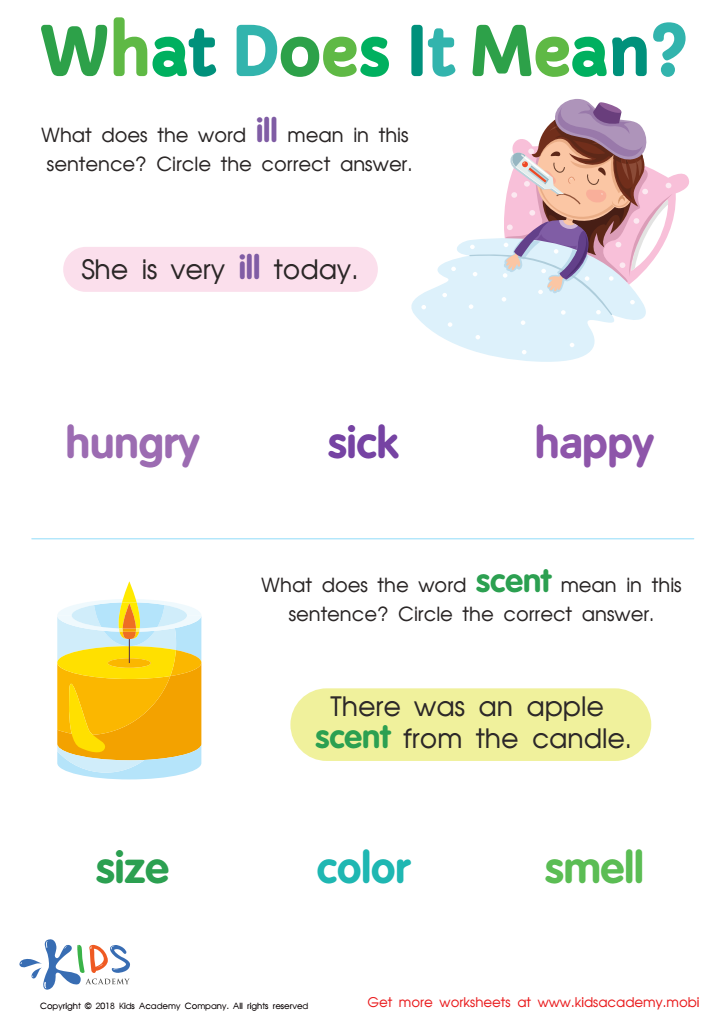
What Does It Mean? Worksheet
 Assign to My Students











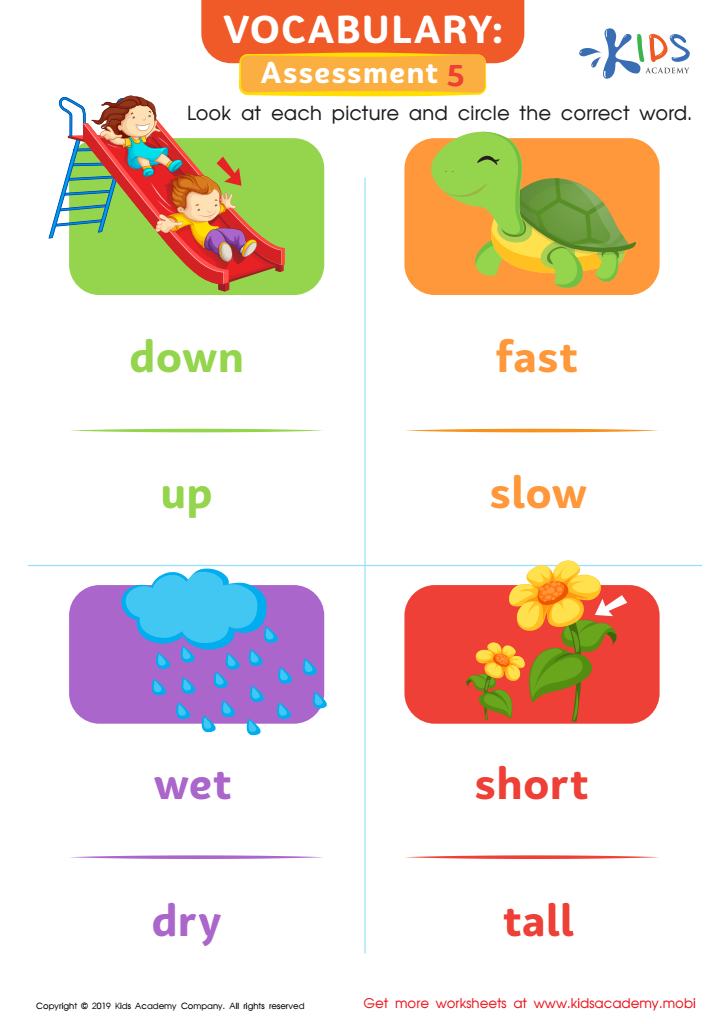
Vocabulary: Assessment 5 Worksheet
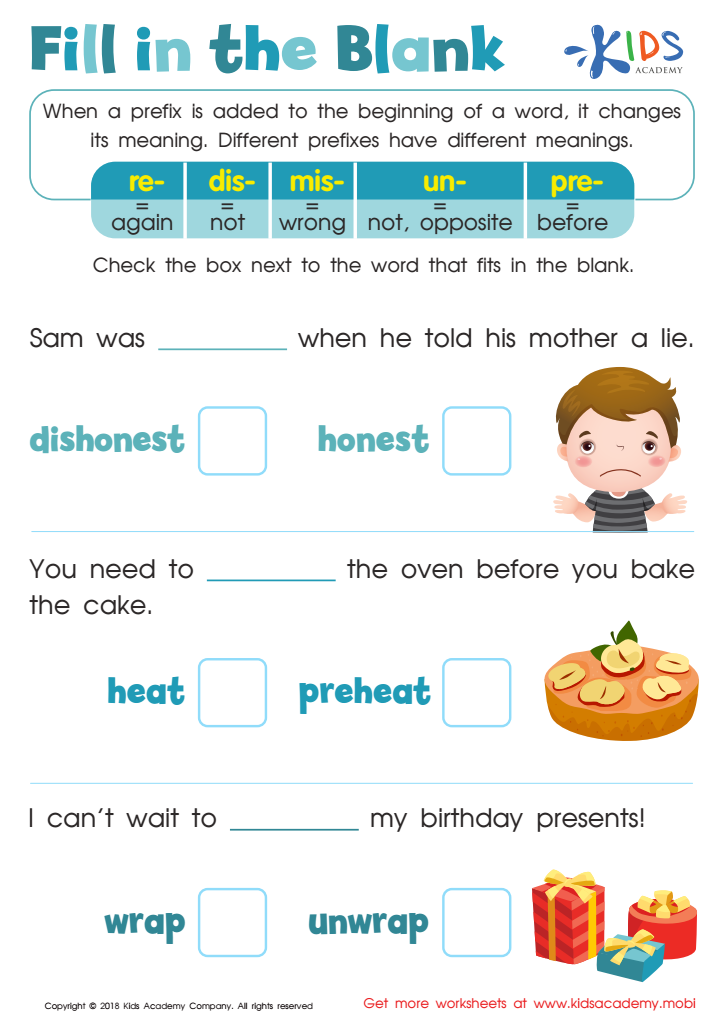
Reading: Fill in the Blank Worksheet
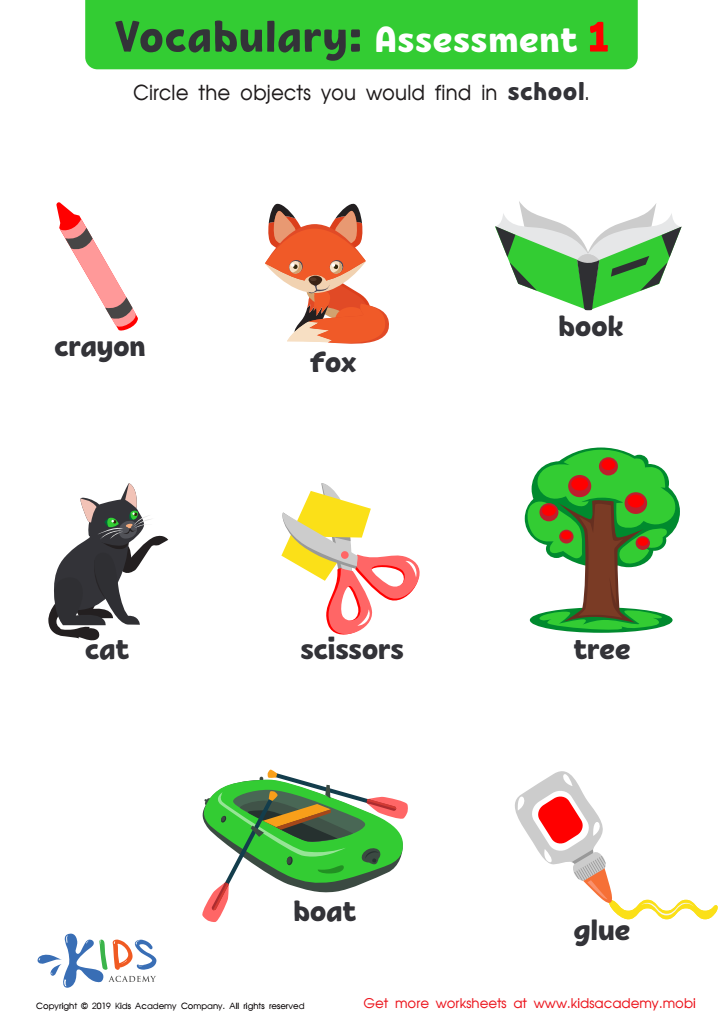
Vocabulary: Assessment 1 Worksheet
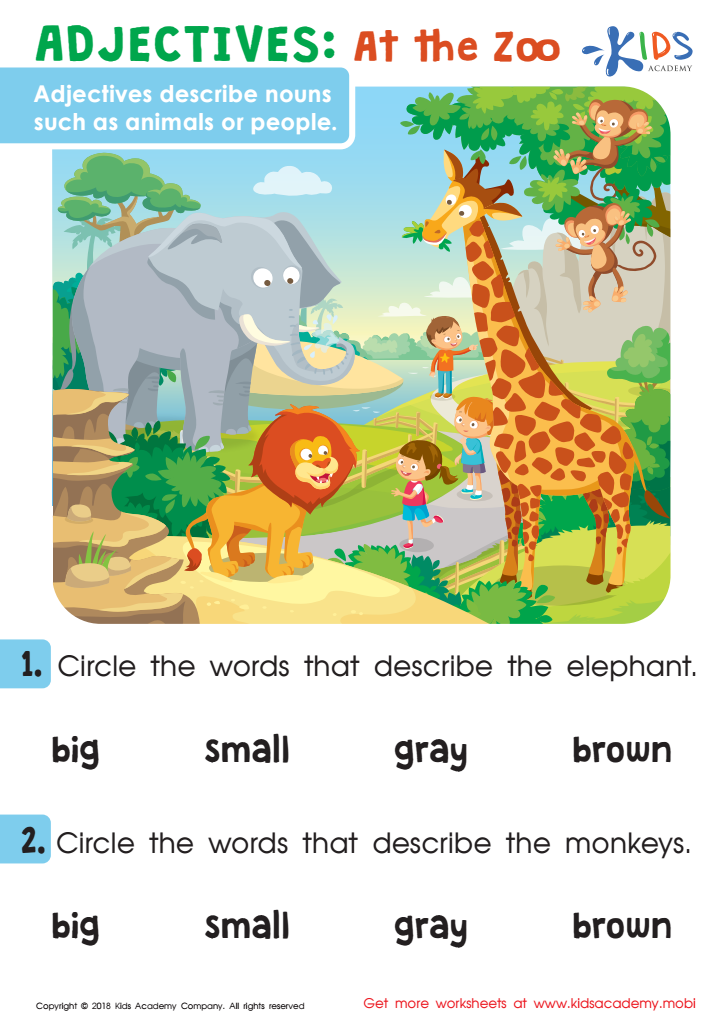
Adjectives: At The Zoo Worksheet
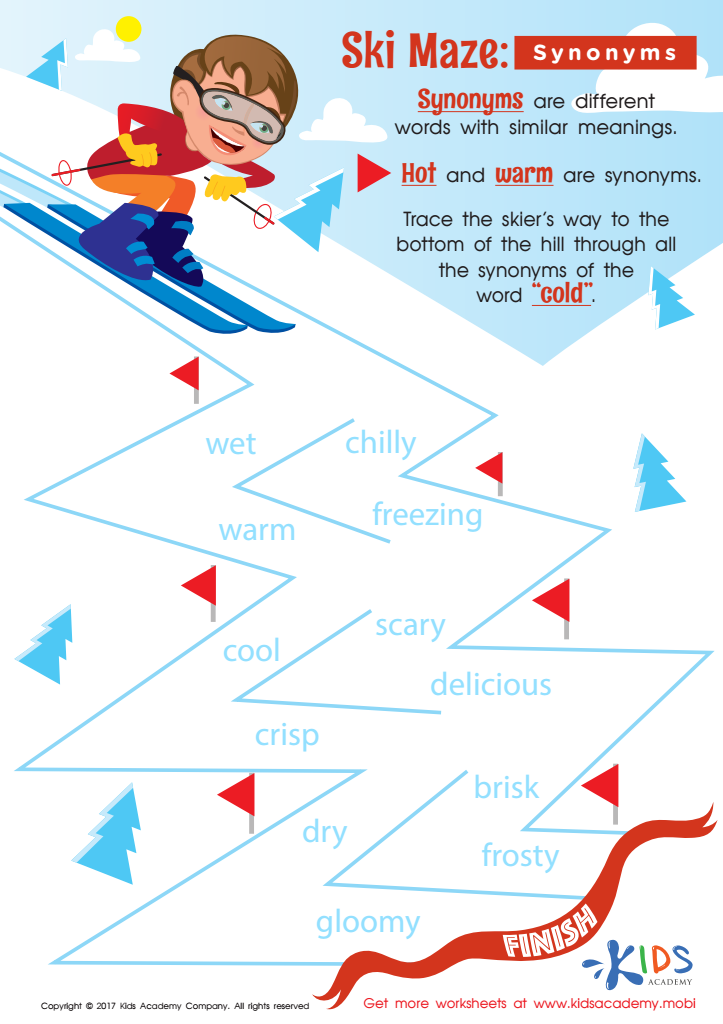
Free Printable Synonym Worksheet
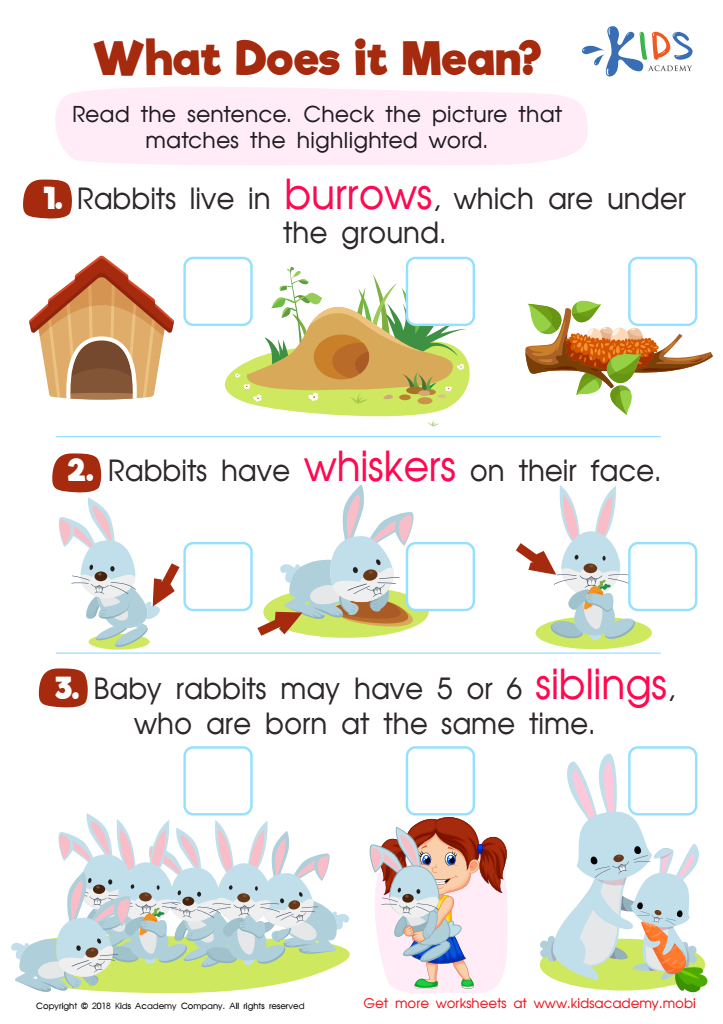
What Does It Mean? Worksheet
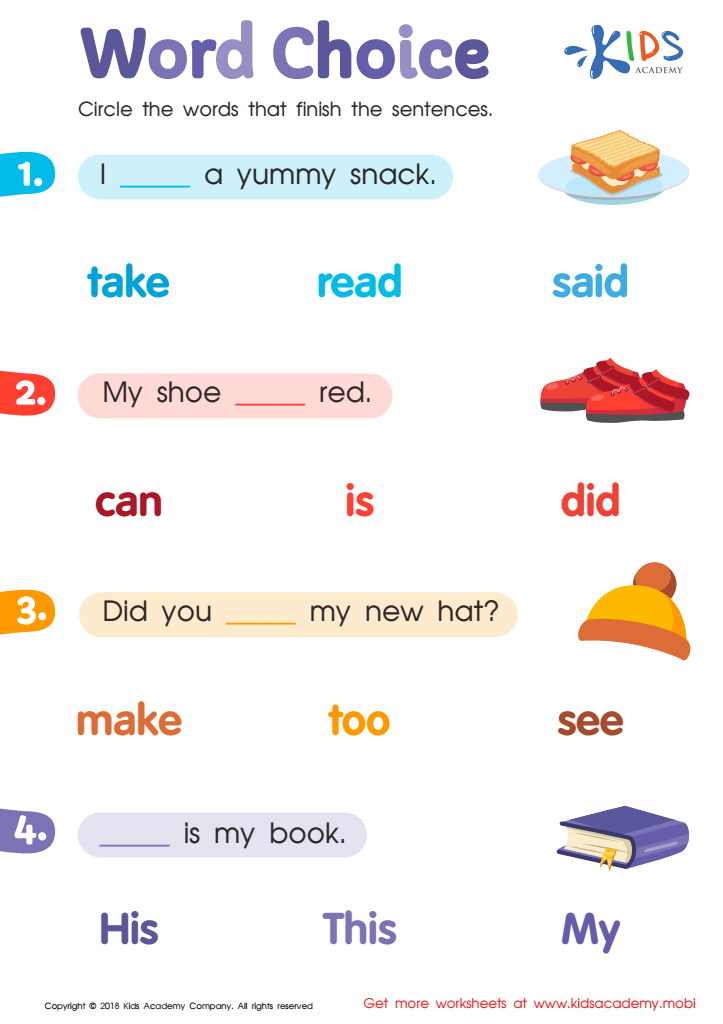
Word Choice Worksheet







.jpg)
Contextual understanding and vocabulary building are critical for children aged 4-7, as these elements form the foundation of literacy and language development. When children engage with new words in meaningful contexts—such as stories, play, or everyday conversations—they are more likely to grasp their significance and use them effectively. This deep understanding fosters not only vocabulary acquisition but also enhances reading comprehension skills.
Parents and teachers play a key role in nurturing this understanding. By providing rich language experiences, such as discussing stories, exploring new topics, or engaging in interactive conversations, they help children connect words to their meanings and contexts. This creates a robust mental framework that enables children to think critically and express themselves clearly.
Moreover, vocabulary is linked to academic success; a rich vocabulary supports understanding across all subjects. When children know more words and their contexts, they are better equipped to tackle challenges in reading and writing, ultimately leading to greater confidence and enthusiasm for learning.
By prioritizing contextual vocabulary development, parents and teachers can empower young learners to become effective communicators, which is essential for their overall growth and success in school and life. Therefore, fostering these skills should be a shared goal among caregivers and educators.








