
Critical thinking skills Building Vocabulary Worksheets for Ages 4-7
5 filtered results
Difficulty Level
Grade
Age
-
From - To
Subject
Activity
Standards
Unlock the power of words and comprehension with our "Critical Thinking Skills Building Vocabulary Worksheets for Ages 4-7." Designed to foster early literacy, these engaging resources not only teach new vocabulary but also enhance critical thinking. Each worksheet offers fun, interactive activities that challenge young minds to make connections, deduce meanings, and solve language puzzles. Perfect for adding depth to reading practice, our expertly crafted sheets help young learners develop essential skills in a structured way. Explore now to nurture a love for words and an enthusiasm for critical thinking in your child’s educational journey.
Favorites
With answer key
Interactive
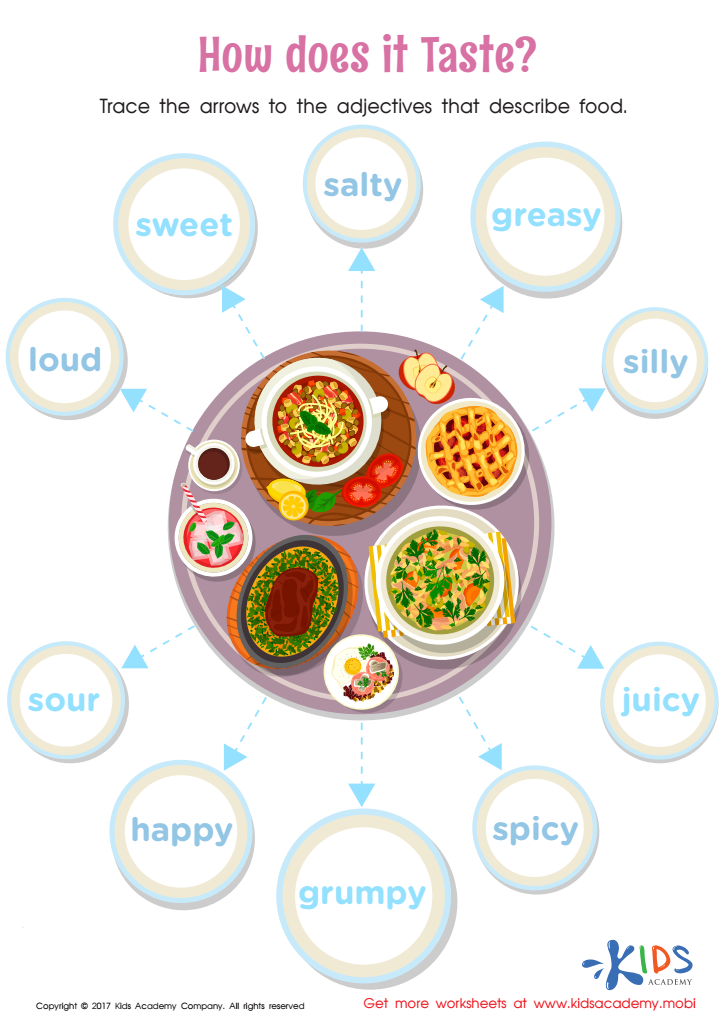
Food Adjectives Worksheet
Here’s a fun PDF worksheet to get your child’s taste buds tingling and help build descriptive language skills!
 Assign to My Students
Food Adjectives Worksheet
Worksheet











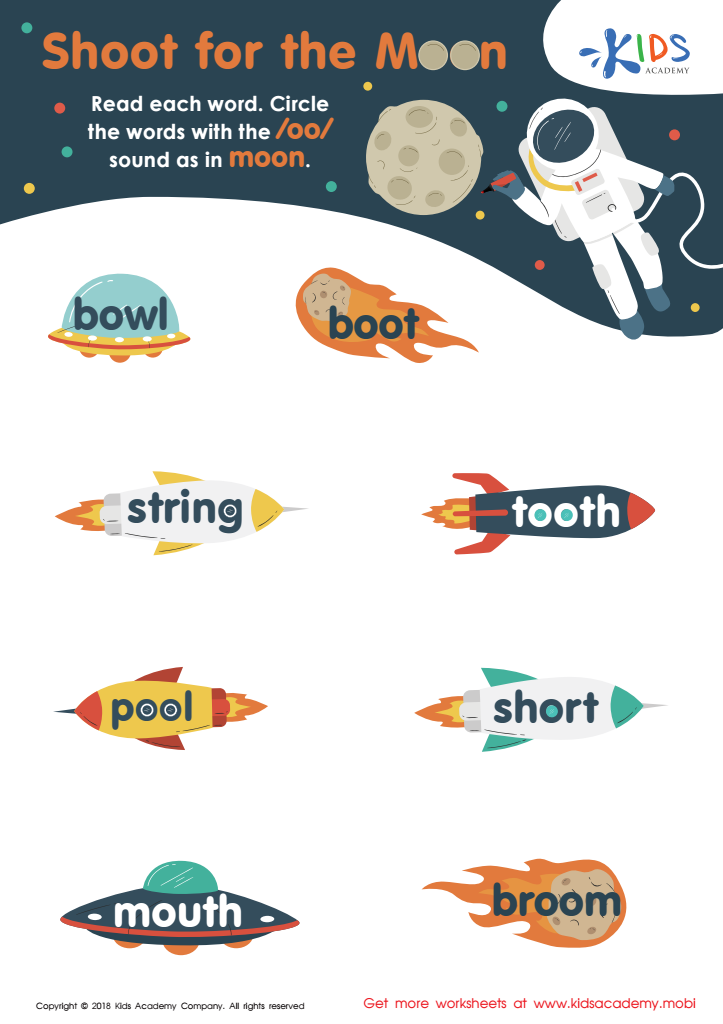
Reading: Shoot for the Moon Worksheet
Ask your kids if they can name any common words with the /oo/ sound. Read each word with them and help them pronounce it. Then, have them circle the words that have the /oo/ sound as in moon.
Reading: Shoot for the Moon Worksheet
Worksheet
Join Kids Academy for Free
Who is primarily going to use this learning content?



.jpg)
.jpg)



Critical thinking skills and strong vocabulary development in children aged 4-7 are crucial for their overall cognitive and academic growth. For parents and teachers, prioritizing these areas can lead to significant, long-lasting benefits.
Building a robust vocabulary at an early age lays the foundation for effective communication, both verbal and written. Children with a greater range of words at their disposal can express their thoughts, needs, and emotions more accurately. This enhanced ability to communicate fosters better relationships with peers and authority figures, promoting social and emotional development.
Furthermore, critical thinking skills enable children to analyze information, make connections, and solve problems logically. These abilities are not only essential for academic achievement but also play a pivotal role in adapting to life’s diverse challenges. Encouraging critical thinking allows children to become independent learners, capable of questioning the world around them and making informed decisions.
When parents and teachers nurture these skills in early childhood, they’re not just preparing children for immediate success in school; they’re also equipping them with the tools they'll need for lifelong learning and adaptability. Engaging children in activities that promote questioning, exploration, and rich language use ensures that they grow up to be resourceful, confident, and articulate individuals.








