Recognizing Patterns Building Vocabulary Worksheets for Ages 4-7
5 filtered results
-
From - To
Discover "Recognizing Patterns Building Vocabulary Worksheets for Ages 4-7" at Kids Academy! Designed specifically for young learners, these engaging worksheets help children enhance their vocabulary by recognizing and understanding patterns in language. With vibrant visuals and interactive activities, our worksheets make learning fun and effective. Perfect for parents and teachers alike, these resources support the development of critical reading and cognitive skills while fostering a love for language. Accessible anytime, anywhere, they provide an excellent foundation for lifelong learning. Equip your child with the tools they need for success with Kids Academy's tailored worksheets today!
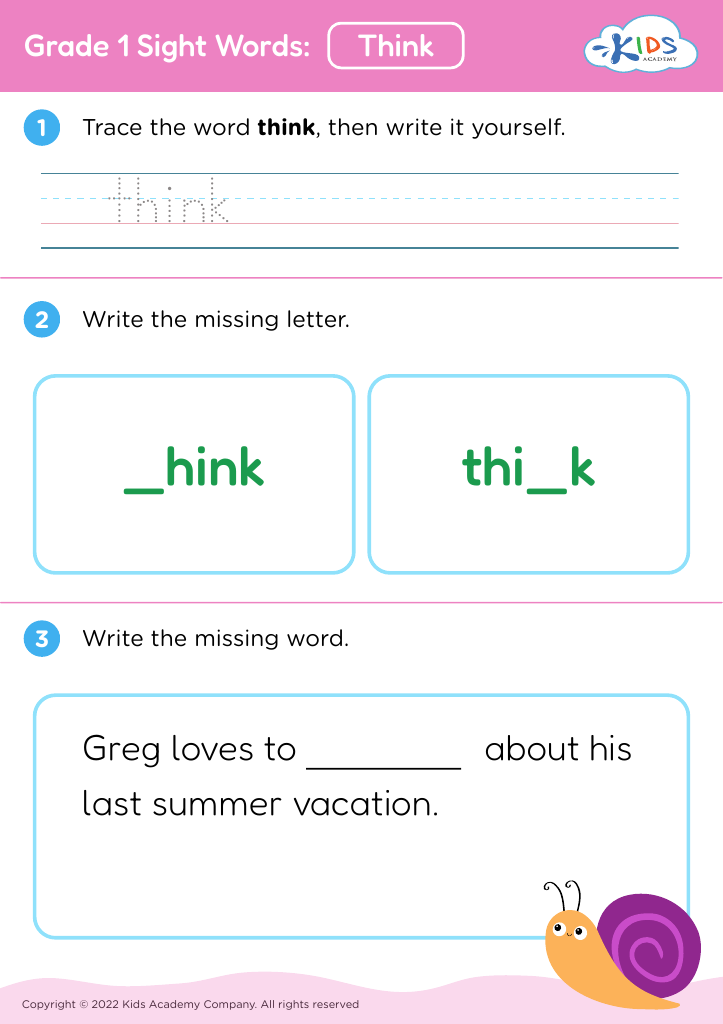











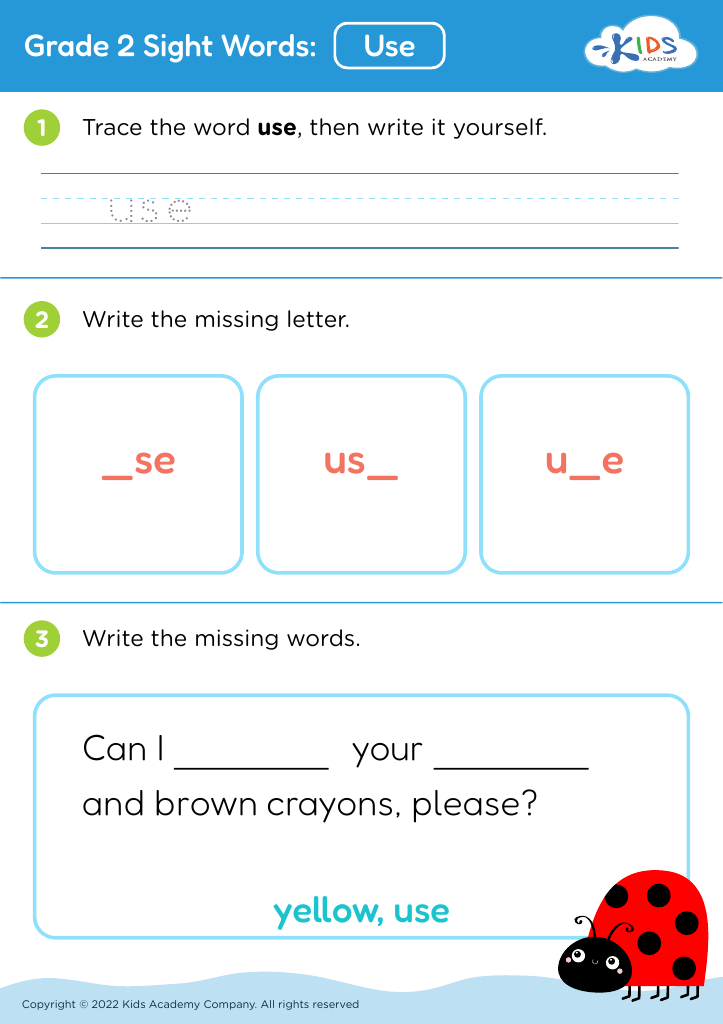
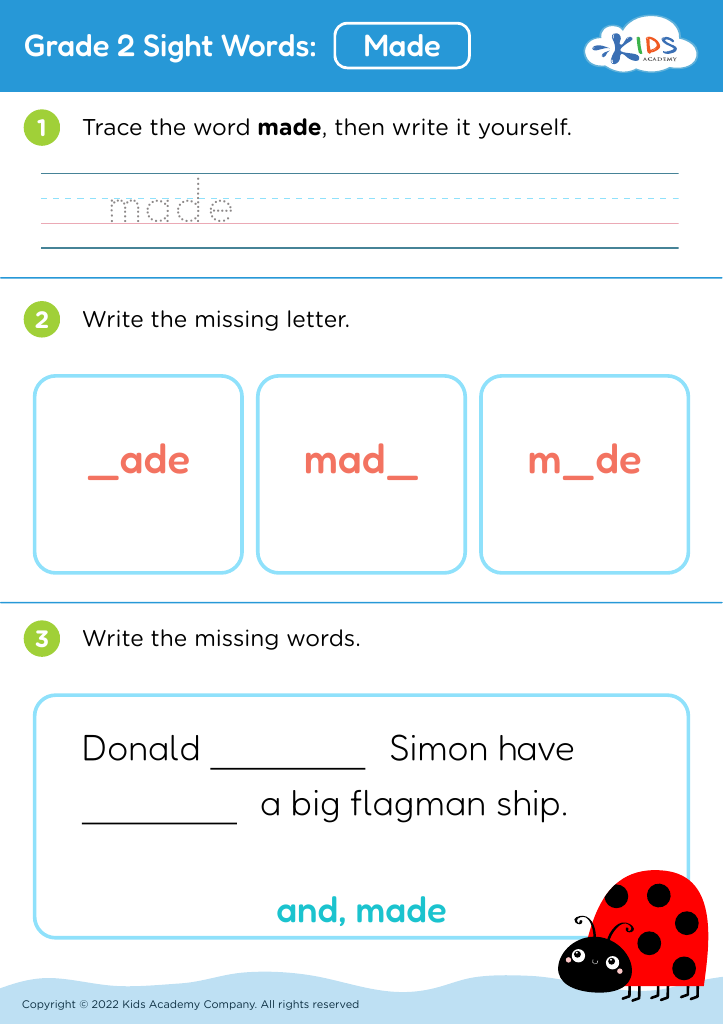
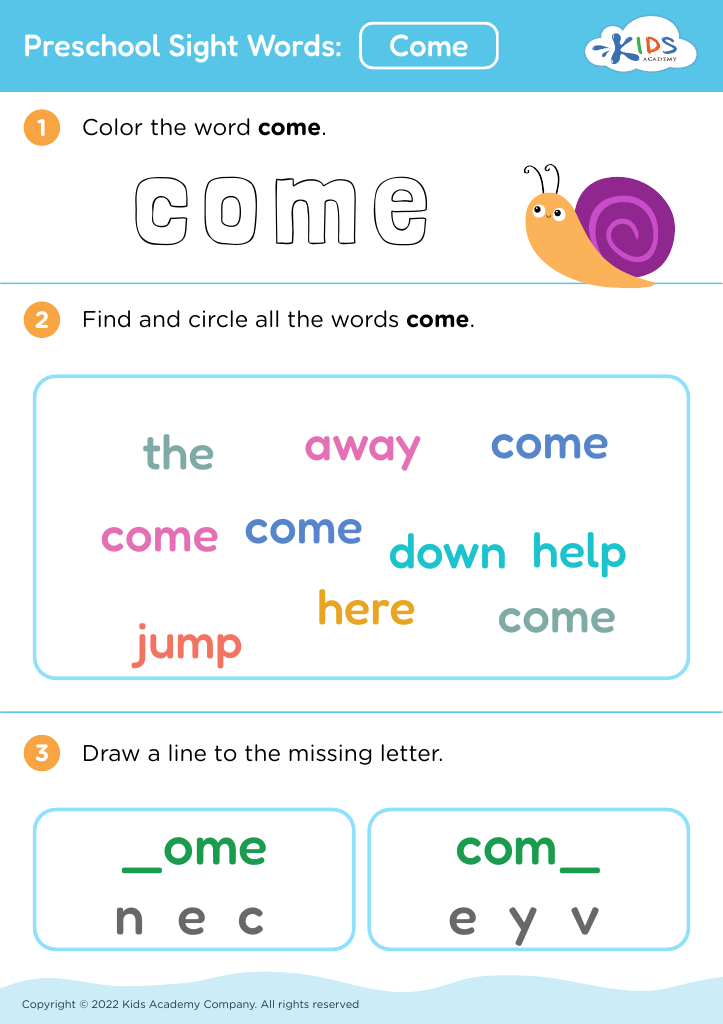
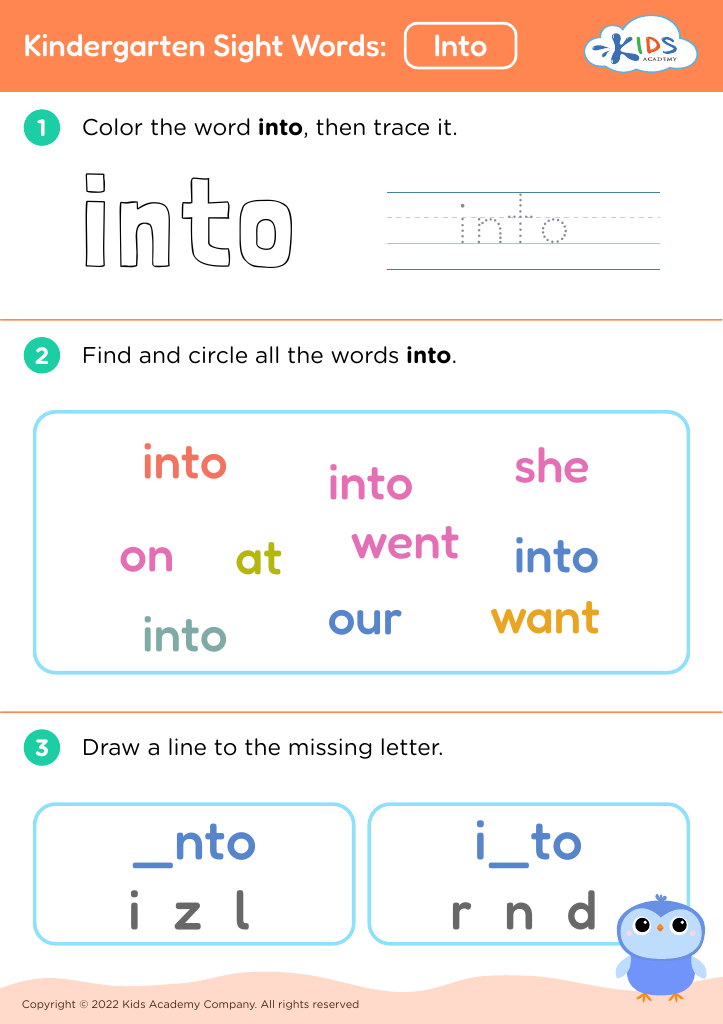








Recognizing patterns and building vocabulary are foundational skills crucial for children ages 4-7, extending far beyond basic literacy and numeracy. For parents and teachers, supporting these areas can significantly impact a child's overall intellectual development and academic success.
Patterns are central to understanding the world's structure. When children recognize patterns, they develop the ability to predict, classify, and infer relationships, which are key skills in subjects like mathematics, science, and even music and art. For example, recognizing numerical patterns lays the groundwork for arithmetic, while understanding story patterns aids in reading comprehension and narrative skills.
On the other hand, a robust vocabulary is vital for effective communication and cognitive development. A enriched vocabulary not only enhances reading skills but also improves listening, speaking, and writing abilities. Knowing more words allows children to express themselves more clearly and precisely. Moreover, vocabulary is closely linked to reading comprehension; children who understand words and their meanings are better equipped to understand complex texts and academic content as they advance through school.
By emphasizing pattern recognition and vocabulary growth, parents and teachers provide children with essential tools for analytical thinking, problem-solving, and effective communication. Nurturing these skills from an early age can set the stage for lifelong learning and intellectual curiosity.








