Understanding Rhymes Reading Worksheets for Ages 4-7
3 filtered results
-
From - To
Discover the joy of rhyming with our "Understanding Rhymes Reading Worksheets," specially designed for children aged 4-7. These engaging worksheets help young learners enhance their reading skills by exploring the rhythmic patterns and sounds of language. Through interactive activities, children will identify, match, and create rhymes, fostering vital phonemic awareness. Our colorful and playful designs make learning fun and effective, instilling a love for reading from an early age. Perfect for use at home or in the classroom, these worksheets provide a meaningful way to develop critical literacy skills essential for future academic success. Start rhyming today!
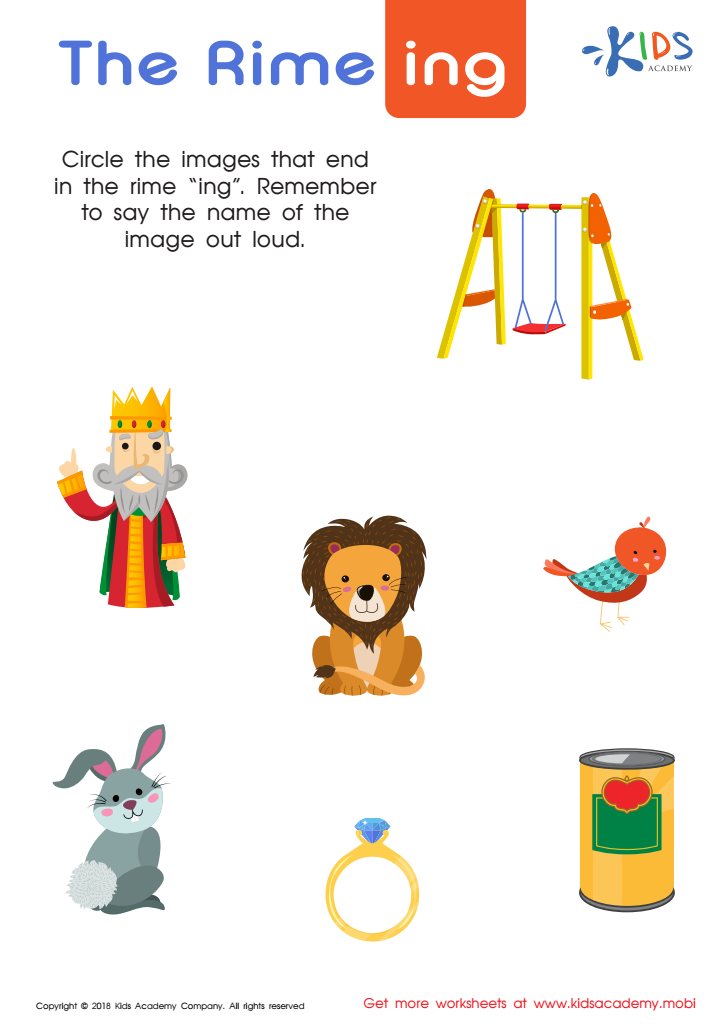
The Rime "ing" Worksheet
 Assign to My Students
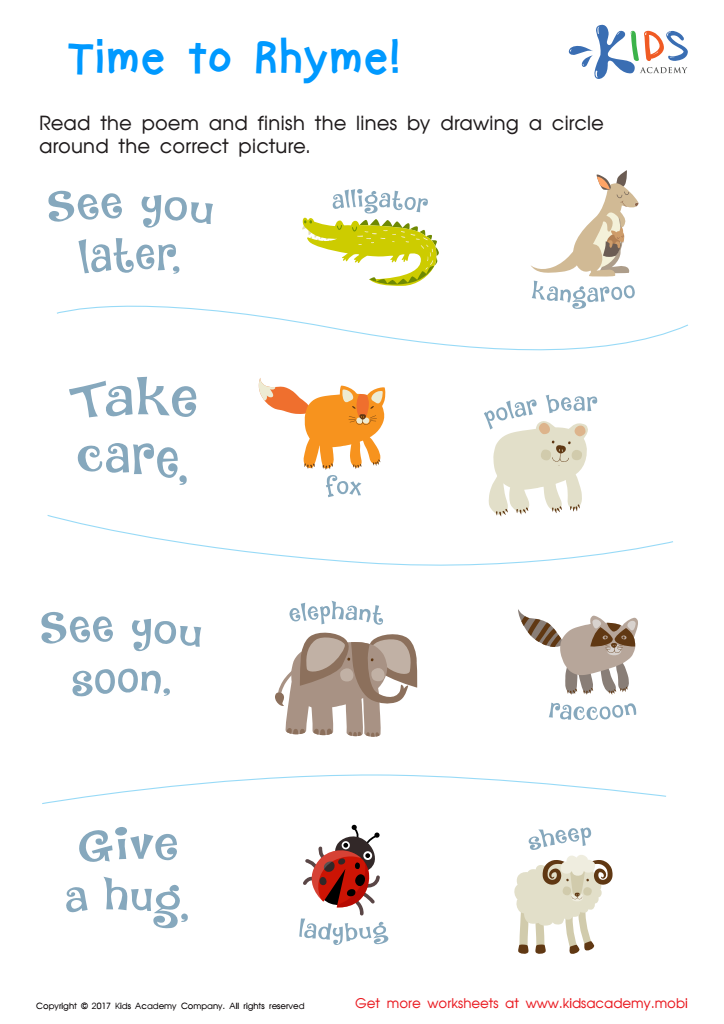
Time to Rhyme Rhyming Worksheet
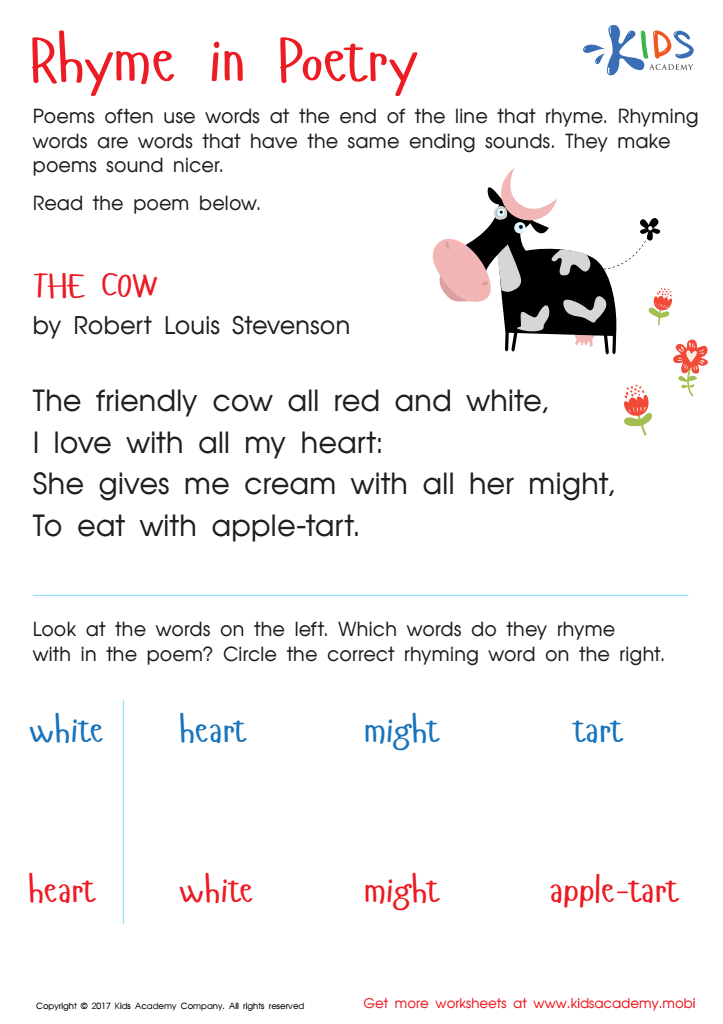
Rhyme In Poetry Worksheet








Understanding rhymes is crucial for children aged 4-7 as it lays the foundation for literacy and language development. For parents and teachers, recognizing the significance of rhyming activities can profoundly impact a child's early reading skills and overall cognitive growth. Rhyme helps children become aware of the sounds within words, enhancing their phonemic awareness, which is a critical skill for decoding unfamiliar words when they begin reading independently.
Engaging with rhymes not only makes learning more enjoyable but also supports vocabulary acquisition. Children exposed to rhyming literature often encounter new words and phrases in a memorable context, which aids comprehension and retention. Moreover, rhyming activities foster linguistic creativity, encouraging children to play with language, develop their verbal skills, and eventually articulate their thoughts more effectively.
Additionally, shared rhyming experiences, such as reading poems or singing songs, strengthen the bond between parents or teachers and children, fostering a positive attitude towards reading. Games and activities that utilize rhymes also promote social skills, as they encourage collaboration and interaction among peers. In summary, understanding rhymes is an essential pathway that enriches literacy, language skills, and social connections in young learners, making it a focal point for educational efforts.








