Vocabulary enhancement Reading Worksheets for Ages 4-7 - Page 5
101 filtered results
-
From - To
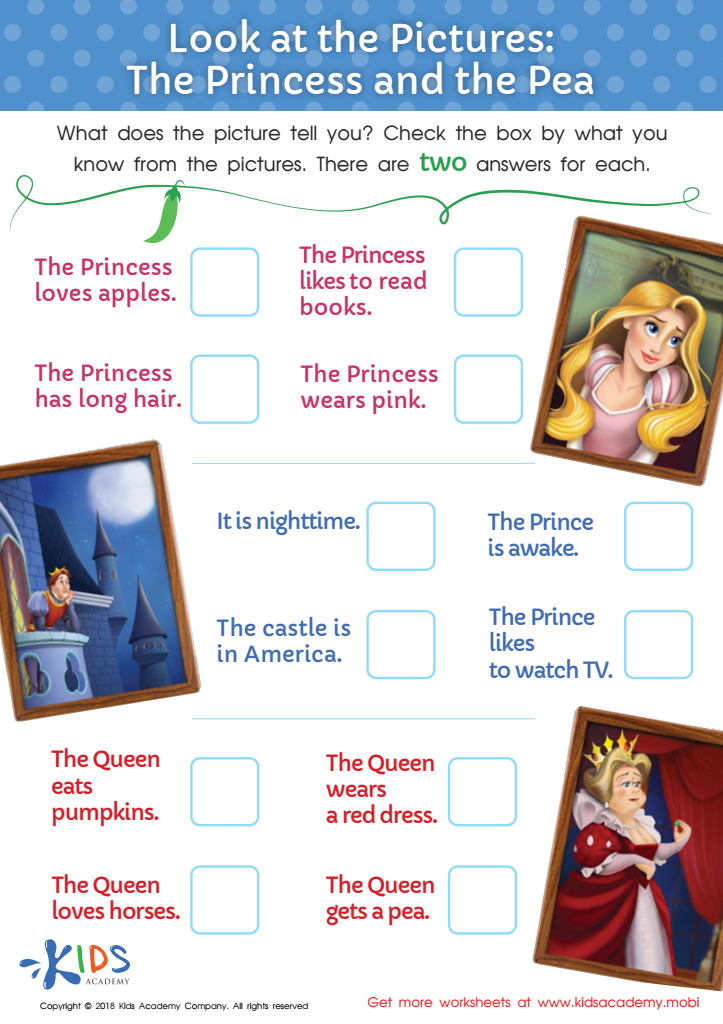
Look at the Pictures: The Princess and the Pea Worksheet
 Assign to My Students
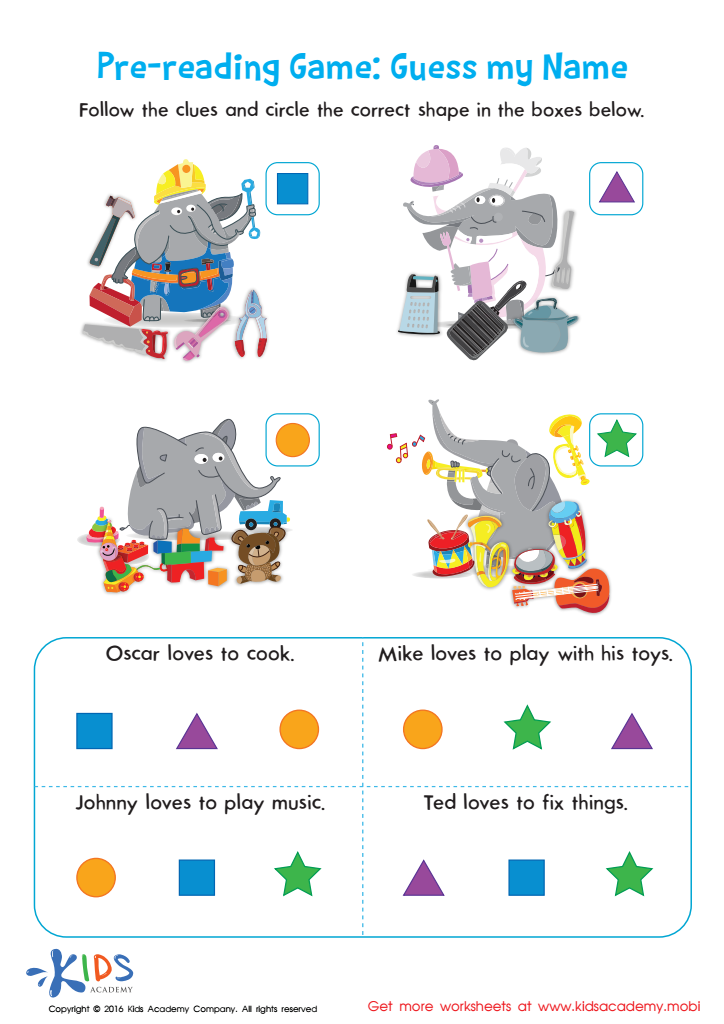
Pre Reading Worksheet Guess My Name
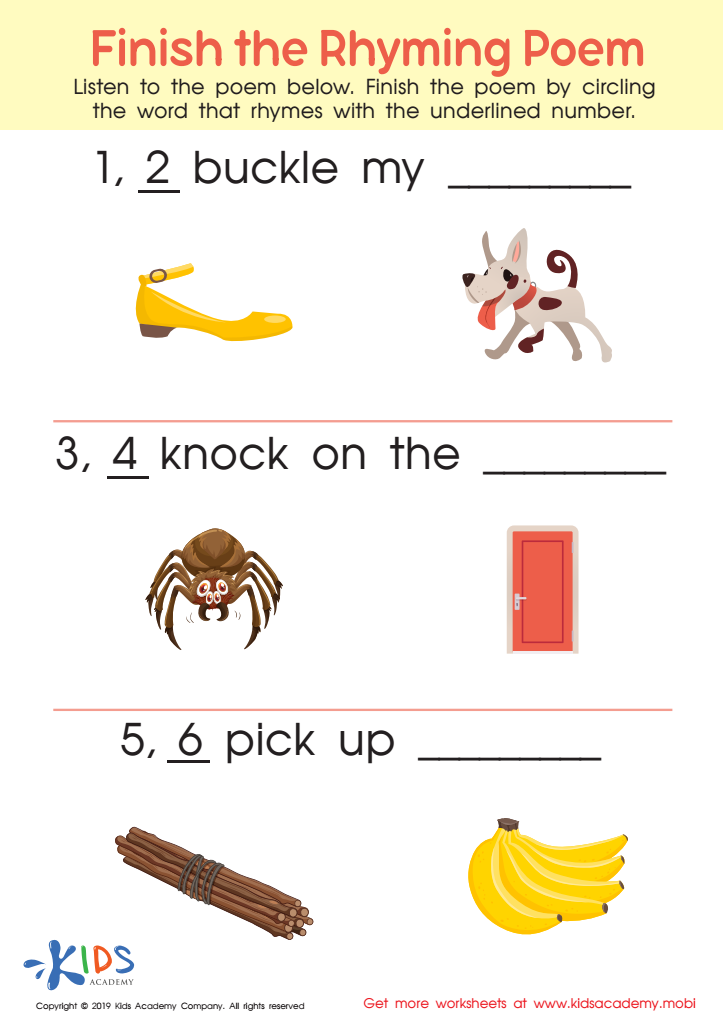
Finish Rhyming Poem Worksheet
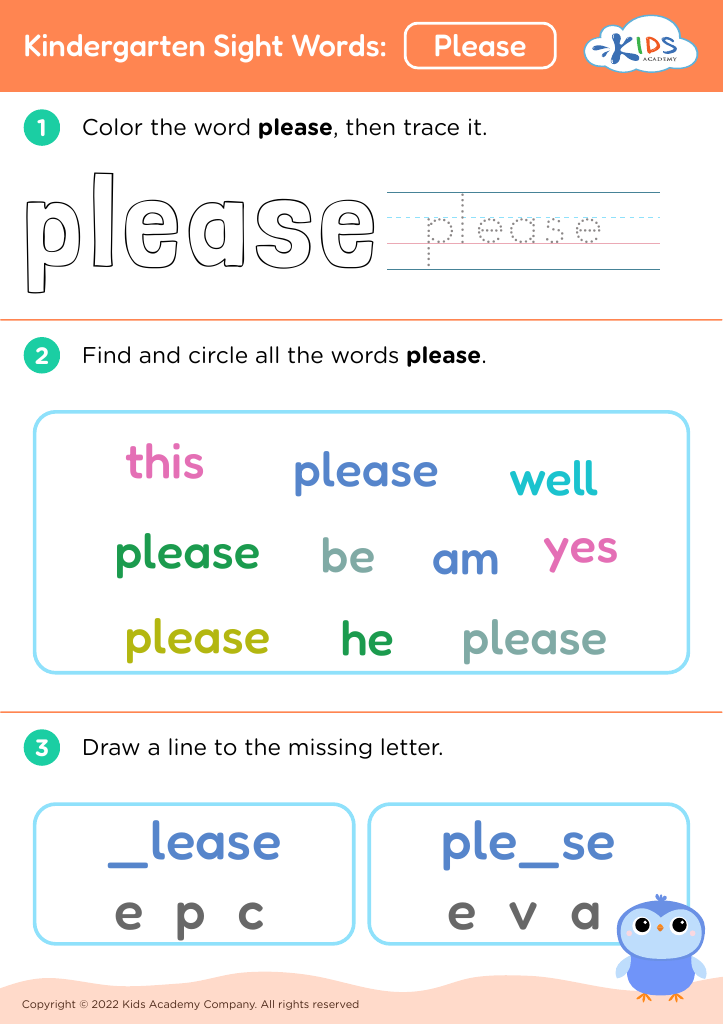








Vocabulary enhancement reading for children aged 4-7 is crucial for their cognitive and social development. At this age, children's brains are rapidly developing, and enriching their vocabulary lays a strong foundation for effective communication skills. A robust vocabulary improves reading comprehension, enabling young readers to grasp meaning more easily when they encounter new texts. As children understand more words, their ability to express their thoughts and feelings also matures, leading to better social interactions and emotional intelligence.
Furthermore, vocabulary is closely linked to academic achievement. Children who possess a rich vocabulary are more likely to excel in their studies, as they can engage with various subjects meaningfully. Additionally, encouraging vocabulary development through reading helps spark curiosity and a love for literature. This not only enhances their imagination but also fosters critical thinking skills.
Parents and teachers serve as role models, demonstrating the importance of language through diverse reading materials, conversations, and interactive storytelling. By actively participating in vocabulary-rich reading activities, they can create an engaging learning environment, fostering a passion for words that will benefit children throughout their lives. Investing in vocabulary enhancement is, therefore, an investment in a child's future success, both academically and socially.








