Moral understanding Reading Comprehension Worksheets for Ages 4-7
4 filtered results
-
From - To
Explore our engaging Moral Understanding Reading Comprehension Worksheets designed specifically for children ages 4-7. These worksheets foster essential reading skills while instilling valuable moral lessons that help young learners navigate social situations. Each activity encourages kids to reflect on themes of kindness, sharing, honesty, and empathy through relatable stories. As children read and interact with age-appropriate content, they enhance their comprehension abilities while gaining insights into responsible behavior and character development. These versatile worksheets are perfect for home or classroom use, providing a fun and interactive way to nurture both literacy and moral understanding in your little ones.
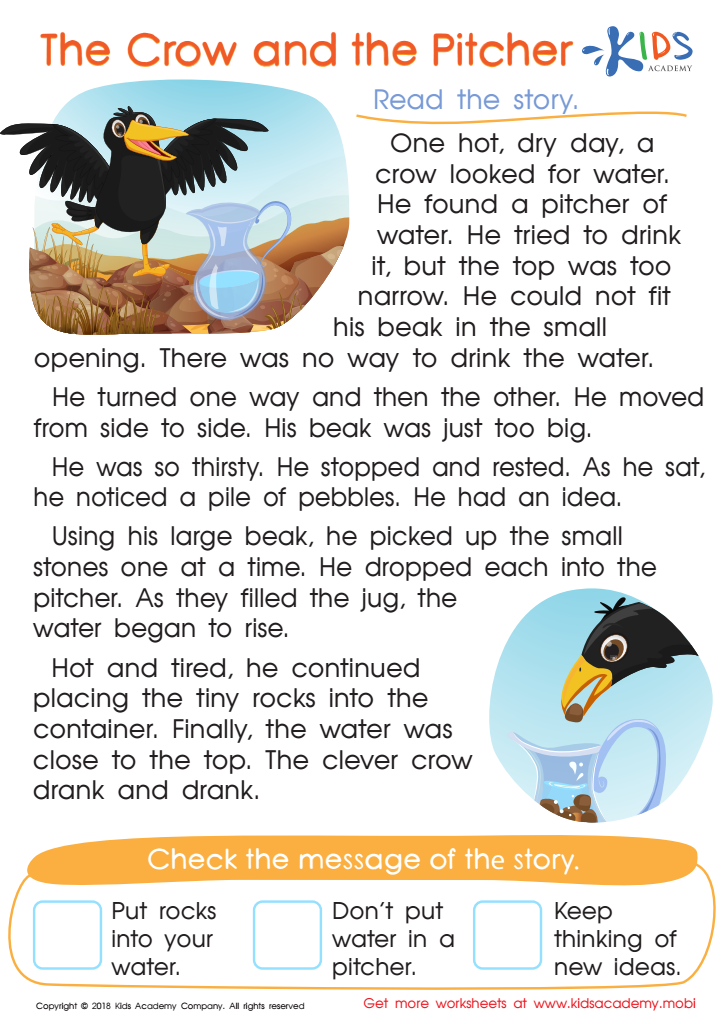
The Crow and the Pitcher Worksheet
 Assign to My Students
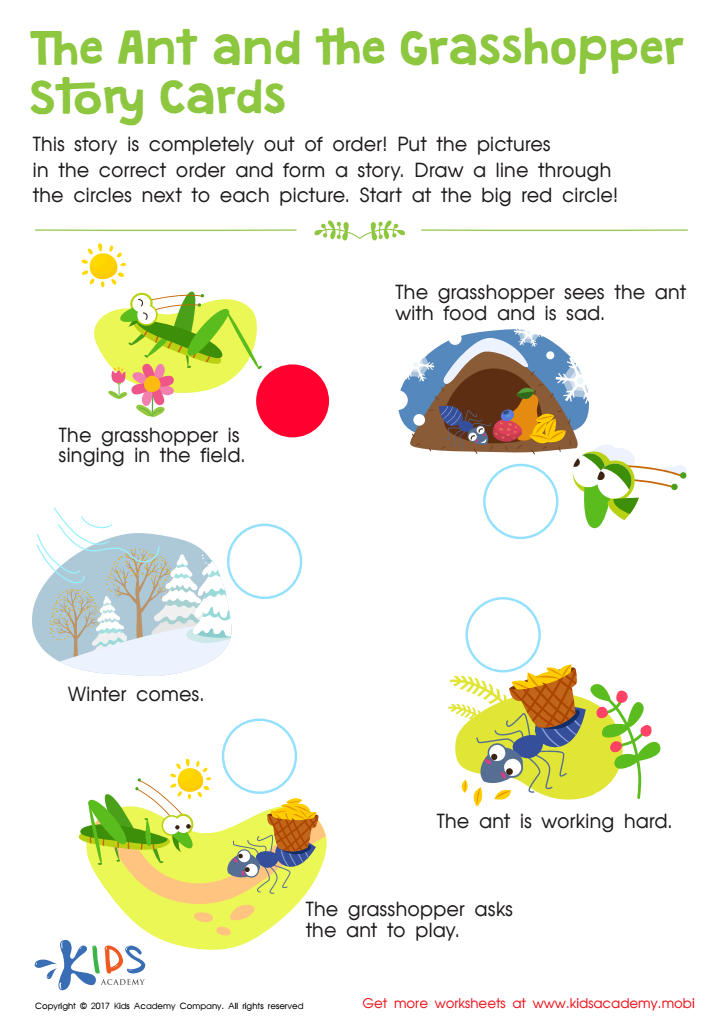
The Ant and The Grasshopper Worksheet
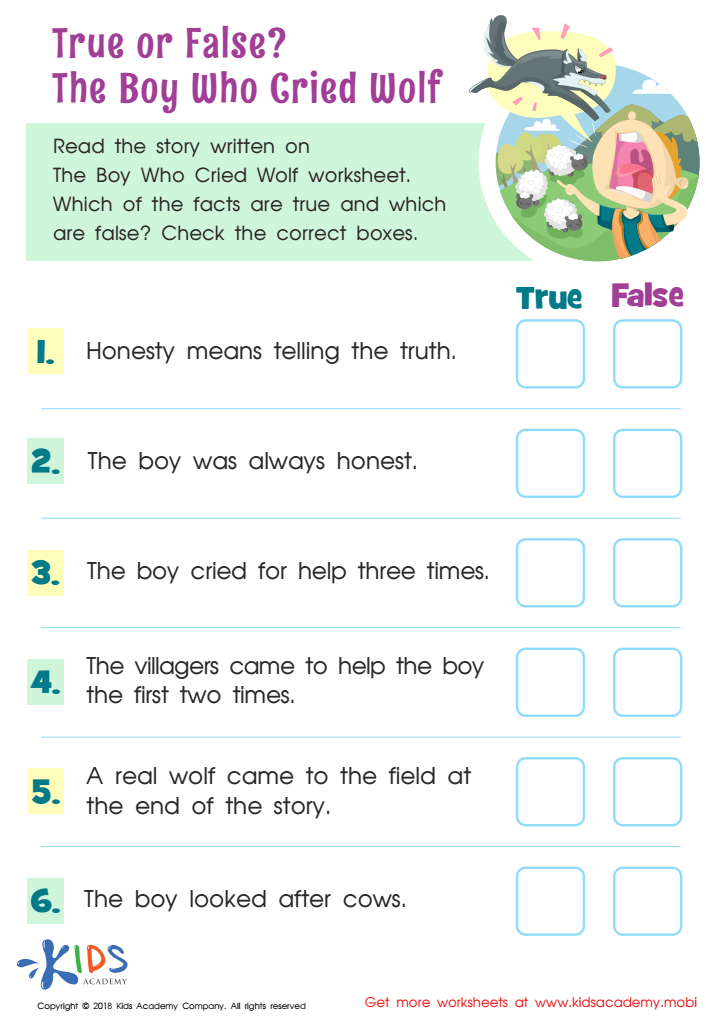
True or False? The Boy Who Cried Wolf Worksheet
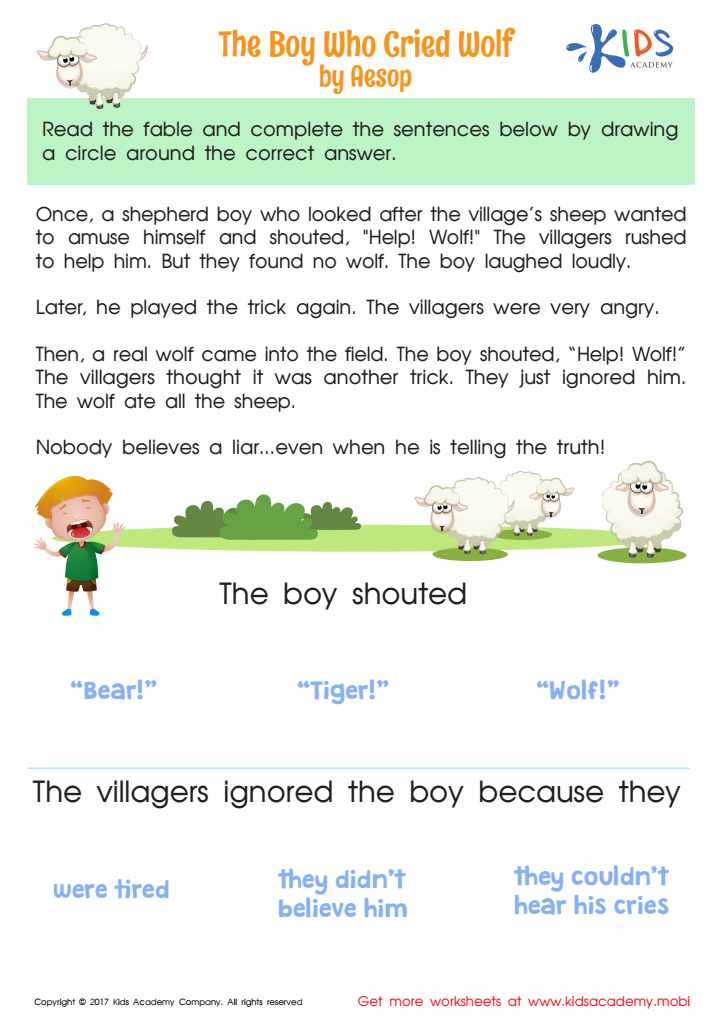
The Boy Who Cried Wolf Worksheet





.jpg)


Moral understanding in reading comprehension is crucial for children aged 4-7 as it lays the foundation for their social and emotional development. During these formative years, children begin to develop their own sense of right and wrong, and literature serves as a powerful tool in this process. Stories often present moral dilemmas, diverse perspectives, and complex characters, helping children to not only understand ethical concepts but also to empathize with others' feelings and experiences.
Parents and teachers should prioritize moral understanding in reading as it enhances critical thinking skills. Engaging with narratives that explore choices and consequences encourages children to reflect on their own values and behaviors. Furthermore, discussing these themes nurtures communication skills, allowing children to articulate their thoughts and feelings about various moral situations.
Incorporating moral lessons into reading also fosters healthy relationships among peers. When children can appreciate different viewpoints and understand the impact of their actions, they are more likely to engage positively with others.
Ultimately, promoting moral understanding in reading comprehension contributes to well-rounded, compassionate individuals who are better equipped to navigate the complexities of society. Thus, caregivers should actively encourage literature that stimulates moral dialogue and reflection in young readers.








