Understanding life cycles Reading Comprehension Worksheets for Ages 4-7
3 filtered results
-
From - To
Explore the fascinating world of life cycles with our engaging reading comprehension worksheets designed specifically for children aged 4-7. These worksheets focus on helping young learners understand the different stages of life cycles through fun stories and interactive activities. Each worksheet encourages critical thinking skills as children read, comprehend, and answer questions about various life processes, from butterflies to plants. Perfect for classroom use or at-home learning, these resources promote literacy development while fostering an appreciation for nature's wonders. Dive into the adventure of life cycles and watch your child's understanding and love for reading grow!
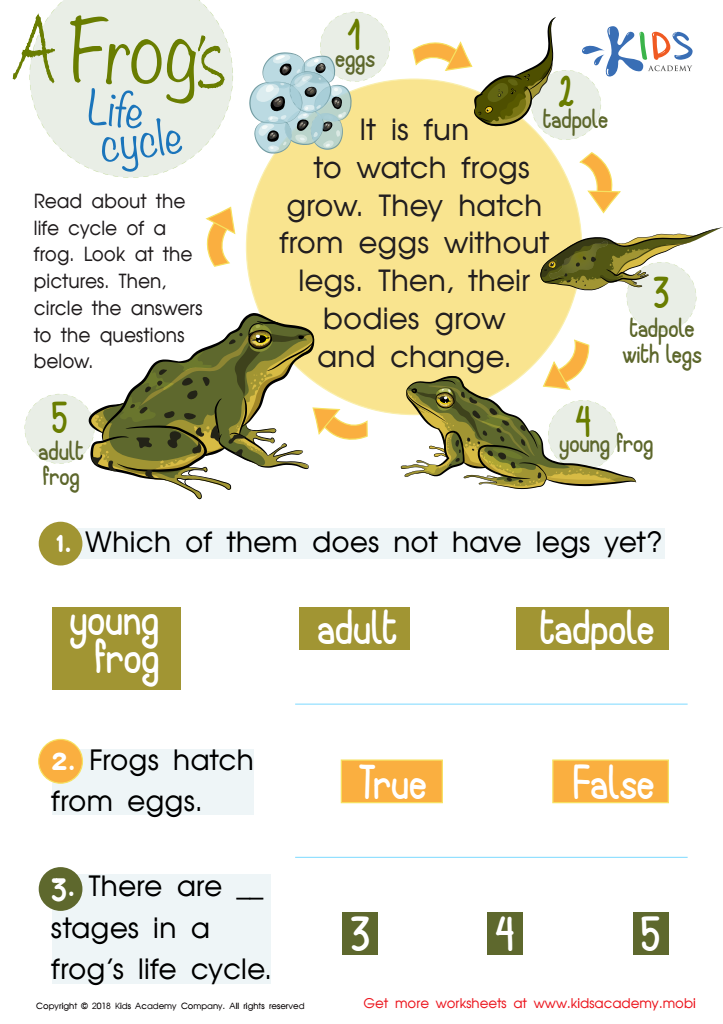
A Frog’s Life Cycle Worksheet
 Assign to My Students
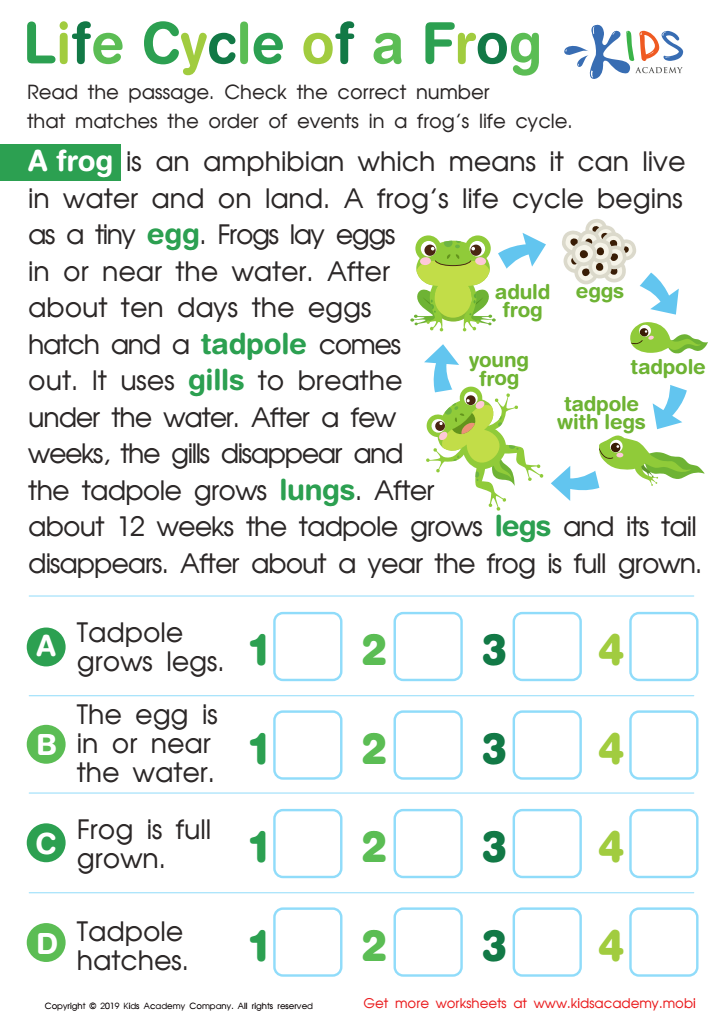
Life Cycle of a Frog Worksheet
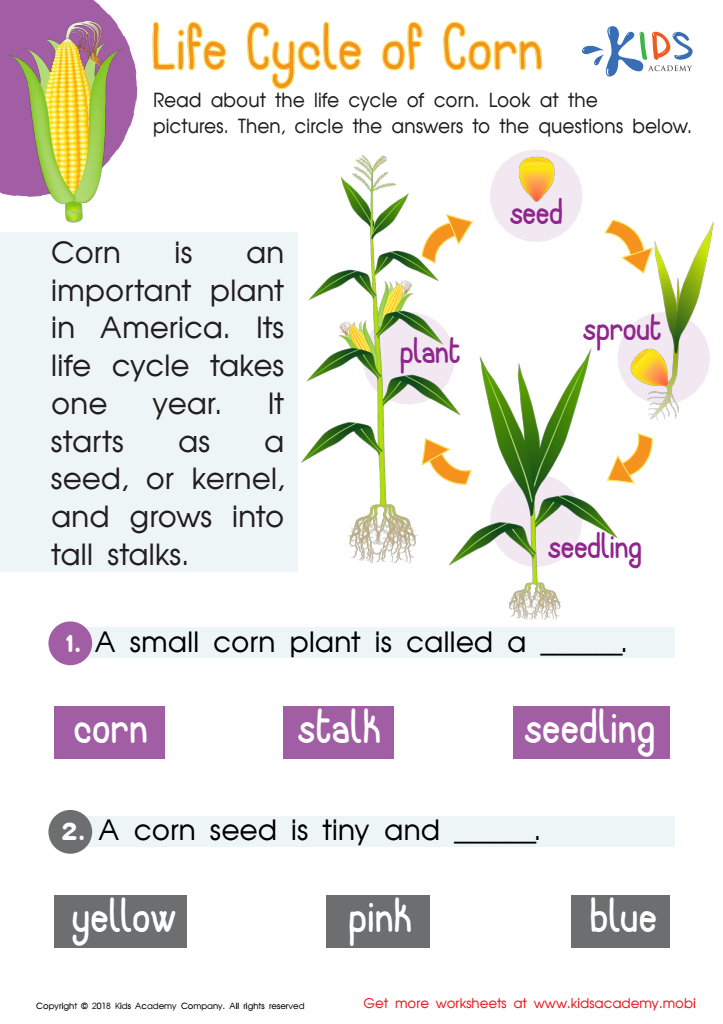
Life Cycle of Corn Worksheet








Understanding life cycles is a vital concept that not only engages young minds but also enhances their reading comprehension skills. For children aged 4-7, learning about life cycles—whether of plants, animals, or humans—provides a concrete context in which they can apply their reading skills.
Firstly, life cycles are fascinating yet straightforward topics that captivate young learners. By exploring concepts like metamorphosis in butterflies or the growth stages of a plant, children draw connections between words and visuals, deepening their comprehension. Teachers and parents can leverage stories about life cycles to build vocabulary and promote critical thinking.
Moreover, reading about life cycles supports scientific understanding and encourages curiosity. When children grasp these natural processes, they learn to sequence events and form predictions about what happens next. This grasp of narrative structure boosts their overall literacy and story comprehension.
Additionally, discussing the significance of life cycles fosters awareness of nature and healthy habits in children. It bolsters their emotional intelligence as they reflect on concepts like growth, change, and interdependence in living beings. Overall, understanding life cycles ties reading comprehension to real-world implications, making it an engaging and meaningful part of early education.








