Critical thinking development Reading Fiction Worksheets for Ages 4-7
4 filtered results
-
From - To
Enhance your child's critical thinking skills with our engaging Reading Fiction Worksheets designed specifically for ages 4-7. These interactive worksheets help young learners analyze stories, interpret characters, and evaluate plots, fostering a deeper understanding of fiction. Tailored to stimulate curiosity and creativity, each activity encourages children to ask questions and form connections, promoting lively discussions while they read. Your little ones will not only develop essential comprehension abilities but also boost their confidence in expressing thoughts and ideas. Explore our collection today and watch your child's imagination soar while building a strong foundation for lifelong reading success!
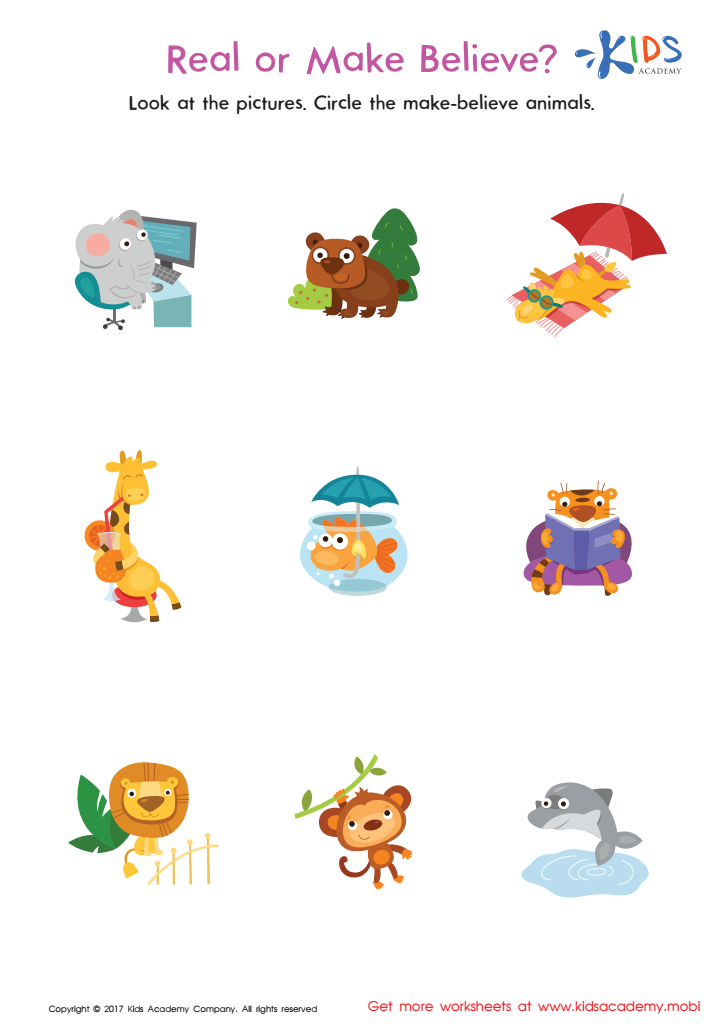
Fact or Make Believe Worksheet
 Assign to My Students
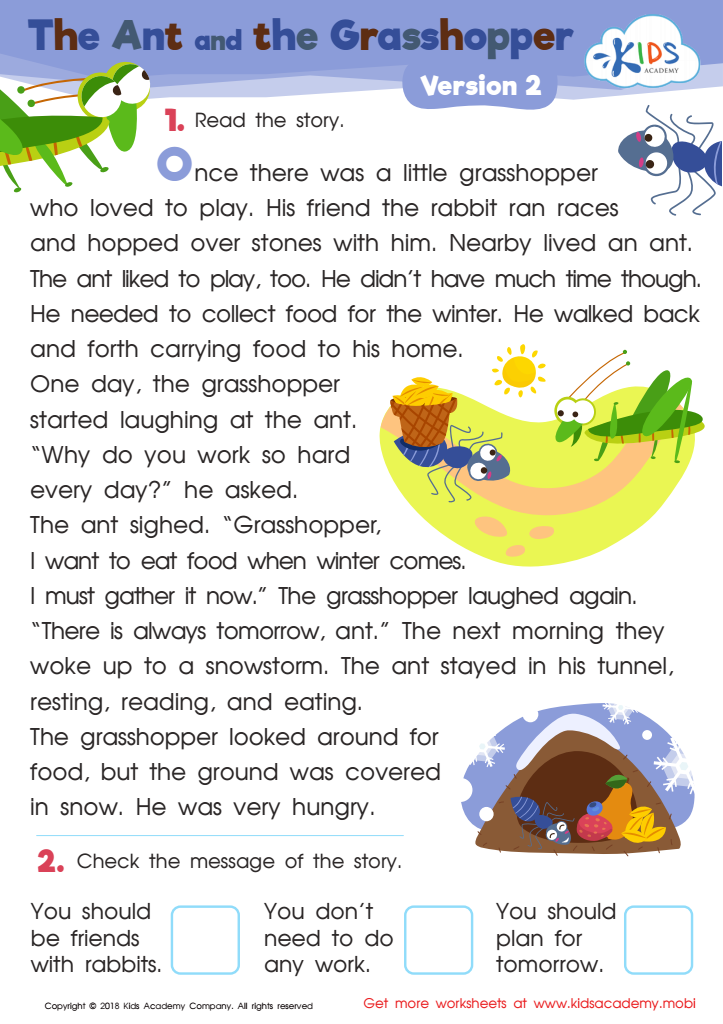
The Ant and The Grasshopper Version 2 Worksheet
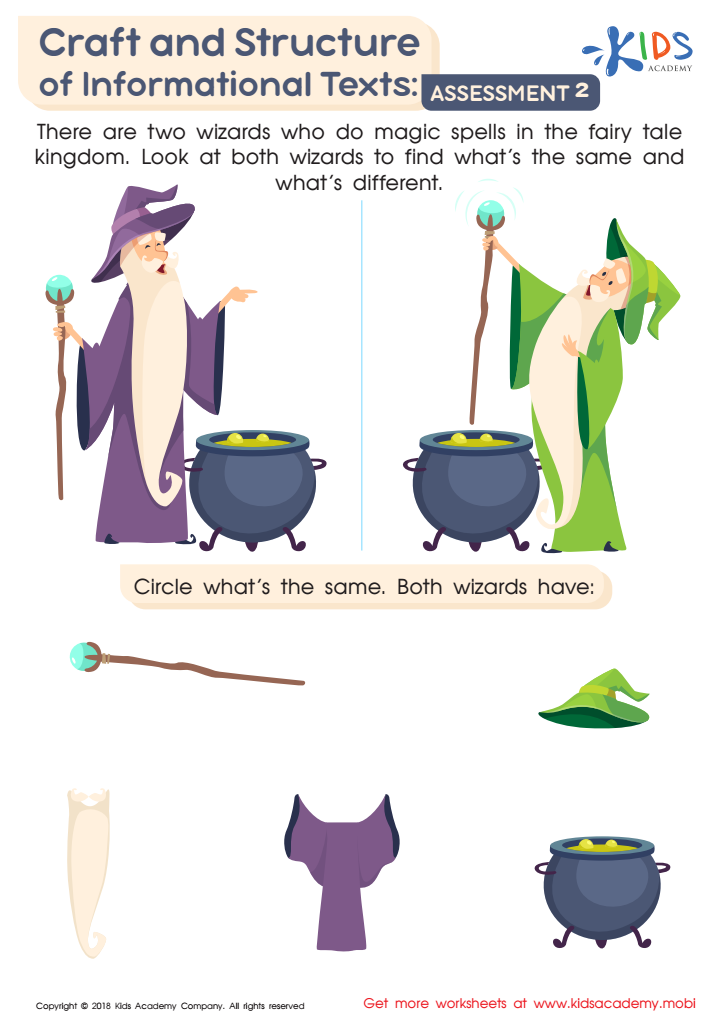
Craft and Structure of Informational Texts: Assessment 2 Worksheet
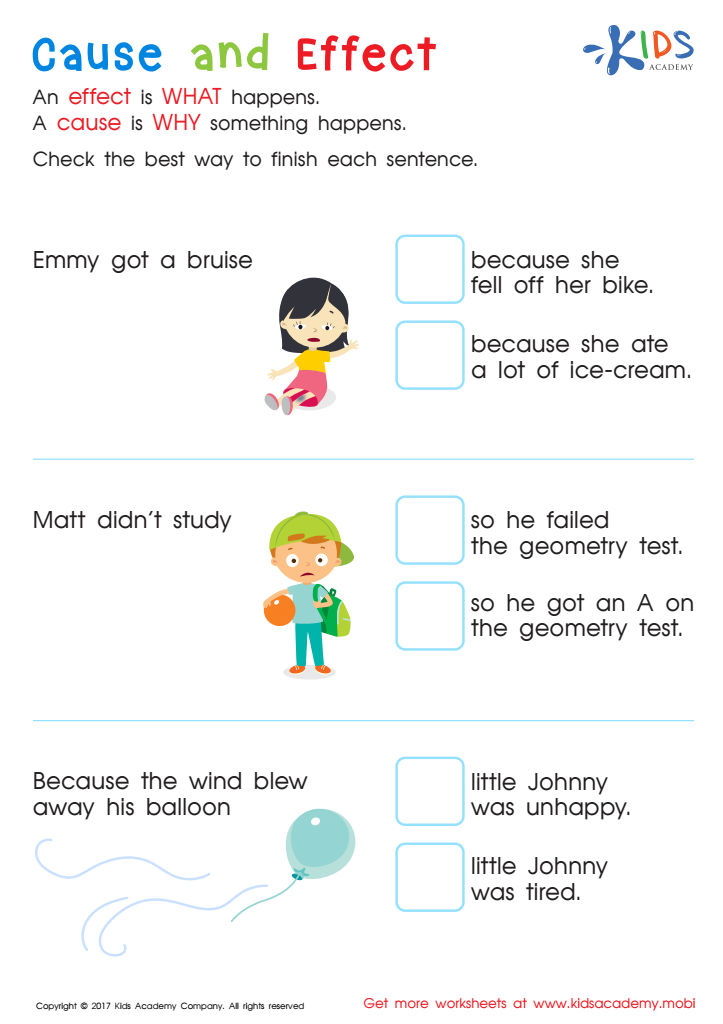
Cause and Effect Worksheet






.jpg)

Critical thinking development through reading fiction is essential for children ages 4-7, and both parents and teachers should prioritize it for several reasons. First, fiction stimulates imagination, encouraging young readers to create mental images and anticipate characters' actions and outcomes. This imaginative engagement helps bolster cognitive flexibility, allowing children to consider different perspectives and solutions to problems.
Second, stories often present relatable challenges, allowing children to discuss and reflect on various scenarios and emotions. This discussion fosters emotional intelligence and reasoning skills, as children learn to analyze characters' motivations and choices. Engaging with fiction also enhances comprehension skills, as young readers need to infer meaning, recognize patterns, and deduce conclusions.
Additionally, exploring fictional narratives encourages language development, expanding vocabulary, and fostering deeper comprehension abilities as children encounter rich language and diverse linguistic structures. Ultimately, critical thinking nurtured through reading fiction not only enhances literacy skills but contributes to lifelong learning and problem-solving abilities. By appreciating the power of storytelling, parents and teachers can equip children with essential thinking skills that will support their academic journey and personal growth. This foundation cultivates independent thinkers capable of navigating and contributing thoughtfully to a complex world.








