Identifying story elements Reading Fiction Worksheets for Ages 4-7
4 filtered results
-
From - To
Unlock the joy of reading with our "Identifying Story Elements" Reading Fiction Worksheets designed for ages 4-7. These educator-crafted worksheets help young learners explore key story elements like characters, setting, and plot in an engaging and age-appropriate manner. Filled with captivating illustrations and simple activities, the worksheets enhance reading comprehension and storytelling skills. Ideal for both classroom and home use, children will build a strong foundation in understanding stories while developing a lifelong love for reading. Dive into the world of fiction and watch your child's imagination and critical thinking skills blossom!
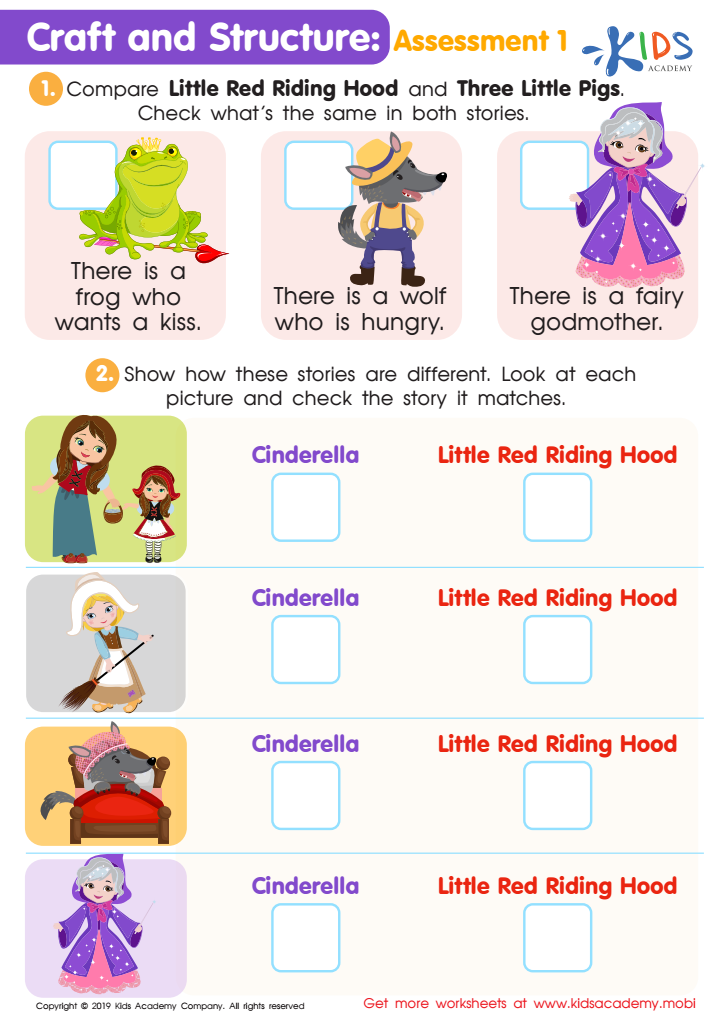
Craft and Structure: Assessment 1 Worksheet
 Assign to My Students
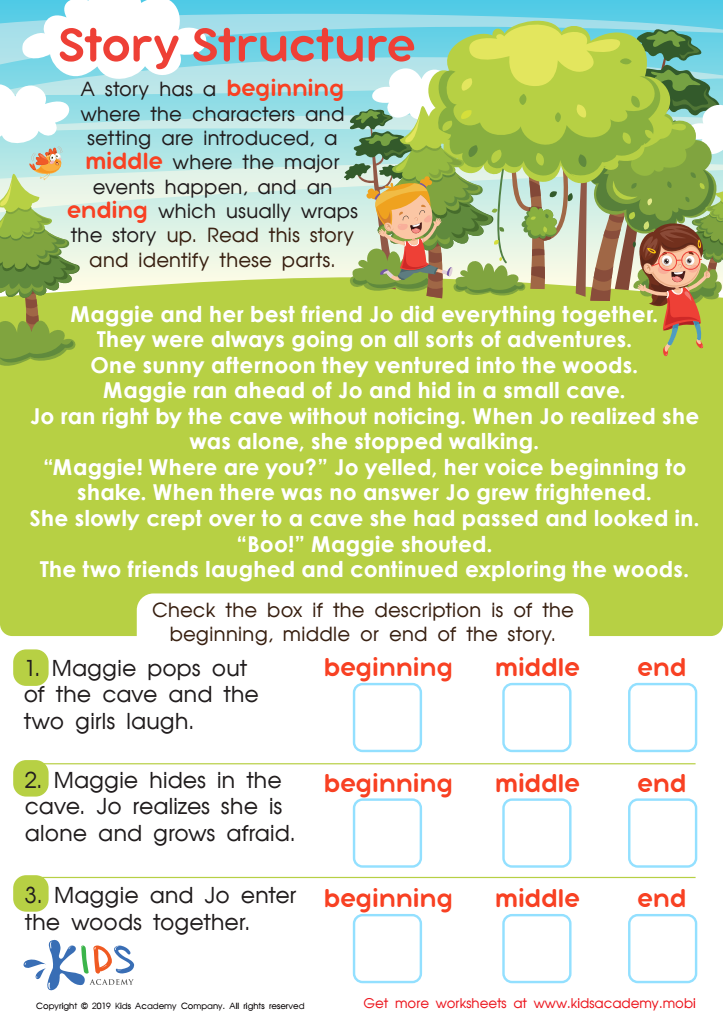
Story Structure Worksheet
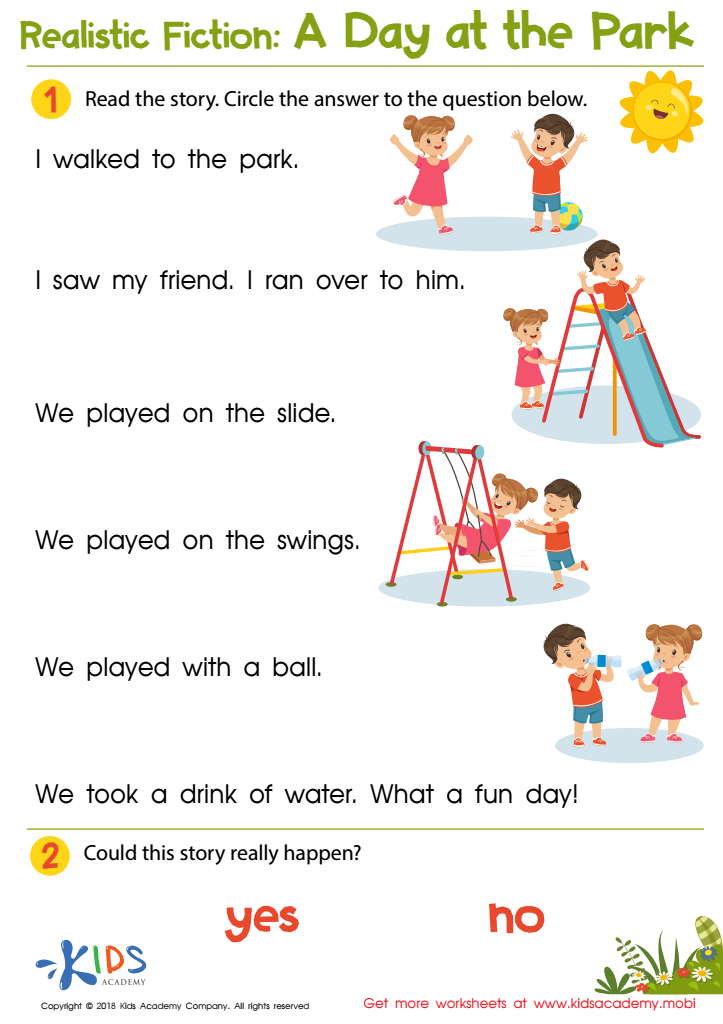
A Day at the Park Worksheet
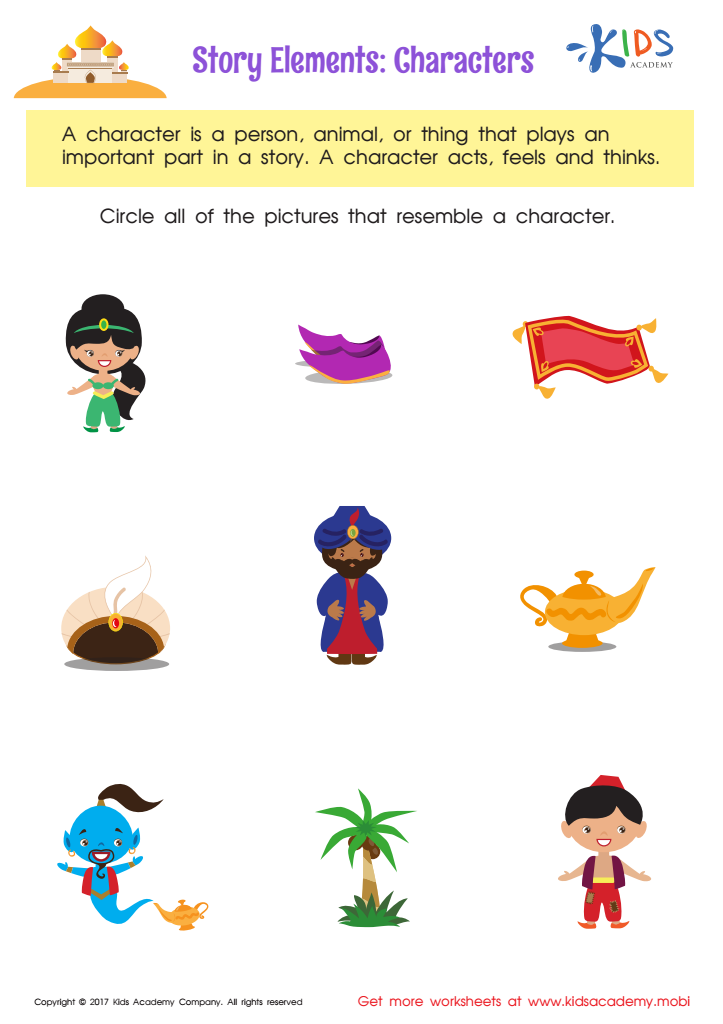
Story Elements Printable








Identifying story elements such as characters, setting, plot, and resolution is crucial for young readers aged 4-7 because it forms the foundation for reading comprehension and critical thinking. At this developmental stage, children are beginning to understand the world around them and how narratives work. By learning to identify and articulate story elements, they enhance their ability to follow and make sense of complex texts in the future.
Firstly, recognizing characters helps children to develop empathy, as they understand different perspectives and motives. Understanding the setting provides contextual clues that enrich their imagination and comprehension of the story's environment. Identifying the plot and its various parts—beginning, middle, and end—encourages logical thinking and narrative skills that are essential for both literacy and life.
Moreover, discussing story elements reinforces vocabulary acquisition and language skills. When children talk about a story's components, they learn new words and improve their verbal expression. This practice is instrumental in excelling across academic disciplines. Additionally, engaging with stories boosts their listening and concentration skills, which are vital for classroom learning.
Lastly, for parents and teachers, investing time in identifying story elements fosters a love for reading. It turns reading into an interactive and enjoyable activity, setting the stage for lifelong literacy and a keen interest in learning.








