
Story analysis Reading Fiction Worksheets for Ages 4-7
5 filtered results
Difficulty Level
Grade
Age
-
From - To
Subject
Activity
Standards
Introduce your little reader to the enchanting world of fiction with our "Story Analysis Reading Fiction Worksheets" designed for ages 4-7. These educational worksheets help young learners identify key elements of a story such as characters, setting, and plot. Through engaging activities and vibrant illustrations, children enhance their comprehension and critical thinking skills. Perfect for both classroom and home use, these printables make reading fun and interactive. Boost your child's love for storytelling and set a strong foundation for future literacy skills with our thoughtfully designed story analysis worksheets.
Favorites
With answer key
Interactive
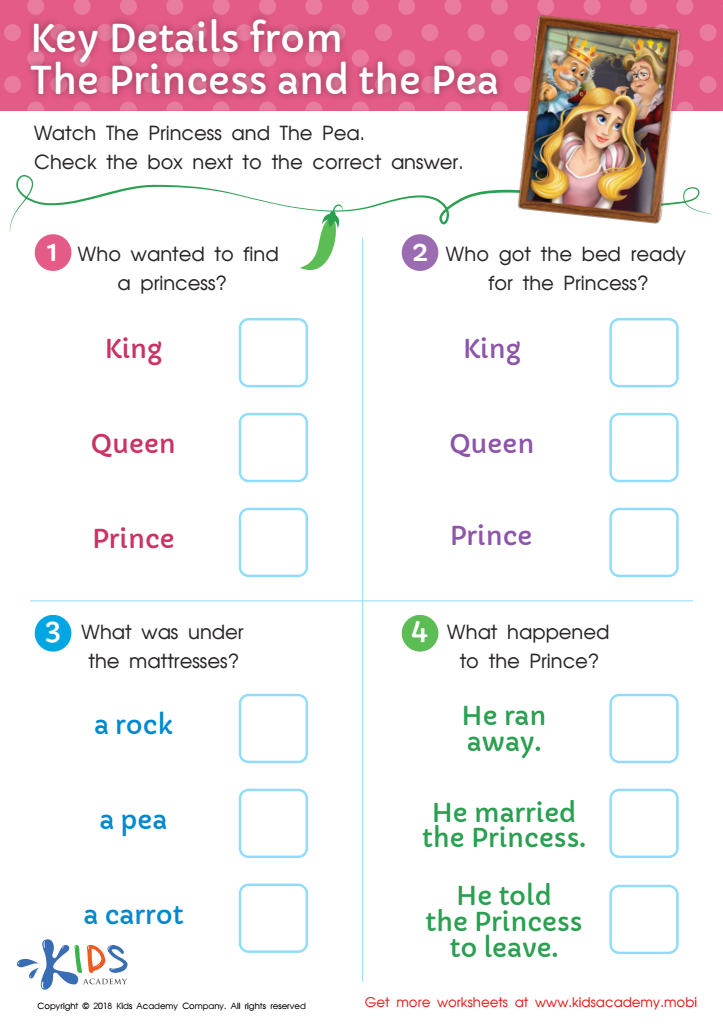
Key Details from the Princess and the Pea Worksheet
After reading The Princess and the Pea, ask your students questions to assess their comprehension of the story. Check their knowledge of key details. This printable can be used to help evaluate their understanding. Encouraging the recall of story events helps build important reading skills.
 Assign to My Students
Key Details from the Princess and the Pea Worksheet
Worksheet
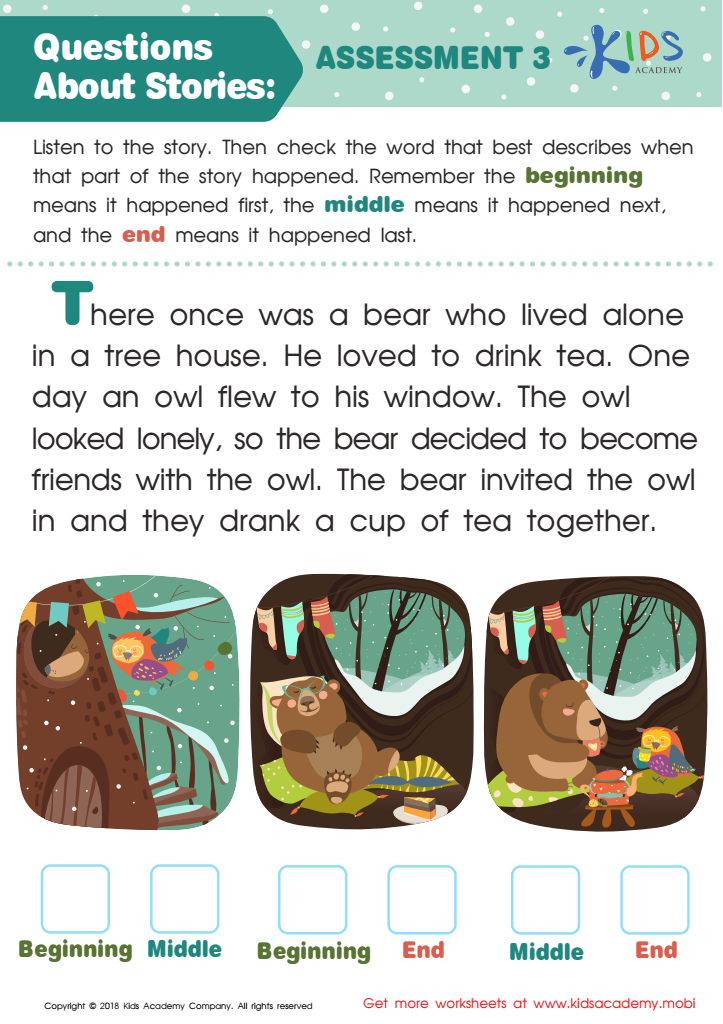
Questions About Stories: Assessment 3 Worksheet
Help kids understand stories by having them listen to a story and check boxes for the beginning, middle, and end. This worksheet makes it fun for even the youngest learners to recall story elements and sequence of events. Let them listen to the story from start to finish, then look at the pictures to check which part of the story they depict.
Questions About Stories: Assessment 3 Worksheet
Worksheet
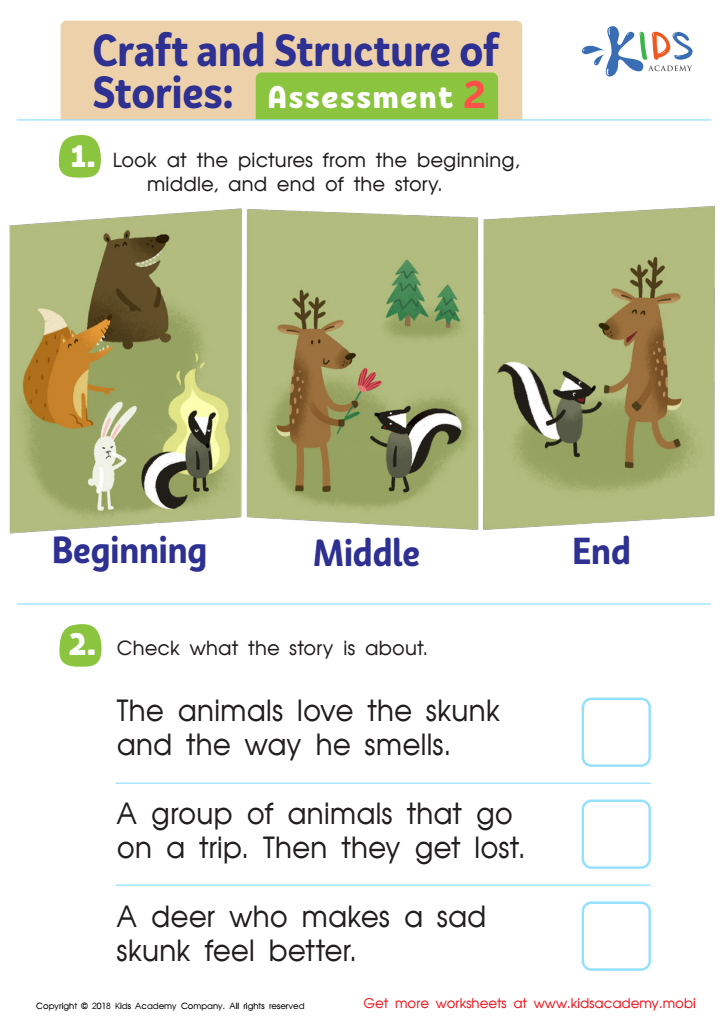
Craft and Structure of Stories: Assessment 2 Worksheet
Help your child assess their story sequencing and reading comprehension skills using this cute worksheet! It encourages them to look at the three pictures on the page, each representing a scene from the beginning, middle and end. Ask them what the story is about, then let them check the box next to the correct answer. This is a great way to ensure they understand the main events of a story.
Craft and Structure of Stories: Assessment 2 Worksheet
Worksheet
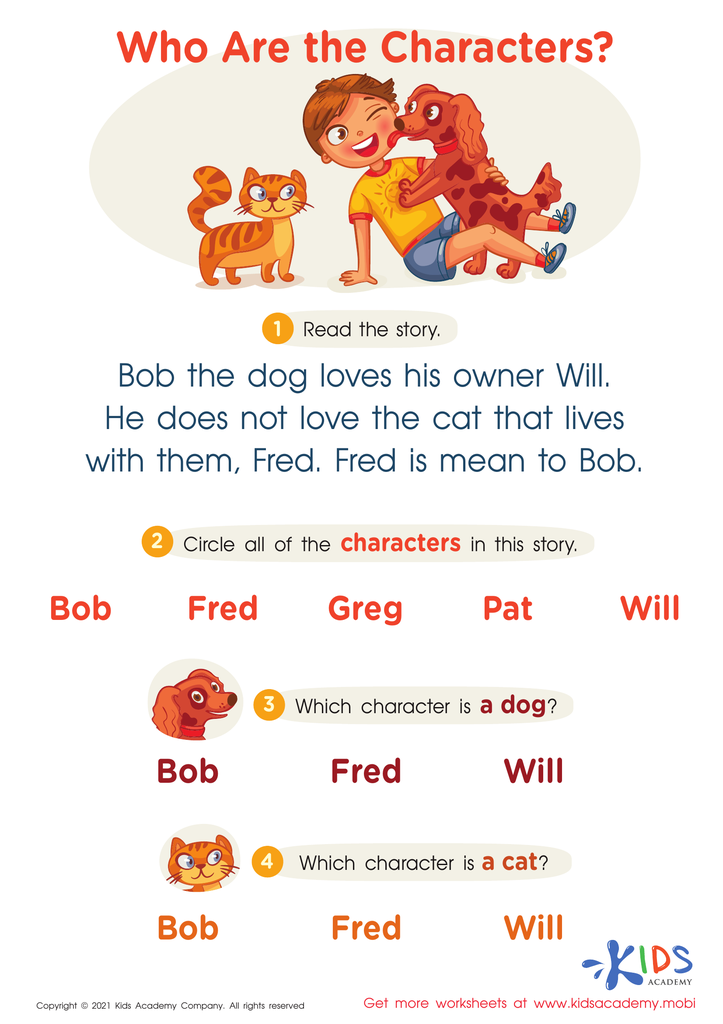
Who Are the Characters? Worksheet
Original:
The annual summer festival takes place on the last day of June and is celebrated with a parade and a carnival that features rides, games, and yummy food.
Rewrite:
Every June end marks the annual summer festival with a parade and carnival. Enjoy rides, games, and delicious food!
Who Are the Characters? Worksheet
Worksheet
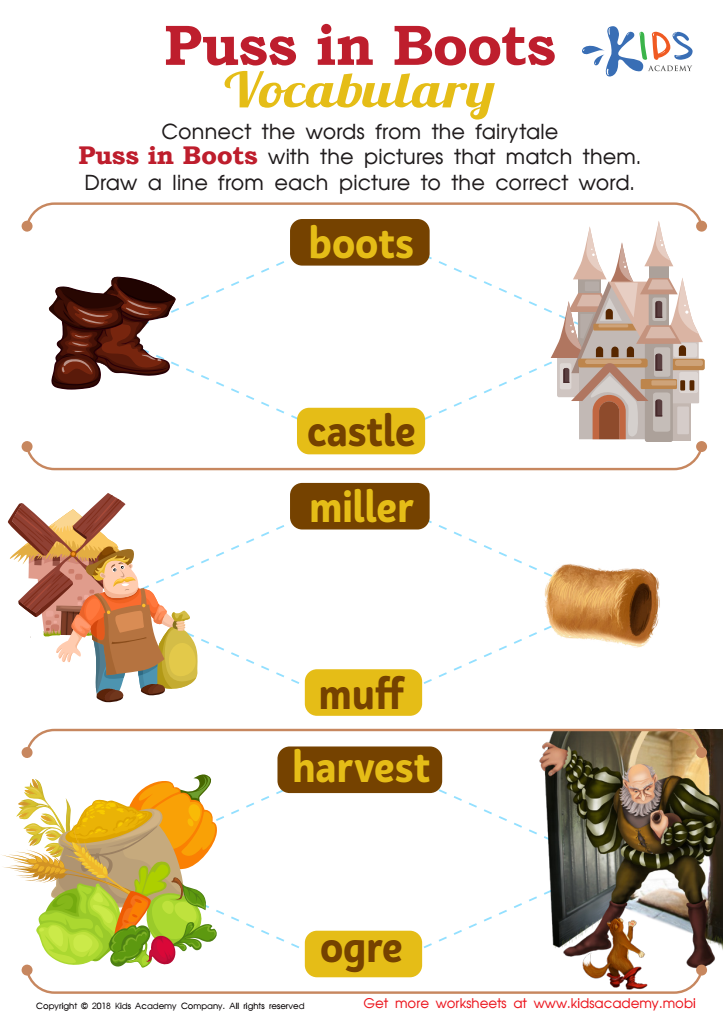
Puss in Boots Vocabulary Worksheet
Let your kids enjoy story-telling while learning at the same time. Help them learn from the fairytale, Puss in Boots, by connecting words from the worksheet with the matching pictures. Ask them to draw a line between each picture and corresponding word to build their vocabulary.
Puss in Boots Vocabulary Worksheet
Worksheet
Join Kids Academy for Free
Who is primarily going to use this learning content?




.jpg)


Story analysis and reading fiction are essential for children aged 4-7, primarily because they significantly contribute to early cognitive, emotional, and social development. At this crucial stage, children’s brains are highly receptive and adaptable, making it an optimal time for introducing activities that build foundational skills.
When parents or teachers engage young kids in story analysis, they cultivate critical thinking skills. Asking questions about plot, characters, and settings encourages children to think deeply about what they read or hear, fostering comprehension and analytical skills. These capabilities extend beyond reading, supporting problem-solving and logical thought in various life situations.
Emotionally, fiction allows children to experience different viewpoints and empathize with characters facing diverse challenges. This promotes empathy, helping them understand and relate to others' feelings in real-world interactions. Entwining moral lessons and social norms within stories teaches values such as kindness, fairness, and perseverance.
Fiction also enriches vocabulary and language skills. Familiarizing young children with varied words, sentence structures, and expressions enhances their communication abilities. During story discussions, children practice articulating thoughts, thus improving both verbal and listening skills.
Ultimately, making story analysis and reading fiction a habit underscores the importance of imagination and creativity, laying the groundwork for a lifelong love of reading and learning.








