Boost your child's reading skills with our "Story Comprehension Reading Fiction Worksheets for Ages 4-7." These engaging, age-appropriate worksheets are designed to enhance story comprehension, vocabulary, and critical thinking. Through fun activities and colorful illustrations, young learners will develop the ability to recall details, understand sequences, and make predictions about stories. Perfect for early readers, these worksheets make reading fiction an enjoyable and educational experience. Tailored to spark a love for reading, they support classroom learning and are excellent tools for parents and teachers alike. Help your child thrive in their reading journey today!

Check out this FREE Trial Lesson on Reading Fiction for age 4-7!

Relationship Between Illustrations and the Story

Favorites
With answer key
Interactive
  • 4-7
  • Story comprehension
  • Reading Fiction
Little Red Riding Hood: Illustrations Worksheet

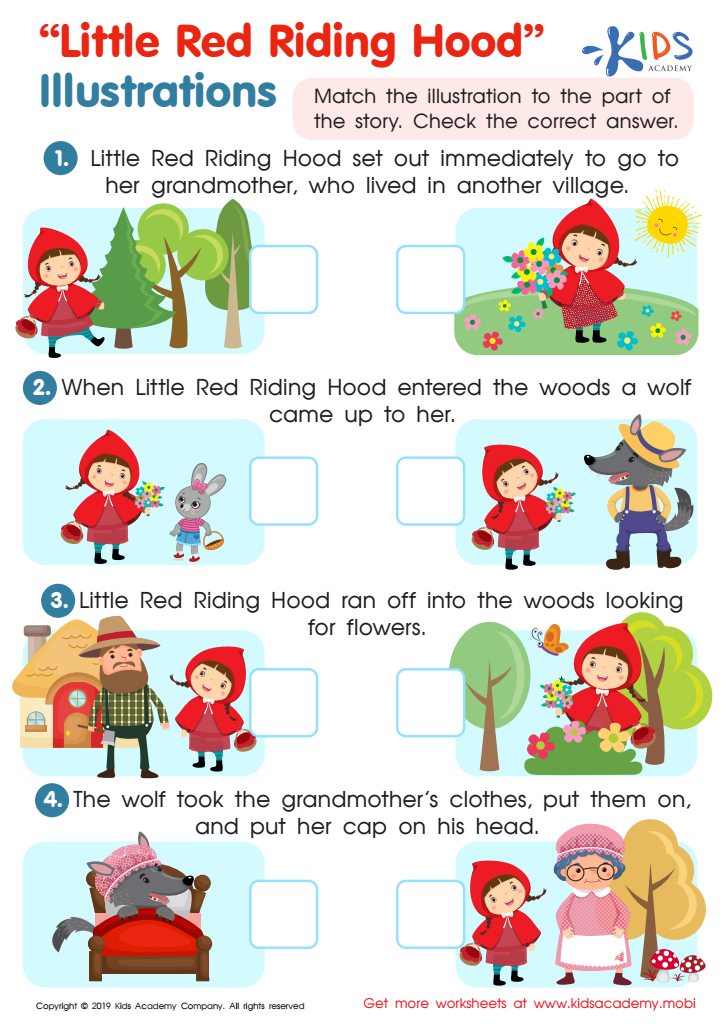
Little Red Riding Hood: Illustrations Worksheet

Comprehension is improved by having young readers recall and retell stories. This worksheet uses colorful illustrations of the fairytale Little Red Riding Hood. Children use their comprehension skills and strategy to match illustrations to the story parts, check off the appropriate boxes and use the pictures as clues.
Little Red Riding Hood: Illustrations Worksheet
Worksheet
Summary of Little Red Riding Hood Worksheet

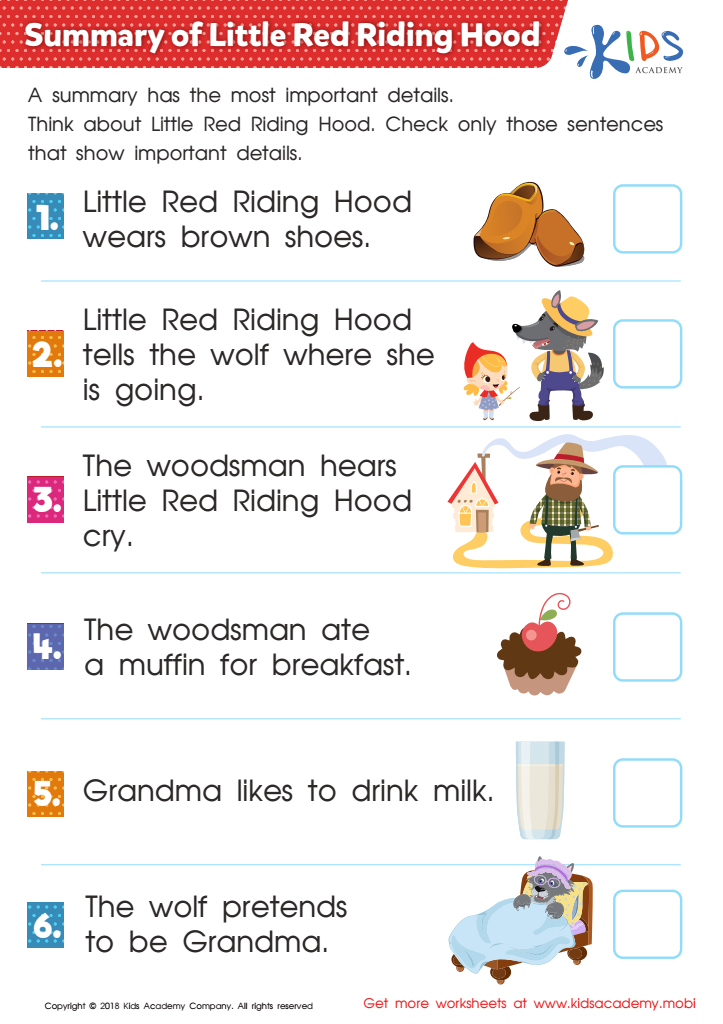
Summary of Little Red Riding Hood Worksheet

Young students may find it hard to summarize stories. This worksheet helps them learn to distinguish between important story details and unimportant ones. Practice reading Little Red Riding Hood and pick out only the important details with the help of this downloadable worksheet.
Summary of Little Red Riding Hood Worksheet
Worksheet
Where Does the Character Belong? Worksheet

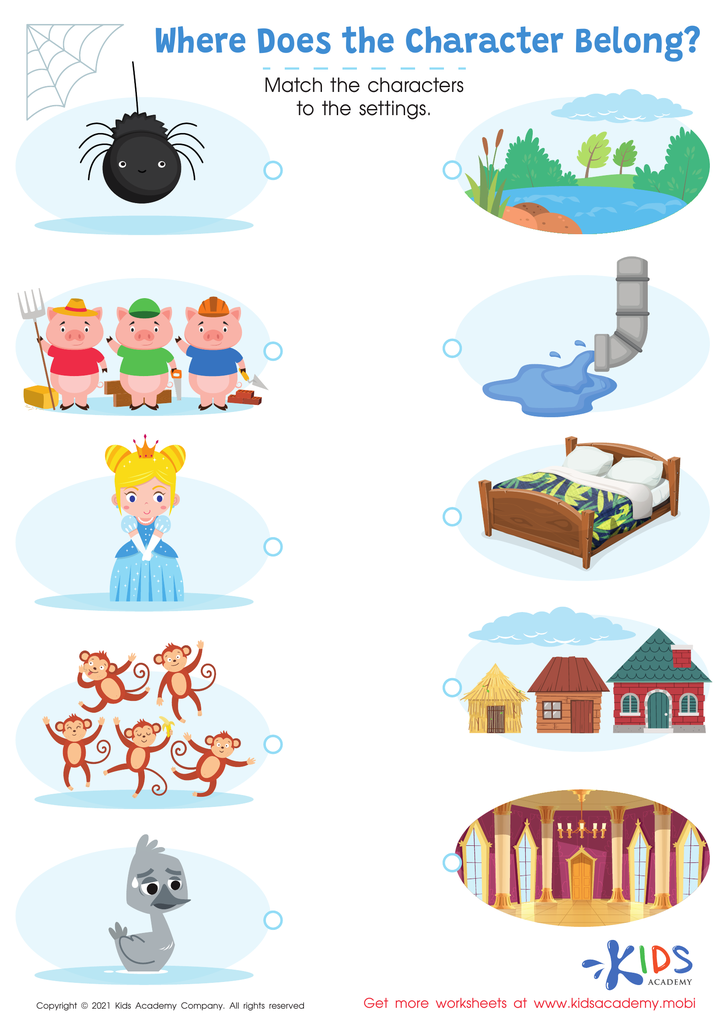
Where Does the Character Belong? Worksheet

Fairy Tales are a great way to teach young ones about settings, characters and other literary elements. This worksheet contains illustrations from popular fairy tales to help kids identify characters and match them to the right settings. It's a fun way to improve recall skills and enhance comprehension using visuals.
Where Does the Character Belong? Worksheet
Worksheet
Printable Coloring Page: Red Riding Hood

Red Riding Hood Coloring Page

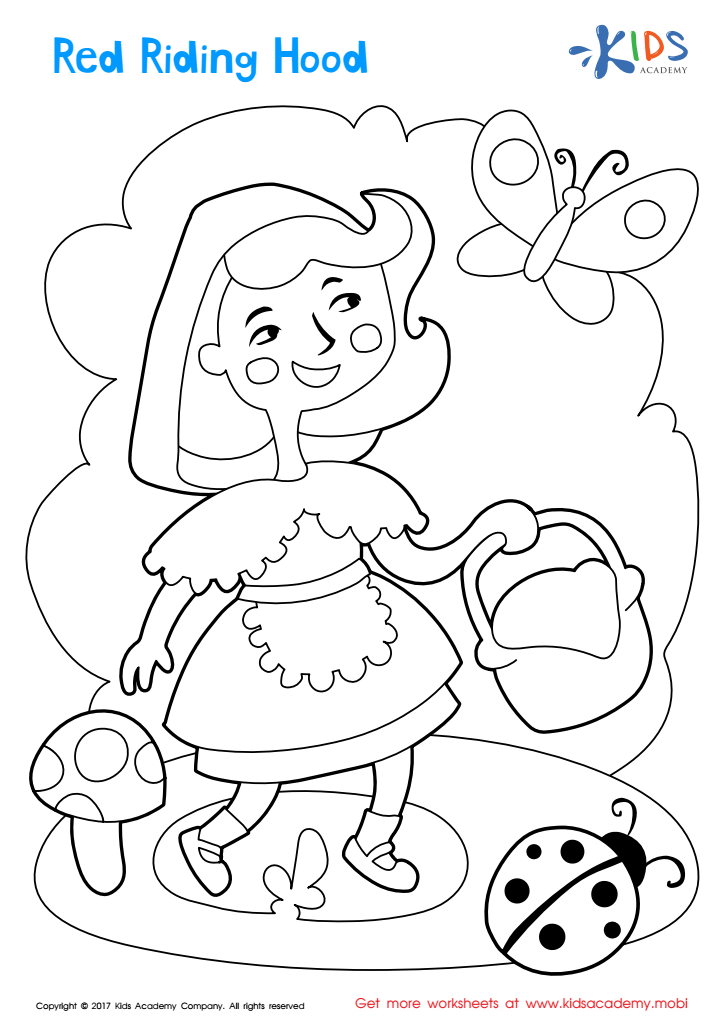
Red Riding Hood awaits in the woods, with a butterfly, mushroom, and ladybug around her. Let your child bring the story to life with this magical printable coloring page. Fairytale fun for all!
Download (PDF)
Assign to My Students
Red Riding Hood Coloring Page
Worksheet
Comprehension Worksheet: Little Red Riding Hood

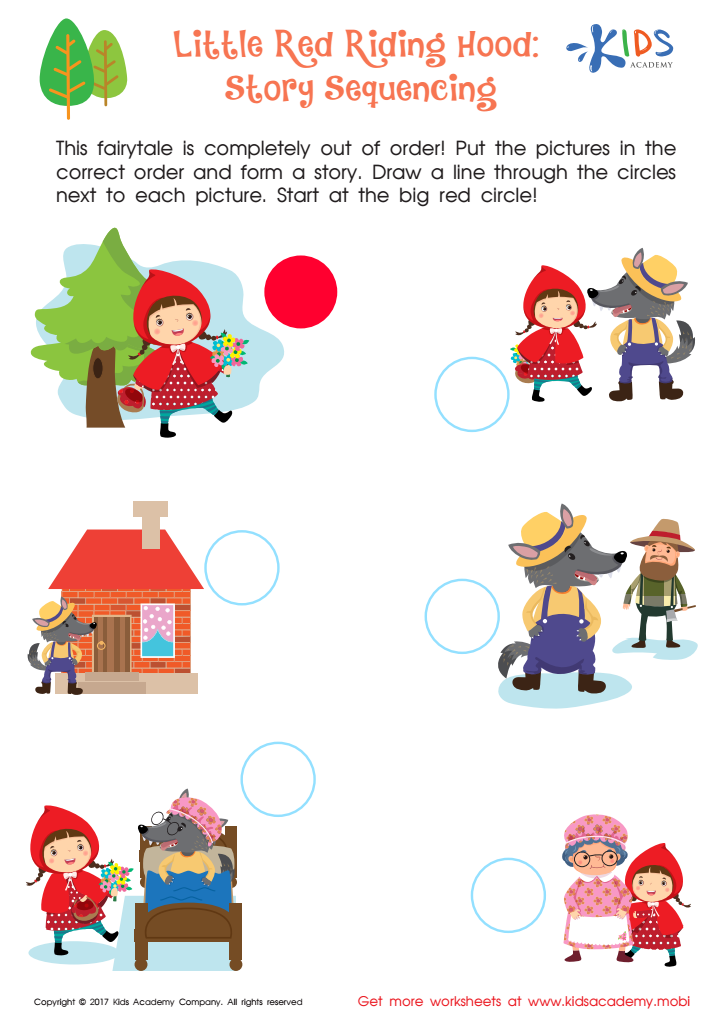
Story Sequencing Printable

Children must identify story events in sequential order to build a better understanding of plot. Help your child learn how to understand plot with this fun comprehension worksheet: Little Red Riding Hood! Guide them to identify story events and order them correctly to boost their reading skills.
Story Sequencing Printable
Worksheet
Three Little Pigs: Illustrations Worksheet

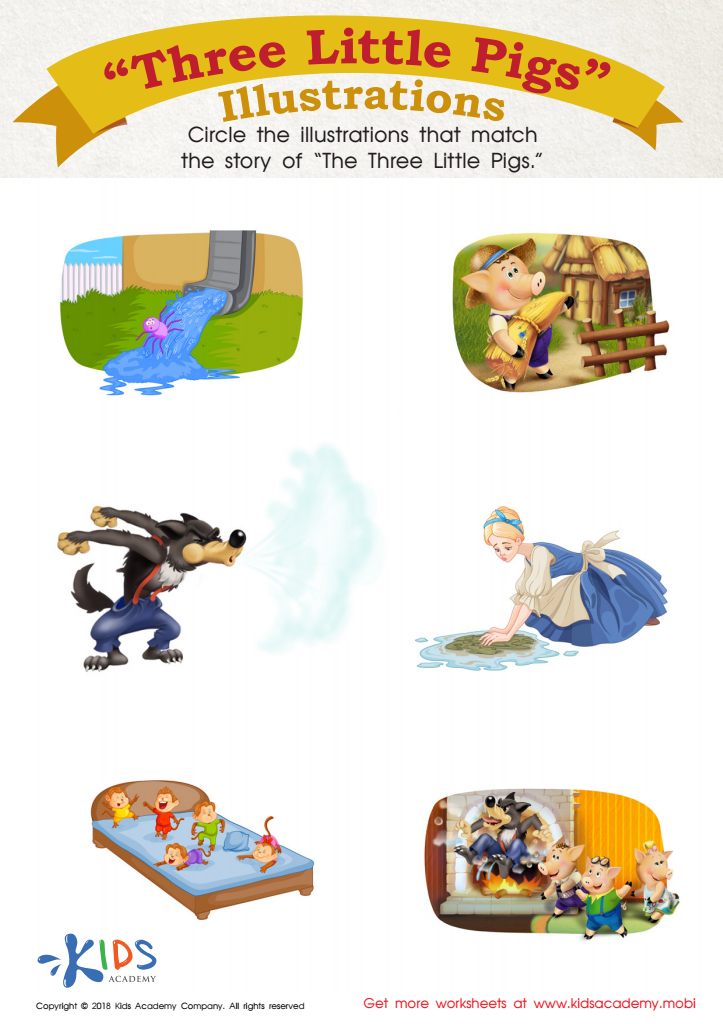
Three Little Pigs: Illustrations Worksheet

Fairy Tales are a great way for young children to learn about settings, characters and other fiction elements. This worksheet has illustrations from The Three Little Pigs, and lets your student use what they know and the visuals to match the story. It's a fun way for them to practice story recall and comprehension with illustrations.
Three Little Pigs: Illustrations Worksheet
Worksheet
Character’s Feelings Worksheet

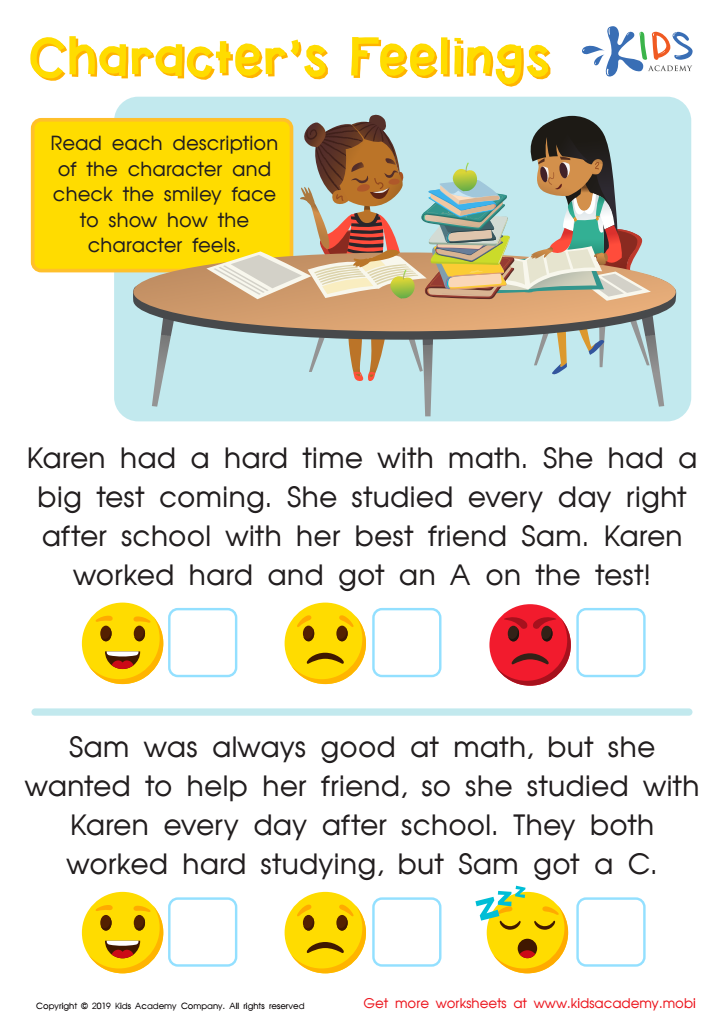
Character’s Feelings Worksheet

To help your child with reading and writing, encourage them to read simple texts and comprehension passages. This will help them learn new words, build their grammar and practice their reading skills. Go through a worksheet together, read the character descriptions then ask your child to pick the smiley face which shows how the character feels.
Character’s Feelings Worksheet
Worksheet
The Tortoise and the Hare Worksheet


The Tortoise and the Hare Worksheet

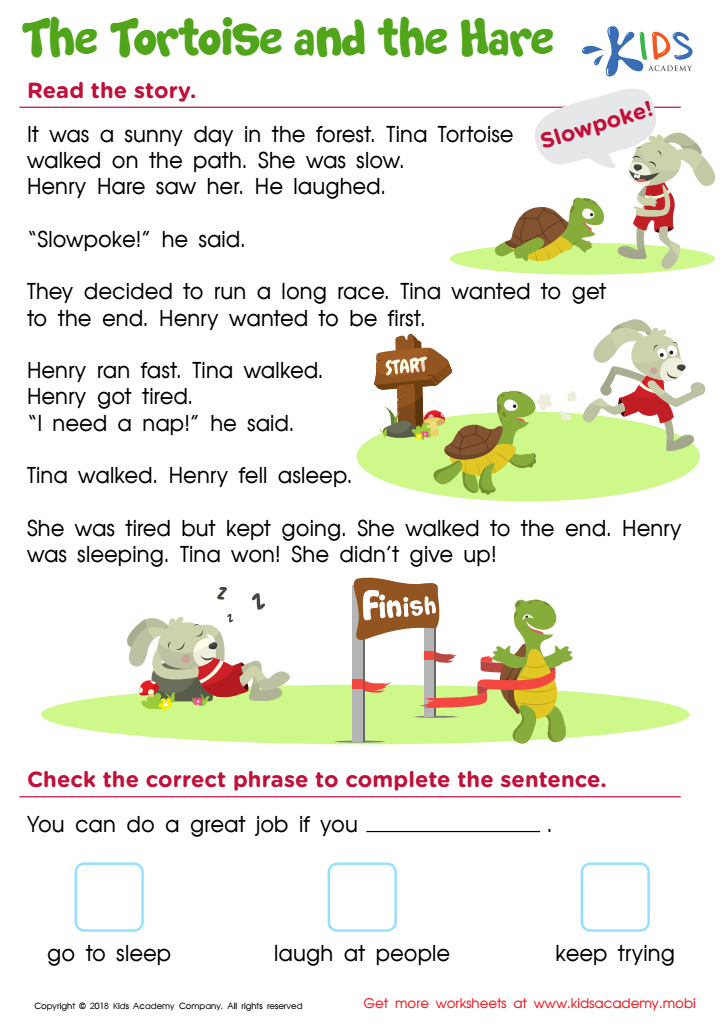
Help your child uncover the hidden moral in a classic children's tale with this free downloadable worksheet. Joyful illustrations bring the story to life and help young readers visualize the events. With your help, they can answer the question and fill in the blank with the phrase that serves as the story's lesson. Check the box to complete the worksheet!
The Tortoise and the Hare Worksheet

Worksheet


Story comprehension reading fiction for ages 4-7 is crucial for several developmental reasons that parents and teachers should prioritize. First, it nurtures cognitive and language skills. During these formative years, children's brains are exceptionally receptive to language acquisition, and reading fiction enhances vocabulary, sentence structures, and comprehension abilities, laying a foundation for future academic success.

Second, fiction serves as an excellent tool for emotional development. Characters and narratives allow children to explore complex emotions and scenarios in a safe and understandable manner. As they identify with characters, they learn about empathy, compassion, and different perspectives, contributing significantly to their social-emotional growth.

Additionally, story comprehension encourages creativity and imagination. Fiction transports children to fantastic realms and sparks creative thinking, which is invaluable for problem-solving and critical thinking skills. It also helps children distinguish between fantasy and reality, an essential aspect of healthy psychological development.

Moreover, shared reading experiences strengthen the bond between children and caregivers. When parents or teachers read with children, it promotes a sense of security and love, turning reading into a cherished lifelong habit.

Ultimately, fostering story comprehension through reading fiction in early childhood paves the way for holistic development, making it a pivotal aspect of early education that parents and teachers should ardently support.