Understanding context Reading Fiction Worksheets for Ages 4-7
4 filtered results
-
From - To
Introduce your young reader to the world of context with our "Understanding Context Reading Fiction Worksheets for Ages 4-7." These engaging activities are designed to help children grasp the nuances of story elements and vocabulary through fun and interactive exercises. Our worksheets encourage critical thinking and comprehension skills as kids explore characters, settings, and plot details in fictional stories. Perfectly tailored for early learners, these resources are an excellent tool for both classroom and home use, making learning enjoyable and effective. Foster a love for reading and boost your child's confidence with our expertly crafted worksheets.
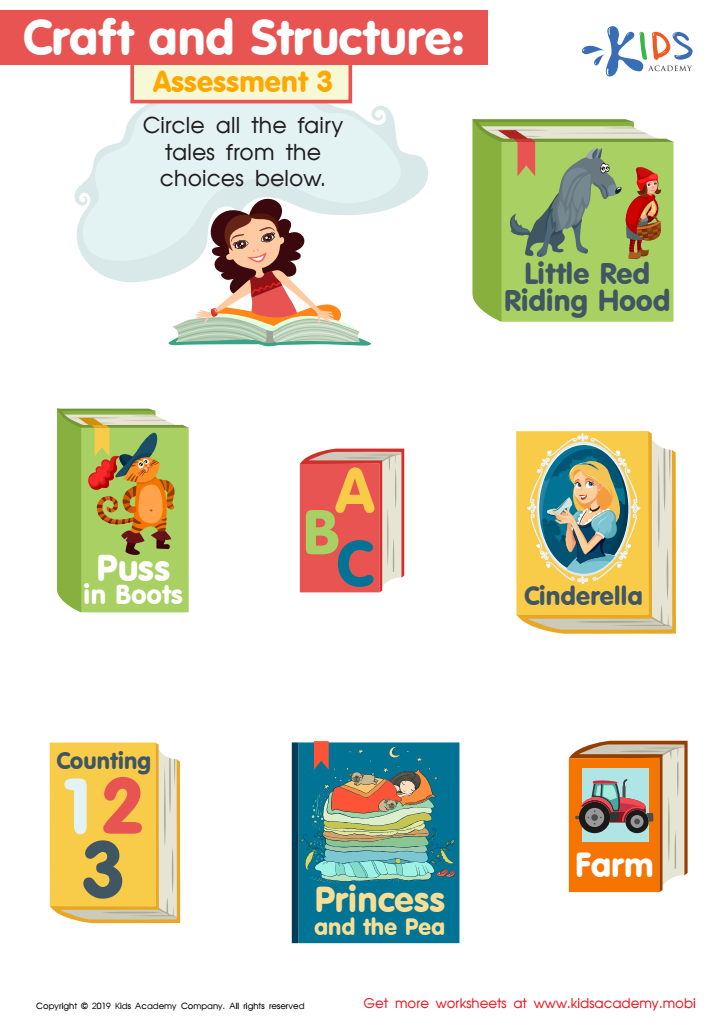
Craft and Structure: Assessment 3 Worksheet
 Assign to My Students
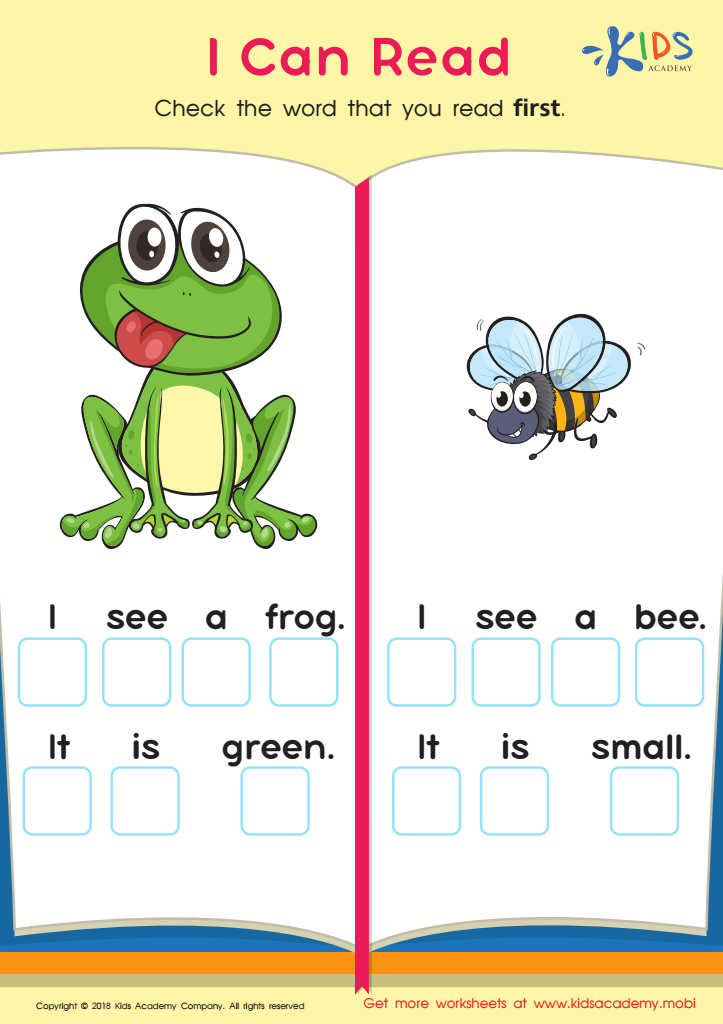
I Can Read Worksheet
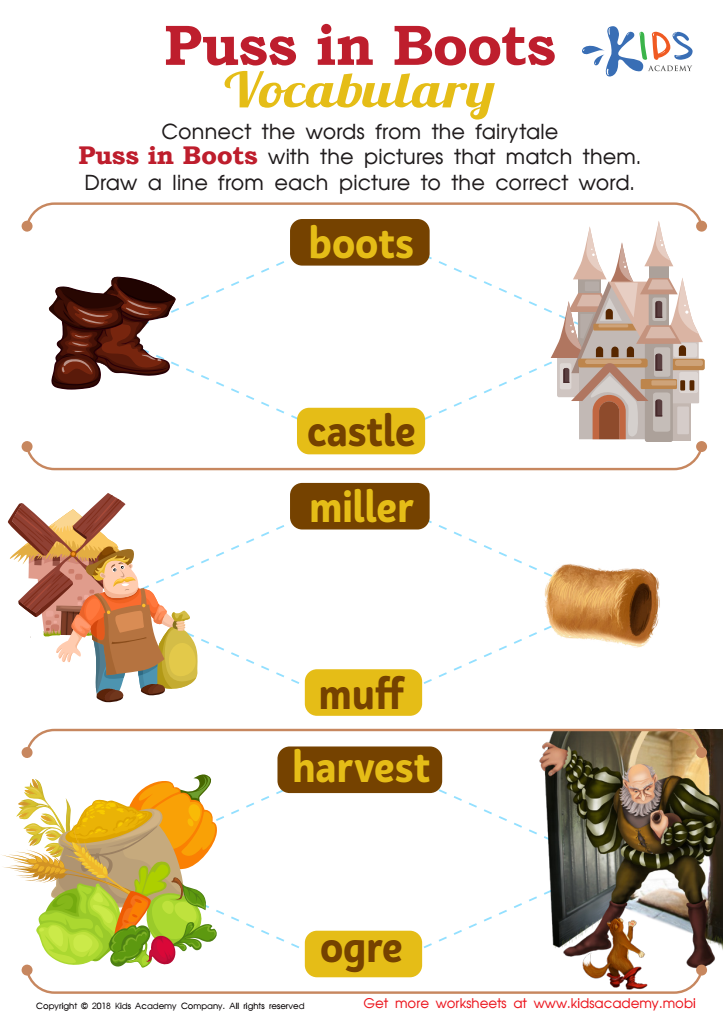
Puss in Boots Vocabulary Worksheet
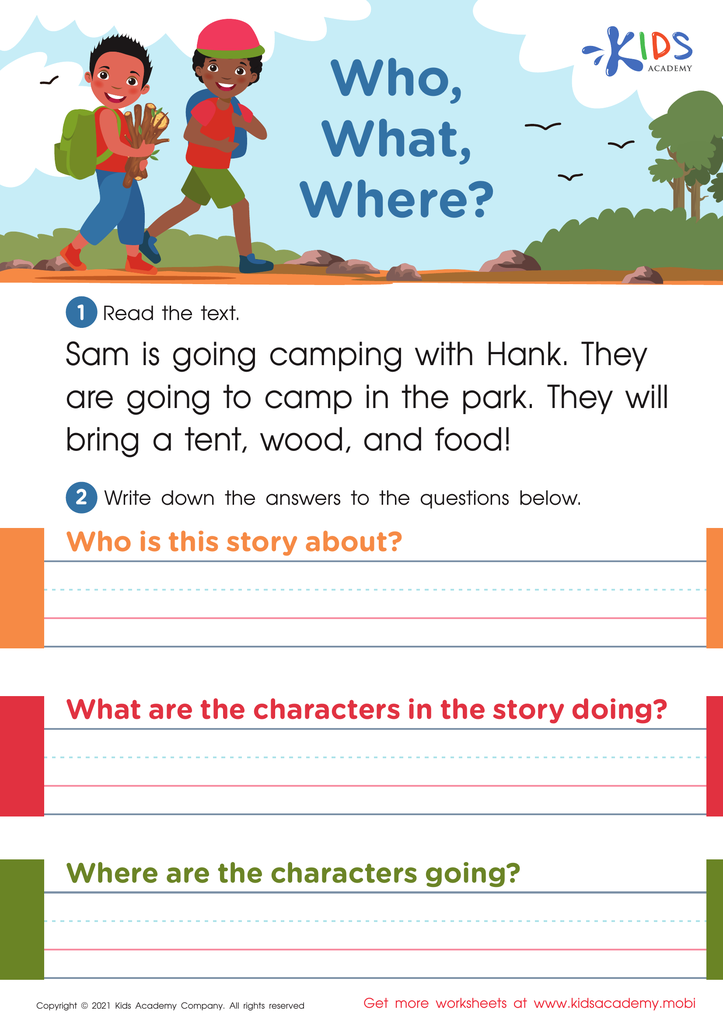
Who, What, Where? Worksheet






.jpg)

Understanding context while reading fiction is crucial for children aged 4-7 as it plays a vital role in their cognitive and emotional development. At this formative stage, children are developing foundational language skills. Grasping the context of a story helps them understand complex sentence structures, vocabulary, and the nuances of communication, which can significantly enhance their linguistic capabilities.
From an emotional and social perspective, understanding context introduces young children to diverse experiences, cultures, and perspectives. This fosters empathy by allowing them to relate to characters and their situations, even if they differ vastly from their own lives. Understanding cause and effect within a story helps children to develop critical thinking and problem-solving skills, as they learn to predict outcomes and understand the consequences of actions.
Moreover, contextual comprehension aids in maintaining their interest and engagement with reading. When children understand the setting, background, and subtext of a story, they are more likely to be captivated and motivated to read further. This can breed a lifelong love for reading, which is essential for academic success and personal growth.
Engaging with fiction in context also enables children to practice imaginative play and creative thinking, encouraging them to visualize stories and consider 'what if' scenarios. This sparks creativity, enhances their ability to innovate, and builds a strong foundation for advanced comprehension and critical analysis skills in later years.








