Sequencing Skills Animals Worksheets for Ages 4-7
3 filtered results
Difficulty Level
Grade
Age
-
From - To
Subject
Activity
Standards
Explore our engaging "Sequencing Skills Animals Worksheets" designed for children ages 4-7! These fun and educational worksheets help young learners develop essential sequencing skills through captivating animal-related activities. Each worksheet encourages children to arrange events or steps in the correct order, enhancing their critical thinking and comprehension abilities. Perfect for at-home practice or classroom use, these worksheets align with early education standards while sparking children's interest in the animal kingdom. With colorful illustrations and age-appropriate challenges, our resources make learning enjoyable and effective. Help your little ones master sequencing skills while discovering fascinating facts about animals today!
Favorites
With answer key
Interactive
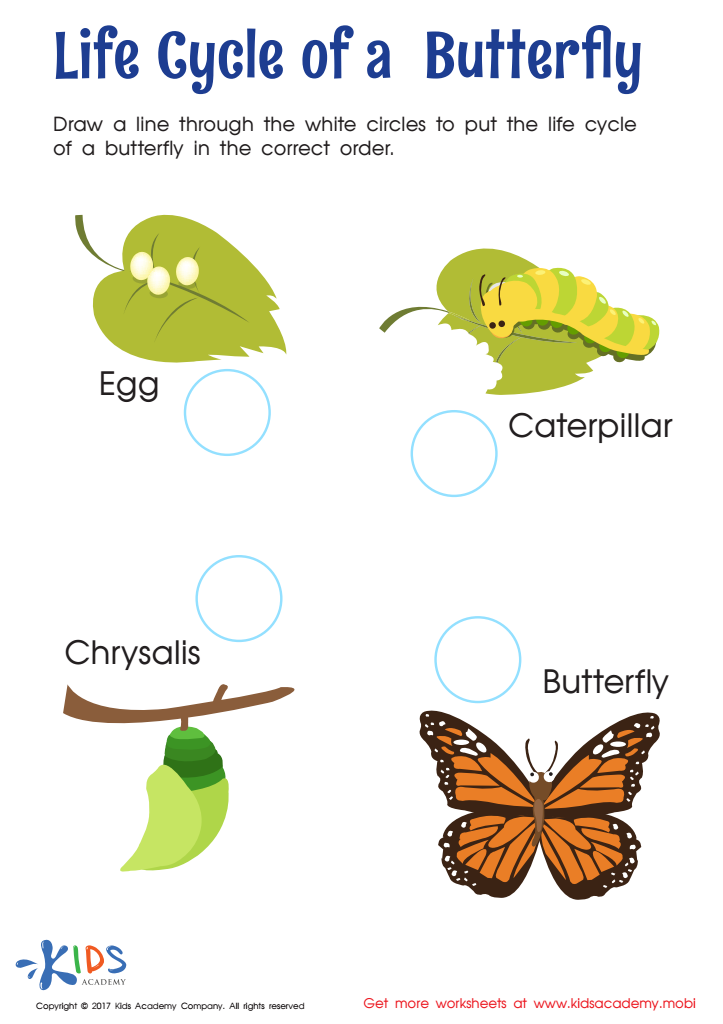
Life Cycle of Butterfly Worksheet
Kids Academy offers an exciting activity – a Life Cycle of a Butterfly Worksheet PDF. It shows four stages in the lifecycle of a butterfly with vivid pictures. Kids put the stages in the correct order to study the lifecycle.
 Assign to My Students
Life Cycle of Butterfly Worksheet
Worksheet
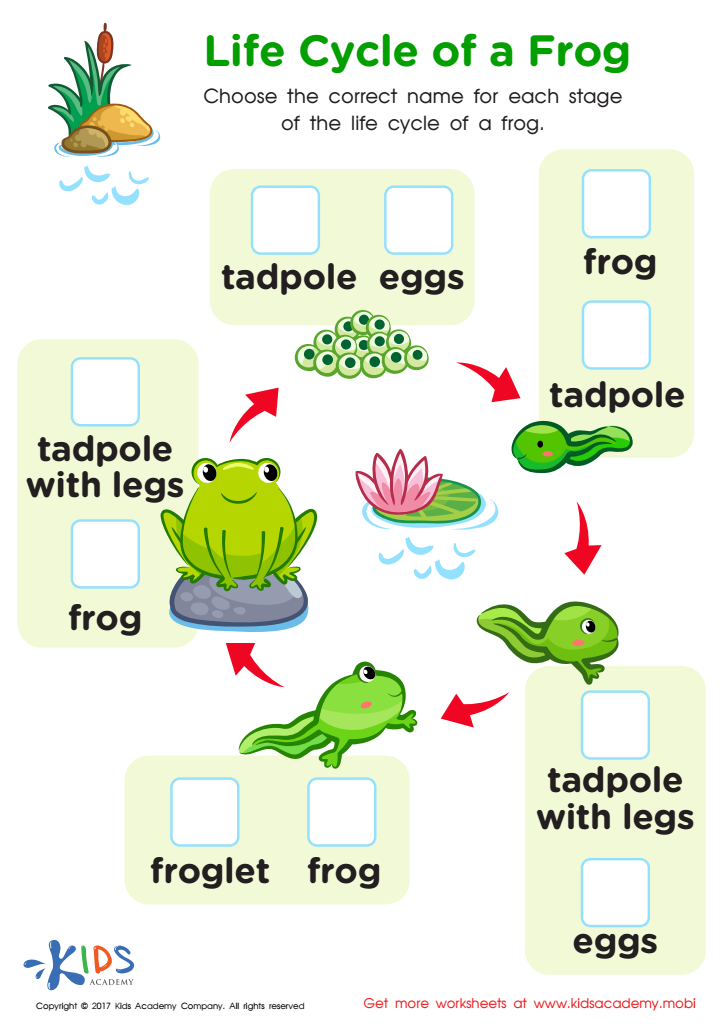
Life Cycle Frog Printable
Kids can explore the life cycle of frog with this fun worksheet! Draw lines from one stage to the next to follow the transformation from tadpole to frog and learn about the cycle of life.
Life Cycle Frog Printable
Worksheet
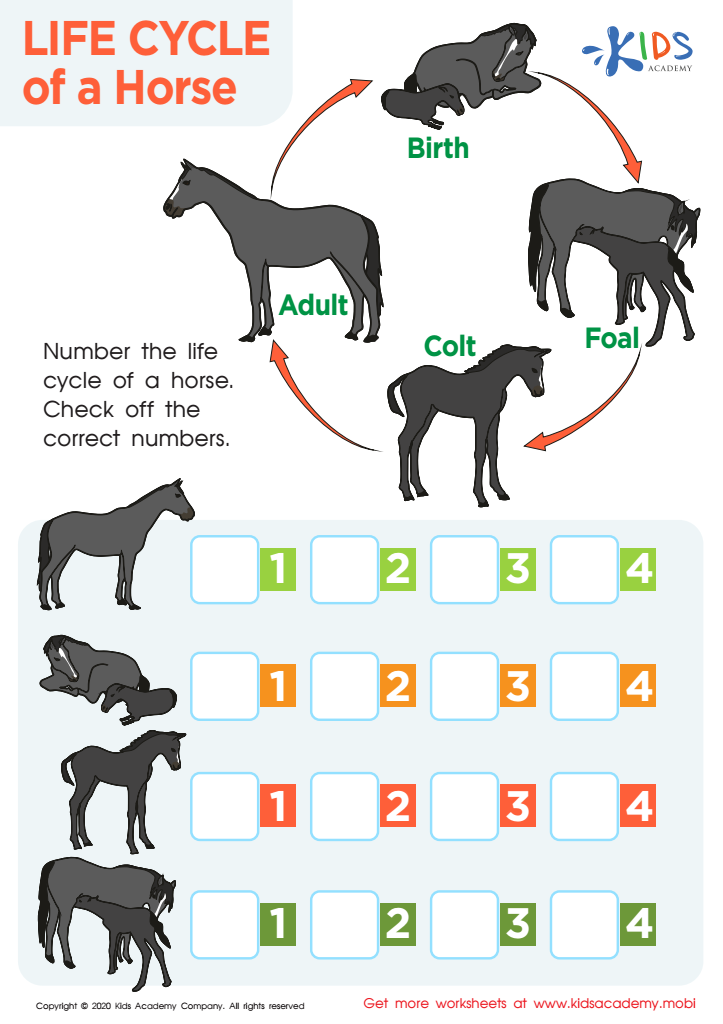
Life Cycle of a Horse Worksheet
Kids Academy's science worksheet on horses' lifecycles offers an engaging way for kids to learn! They'll study the diagram and label each stage of life, from birth to adulthood, and then number the pictures to mark the correct sequence. Fun and educational - a perfect way to get your kids learning!
Life Cycle of a Horse Worksheet
Worksheet
Join Kids Academy for Free
Who is primarily going to use this learning content?






Sequencing skills are crucial for young children, particularly for ages 4-7, as they form the foundation for cognitive development and critical thinking. Understanding sequencing helps children recognize the logical order of events, which is essential for reading comprehension, storytelling, and even everyday tasks. When children learn to sequence, they enhance their problem-solving abilities, improving their overall capacity to make sense of the world around them.
In the context of animals, sequencing activities can be particularly engaging and educational. For example, children can learn about animal life cycles (like butterflies, frogs, etc.), understanding the stages from egg to adult. This not only fosters a sense of empathy towards living things but also instills appreciation for biodiversity.
Furthermore, participating in sequencing tasks, like arranging pictures or stories featuring animals, promotes language development and communication skills. It encourages vocabulary enrichment and narrative skills, allowing children to express their understanding creatively.
Parents and teachers should care about sequencing skills related to animals as they play an essential role in shaping well-rounded, thoughtful individuals. Engaging in these activities not only supports academic growth but also strengthens family and classroom bonds through collaborative learning experiences. Ultimately, building these skills prepares children for future learning challenges.