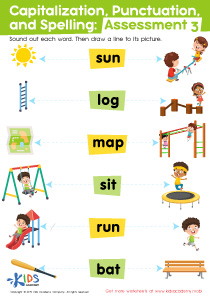
Spelling Skills Grammar Worksheets for Ages 4-7
3 filtered results
-
From - To
Enhance your child's spelling and grammar with our curated collection of Spelling Skills Grammar Worksheets for Ages 4-7. Perfectly tailored for young learners, these worksheets inspire confidence and improve language proficiency through engaging activities. Each worksheet focuses on fundamental spelling rules, vocabulary building, and sentence structure, laying a solid foundation for future writing success. With colorful designs and interactive exercises, learning becomes fun and effective. Ideal for both classroom and home use, our worksheets are a fantastic resource for parents and teachers aiming to develop essential literacy skills in early learners. Unlock your child’s potential today!
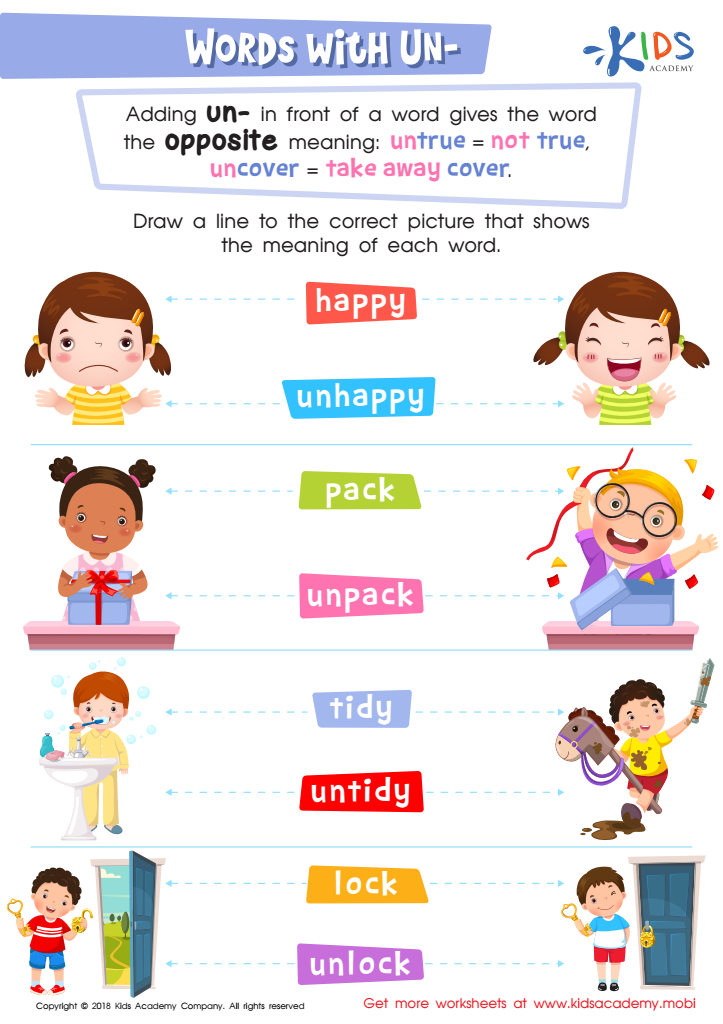
Words with Un– Worksheet
 Assign to My Students
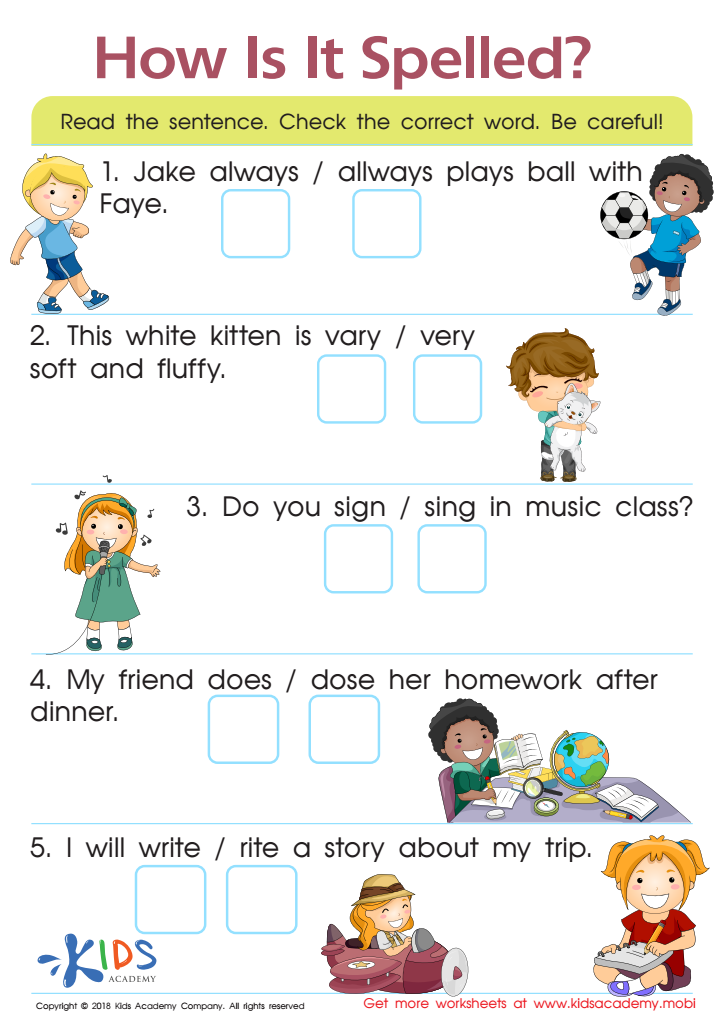
How is it spelled? Worksheet
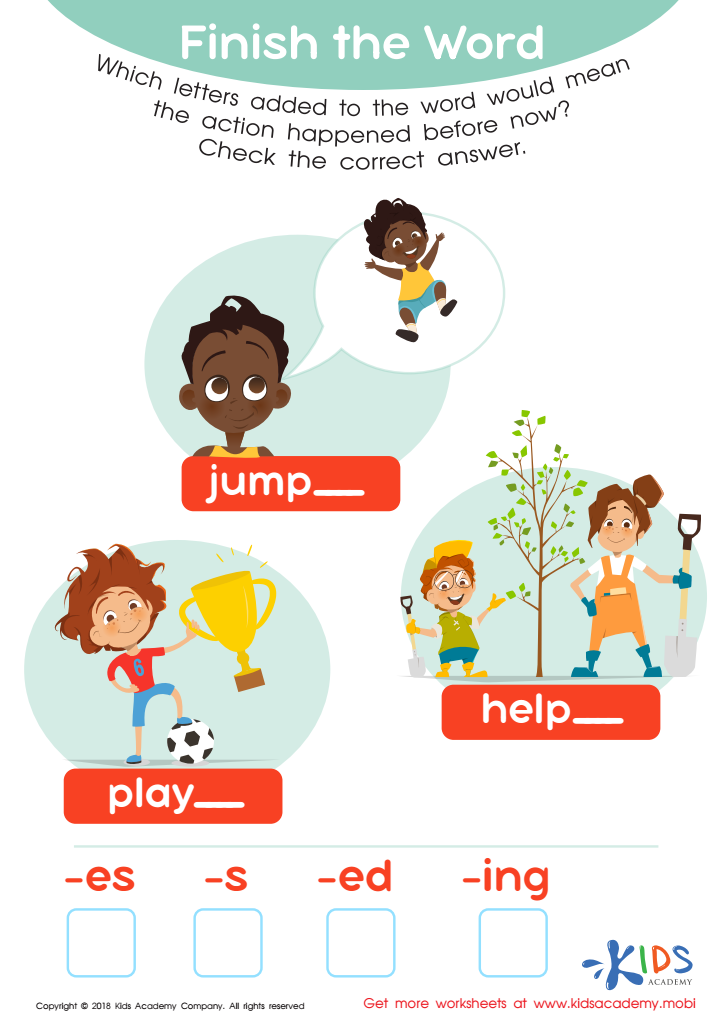
Finish the Word Worksheet







.jpg)
Spelling and grammar skills are foundational components of language development crucial for young children aged 4-7. At this formative stage, children’s brains are exceptionally receptive and malleable, making it the perfect time to introduce these fundamental elements of communication.
Firstly, strong spelling skills support reading development. As kids learn to spell, they become more familiar with the relationship between letters and sounds. This phonemic awareness is essential for decoding words, a critical step in becoming proficient readers. Consequently, strong readers are better equipped to succeed in school across all subjects.
Grammar, on the other hand, empowers children to structure their thoughts and communicate more effectively. Mastery of grammar rules allows them to form coherent sentences and convey clear, logical ideas. This competency not only enhances their writing but also bolsters their confidence and abilities in spoken communication.
Moreover, an early focus on spelling and grammar helps prevent future learning difficulties. Problems in these areas can compound over time, leading to challenges in comprehension, poor academic performance, and frustrating learning experiences.
Therefore, investing time and effort into teaching spelling and grammar to children aged 4-7 sets the stage for long-term educational success, effective communication skills, and a strong self-esteem associated with academic achievement.