Word association Grammar Worksheets for Ages 4-7
4 filtered results
-
From - To
Discover engaging Word Association Grammar Worksheets designed specifically for children aged 4-7! These worksheets help young learners enhance their vocabulary and improve their grammar skills through fun activities. By connecting words and understanding their relationships, children develop critical thinking and language abilities. Our colorful and interactive worksheets make learning enjoyable while fostering creativity. Ideal for homeschoolers and educators alike, these resources are perfect for building a strong foundation in language arts. Encourage your child’s love for words and prepare them for future success with our carefully crafted worksheets that spark imagination and promote learning in a playful way!
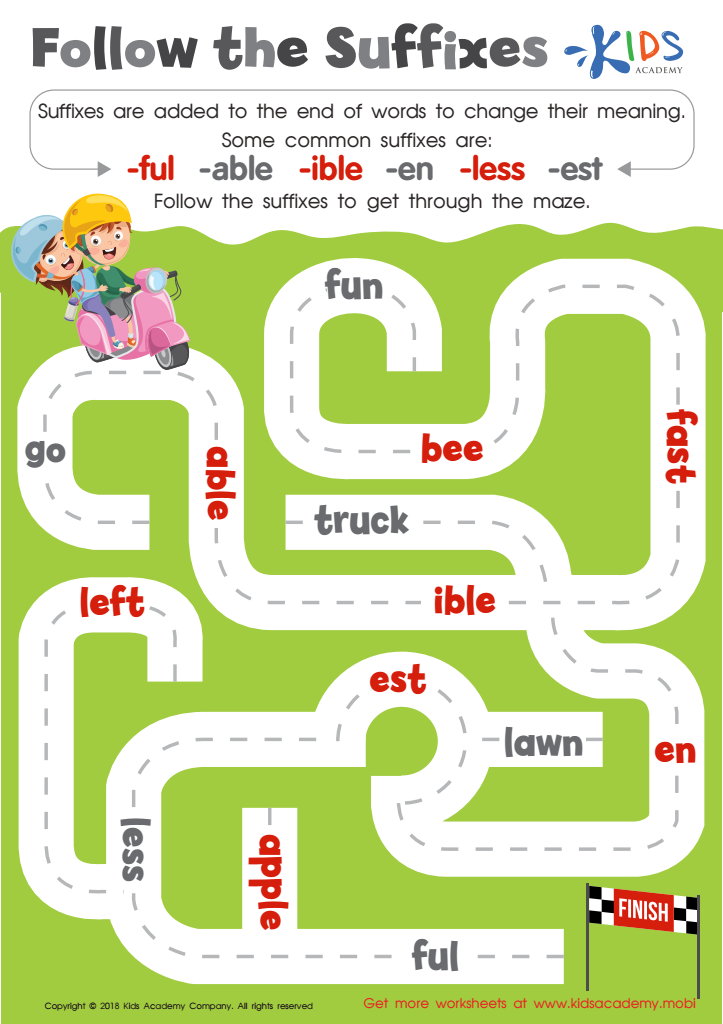
Reading: Follow the Suffixes Worksheet
 Assign to My Students
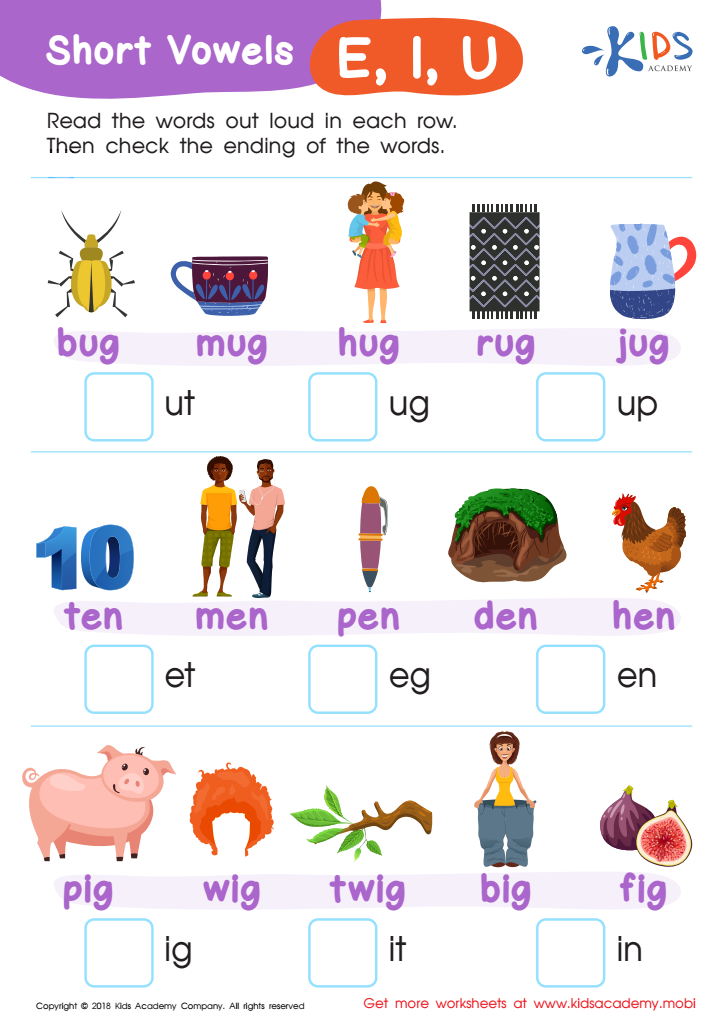
Short Vowels /e/, /i/, and /u/ Worksheet
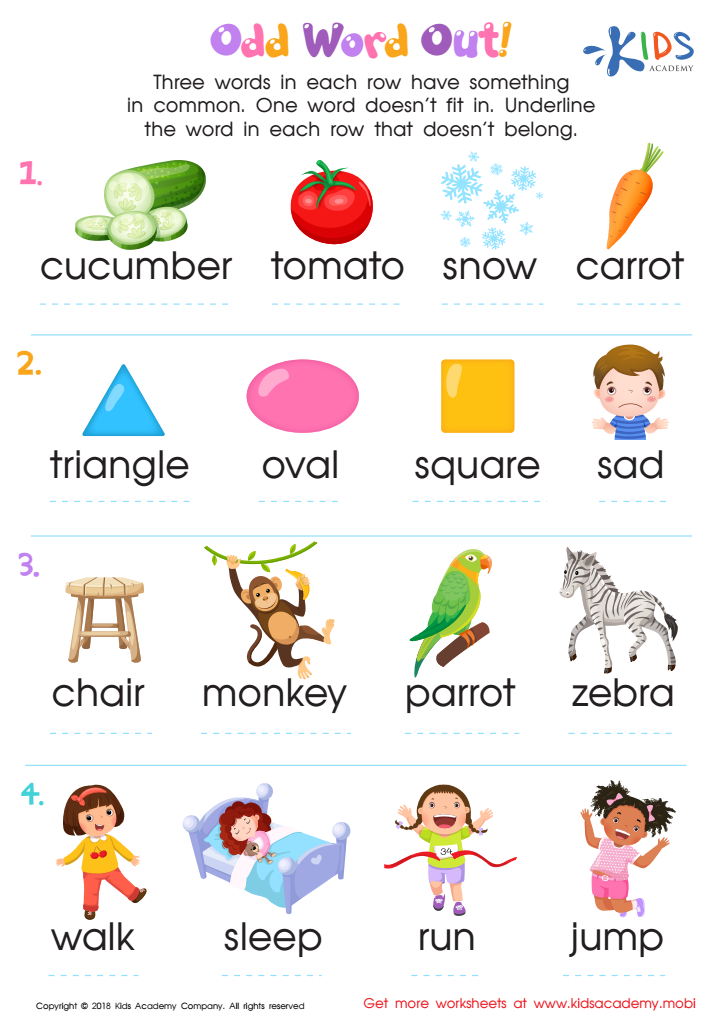
Odd Word Out Worksheet
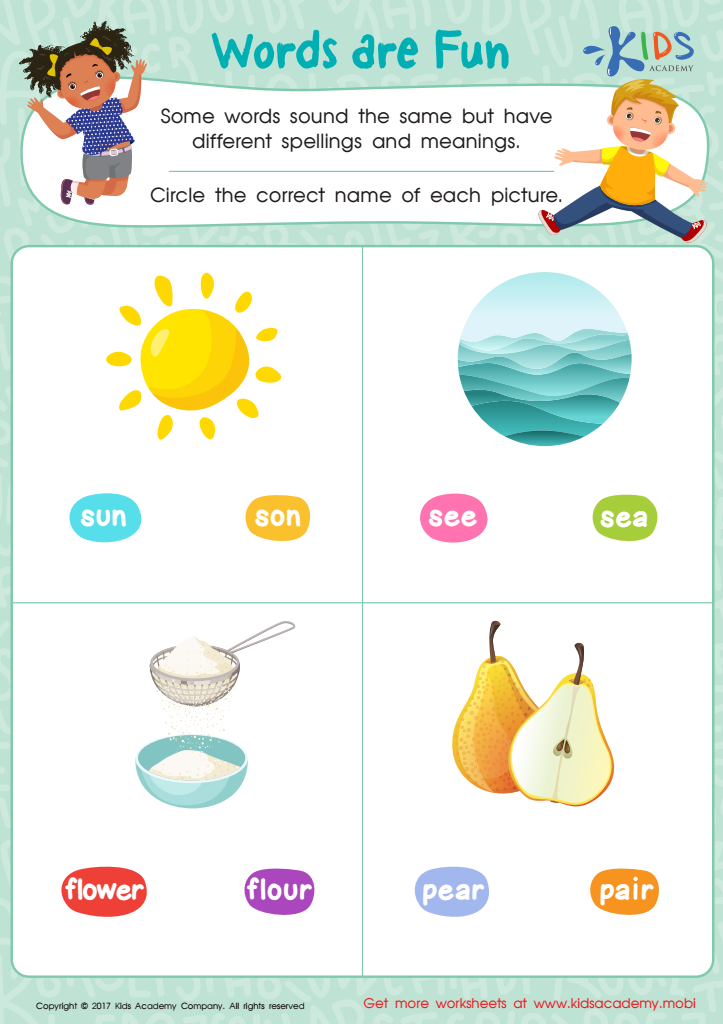
Words Are Fun Worksheet


.jpg)





Parents and teachers should care about word association grammar for children aged 4-7 because it fundamentally supports early language development, cognitive skills, and reading comprehension. This age is crucial for language acquisition, and understanding how words connect enhances vocabulary and grammatical awareness. By engaging in word association activities, children learn to recognize relationships between words, which can lead to improved sentence construction and expressive language skills.
Additionally, word association helps to develop critical thinking and problem-solving skills, as children begin to make connections between words based on their meanings and contexts. These activities promote phonemic awareness, which is vital for early literacy and reading success. When children can associate words with images, concepts, or synonyms, it deepens their understanding and retention of language.
Furthermore, word association playing encourages creativity and imagination, fostering an environment where children feel comfortable exploring language through games, stories, and discussions. By incorporating word association grammar into daily learning, parents and teachers can nurture confident communicators, equipped with the tools they need for academic success now and in the future. Ultimately, paying attention to these early language skills sets the foundation for lifelong learning and effective communication.








