Word identification Grammar Worksheets for Ages 4-7
6 filtered results
-
From - To
Discover our engaging Word Identification Grammar Worksheets designed specifically for children ages 4-7! These interactive resources help young learners build strong foundational skills in language and literacy. Our worksheets focus on word recognition, empowering students to decode and understand various vocabulary terms. With colorful illustrations and age-appropriate exercises, children will enjoy enhancing their word identification skills through fun activities. Ideal for home and classroom use, these worksheets promote independent learning while strengthening reading and writing capabilities. Encourage your child's love for language and watch them thrive! Explore our collection today and set the stage for a bright educational journey.
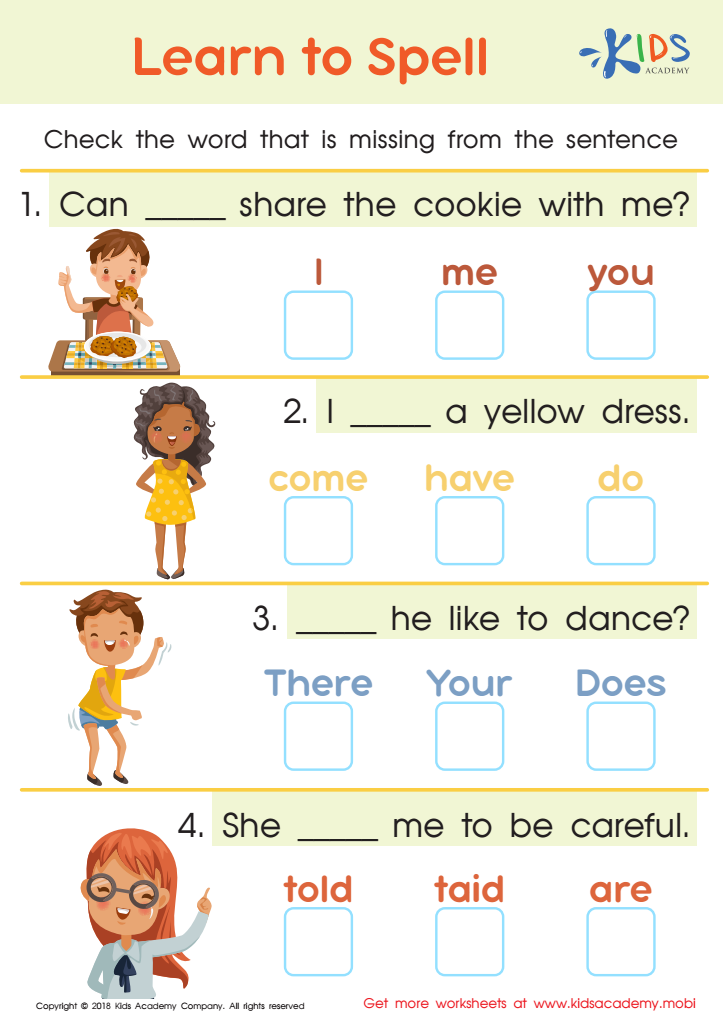
Learn to Spell Worksheet
 Assign to My Students
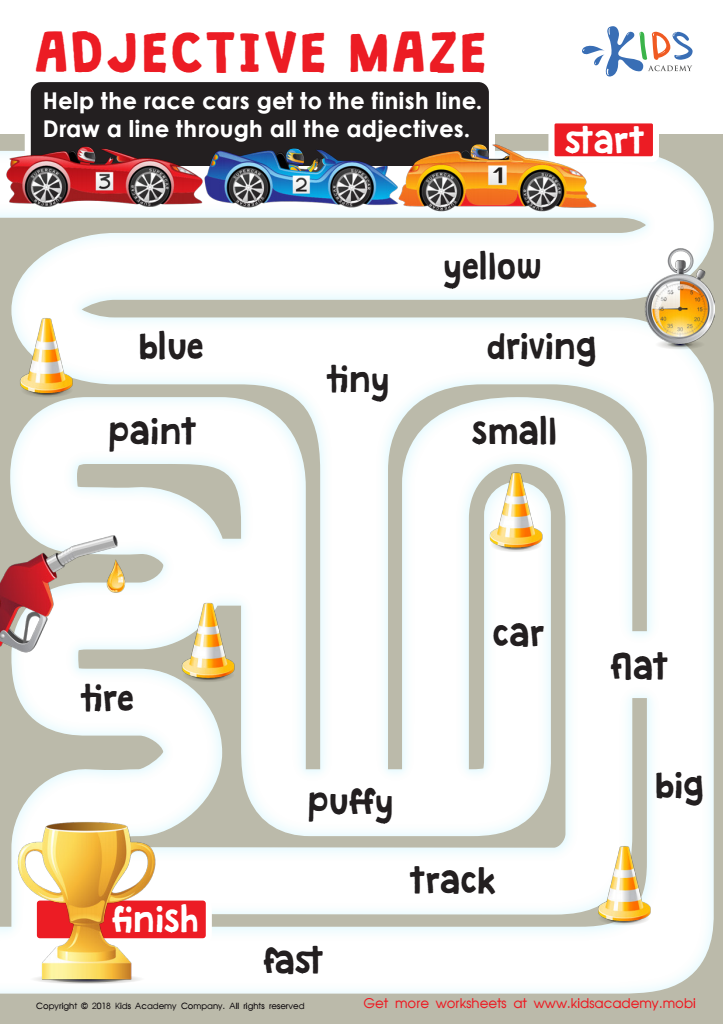
Adjective Maze Worksheet
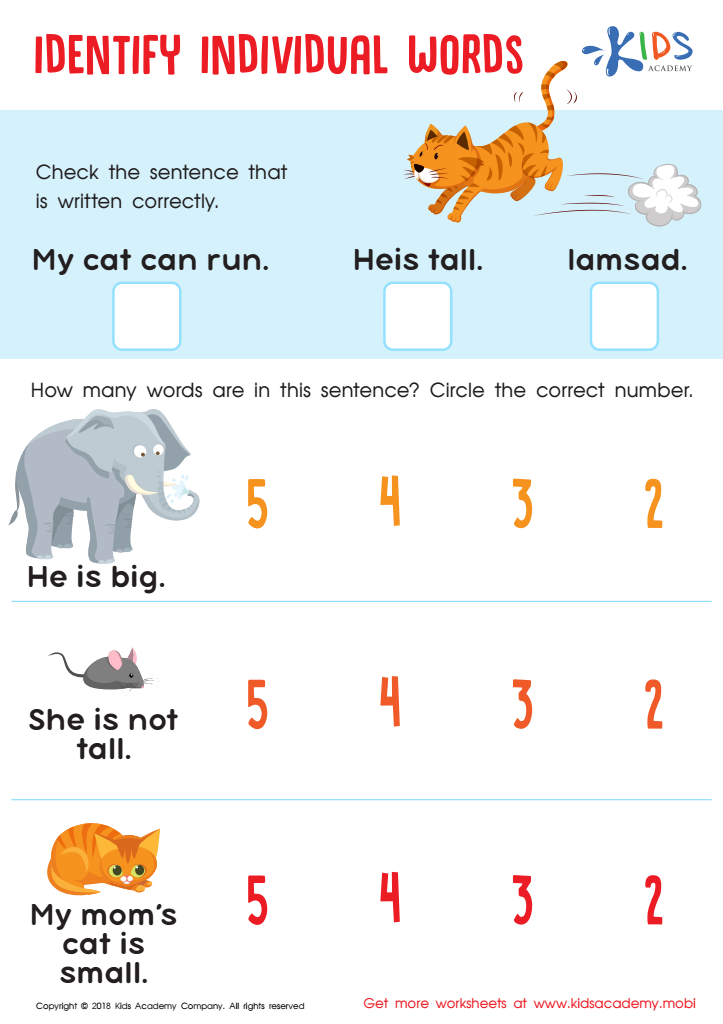
Identify Individual Words Worksheet
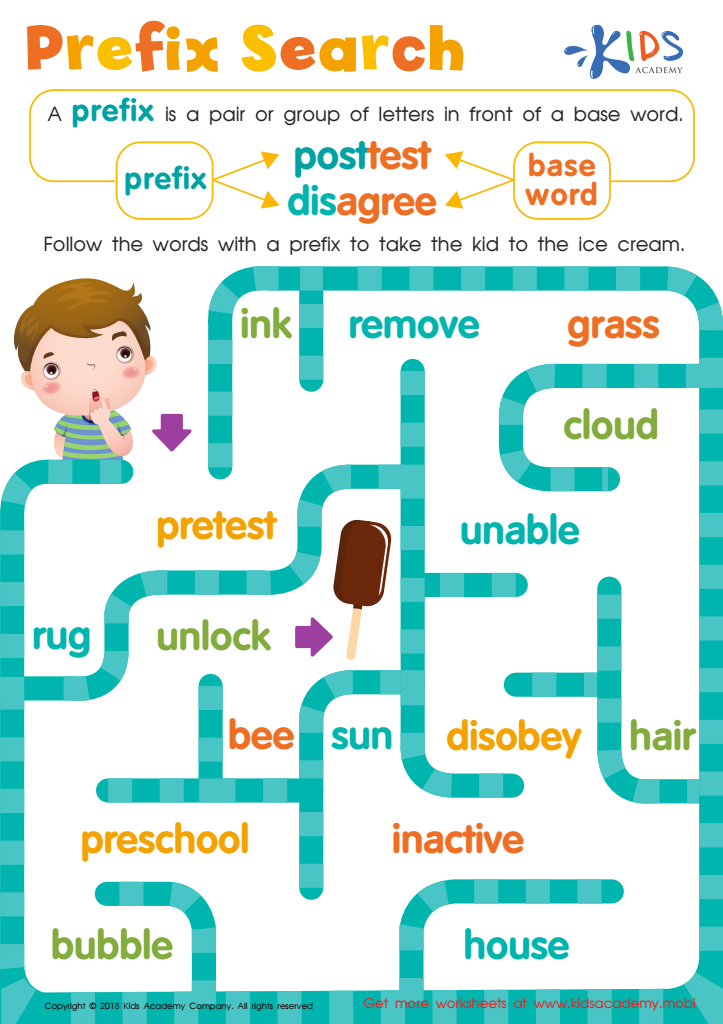
Reading: Prefix Search Worksheet
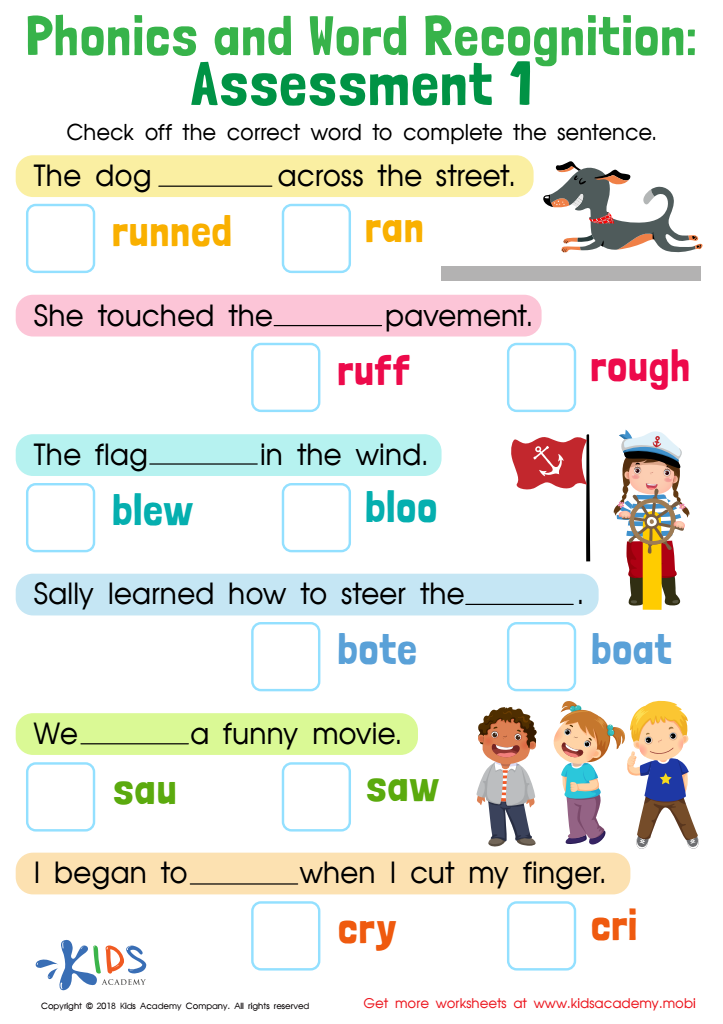
Phonics and Word Recognition: Assessment 1 Worksheet
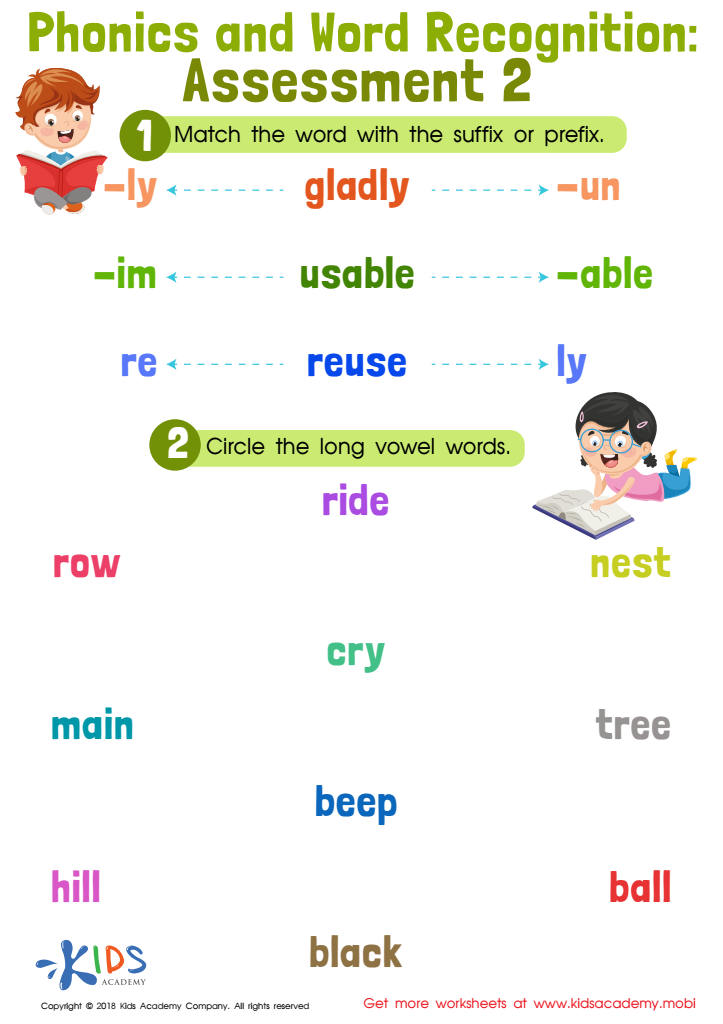
Phonics and Word Recognition: Assessment 2





.jpg)

Word identification and grammar are essential components of early literacy, especially for children aged 4-7. During these formative years, children begin to build the foundational skills necessary for reading and writing. Word identification—recognizing and decoding words—empowers children to understand text and enhances their reading fluency. When children can quickly identify words, their comprehension skills improve, allowing them to engage more deeply with stories and informational texts.
Furthermore, understanding basic grammar helps children structure their thoughts and communicate effectively. By grasping concepts like sentence formation, punctuation, and verb usage, they can express themselves clearly in both spoken and written forms. This grammatical awareness supports their cognitive development, allowing them to analyze and create sentences, fostering confidence in language use.
For parents and teachers, focusing on word identification and grammar during these critical years is crucial because it lays the groundwork for academic success. Early intervention can address potential challenges in literacy, ensuring that children develop strong reading and communication skills. Ultimately, fostering these skills contributes to a lifelong love of learning and literacy, setting children on a path to succeed in school and beyond.








