Fine motor skills development ABC Letters Worksheets for Ages 4-8
3 filtered results
-
From - To
Enhance your child’s fine motor skills with our ABC Letters Worksheets designed for ages 4-8. Each activity features creatively structured exercises that combine letter recognition with fun, engaging tasks aimed at developing handwriting and finger dexterity. Perfect for preschool through early elementary students, these printable worksheets make learning enjoyable while promoting essential fine motor development. From tracing and coloring to interactive letter games, our expertly crafted materials support both educational growth and cognitive development. Boost your child’s confidence and academic readiness with this comprehensive set of fine motor skills worksheets, available exclusively at Kids Academy.
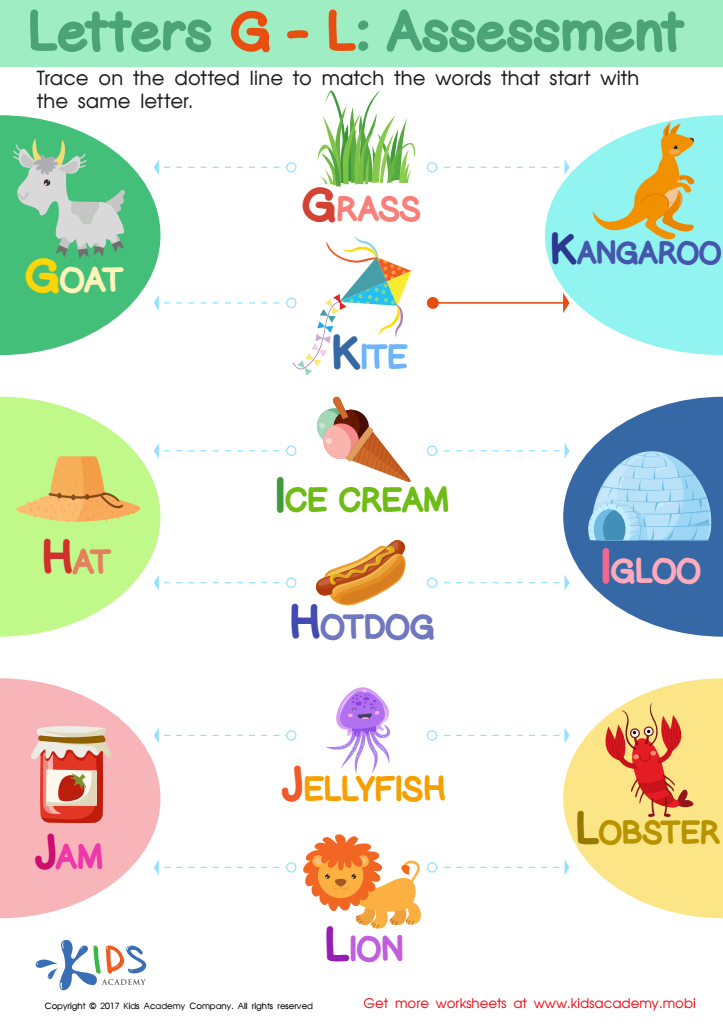
Letters G-L Worksheet









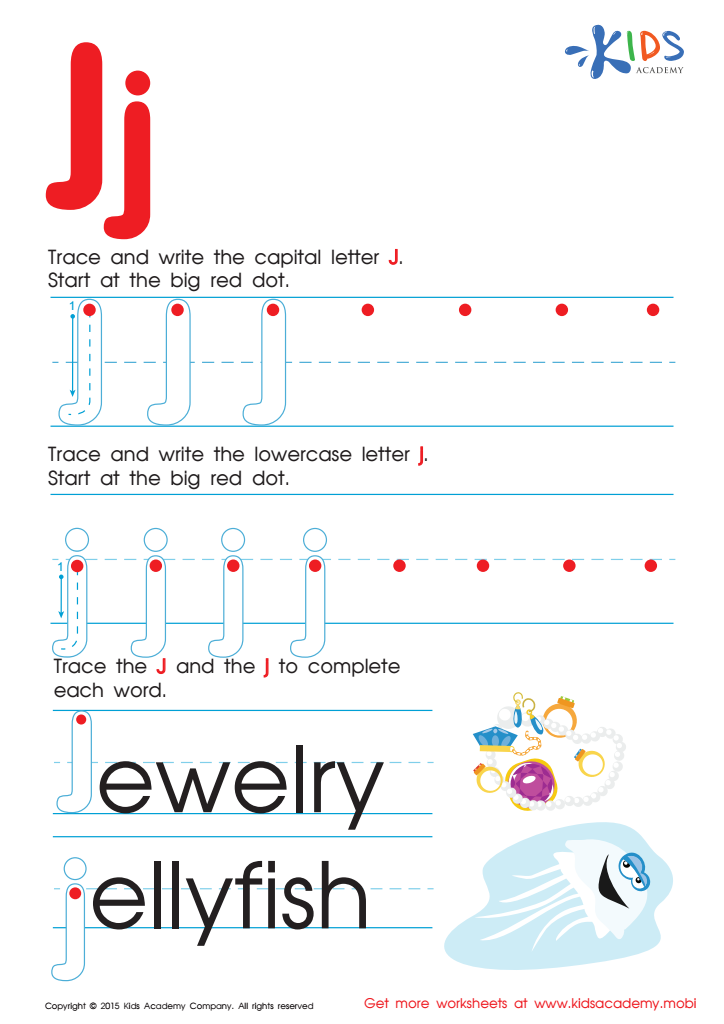
Letter J Tracing Page
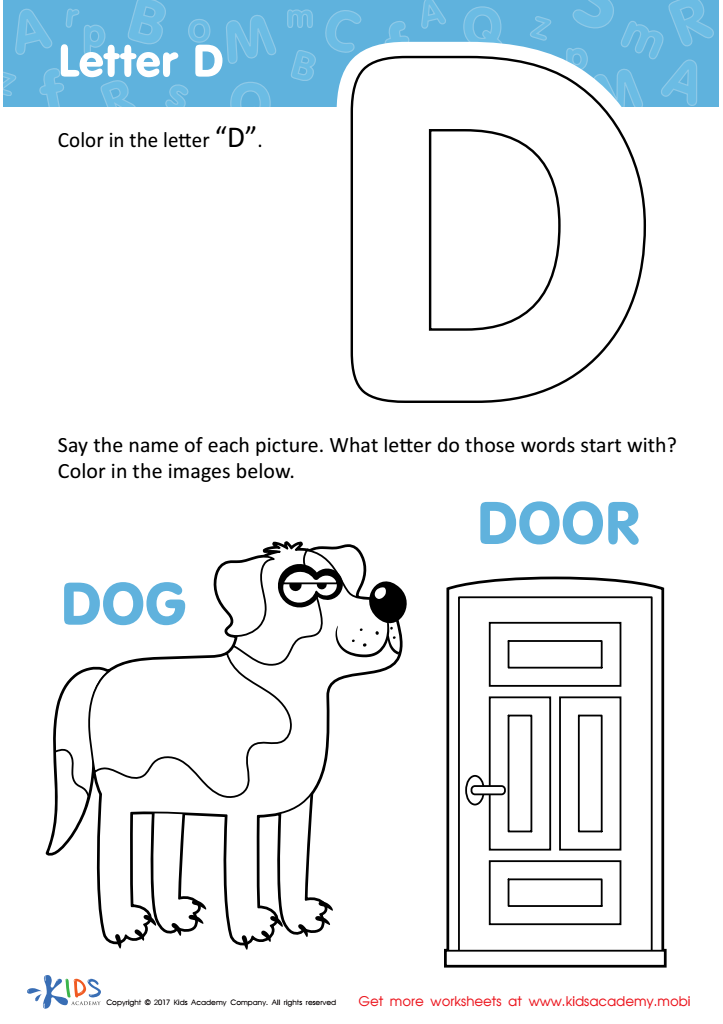
Letter D Coloring Sheet
 Assign to My Students







Fine motor skills development is crucial for children aged 4-8 as it prepares them for essential tasks and learning activities crucial in their early education. Fine motor skills involve small muscle movements, particularly of the hands and fingers, and are foundational for writing. By focusing on ABC letters, children practice these motor skills, facilitating better handwriting and pencil grip.
Through activities like tracing, drawing, and cutting, children enhance their coordination and dexterity, making daily tasks easier, such as buttoning clothes or tying shoelaces. Improved fine motor skills also support cognitive development. As children learn to form letters, they simultaneously develop language skills, letter recognition, and phonemic awareness, foundational for reading and spelling.
Teaching ABC letters with a focus on fine motor skills encourages patience, concentration, and attention to detail - vital academic and life skills. Additionally, mastering these skills boosts self-esteem and confidence, enabling children to engage more fully in classroom activities and social interactions.
In summary, development of fine motor skills through ABC learning activities builds a strong base for literacy, academic progression, and everyday functional abilities. Parents and teachers can profoundly impact a child's educational trajectory and functional independence by actively supporting these developmental stages.







