
Fine motor skills improvement ABC Letters Worksheets for Ages 4-8
3 filtered results
Difficulty Level
Grade
Age
-
From - To
Subject
Activity
Standards
Enhance your child's fine motor skills with our engaging ABC Letters Worksheets designed for ages 4-8. Each worksheet offers interactive activities to help children develop precise hand movements crucial for writing, drawing, and daily tasks. Our carefully crafted exercises combine tracing, drawing, and fun letter recognition games, fostering a strong foundation in both alphabet knowledge and motor skill coordination. Whether used at home or in the classroom, these worksheets provide an enjoyable and educational way to improve dexterity and confidence in young learners. Dive into fun learning and watch your child's motor skills flourish with our ABC Letters Worksheets.
Favorites
With answer key
Interactive
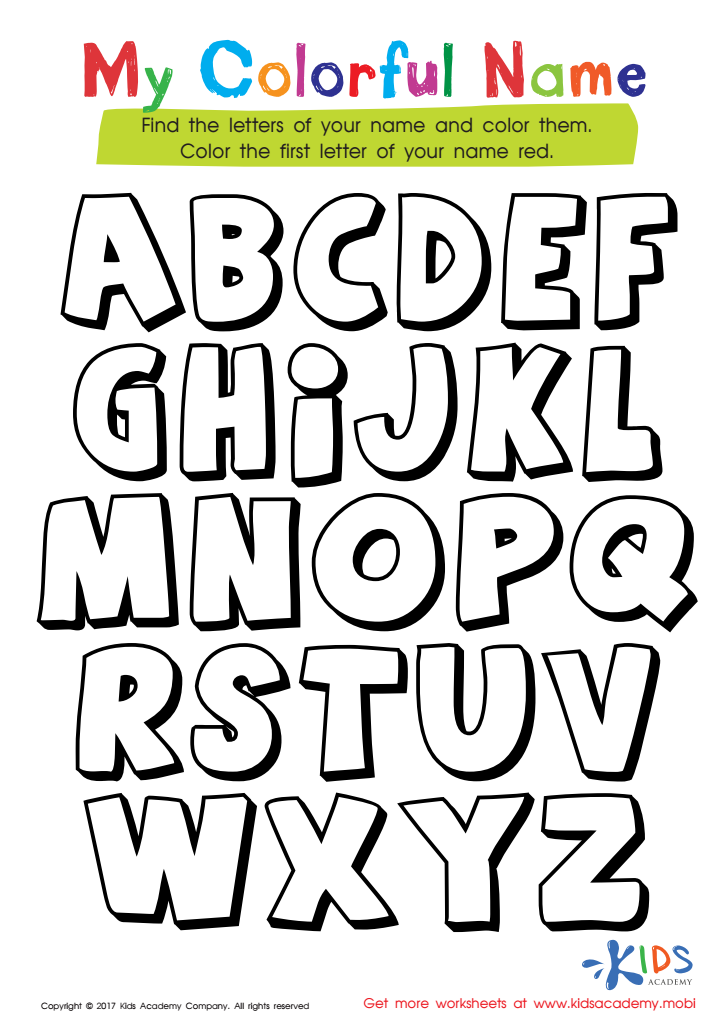
My Colorful Name Worksheet
Writing their names is a milestone for children. With this worksheet, they recall the letters in their name and color the letters one at a time. Spelling and alphabet order are reinforced as they find each letter. Use this fun printable to help kids learn to write their names!
Download (PDF)
 Assign to My Students
Assign to My Students
My Colorful Name Worksheet
Worksheet





Letter S Coloring Sheet
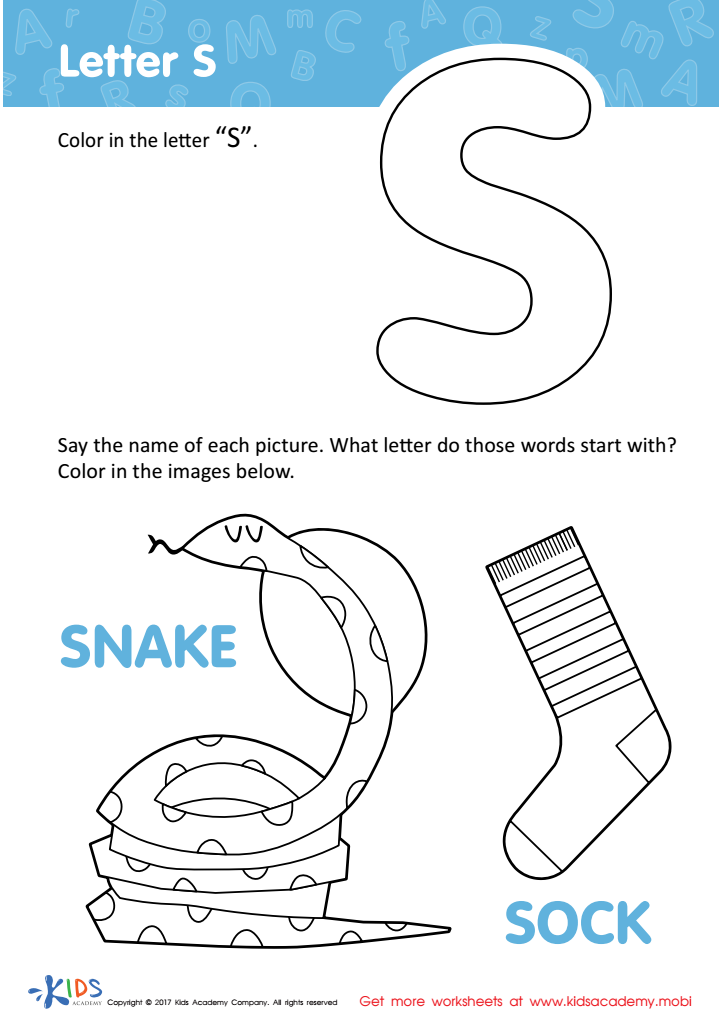
Help your child practice recognizing the letter "S" and the sound it makes with this fun coloring page. It features a slippery snake, smelly sock and more! Give them extra practice by coming up with more "S" sounds and words.
Download (PDF)
Assign to My Students
Assign to My Students
Letter S Coloring Sheet
Worksheet
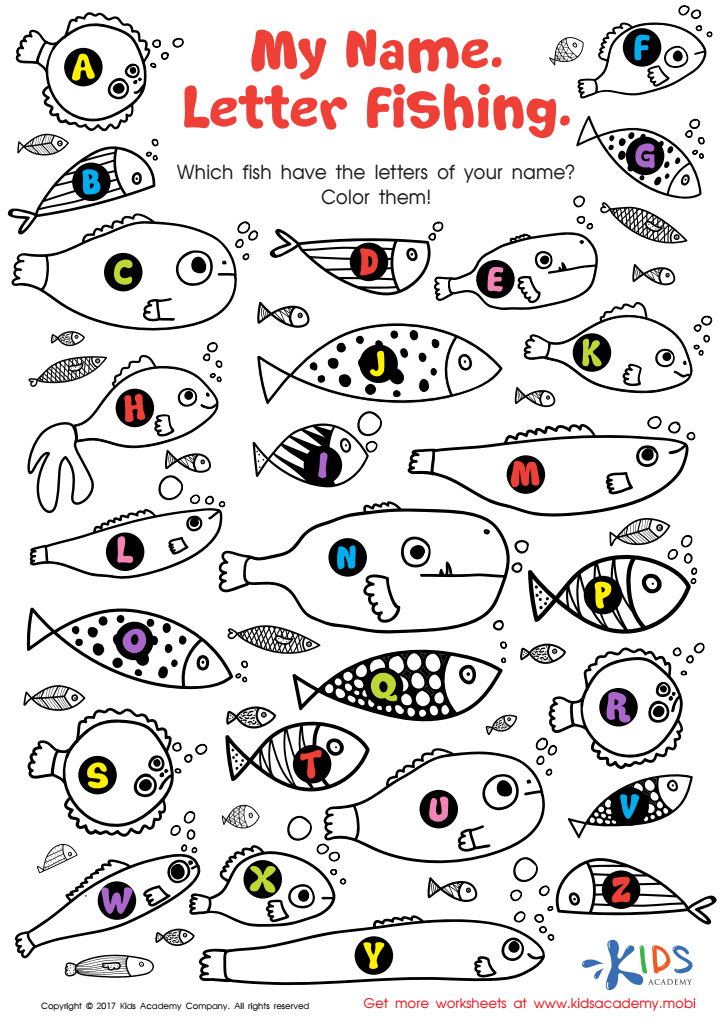
My Name: Letter Fishing Worksheet
Dive into the deep sea and search for fish with a letter on them. Can you find all the letters from your name? Color your favorite fish with crayons and be creative! On the other side, use the letters you found to write your name. Have fun coloring and finding the letters of your name! (80 words)
Download (PDF)
Assign to My Students
Assign to My Students
My Name: Letter Fishing Worksheet
Worksheet
Join Kids Academy for Free
Who is primarily going to use this learning content?







Fine motor skills refer to the control of small muscles in the hands and fingers, and are crucial for children in the 4-8 age range. The improvement of these skills, especially through engaging activities like forming ABC letters, is essential for several reasons.
Firstly, fine motor skills are foundational for academic achievements. By practicing letters, children enhance their handwriting abilities, which are vital for written communication. Well-developed writing skills bolster their confidence and facilitate educational performance as they progress through school.
Secondly, engaging in activities that improve fine motor skills fosters cognitive development. Manipulating small objects, like pencils or crayons, to form letters requires concentration and stimulates brain regions involved in problem-solving and spatial awareness. This cognitive engagement can enhance memory, attention, and overall intellectual growth.
Additionally, fine motor skills are integral for daily life tasks. Working on activities that require precision—like tying shoelaces, buttoning clothes, or using utensils—promotes independence. Mastery of these tasks not only fosters self-reliance but also boosts self-esteem as children feel competent in managing their own needs.
Lastly, activities that improve fine motor skills, such as forming ABC letters, often incorporate creativity and play, making learning enjoyable and intrinsically motivating. Encouraging this enjoyable practice sets a positive tone towards lifelong learning.
Thus, parents and teachers play a pivotal role in nurturing fine motor skills, ensuring children acquire the essential abilities for academic success, cognitive development, daily life competence, and overall confidence.







