Handwriting practice ABC Letters Worksheets for Ages 4-8 - Page 2
26 filtered results
-
From - To

Letter N Coloring Sheet
 Assign to My Students






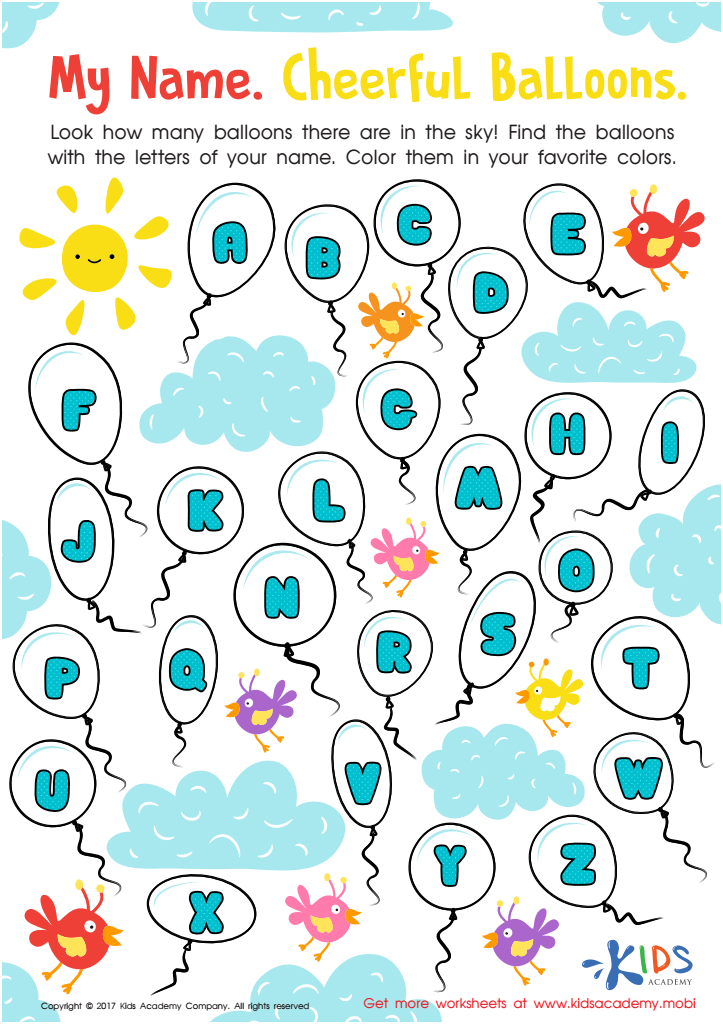
My Name: Cheerful Balloons Worksheet
Assign to My Students







Handwriting practice for children aged 4-8 is crucial for several developmental and educational reasons, making it important for both parents and teachers to prioritize it. At this early age, children are developing fine motor skills, and practicing handwriting helps strengthen their hand muscles and coordination. Mastery of these skills facilitates other daily tasks, such as tying shoelaces or using utensils.
Introduce handwriting practice through tracing ABC letters fosters letter recognition and memorization, foundational for literacy. When children connect the physical act of writing letters to their shapes and sounds, they engage multiple parts of the brain, enhancing their cognitive learning. This multi-sensory approach aids in retaining information and developing strong reading skills, which are essential for academic success.
Furthermore, consistent handwriting practice instills a sense of discipline, focus, and patience in young learners. These are qualities that benefit them across various areas, both academically and personally. Well-developed handwriting improves overall communication skills. Kids having legible writing can express their thoughts clearly and effectively, a skill invaluable in academics and beyond.
For parents and teachers, prioritizing handwriting practice ensures children acquire essential skills that support their long-term learning and personal growth, setting a firm foundation for a successful educational journey.







