Phonics practice ABC Letters Worksheets for Ages 4-8
3 filtered results
-
From - To
Unlock the joy of learning with our Phonics Practice ABC Letters Worksheets for Ages 4-8! Perfectly crafted for young readers, these engaging worksheets bring phonics to life. Kids will enhance their reading skills by practicing letter sounds, recognizing patterns, and forming words. Through colorful illustrations and interactive activities, your child will discover the excitement of letters and sounds. Ideal for both classroom use and at-home practice, our worksheets make learning fun and effective. Give your child the foundation they need for reading success with our expertly designed phonics practice worksheets. Explore now and watch them thrive!
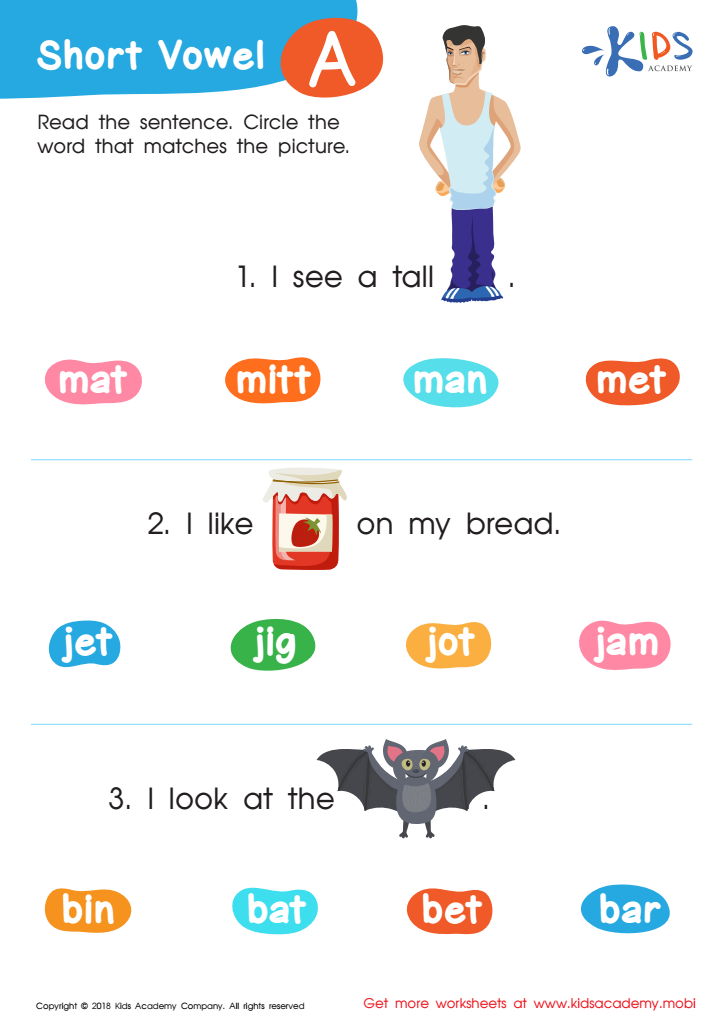
Short Vowel /a/ Worksheet

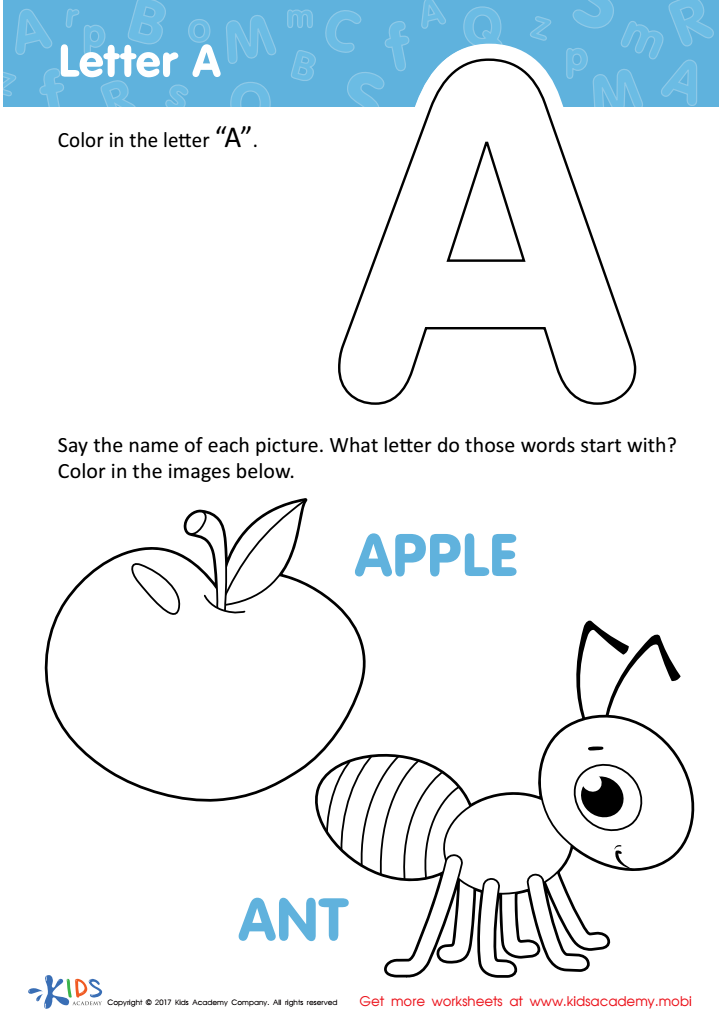
Letter A Coloring Sheet
 Assign to My Students
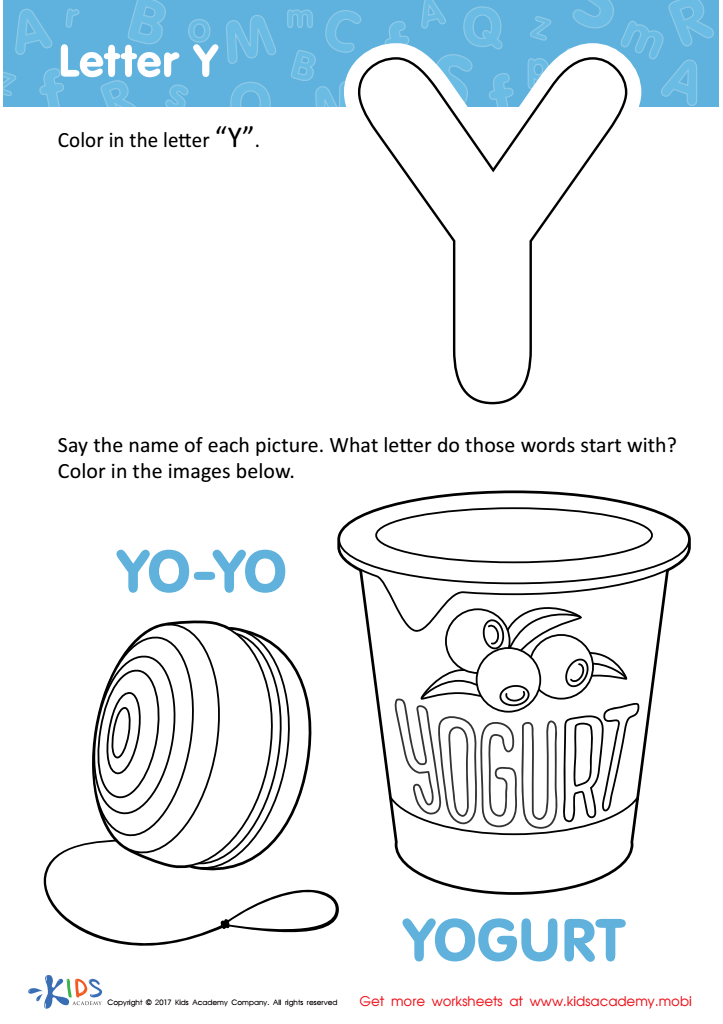
Letter Y Coloring Sheet
Assign to My Students






Phonics practice in early literacy is crucial for children aged 4-8, as it lays the foundational framework for proficient reading and writing. Engaging in phonics activities helps children understand the relationship between letters and sounds (phonemic awareness), a skill essential for decoding words. By practicing the ABC letters, children learn to recognize and distinguish between individual letters and understand their associated sounds, which is a critical step in reading fluency.
For parents and teachers, prioritizing phonics practice is vital because early literacy skills are strong predictors of later academic success. Phonics instruction develops children's abilities to spell, read, and comprehend text efficiently, which directly influences their confidence and enthusiasm for learning. Moreover, early exposure to phonic structures supports vocabulary expansion and enhances listening skills, allowing children to better comprehend spoken language and their environment.
Providing consistent phonics practice through engaging and interactive methods ensures that learning feels like play, making it enjoyable and effective for young children. As they progress, their ability to tackle more complex reading tasks improves, preparing them for future educational challenges and fostering a lifelong love of reading. Thus, phonics practice is a key investment in a child's early education, providing them with tools necessary for academic and personal growth.







