Letter recognition Alphabetizing Worksheets for Ages 4-8
3 filtered results
-
From - To
Discover fun and engaging Letter Recognition Alphabetizing Worksheets for children ages 4-8! These carefully crafted activities help young learners master letter recognition while developing essential alphabetizing skills. Our worksheets are designed to make learning enjoyable, encouraging kids to identify letters, understand their order, and improve their overall literacy skills. Each worksheet features age-appropriate exercises that promote hands-on learning, stimulating curiosity and creativity. Perfect for classrooms or at-home practice, these worksheets can easily support your child's learning journey. Equip your little ones with valuable skills that lay the foundation for future reading and writing success. Start their alphabetical adventure today!
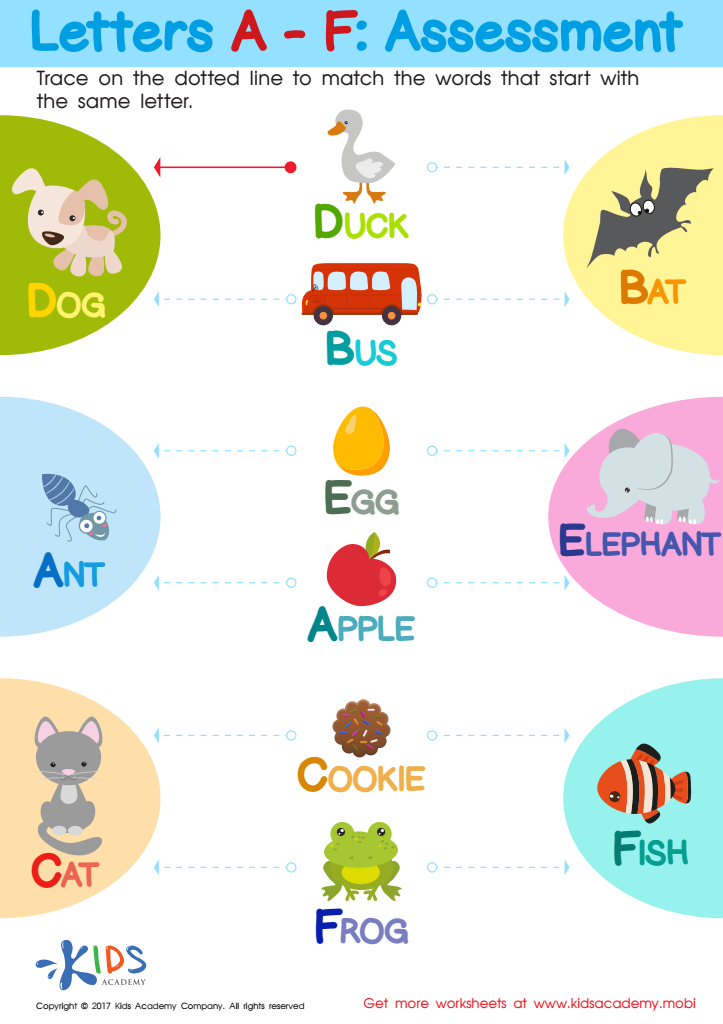
Letters A - F Worksheet
 Assign to My Students
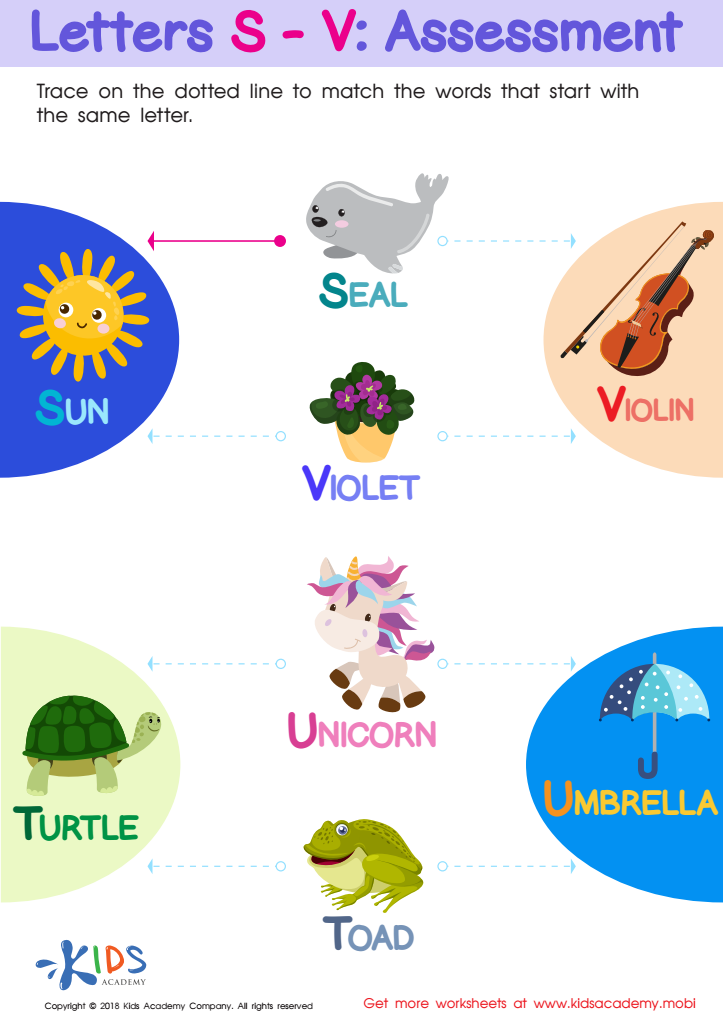
Letters S - V Tracing Worksheet
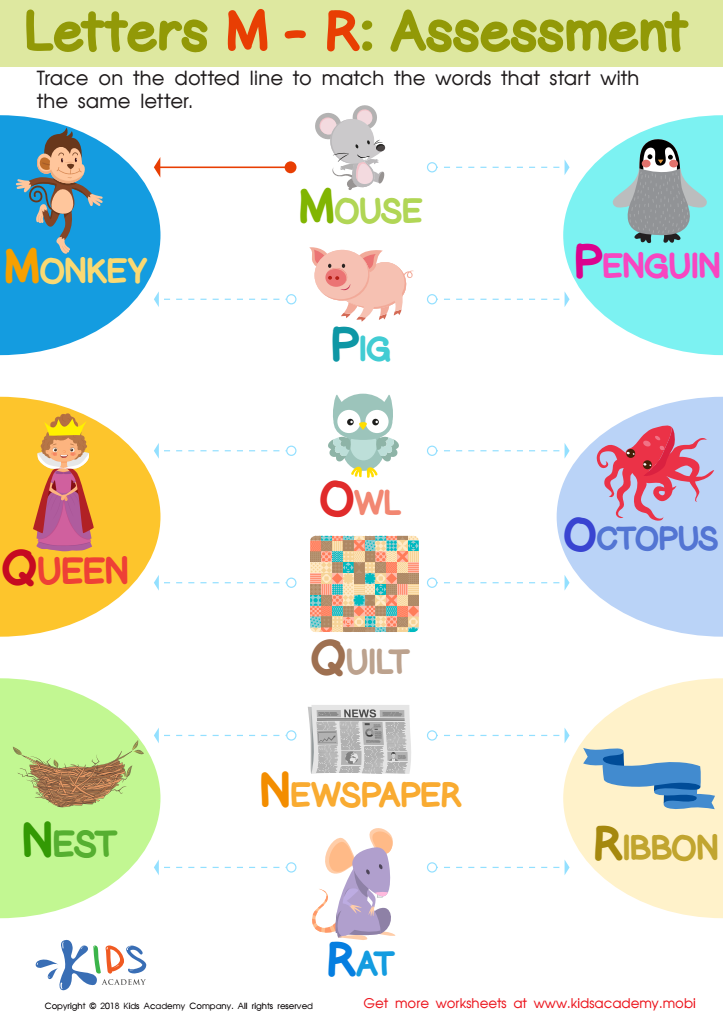
Letters M-R Tracing Worksheet


Letter recognition and alphabetizing are crucial skills for children aged 4-8, serving as foundational building blocks for literacy development. During these formative years, children are learning how to identify letters and understand their sounds, which forms the basis for reading and writing. When children recognize letters, they can begin to decode words, facilitating their reading progress.
Additionally, teaching children to alphabetize helps improve their organizational skills, which play a significant role in academic success and everyday tasks. Alphabetizing enhances memory recall, as children learn to categorize and retrieve information systematically. This skill supports them in navigating libraries, filing systems, and even digital formats as they continue their education.
When parents and teachers prioritize letter recognition and alphabetization, they provide children with the tools they need for effective communication and information processing. Furthermore, these activities foster a love for books and language that can lead to lifelong learning. Engaging children in fun, interactive ways to learn the alphabet not only aids in their cognitive development but also strengthens their confidence and enthusiasm for future reading endeavors. Empowering children at this stage sets them on a path to academic achievement and lifelong literacy skills.







