Phonics practice Beginning Sounds Worksheets for Ages 4-8
5 filtered results
-
From - To
Discover our engaging and educational "Phonics Practice: Beginning Sounds Worksheets" designed for kids ages 4-8. These worksheets help young learners master the fundamentals of phonics by identifying the beginning sounds of words. With vibrant illustrations and interactive activities, each worksheet makes learning fun and effective. These resources support crucial language skills, helping children build a strong reading foundation. Perfect for classroom or at-home use, our worksheets can boost your child's confidence and enhance their phonemic awareness. Visit Kids Academy for these and other outstanding educational materials that foster a love for learning in your little ones!
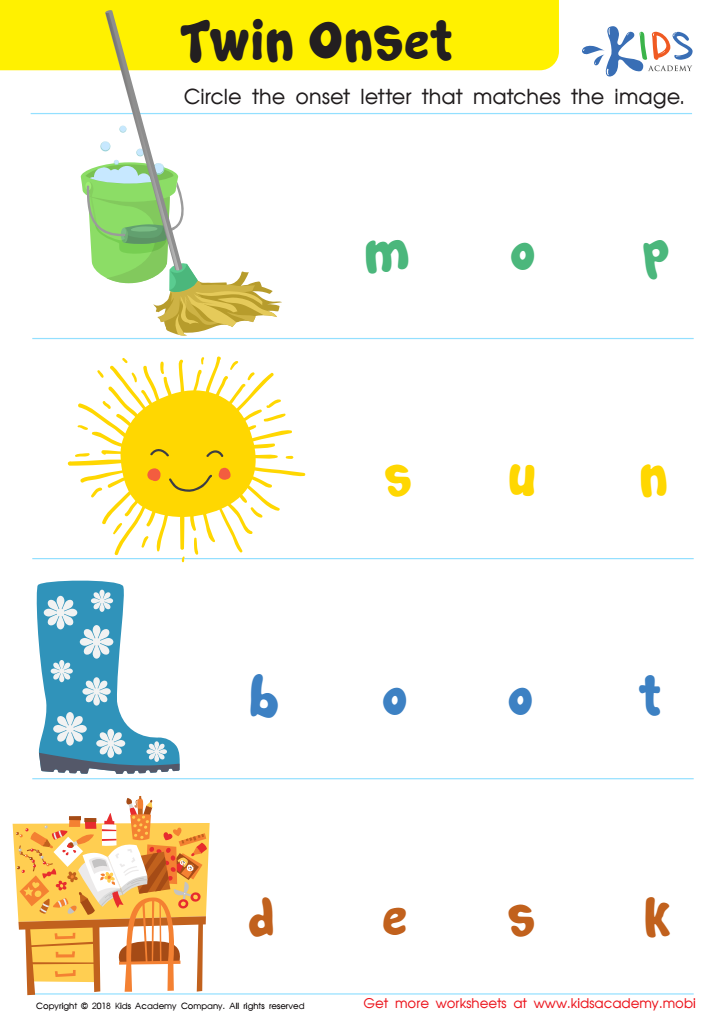
Twin Onset Worksheet
 Assign to My Students
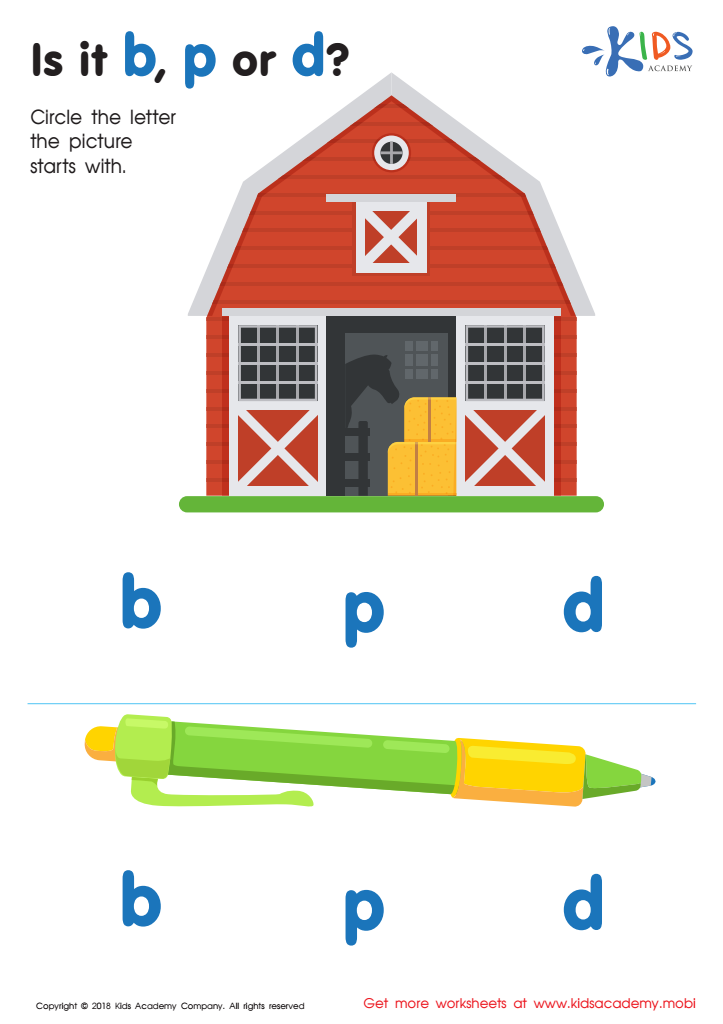
Is it b, p or d? Worksheet
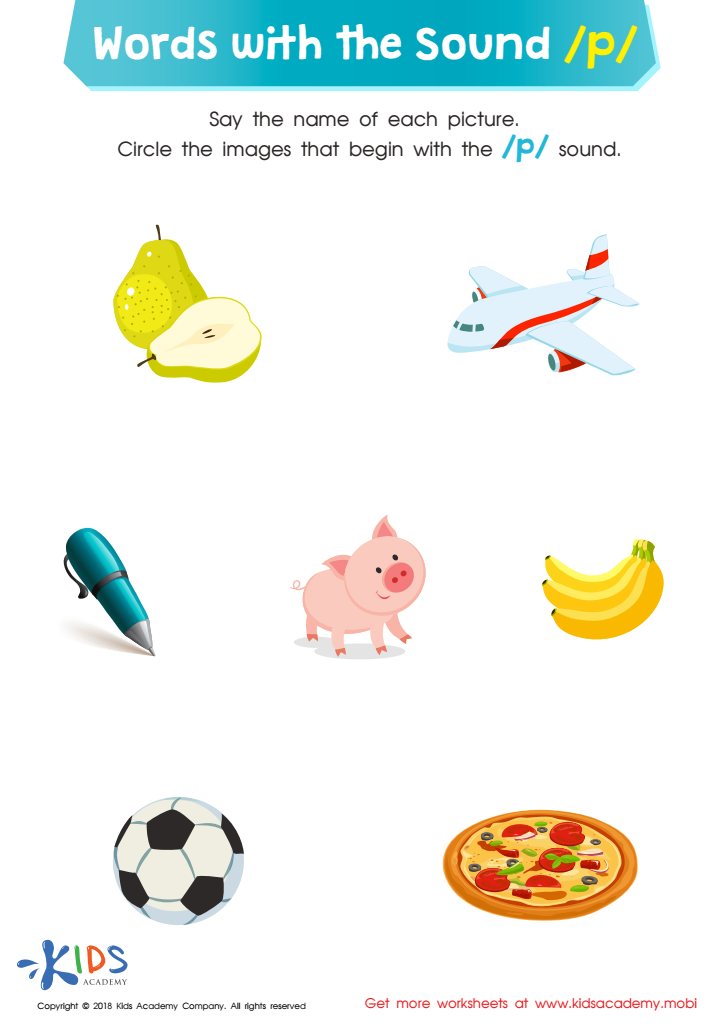
Words with sound p Reading Worksheet
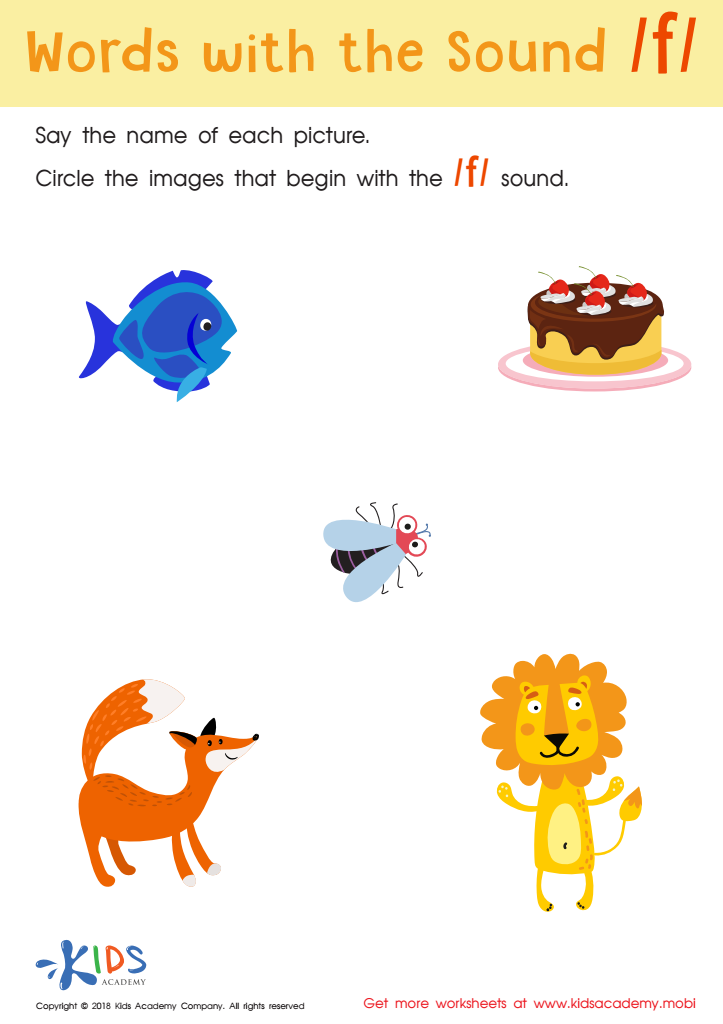
Words with sound f Reading Worksheet
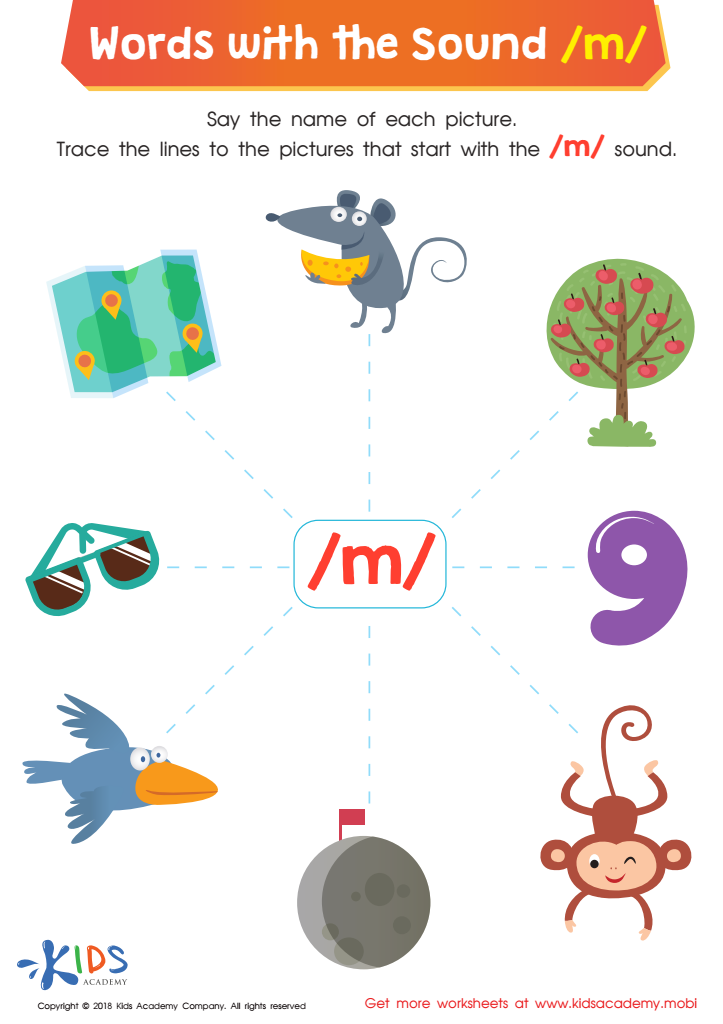
Words with Sound M Reading Worksheet








Phonics practice focusing on beginning sounds is crucial for children aged 4-8 because it lays the foundational skills necessary for early reading and writing. By understanding the relationship between letters and their associated sounds, children develop phonemic awareness, which is a key predictor of reading success. This age is typically when children are starting to encounter more complex vocabulary and begin formalized education, so grasping these basic language principles early on is beneficial.
For parents and teachers, emphasizing beginning sounds fosters children's decoding skills—the ability to interpret written language into spoken words. This practice helps kids recognize patterns among letters and sounds, aiding memory and enhancing their ability to sound out unfamiliar words. Improved decoding capability translates to better fluency and comprehension, allowing kids to progress smoothly through elementary literacy milestones.
Moreover, early mastery of phonics boosts children's confidence and motivation to read independently, leading to a positive attitude toward learning. It also helps to prevent future reading difficulties, potentially reducing the need for interventions.
In summary, investing in phonics practice around beginning sounds for young children helps construct a robust literacy foundation, steering them towards academic success, ensuring they become competent and enthusiastic readers.







