Phonics recognition Consonants Worksheets for Ages 4-8
4 filtered results
-
From - To
Explore our engaging Phonics Recognition Consonants Worksheets, specifically designed for ages 4-8! These worksheets help young learners identify and understand consonant sounds, enhancing their early reading skills. Our activities are interactive and colorful, making phonics learning enjoyable and effective. Each worksheet focuses on a variety of consonant sounds, allowing children to practice consonant recognition, phonetic pronunciation, and associated vocabulary. Ideal for classroom use or at-home learning, these resources are perfect for developing foundational reading skills. Give your child a head start in literacy with our comprehensive and fun phonics recognition materials, crafted to inspire a love of reading from a young age!
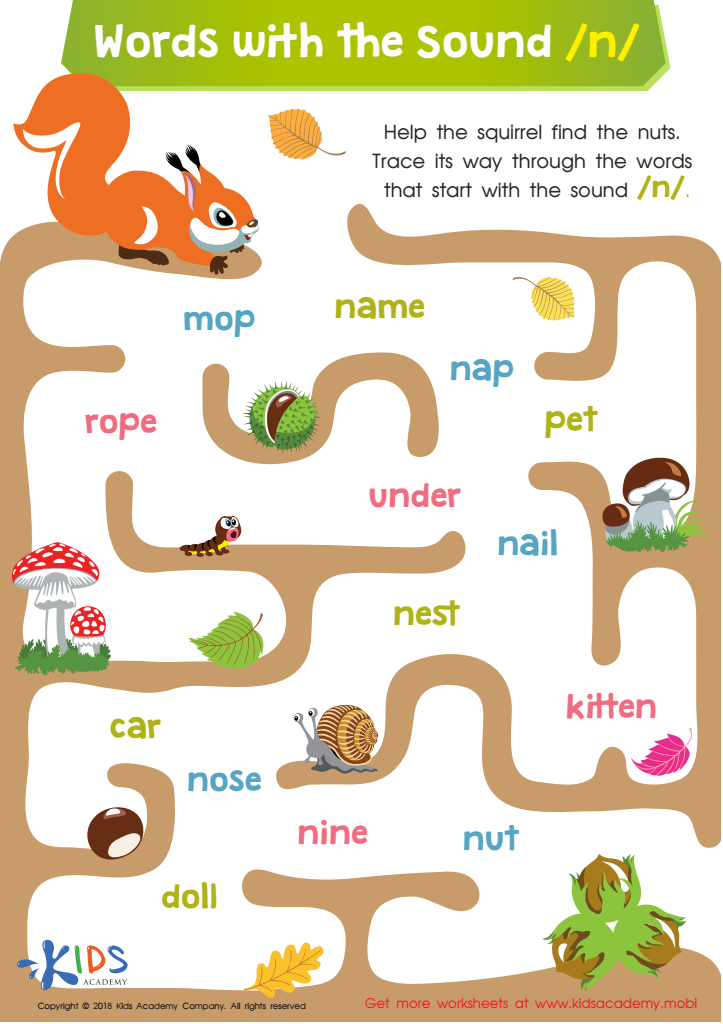
Words with Sound N Reading Worksheet
 Assign to My Students
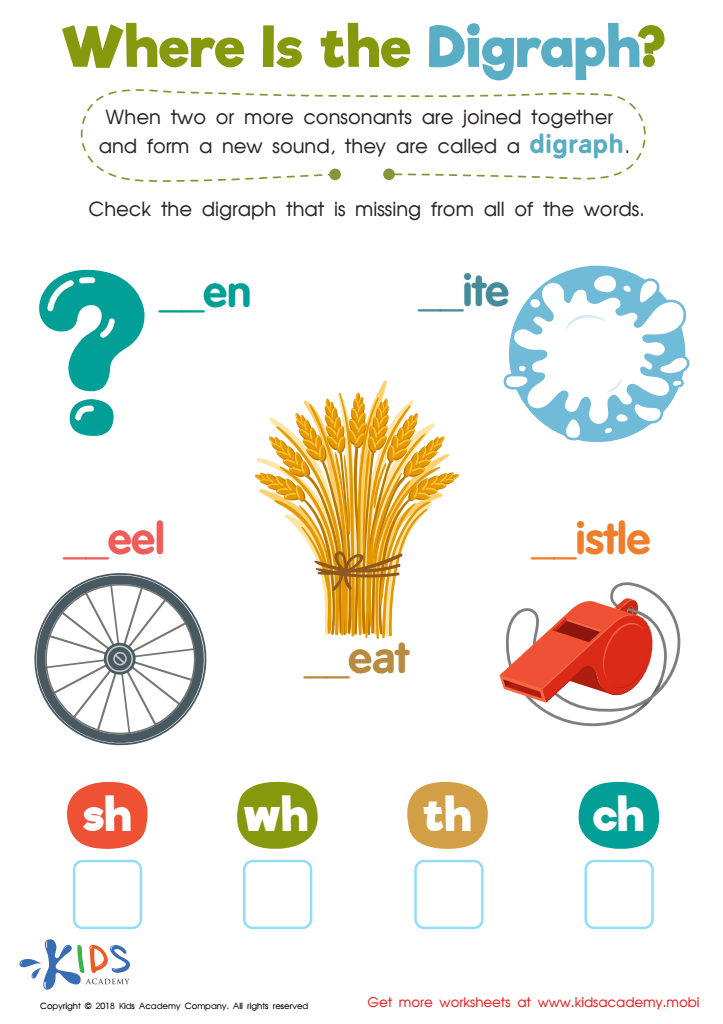
Where Is the Digraph? Worksheet
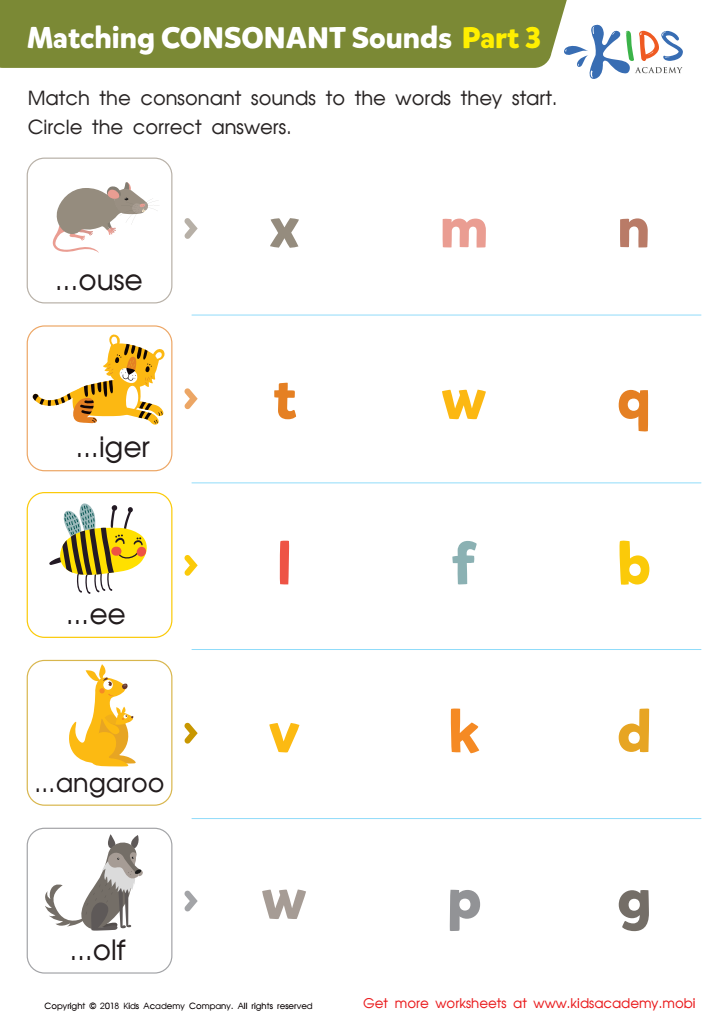
Matching Consonant Sounds: Part 3 Worksheet
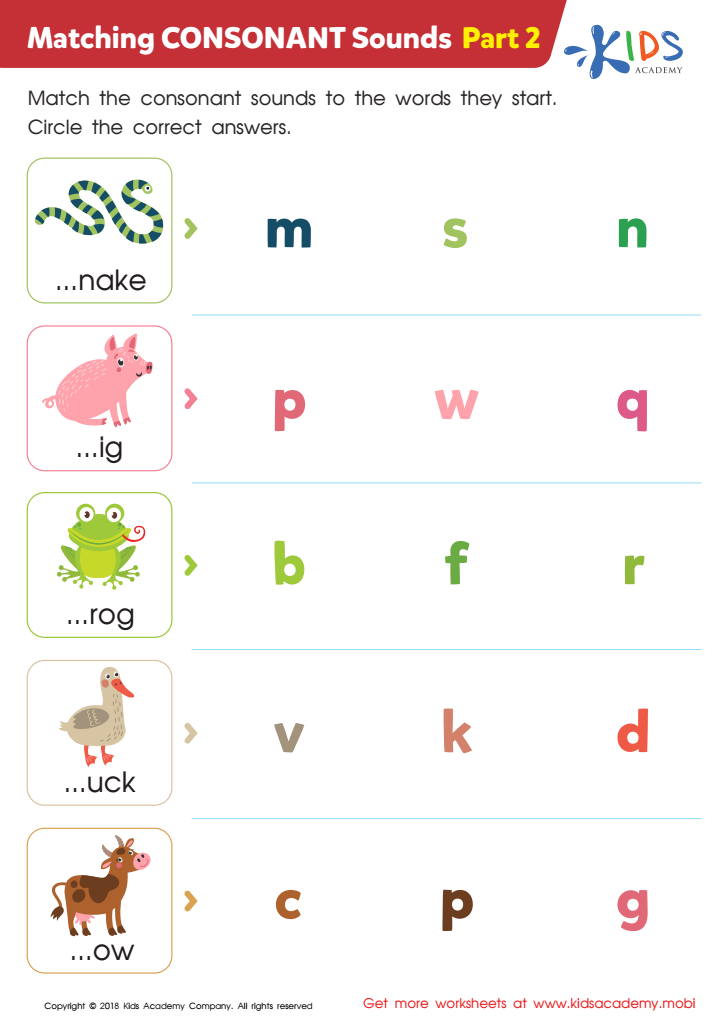
Matching Consonant Sounds: Part 2 Worksheet



Phonics recognition, particularly of consonants, is fundamental for early literacy development in children aged 4-8. When parents and teachers prioritize phonics, they lay a strong foundation for reading and writing skills. Understanding consonants helps children decode words, improving their ability to sound out letters and assemble sounds into recognizable words. This decoding skill is crucial as it significantly enhances their pronunciation, fluency, and comprehension.
Furthermore, consonant recognition fosters vocabulary growth. Children become more confident readers, feeling empowered to tackle new words, which encourages a love for reading. Phonics instruction also aids in spelling development, allowing kids to make connections between letters and sounds, ultimately assisting them in crafting their own written narratives.
Additionally, a strong grasp of phonics can support children who may struggle with language acquisition, providing them accessible tools for overcoming literacy challenges. By engaging in phonics activities, both in the classroom and at home, parents and teachers can cultivate an enriching learning environment that stimulates intellectual curiosity. Overall, their commitment to fostering consonant recognition is essential in equipping children with the essential skills required for successful reading and lifelong learning.







