Vocabulary enhancement Ending Sounds Worksheets for Ages 4-8
3 filtered results
-
From - To
Enhance your child's vocabulary with our engaging Ending Sounds Worksheets designed specifically for ages 4-8! These interactive worksheets focus on recognizing and practicing ending sounds, a crucial phonetic skill that fosters reading readiness and spelling proficiency. Each activity is carefully crafted to make learning fun and effective, perfect for young learners. Kids will identify word endings through colorful images and engaging exercises, helping them build a strong foundation in literacy. With repeatable practice opportunities, your child will gain confidence and fluency in language. Start their journey to becoming confident readers and writers today with our captivating ending sounds resources!
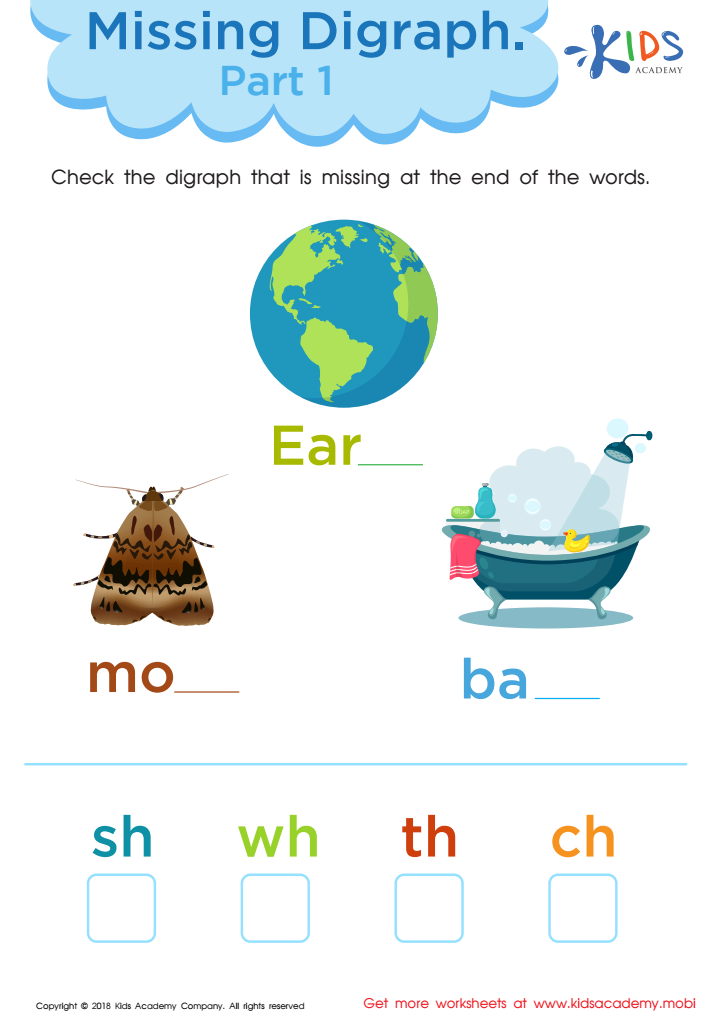
Missing Digraph: Part 1 Worksheet
 Assign to My Students
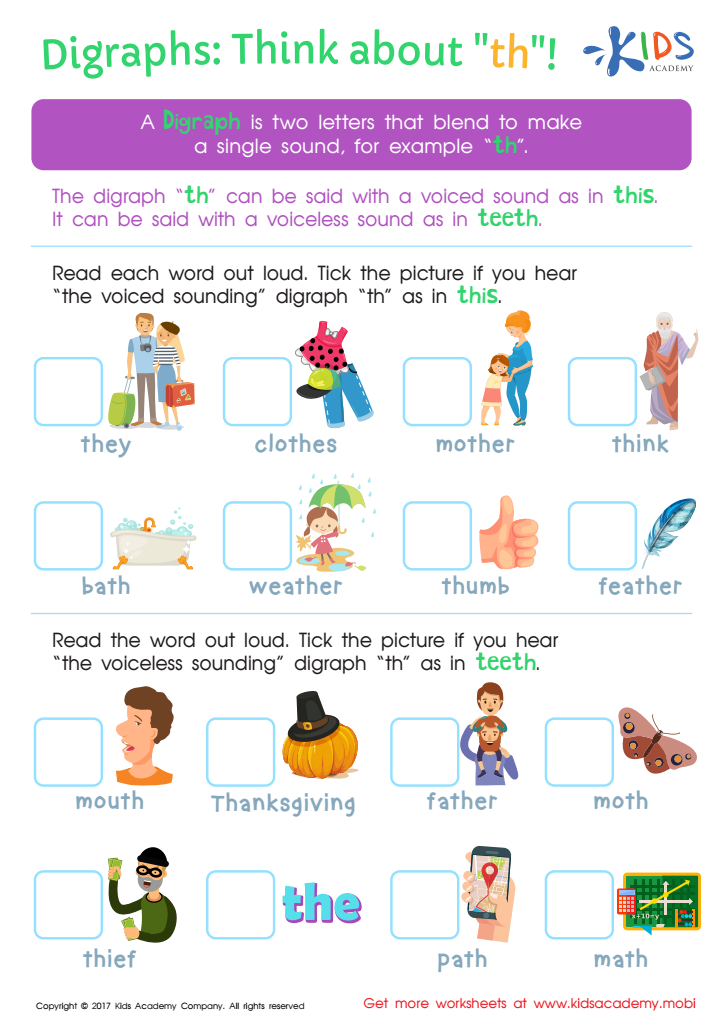
Digraphs: Think About "th" Worksheet
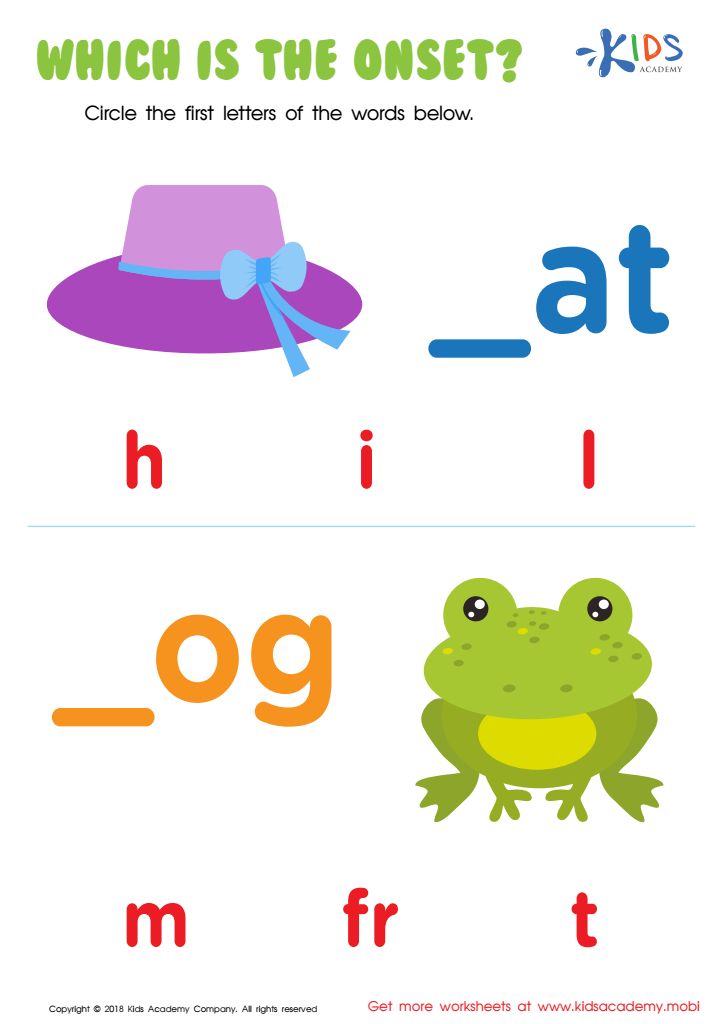
Which Is the Onset? Worksheet






Vocabulary enhancement, particularly focusing on ending sounds, is crucial for children aged 4-8 for several reasons. Understanding ending sounds helps children develop better phonemic awareness, which is the ability to hear, identify, and manipulate individual sounds in spoken words. This skill is foundational for reading and writing and significantly enhances their overall literacy development.
Vocabulary skills directly influence a child's ability to comprehend and express themselves effectively. By focusing on ending sounds, parents and teachers can introduce children to patterns in language, helping them to decode new words and understand their meanings. For instance, recognizing that "cat," "hat," and "bat" share the same ending sound can help children finish words they don’t know and expand their vocabulary.
Furthermore, mastering ending sounds contributes to better spelling skills. Children who understand the relationship between sounds and letters are more likely to spell words correctly and feel confident in their writing efforts. By engaging in activities centered around ending sounds, such as rhyming games and songs, parents and teachers can create a fun learning environment that encourages language exploration. Overall, prioritizing vocabulary enhancement through ending sounds equips young learners with essential skills for lifelong literacy success.








