Fine motor skills improvement Alphabet Worksheets for Ages 4-8
5 filtered results
-
From - To
Boost your child's fine motor skills with our fun and engaging Alphabet Worksheets, specially designed for ages 4-8. Each worksheet integrates creative tracing, drawing, and writing activities to build hand strength, dexterity, and coordination. With colorful and interactive tasks, children will love learning to form letters while enhancing their motor skills. Perfect for preschool and early elementary students, these worksheets are an excellent resource for both classroom and at-home learning. Help your child develop essential pre-writing skills and gain confidence in their abilities with our expertly crafted Fine Motor Skills Improvement Alphabet Worksheets.
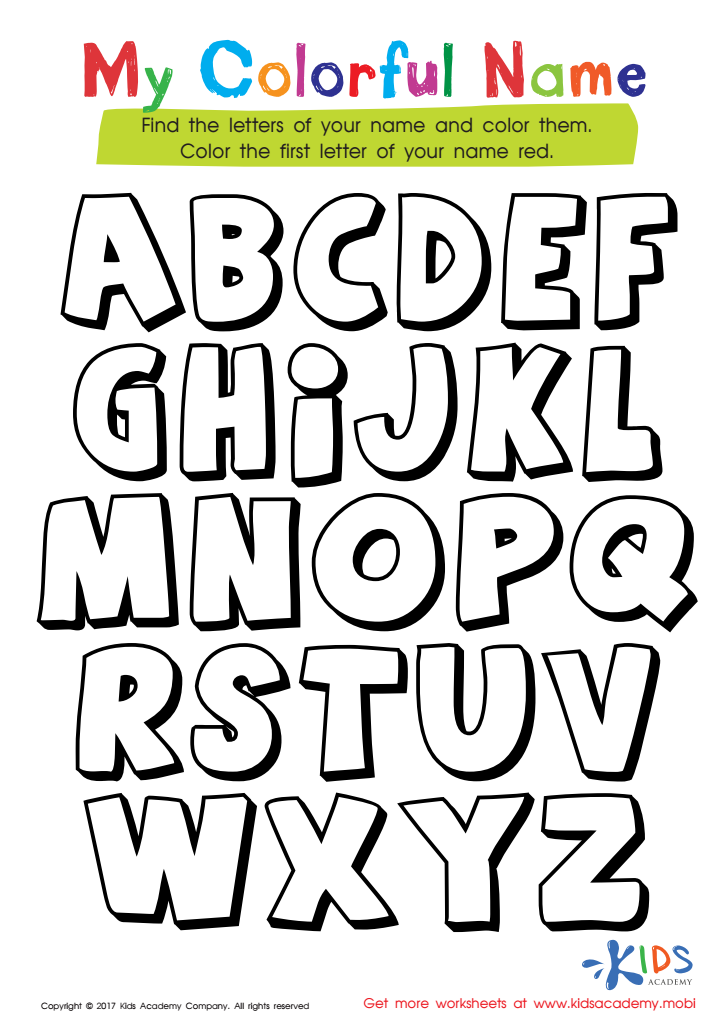
My Colorful Name Worksheet
 Assign to My Students
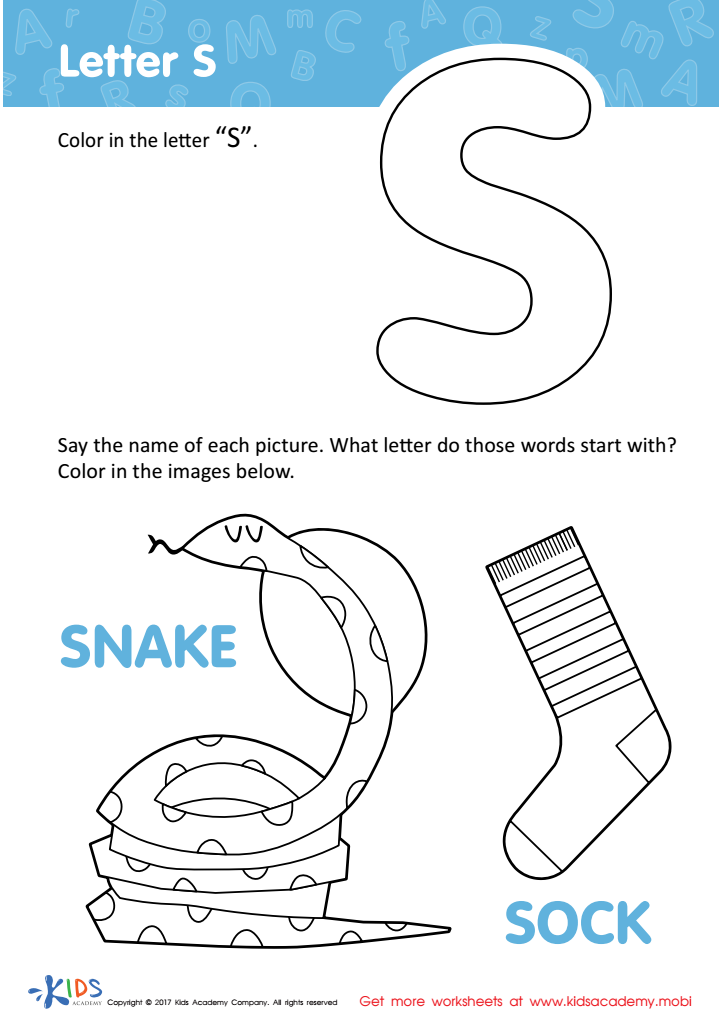
Letter S Coloring Sheet
Assign to My Students
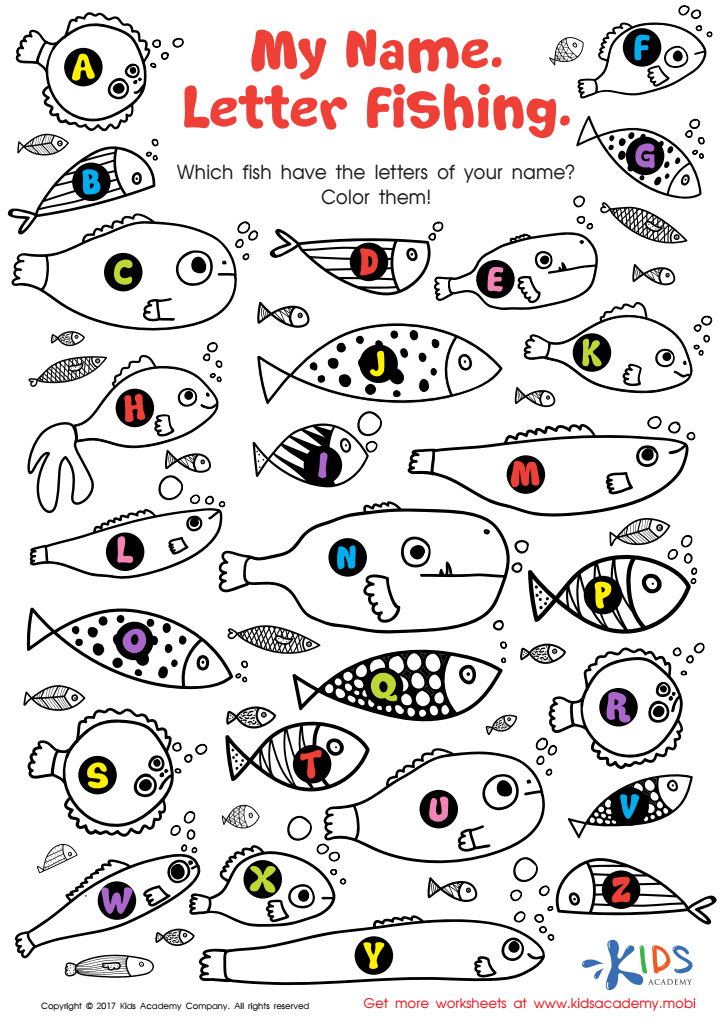
My Name: Letter Fishing Worksheet
Assign to My Students
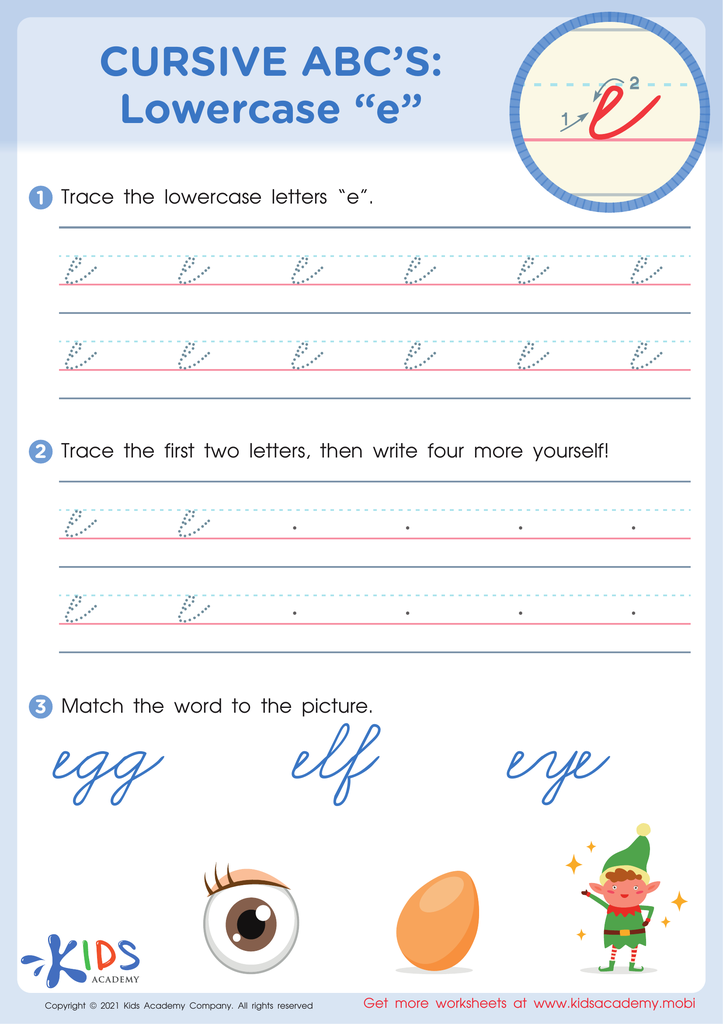
Cursive ABCs: Lowercase e
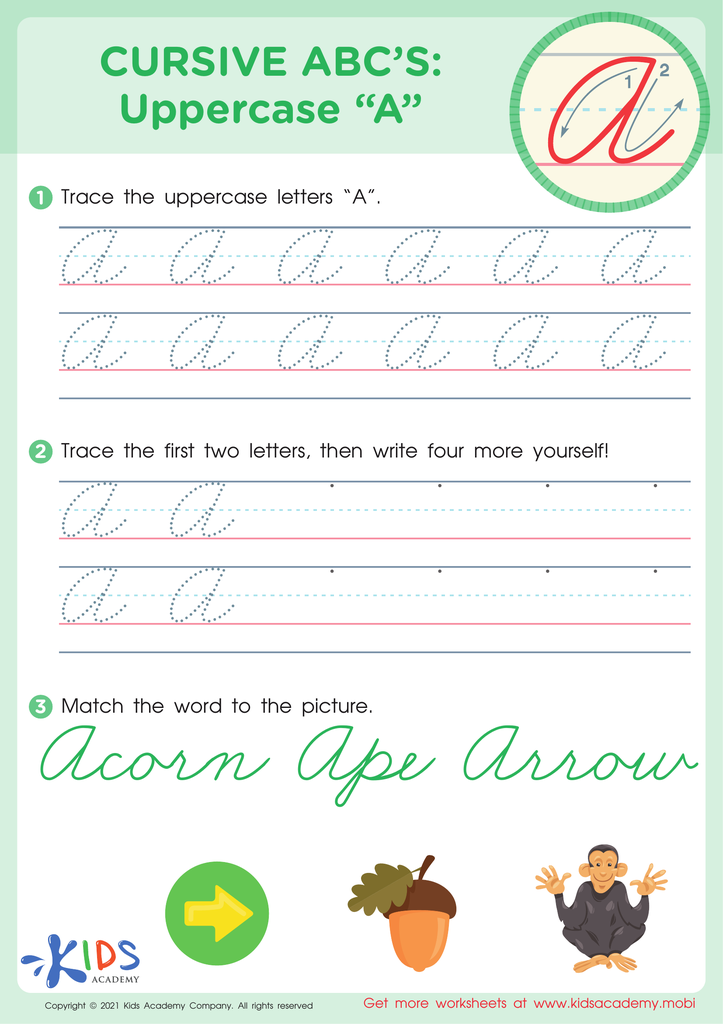
Cursive ABCs: Uppercase A







Fine motor skills are critical physical abilities that involve the coordination of small muscles, particularly in the hands and fingers, to perform tasks with precision. For children aged 4-8, improvement in these skills is essential not only for daily activities but also for their academic and future success.
When linked specifically to the alphabet, fine motor skill development becomes crucial. Children learn to write the alphabet by controlling hold and strokes with a pencil or crayon, which requires fine muscle control. Strong fine motor skills help children write letters more comfortably and legibly, fostering confidence and motivation to engage in reading and writing activities. This early literacy practice lays the foundation for more advanced literacy skills later on.
Moreover, the benefits extend beyond academics. Fine motor activities, such as writing, cutting with scissors, or using small manipulatives (like beads or blocks), enhance hand-eye coordination, boost cognitive development, and support brain development related to complex skills like problem-solving and planning.
Parents and teachers must focus on fine motor skills to facilitate smoother educational experiences and daily functioning for children. Simple games and educational exercises can significantly impact children's ability to express themselves, both in school and in everyday activities, ensuring they develop a strong foundational toolkit as they grow.







