
Phonetics understanding Alphabet Worksheets for Ages 4-8
4 filtered results
Difficulty Level
Grade
Age
-
From - To
Subject
Activity
Standards
Discover our engaging Phonetics Understanding Alphabet Worksheets, designed specifically for children aged 4-8. These interactive resources help young learners grasp the fundamental sounds of letters, enhancing their phonetic awareness and early reading skills. Our user-friendly worksheets feature colorful illustrations and fun activities that keep kids motivated while they learn to recognize letter sounds, identify word patterns, and develop essential phonics skills. Ideal for both classroom settings and home practice, these worksheets provide a solid foundation for literacy in a playful, enjoyable way. Empower your child's reading journey with our innovative phonetics worksheets today and watch their confidence soar!
Favorites
With answer key
Interactive
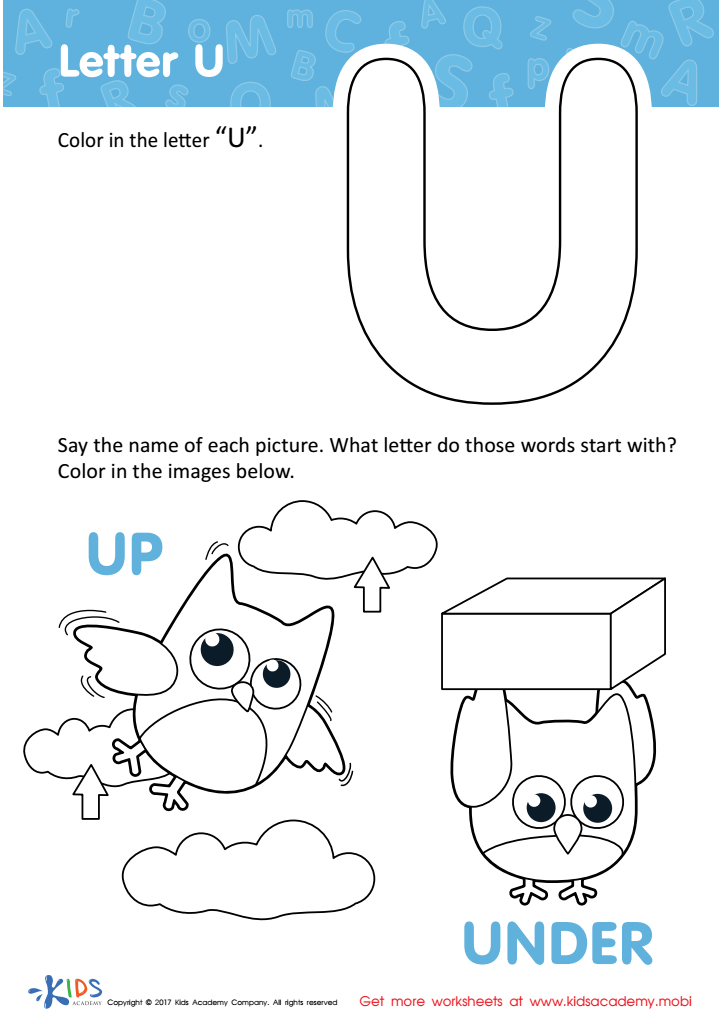
Letter U Coloring Sheet
This letter "U" coloring page helps your child learn two things at once - the letter "U" and positional words! An adorable owl character aids in understanding up and under. In a few strokes of a crayon, your child can master these concepts.
Download (PDF)
 Assign to My Students
Assign to My Students
Letter U Coloring Sheet
Worksheet
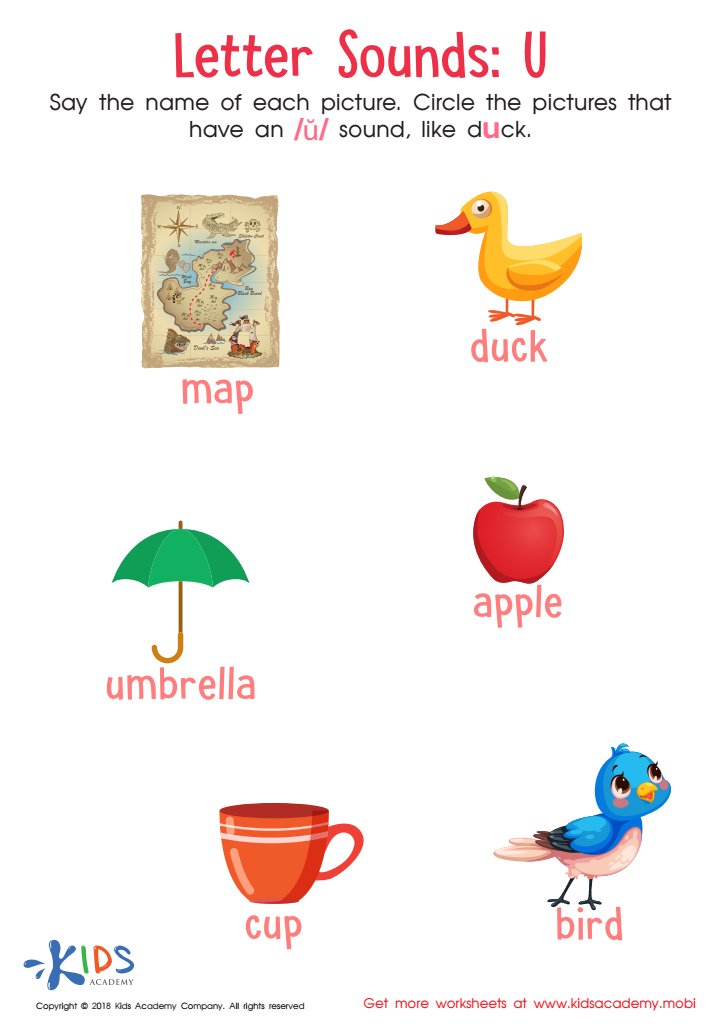
Letter U Sounds Worksheet
The letter U is special with multiple pronunciations. This worksheet helps kids identify the short «u» in words like duck and cup. Read the words aloud and listen closely to the sounds. Circle only words with the correct sound to complete the sheet. Kids will quickly know that words like "map" don't contain a U.
Letter U Sounds Worksheet
Worksheet
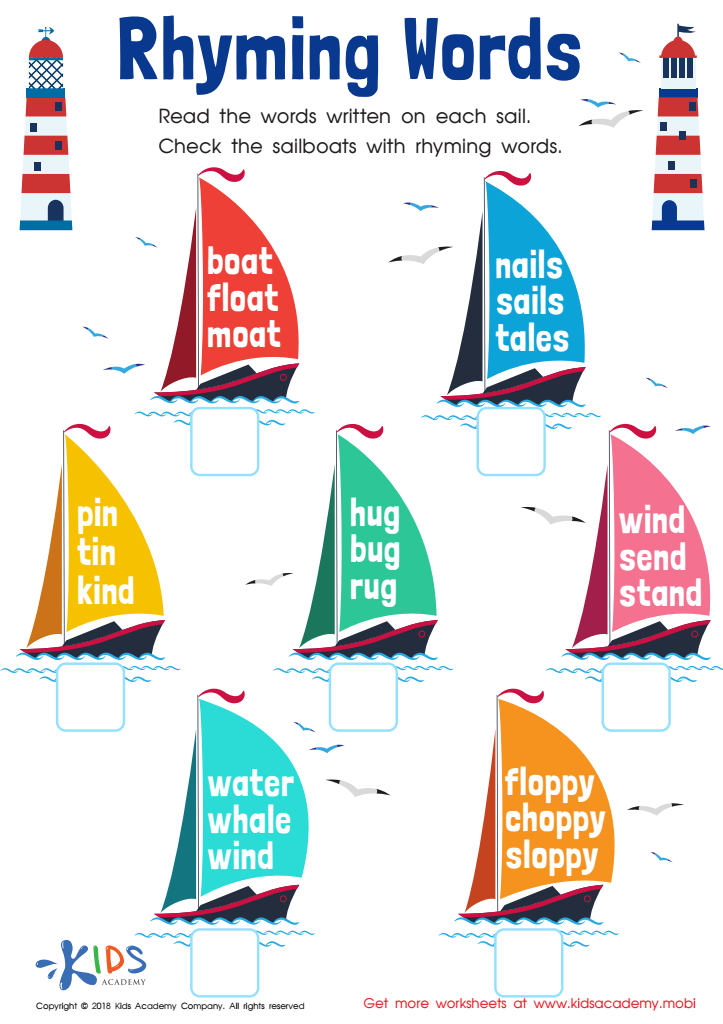
Rhyming Words Worksheet
Does your child know about rhyming words? Get them interested in poetry and explain that these words have similar sounds when pronounced. Read the words on each sailboat to your child and ask them to identify the rhyming pairs. Guide them to check the sailboats.
Rhyming Words Worksheet
Worksheet
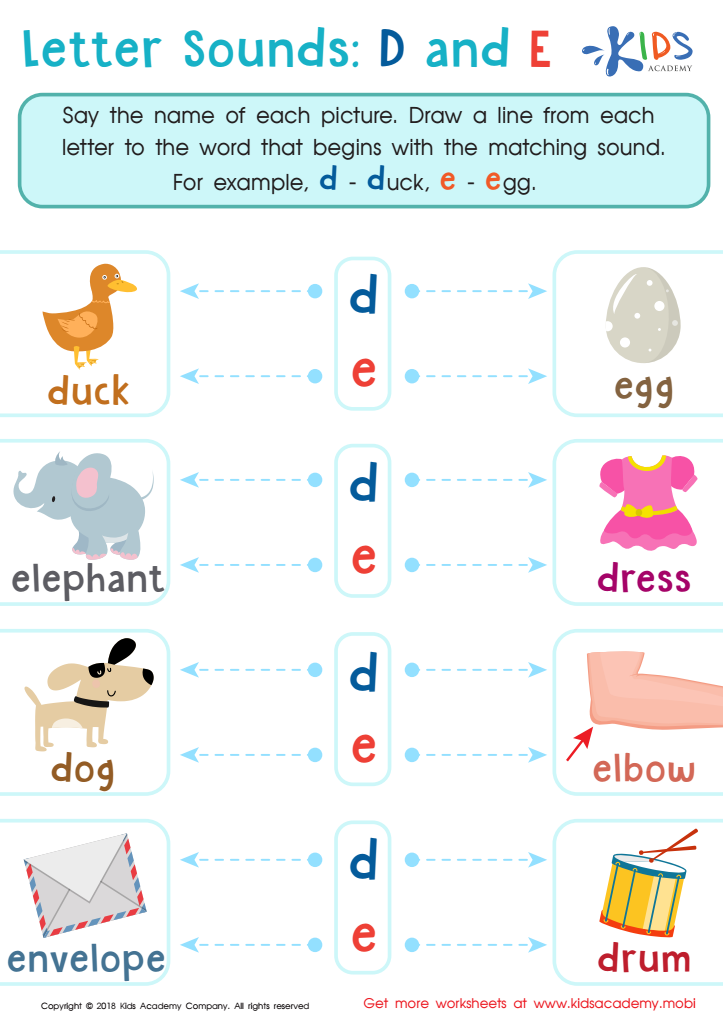
Letter D and E Sounds Worksheet
Kids can use picture clues and visual discrimination to name cheerful pics and isolate the beginning sound. This free PDF worksheet will help them develop phonological awareness, differentiate between "D" and "E", and hone fine-motor skills. It'll also boost their confidence as they become readers.
Letter D and E Sounds Worksheet
Worksheet
Join Kids Academy for Free
Who is primarily going to use this learning content?







Understanding phonetics is crucial for children aged 4-8 as it lays the foundation for reading and writing. Phonetics focuses on the sounds of speech, helping children become aware of how individual sounds—or phonemes—combine to form words. When parents and teachers prioritize phonetics, they empower children to decode unfamiliar words and spell correctly, increasing their confidence in language skills.
By grasping the connection between sounds and letters (the alphabet), children learn to recognize letter patterns, improving their vocabulary and comprehension. Phonetic skills also foster listening and auditory discrimination, key abilities in a child's overall language development. Engaging with phonetics through fun activities, such as rhyming games and sound sorting, makes learning enjoyable and memorable.
Moreover, a strong foundation in phonetics enables early readers to bridge from simple texts to more complex literature, facilitating a lifelong love for reading. By investing time in phonetic understanding, parents and teachers cultivate essential communication skills, ensuring children not only advance academically but also thrive socially in their literacy journey. Thus, nurturing phonetic understanding represents a vital step in fostering competent, confident, and enthusiastic young learners.







