
Alphabetical understanding Letter Recognition Worksheets for Ages 4-8
3 filtered results
Difficulty Level
Grade
Age
-
From - To
Subject
Activity
Standards
Discover engaging Alphabetical Understanding Letter Recognition Worksheets designed for ages 4-8, available at Kids Academy. These innovative resources foster foundational alphabet skills through hands-on activities, ensuring youngsters grasp letter shapes, sounds, and sequencing. Perfect for preschool and early grade learners, the worksheets incorporate vibrant visuals and interactive elements to transform learning into a playful adventure. Enhance your child’s reading readiness and boost their confidence as they master early literacy skills. Visit Kids Academy now to explore our diverse collection and set the stage for successful, enjoyable alphabet learning!
Favorites
With answer key
Interactive
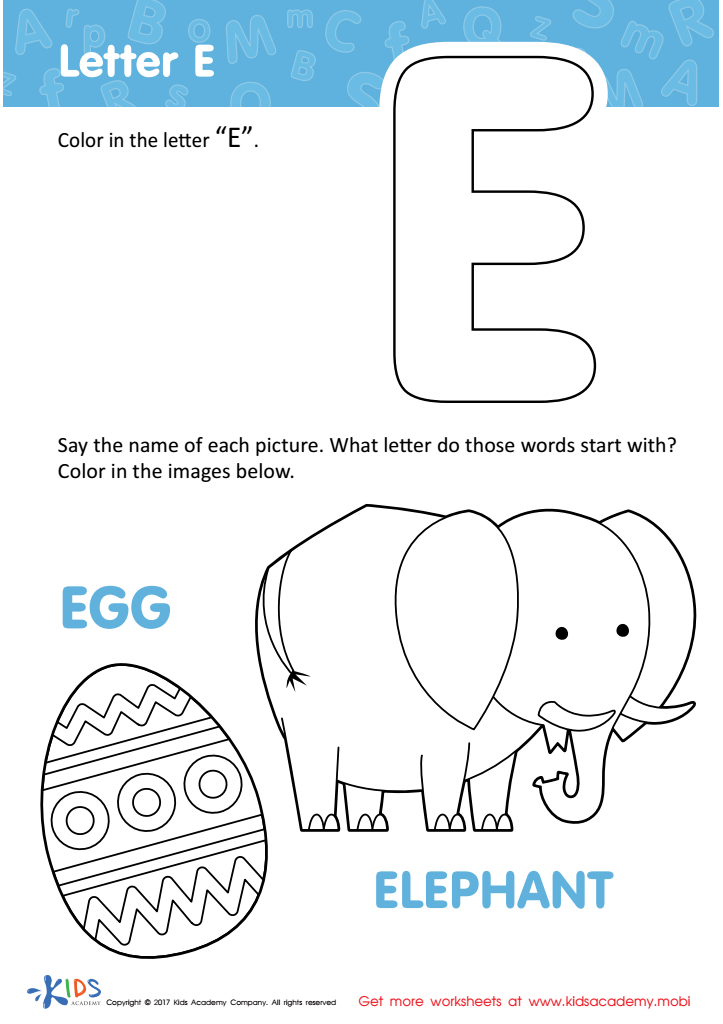
Letter E Coloring Sheet
Coloring pages are great for teaching kids the alphabet and words! This "E" page features a cute elephant and Easter egg. Kids will love it and learn the letter "E" at the same time. 80 words
Download (PDF)
 Assign to My Students
Assign to My Students
Letter E Coloring Sheet
Worksheet
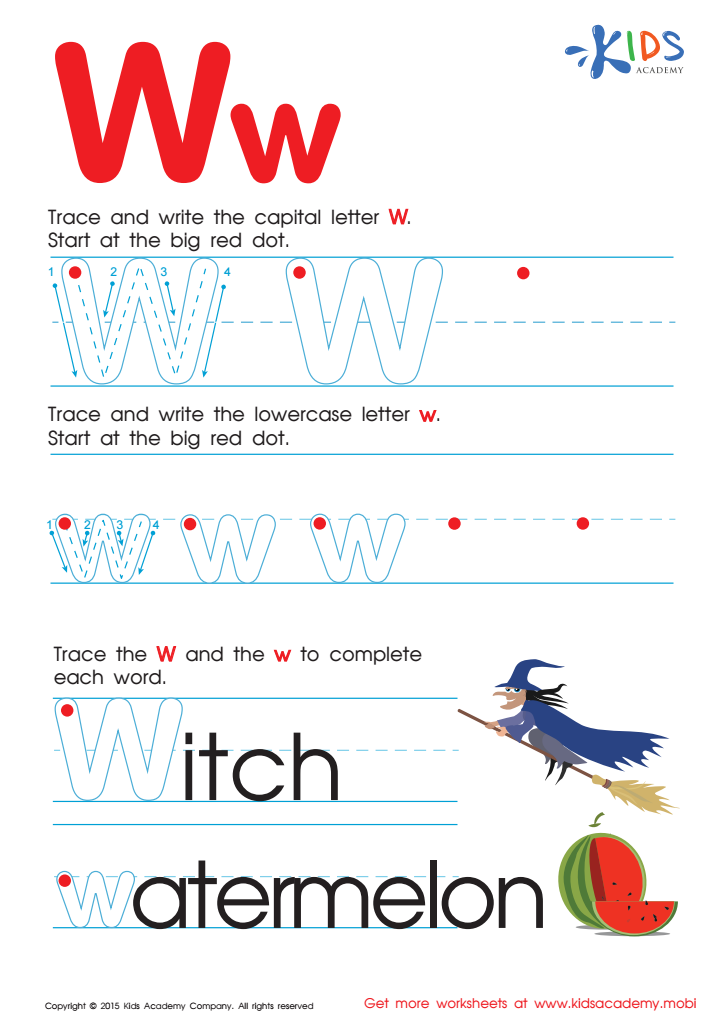
Letter W Tracing Page
Trace and write the capital and lowercase letter W with this free letter tracing worksheet by Kids Academy. Complete the words "Witch" (capital) and "watermelon" (lowercase). Check out our other kindergarten alphabet worksheets!
Letter W Tracing Page
Worksheet
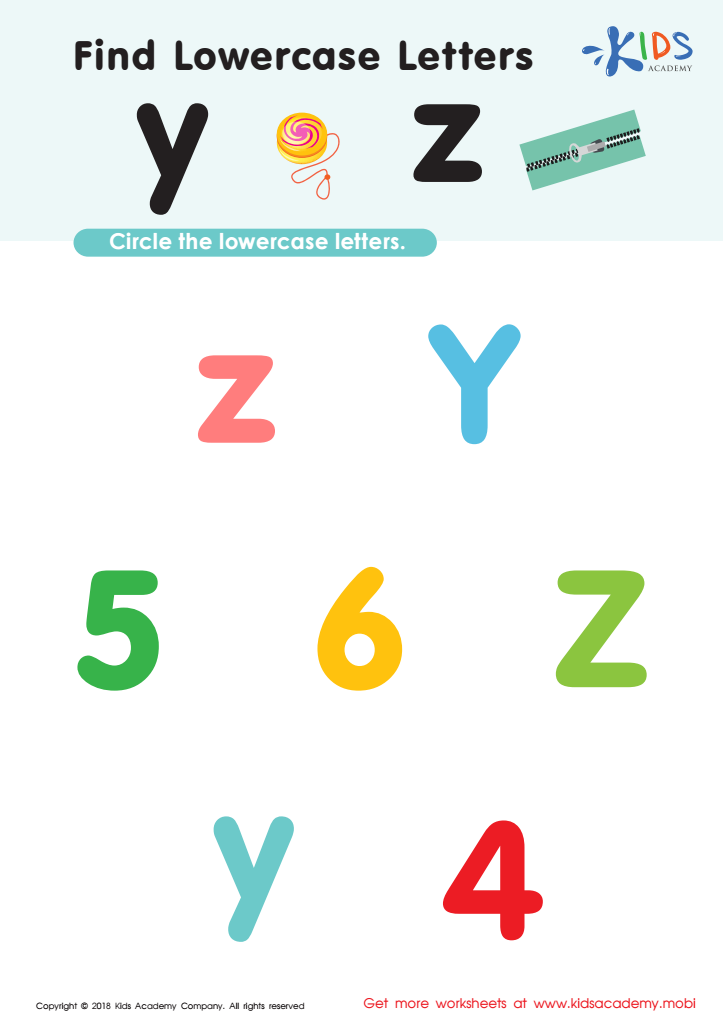
Find Lowercase Letters y z Worksheet
Help your kid learn the alphabet. Before they can move on to words and reading, they must first know the lower and uppercase letters. Show them how to find the letters y and z in this worksheet, which is filled with uppercase letters and numbers. Together, find and circle them.
Find Lowercase Letters y z Worksheet
Worksheet
Join Kids Academy for Free
Who is primarily going to use this learning content?








Alphabetical understanding and letter recognition are essential building blocks for literacy and overall cognitive development in children ages 4-8. At this formative stage, kids are like sponges, capable of absorbing vast amounts of information. Knowing the alphabet not only helps them read and write but also enhances their ability to communicate effectively. Early mastery of letter names and sounds enables children to decode words, which is a critical skill for reading fluency. Research shows that early letter recognition is a strong predictor of future academic success, including comprehension, vocabulary, and even math skills.
For teachers, fostering this foundational skill involves interactive and engaging activities like singing alphabet songs, playing letter-matching games, and incorporating hands-on tools such as magnetic letters or flashcards. For parents, reinforcing these skills at home through fun and meaningful experiences, such as reading picture books and naming objects, can significantly complement classroom learning. Ignoring this critical aspect can lead to reading difficulties, frustration, and a lack of confidence. Therefore, focusing on alphabetical understanding and letter recognition not only sets the stage for lifelong learning but also promotes a love for reading, enriching a child's educational journey.







