Fine motor skills development Letter Recognition Worksheets for Ages 4-8
5 filtered results
-
From - To
Enhance your child's fine motor skills while promoting letter recognition with our engaging worksheets designed for ages 4-8! These printable activities combine fun and learning, allowing young learners to develop essential dexterity through tracing, coloring, and engaging hands-on tasks. Our letter recognition worksheets not only familiarize children with letters, but also strengthen their grip and coordination skills. Designed with vibrant illustrations and age-appropriate challenges, these worksheets create a stimulating educational experience that keeps kids motivated. Whether for home or classroom use, our fine motor skills development resources are perfect for laying the foundation for literacy and future success. Start the learning journey today!
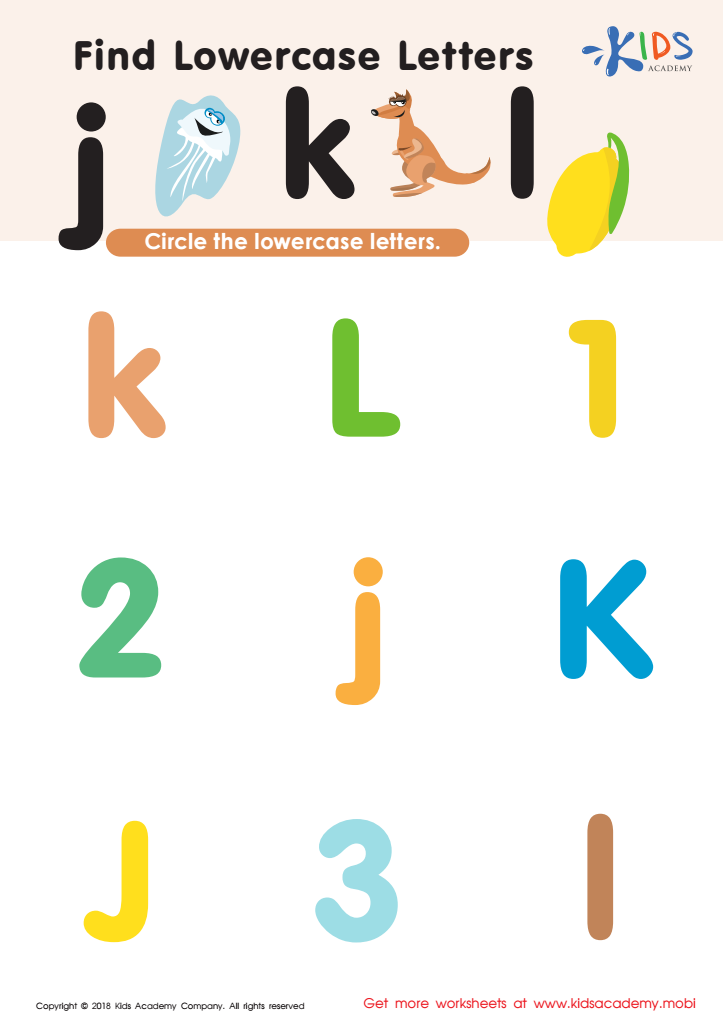
Find Lowercase Letters j k l Worksheet
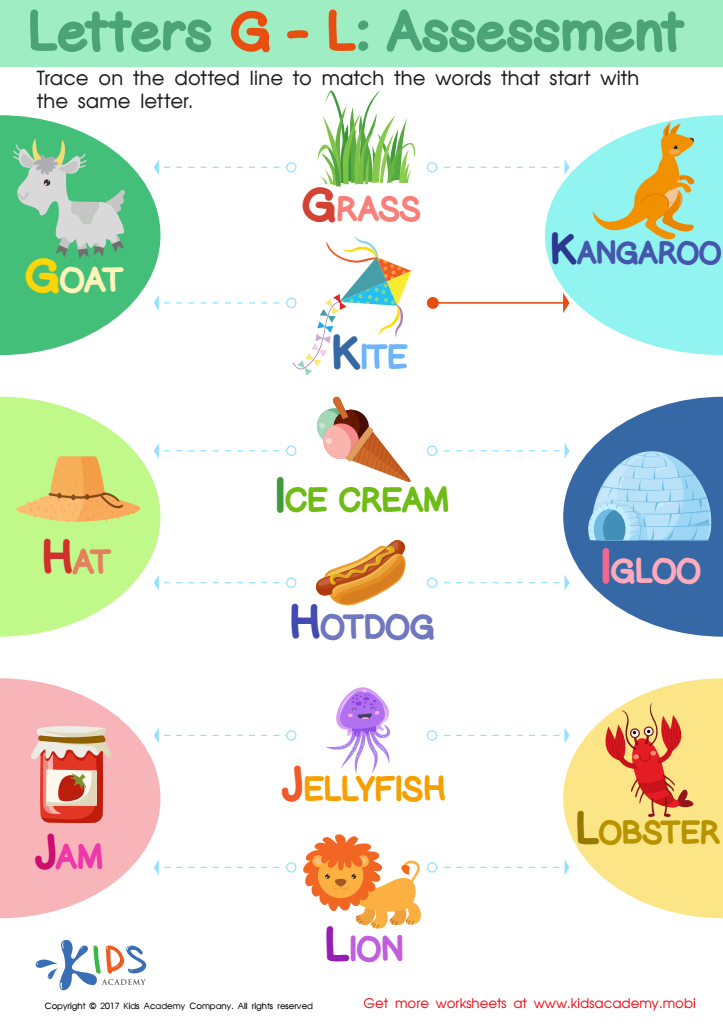
Letters G-L Worksheet

Letter J Tracing Page
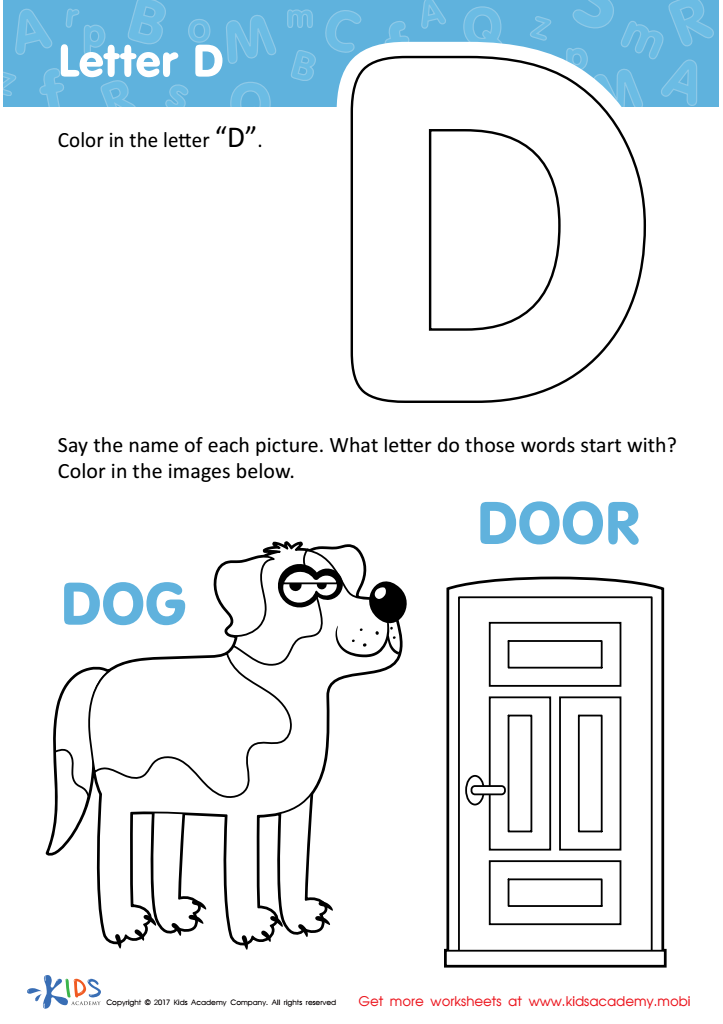
Letter D Coloring Sheet
 Assign to My Students
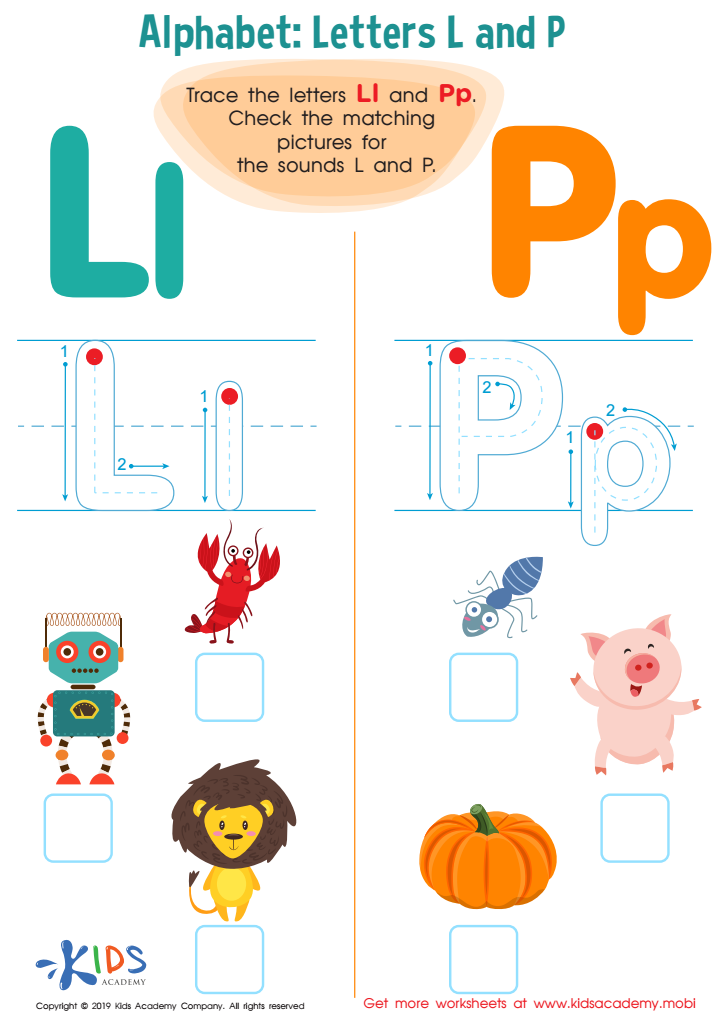
Letter L and P Tracing Worksheet








Fine motor skills development and letter recognition are critical for children ages 4-8 as they lay the foundation for academic success and everyday tasks. Fine motor skills, such as grasping, pinching, and manipulating small objects, are essential for developing writing, drawing, and self-help abilities. These skills allow children to hold pencils correctly, use scissors with control, and manage buttons or zippers, which are crucial for their independence.
On the other hand, letter recognition focuses on helping children identify and understand the symbols that make up written language. This foundation enhances phonics skills, enabling effective reading and writing development. Early recognition of letters fosters vocabulary growth and boosts confidence in literacy, which is crucial for ongoing academic achievement.
When parents and teachers prioritize fine motor activity and letter recognition, they create a supportive learning environment. Engaging in activities like arts and crafts or elegant handwriting exercises strengthens fine motor skills, while playful literacy games enhance letter familiarity. This holistic approach ensures that children develop both the physical dexterity and cognitive understanding necessary to thrive in school and beyond. Investing in these skills not only enriches a child's immediate learning experience but also prepares them for future educational challenges.







