
Vocabulary Building Letter Recognition Worksheets for Ages 4-8
3 filtered results
Difficulty Level
Grade
Age
-
From - To
Subject
Activity
Standards
Our Vocabulary Building Letter Recognition Worksheets for ages 4-8 are designed to make learning engaging and effective for young children. These vibrant and interactive worksheets help kids master the alphabet while expanding their vocabulary. Featuring fun activities, matching games, and colorful illustrations, the worksheets support early literacy skills, comprehension, and cognitive development. Ideal for both classroom use and at-home practice, they provide comprehensive, step-by-step guidance that ensures children build a strong foundation in reading and writing. Discover the joy of learning letters and new words with these expertly crafted, educational resources from Kids Academy!
Favorites
With answer key
Interactive
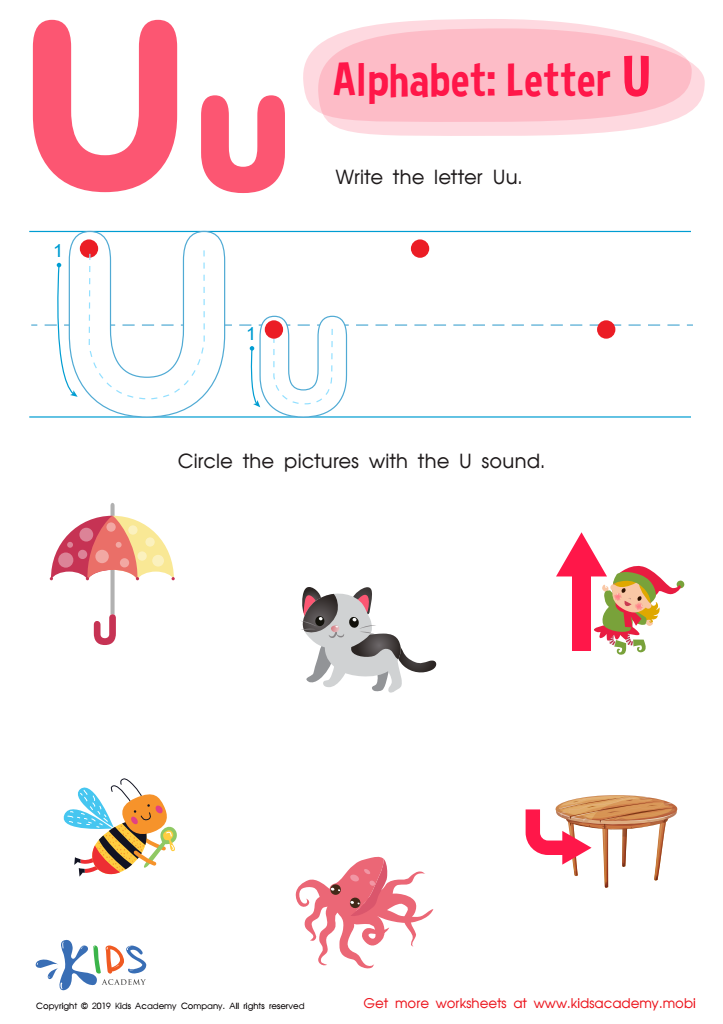
Letter U Tracing Worksheet
Your students can have fun and learn about the alphabet with this letter «U» worksheet. Pre-schoolers will trace the letter «U», circle words with the letter sound, and learn phonics while boosting their confidence. Doing these tasks will help them understand the letter more.
Letter U Tracing Worksheet
Worksheet
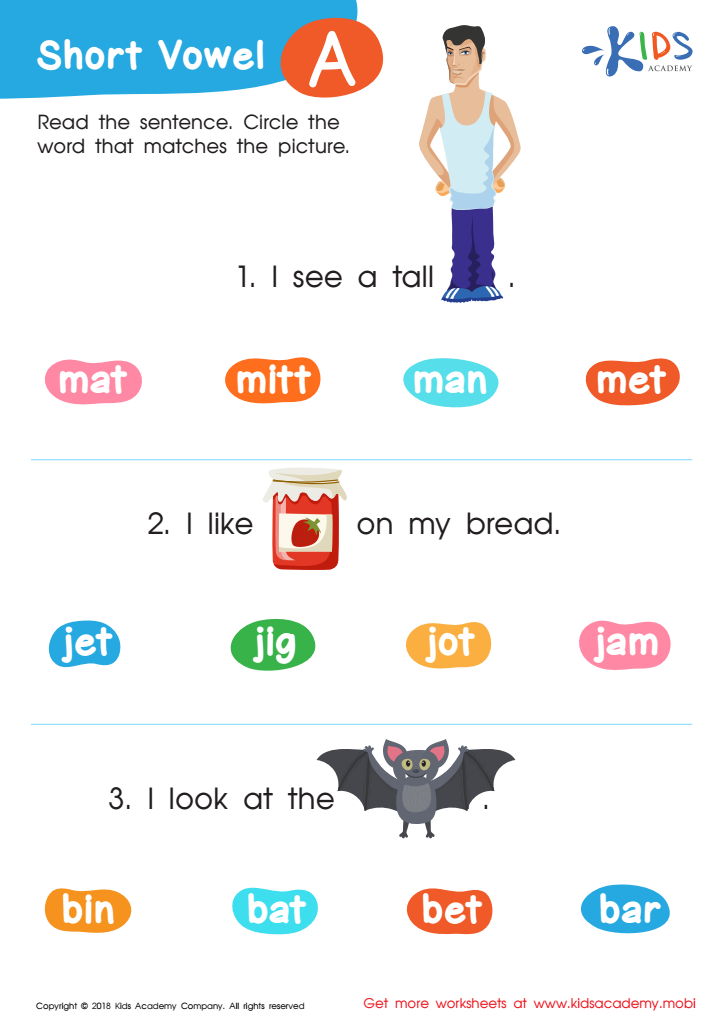
Short Vowel /a/ Worksheet
This free PDF helps new readers use sight words and pictures to read basic sentences. Then, they use accompanying word choices to find the correct word with the short a vowel sound. A key early reading skill, discriminating between short vowel sounds can be tricky in monosyllabic words, so use this PDF to help your reader reinforce it.
Short Vowel /a/ Worksheet
Worksheet
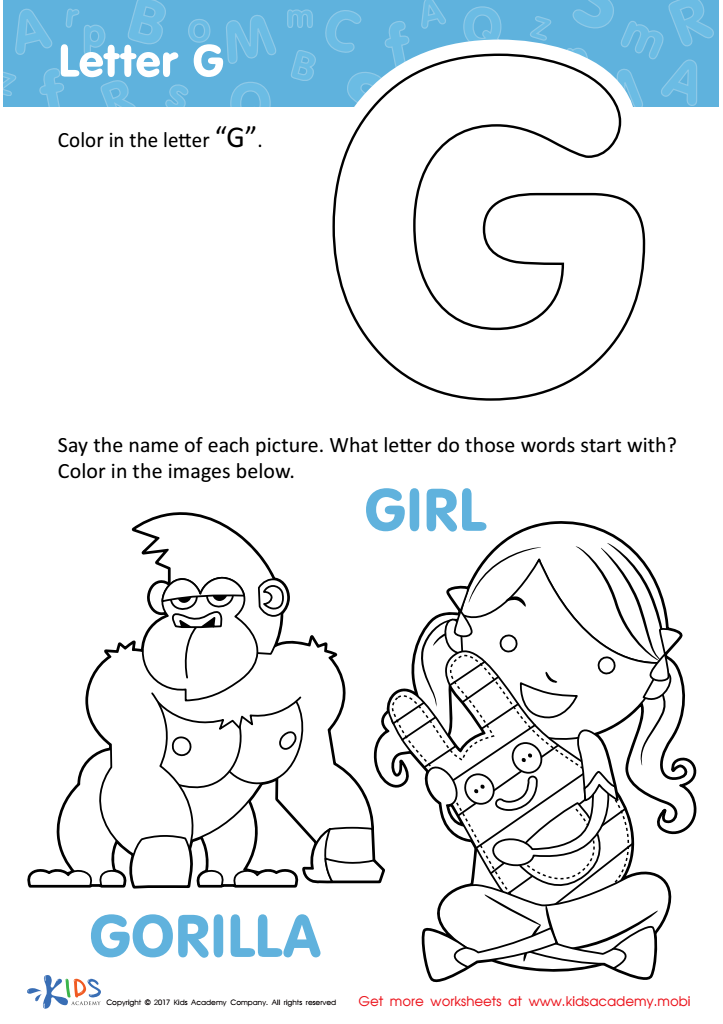
Letter G Coloring Sheet
This "G" coloring page encourages creativity and teaches kids the letter "G" sound. With its fun visuals and familiar words, it's sure to excite your child. Plus, you can talk about the letter’s sound with the pictures given.
Download (PDF)
 Assign to My Students
Assign to My Students
Letter G Coloring Sheet
Worksheet
Join Kids Academy for Free
Who is primarily going to use this learning content?








Vocabulary building and letter recognition are foundational skills for young learners, aged 4-8. For parents and teachers, focusing on these areas is crucial because they serve as the building blocks for reading and writing, which are essential for academic success and effective communication.
Letter recognition is the ability to identify letters by their shapes, names, and sounds. This skill is a precursor to phonemic awareness, the understanding that words are made up of individual sounds. Early mastery of letter recognition, therefore, significantly aids in the development of reading fluency and spelling accuracy. When children can quickly and easily recognize letters, they are more equipped to decode new words, contributing to more robust literacy skills.
On the other hand, vocabulary building enriches a child's language comprehension and expression. A broad vocabulary allows children to better understand what they read and hear, enabling them to communicate their ideas more clearly and confidently. Early vocabulary instruction helps children grasp new concepts, engage more deeply with content, and perform better across all subjects.
In summary, parents and teachers should prioritize vocabulary building and letter recognition to establish a strong literacy foundation. These skills not only enhance academic achievement but also promote lifelong learning and communication abilities.







