Letter recognition Tracing Letters Worksheets for Ages 4-8 - Page 2
26 filtered results
-
From - To
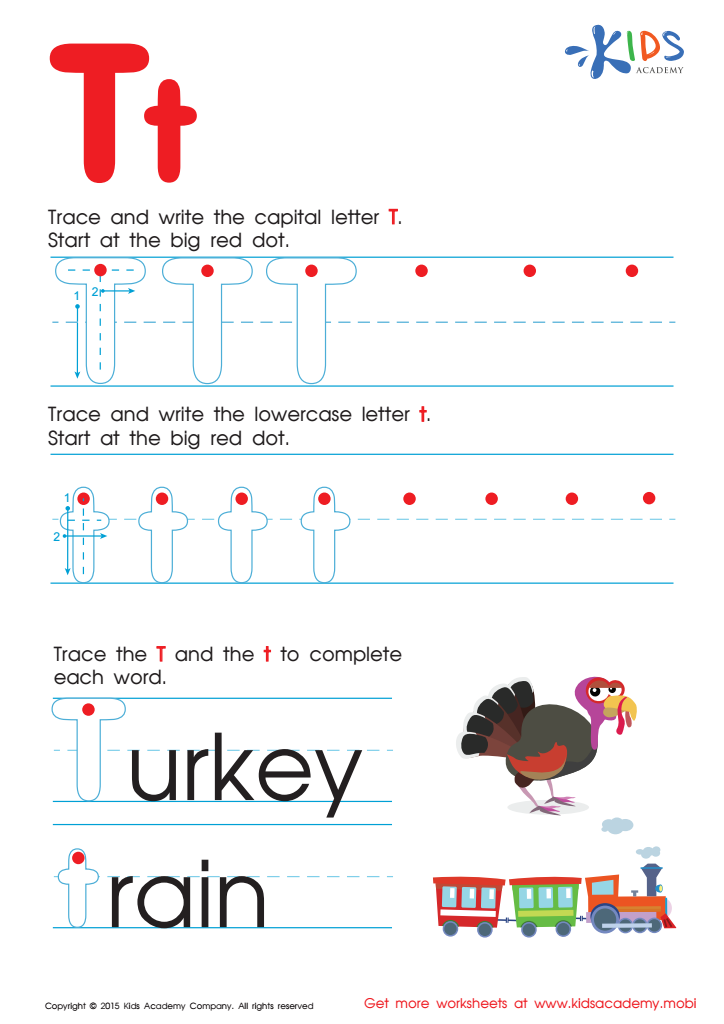
Letter T Tracing Page
 Assign to My Students
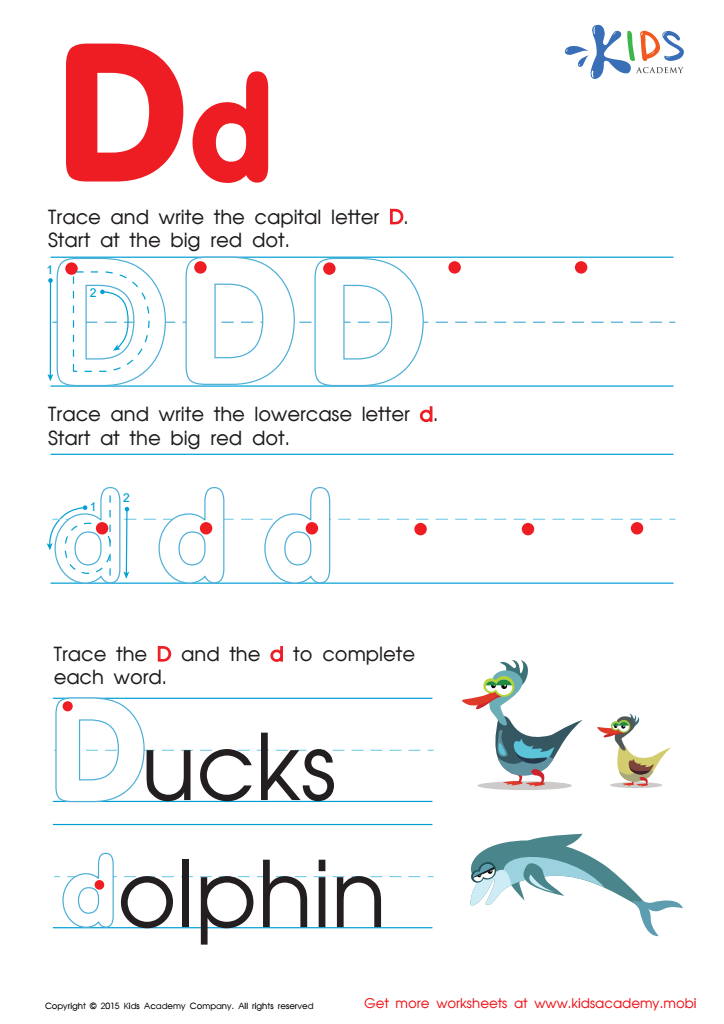
Letter D Tracing Page







Letter recognition and tracing are foundational skills vital for children aged 4-8 as they lay the groundwork for literacy development. At this age, children are beginning to understand the alphabet, which is essential for reading and writing. Recognizing letters helps them identify the sounds associated with each letter, significantly boosting their phonemic awareness—an essential skill for future reading.
Tracing letters reinforces the formation of these characters and aids in developing fine motor skills. As children trace letters, they practice using a pencil or crayon, strengthening their hand-eye coordination and dexterity. This practice enhances their ability to write independently, fostering confidence in their writing abilities.
Moreover, engaging with letters in a hands-on way makes learning enjoyable and interactive. Parents and teachers can create a stimulating learning environment that promotes curiosity and exploration. It also provides opportunities for positive reinforcement, as children feel a sense of accomplishment when they recognize and trace letters correctly.
Ultimately, letter recognition and tracing activities contribute to a solid literacy foundation, enabling children to succeed in reading and writing. By prioritizing these skills, parents and teachers help children navigate their educational journey confidently.








