Letter-sound association Tracing Letters Worksheets for Ages 4-8
5 filtered results
-
From - To
Discover our engaging Letter-Sound Association Tracing Letters Worksheets designed for children aged 4-8, exclusively at Kids Academy. These printable resources effortlessly blend fun and learning, guiding young learners through the essentials of letter recognition and sound association. With expertly crafted activities, children practice tracing letters, which enhances their fine motor skills, while simultaneously reinforcing the sounds each letter makes. These worksheets lay a solid foundation for reading and writing, making early literacy an enjoyable journey. Ideal for preschoolers, kindergartners, and first graders, our tracing letters worksheets are your perfect partner in early education. Explore now and watch your child thrive!
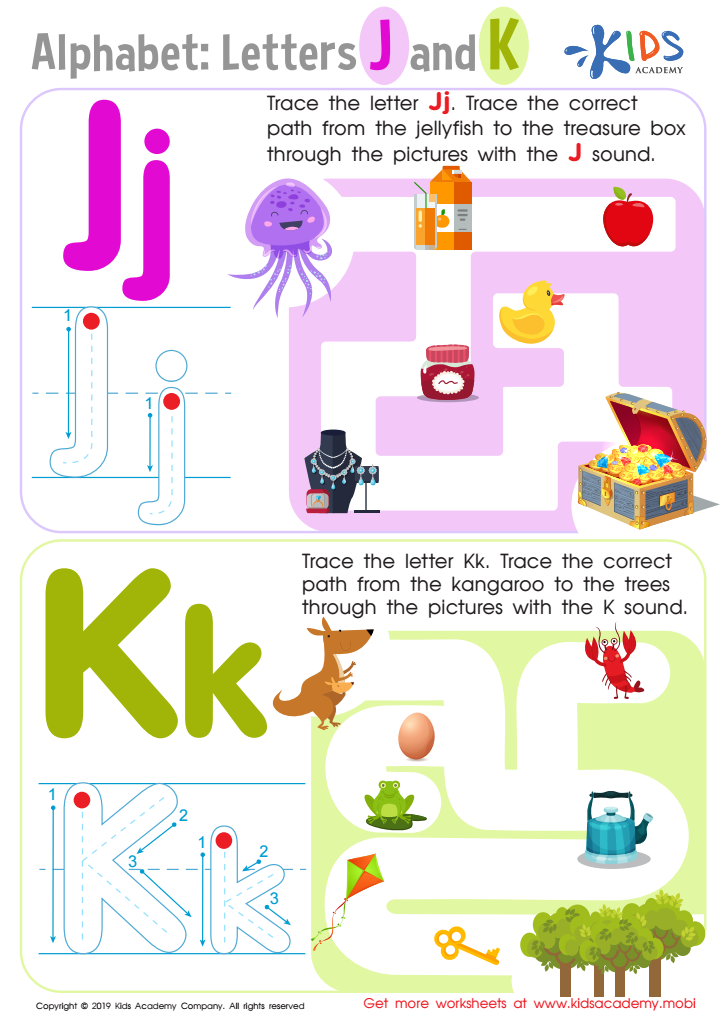
Letters J and K Tracing Worksheet
 Assign to My Students
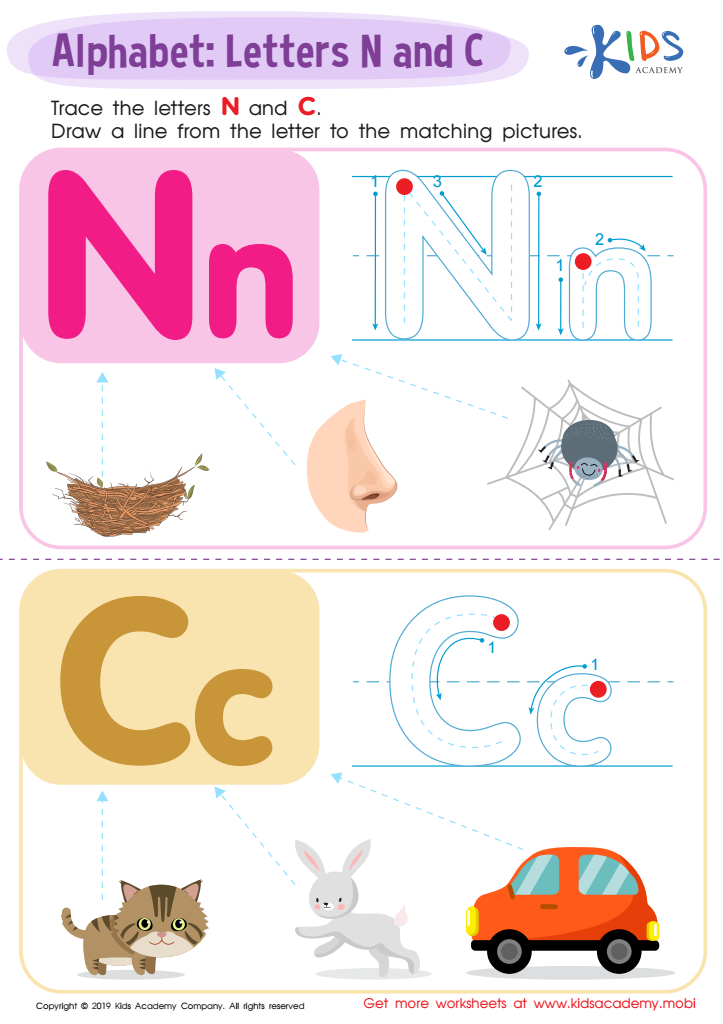
Letter N and C Tracing Worksheet
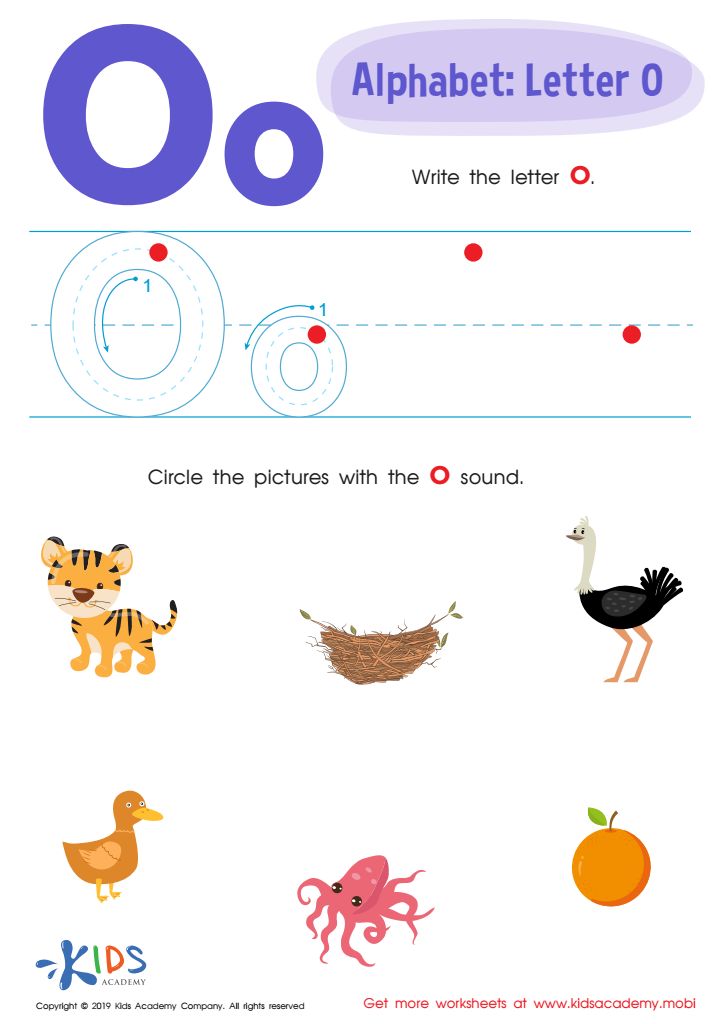
Letter O Tracing Worksheet
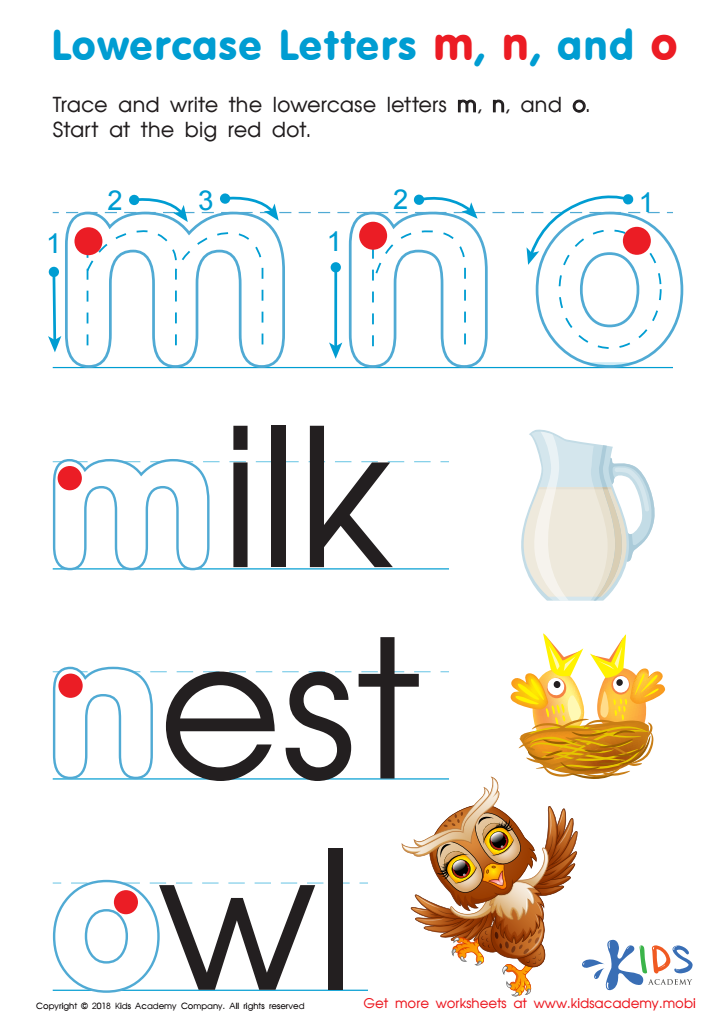
Lowercase Letters m n o Worksheet
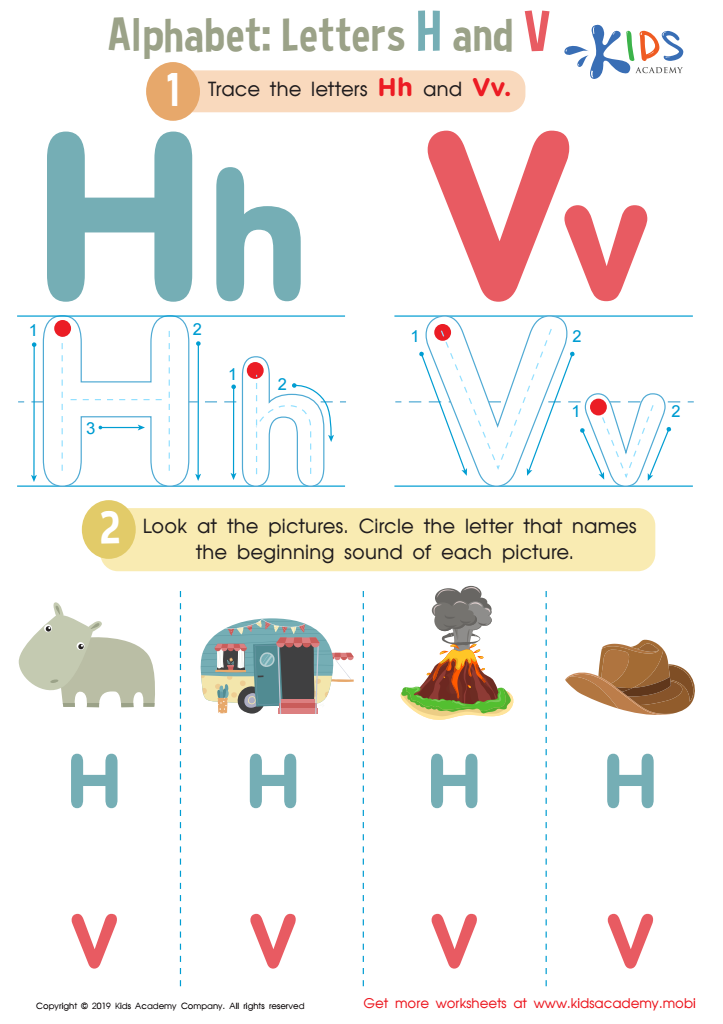
Letters H and V Tracing Worksheet








Letter-sound association and tracing letters are foundational skills crucial for young children, typically ages 4-8, as they begin their journey into literacy. When parents and teachers emphasize these activities, they set children up for successful reading and writing experiences.
Firstly, integrating letter-sound association helps children understand that letters represent sounds, a critical insight for decoding words. This phonemic awareness is a key predictor of reading success. By recognizing that the letter "a" sounds like /æ/ as in apple, for example, children start connecting written text to spoken language.
Tracing letters reinforces this understanding while aiding fine motor skills. As kids trace, they learn the shapes and forms of each letter, which helps with both letter recognition and handwriting. This kinesthetic activity also supports memory retention; forming letters through tracing solidifies their knowledge both visually and through motion.
Moreover, these practices boost confidence and foster a love for learning. Mastery of letter-sound associations provides children with the tools they need to approach new words with less apprehension. When kids are confident in their literacy skills, they are more likely to enjoy reading and continue practicing independently.
In sum, ensuring that young learners have strong letter-sound association and tracing experiences equips them with essential early literacy skills, supports cognitive development, and promotes an enthusiastic attitude toward learning.








