Filters

7 filtered results

Clear all filters
Favorites
With answer key
Interactive

7 filtered results

Difficulty Level

Grade


Discover our engaging Two Letter Phonics Worksheets designed for children ages 4-8! These interactive resources focus on developing essential phonics skills through fun activities and exercises. Each worksheet encourages early readers to recognize and sound out two-letter combinations, enhancing their vocabulary and reading fluency. Perfect for educators and parents, these worksheets foster a love for learning and help build a strong foundation in phonics. With colorful illustrations and age-appropriate content, children will enjoy mastering the basics of reading while gaining confidence. Explore our collection today and unlock the joy of phonics learning for your little ones!

Check out this FREE Trial Lesson on Two Letter Phonics for age 4-8!

Review Blends

Favorites
With answer key
Interactive
  • 4-8
  • Phonics Skills
  • Two Letter Phonics
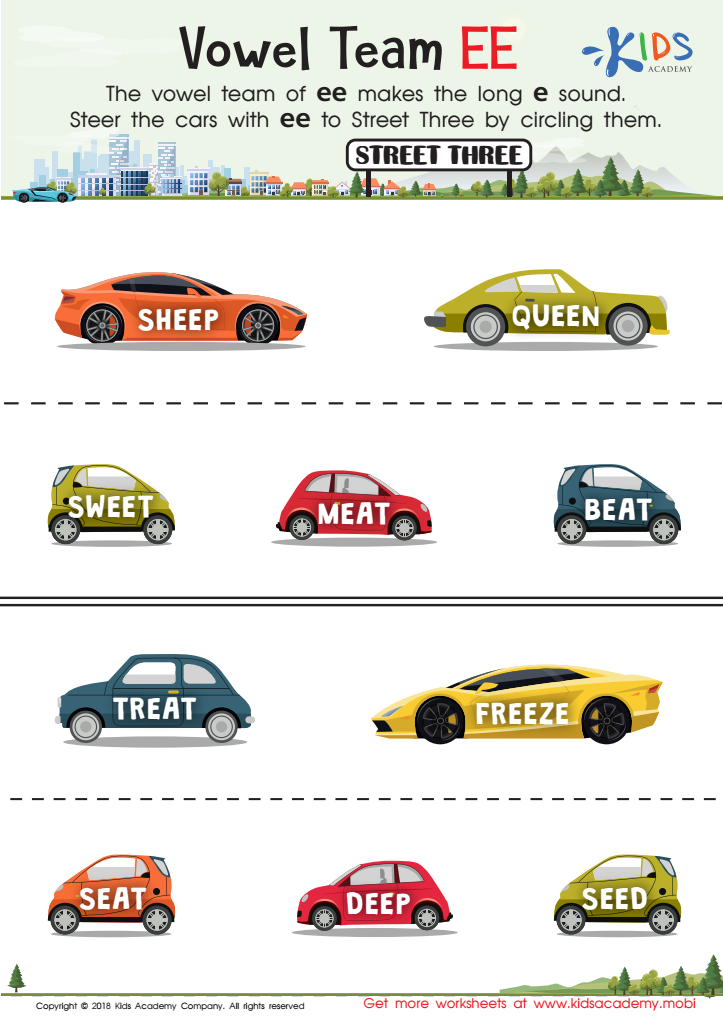
Vowel team ee Worksheet

Vowel team ee Worksheet

Revised: Kids will have a blast steering cars with the -ee digraph towards Street Three! This fast-paced worksheet reinforces that -ee makes the long -e sound while boosting fine motor skills. Kids will love the bright colors and stay engaged with this fun printable. Get ready for hours of off-road excitement!
Vowel team ee Worksheet
Worksheet
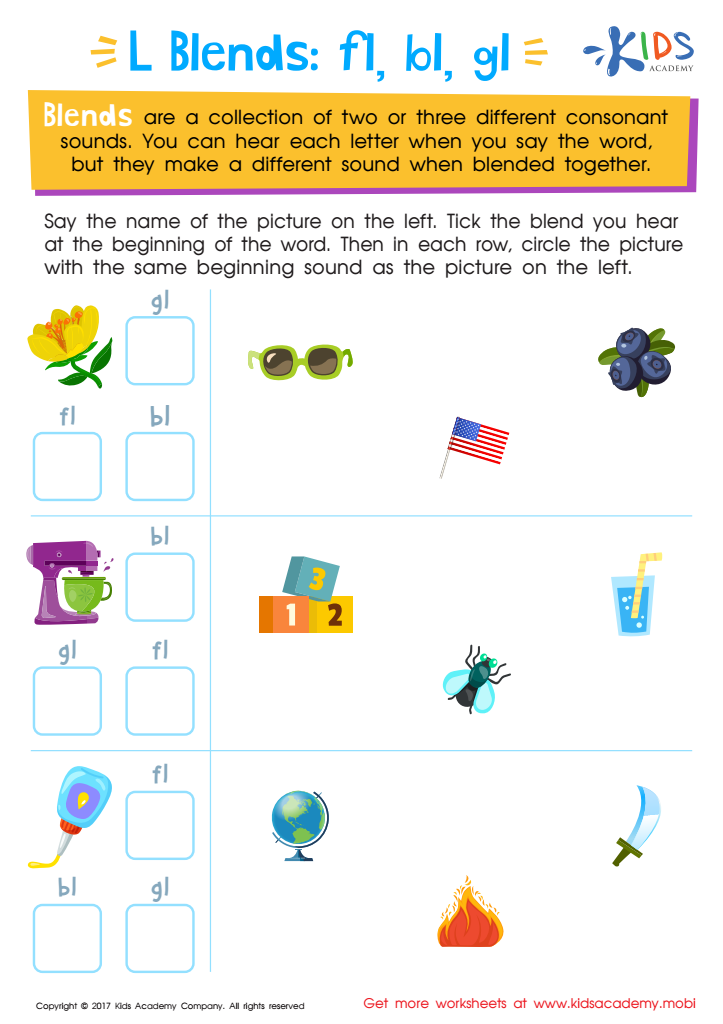
Consonant Blend Fl, Bl, and Gl Printable Worksheet

Blending Consonants: "Fl", "Bl" and "Gl" Printable
Help your child master consonant blends Fl, Bl, and Gl with this printable worksheet. Find words associated with the pictures and learn to better understand the difference between consonant blends. Vibrant images motivate and aid in learning. Download now for improved phonics success!
Blending Consonants: "Fl", "Bl" and "Gl" Printable
Worksheet
What do you hear Worksheet

What do you hear Worksheet

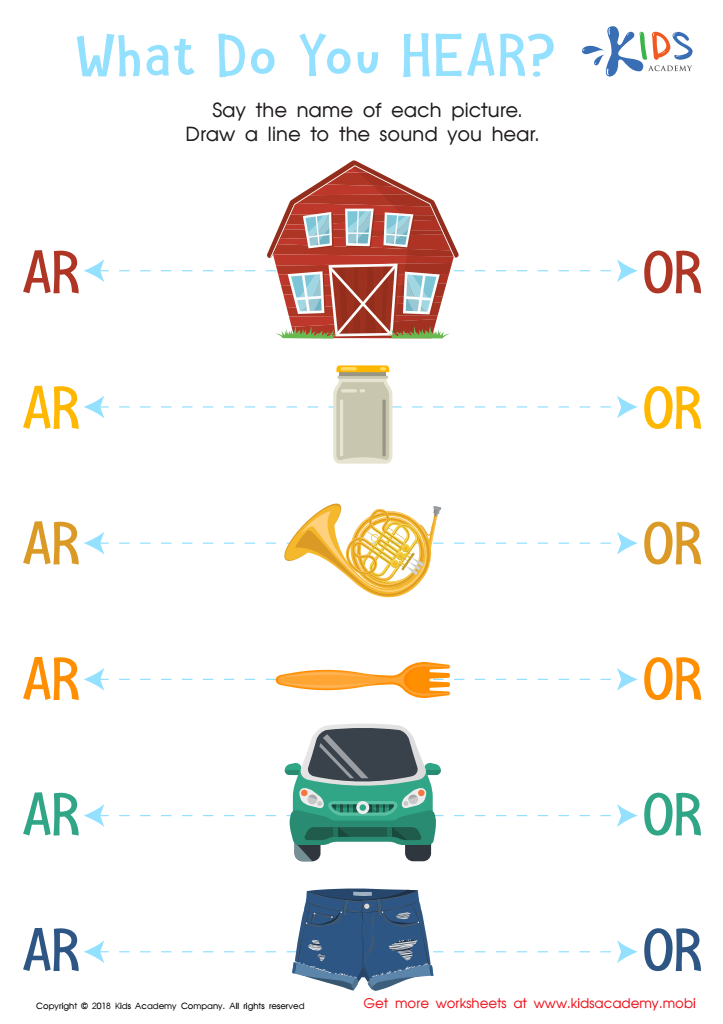
Kids can practice distinguishing between r-controlled vowel teams /ar/ and /or/ with this worksheet. The pictures help identify the words and the sounds heard. Tracing a line to the correct sound supports fine motor skills development.
What do you hear Worksheet
Worksheet
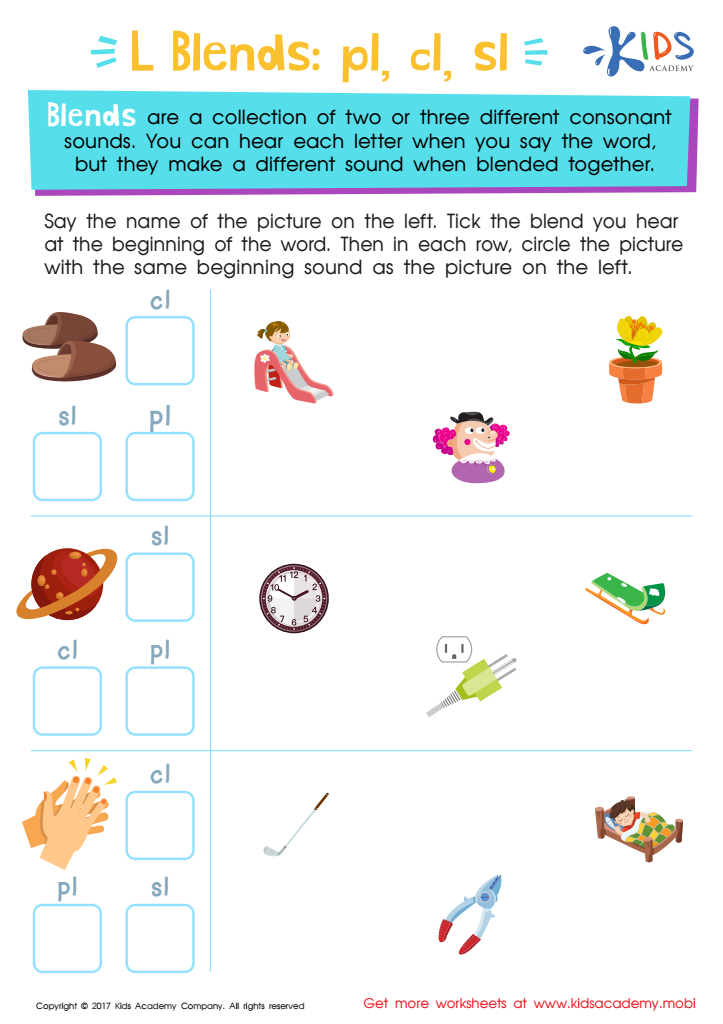
Consonant Blends Pl, Cl, and Sl Printable Worksheet

L Blends: "Pl", "Cl" and "Sl" Printable
This printable worksheet will help your child recognize and identify the Pl, Cl, and Sl consonant blends, sound them out, and identify them in print. Improve your child's reading and writing skills with fun and colorful phonics practice!
L Blends: "Pl", "Cl" and "Sl" Printable
Worksheet
Two Sounds for OO Worksheet

Two Sounds for OO Worksheet

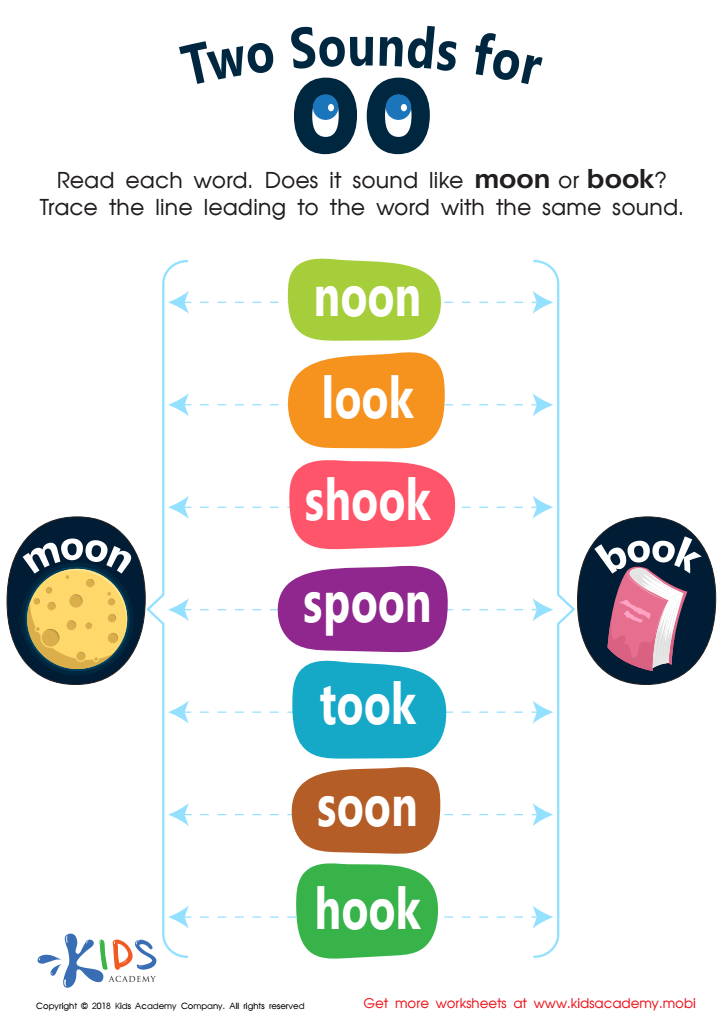
This worksheet helps kids learn the different sounds of the -oo digraph. They match words based on whether they sound like moon or book, plus practice fine motor skills tracing lines. Fun and educational!
Two Sounds for OO Worksheet
Worksheet
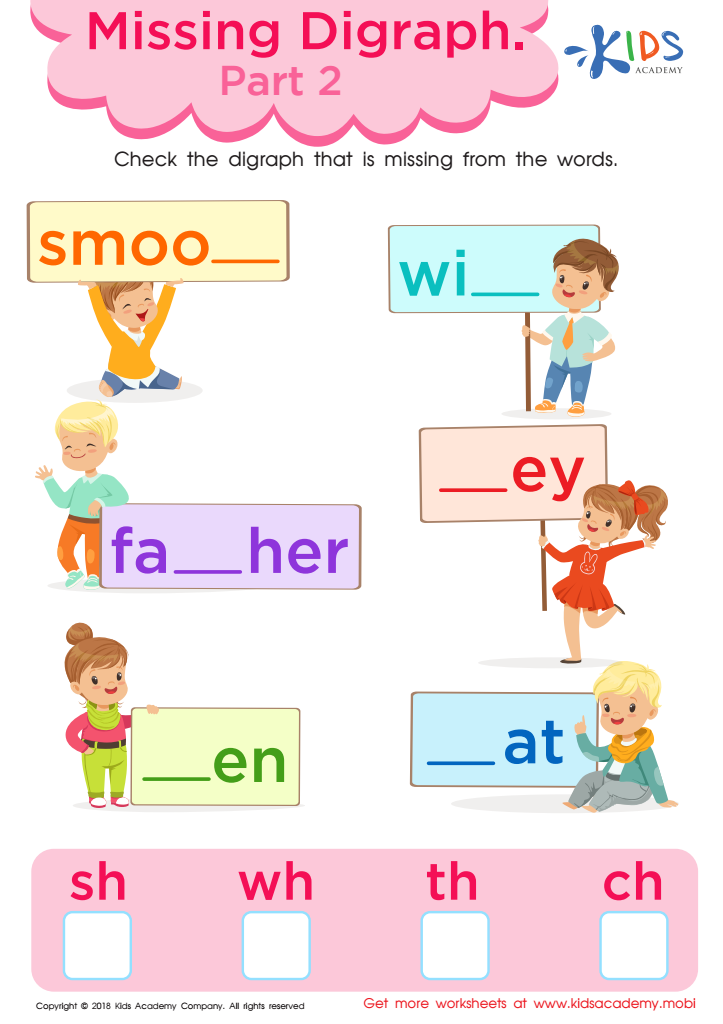
Missing Digraph: Part 2 Worksheet

Missing Digraph: Part 2 Worksheet

Practice the "th" digraph with this fun worksheet from Kids Academy! See how it appears at the beginning, middle, or end of words and help learners fill in the blanks. Check if they got it right by finding the th digraph at the bottom!
Missing Digraph: Part 2 Worksheet
Worksheet
Consonant Blend Dr and Tr Printable Worksheet

Consonant Blends: "Dr" and "Tr" Printable

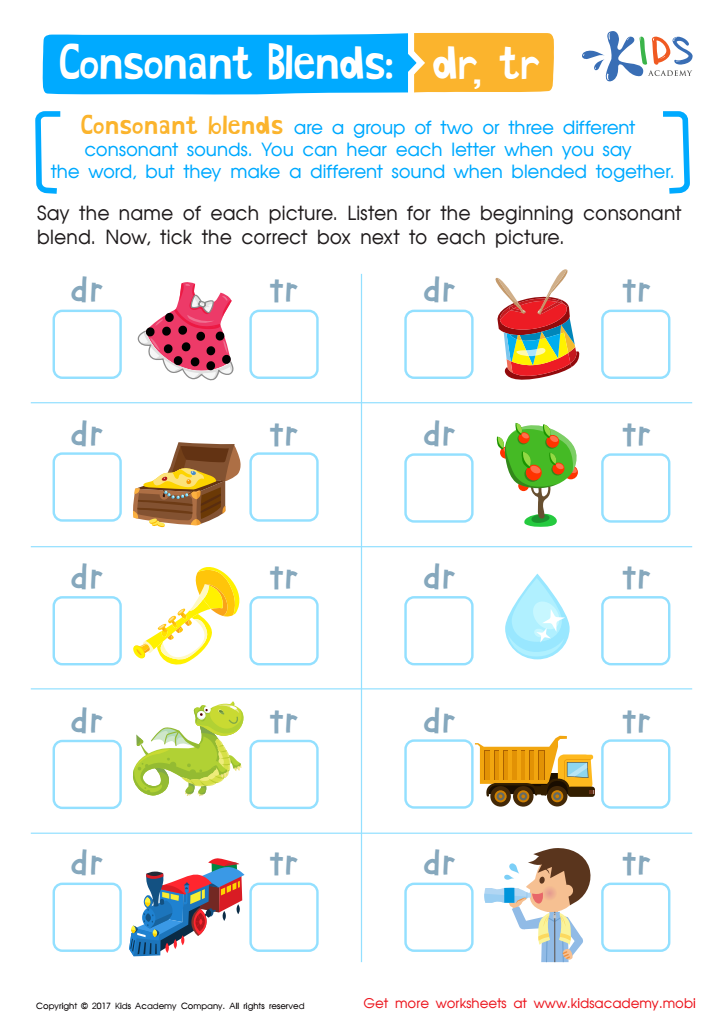
Pictures of the words provide a visual cue, and sound-outs help with auditory cues.
Consonant Blends: "Dr" and "Tr" Printable

Worksheet


Phonics skills are foundational for early literacy development and have a profound impact on a child's reading and writing abilities. For children ages 4-8, mastering two-letter phonics—such as “at,” “in,” “on,” and “up”—is crucial. This stage is where they begin to link sounds with letters, facilitating an understanding of how language works.

Firstly, phonics skills enhance decoding abilities, empowering children to read unfamiliar words independently. When they can break down words into manageable parts, they gain confidence and motivation to tackle more complex texts. Additionally, knowing two-letter phonics helps build vocabulary. Children learn to blend sounds more effectively, paving the way for reading simple words and phrases.

Furthermore, phonics lays the groundwork for more complex literacy skills, such as spelling and grammar. Early success with two-letter phonics creates a positive cycle of learning, promoting an eagerness to read and write.

Finally, investing in phonics skills fosters crucial cognitive development and helps build a positive relationship with literacy that lasts a lifetime. By actively supporting phonics education, parents and teachers can equip children with essential tools for academic achievement and lifelong learning.