Capitalization rules Upper & Lowercase Letters Worksheets for Ages 4-8
3 filtered results
-
From - To
Our "Capitalization Rules: Upper & Lowercase Letters Worksheets for Ages 4-8" are designed to help young learners master the fundamentals of proper capitalization. These engaging, age-appropriate worksheets provide clear instructions and fun activities that teach children how to distinguish and correctly use uppercase and lowercase letters. Perfect for preschoolers and early elementary students, these worksheets strengthen writing skills, enhance reading readiness, and promote better understanding of sentence structure. Ideal for both classroom and home use, they make learning essential capitalization rules enjoyable and effective. Equip your child with the basic literacy skills they need with our expertly crafted resources.
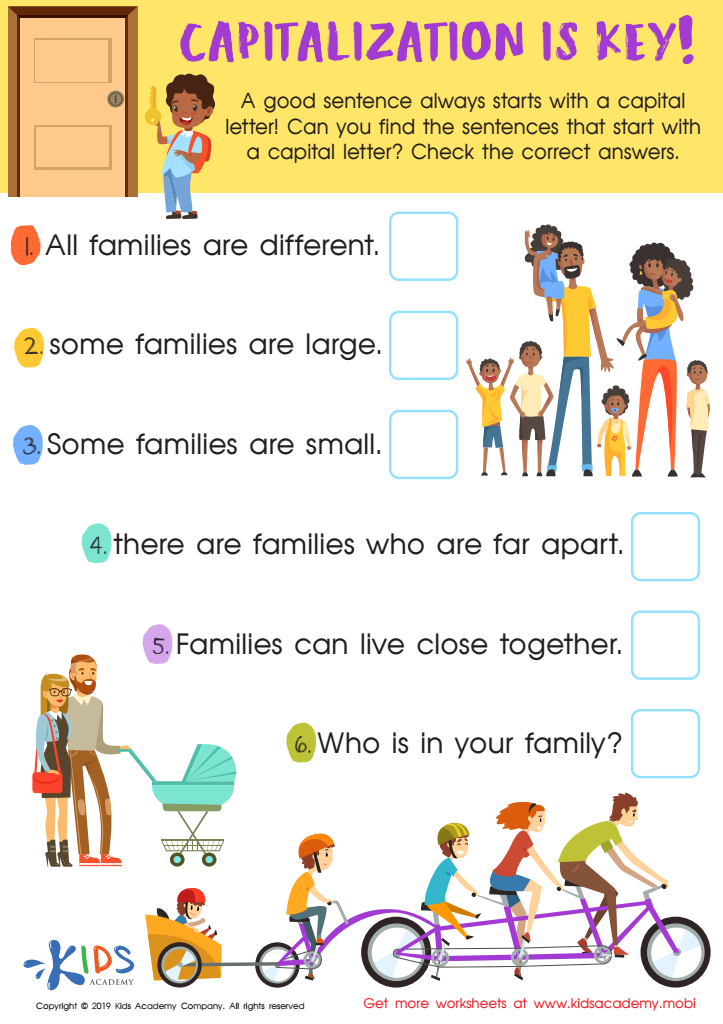
Capitalization Key Worksheet
 Assign to My Students




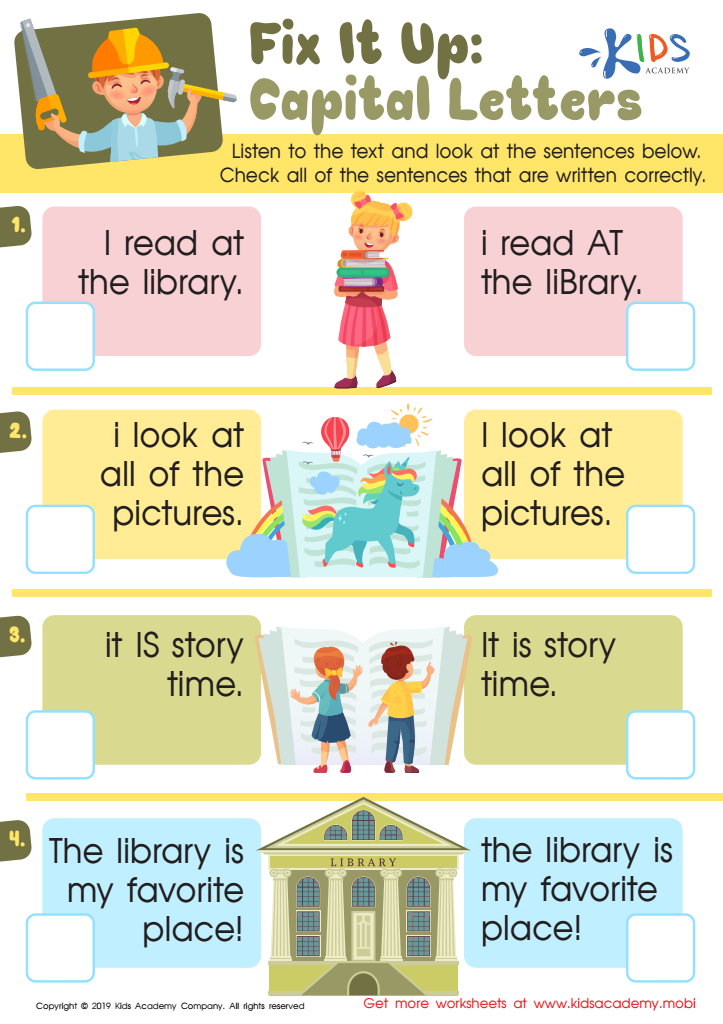
Fix Capital Letters Worksheet

How to Capitalize Worksheet






Capitalization rules play a critical role in early literacy, and understanding these rules is essential for young learners aged 4-8. Parents and teachers should care about teaching these rules for several important reasons. Firstly, capitalization aids in the development of reading fluency. When children correctly recognize and use capital letters, it becomes easier for them to differentiate between the beginnings of sentences, proper nouns, and important titles, thereby enhancing comprehension.
Secondly, correct use of uppercase and lowercase letters fosters effective communication skills. Misusing capital letters can lead to misunderstandings or convey unintended messages, so early mastery helps children articulate their thoughts more clearly and confidently. For instance, capitalizing "Dad" versus "dad" makes a distinction between one’s own father and dads in general, which can change the meaning of a sentence.
Additionally, learning these rules builds a foundation for future academic success. As children grow older and their writing becomes more complex, a solid understanding of basic grammar rules, like capitalization, will be crucial for writing essays, reports, and even personal expressions.
Finally, adherence to capitalization rules also instills a sense of attention to detail and discipline in children. These skills are invaluable throughout life, in both personal and professional spheres.
Thus, focusing on capitalization rules in early education paves the way for improved literacy, communication, and academic proficiency, equipping children with the tools they need for future success.







