
Hand-eye Coordination Upper & Lowercase Letters Worksheets for Ages 4-8
3 filtered results
Difficulty Level
Grade
Age
-
From - To
Subject
Activity
Standards
Boost your child's hand-eye coordination and letter recognition with our engaging Upper & Lowercase Letters Worksheets designed for ages 4-8. Each activity is crafted to enhance motor skills, promote accurate letter formation, and provide a solid foundation for reading and writing. Ideal for preschoolers and early elementary students, these printable worksheets offer fun and interactive ways to practice matching, tracing, and identifying letters. Perfect for both classroom and home use, our resources support effective learning while keeping children entertained. Help your young learner develop essential skills with our comprehensive collection today!
Favorites
With answer key
Interactive
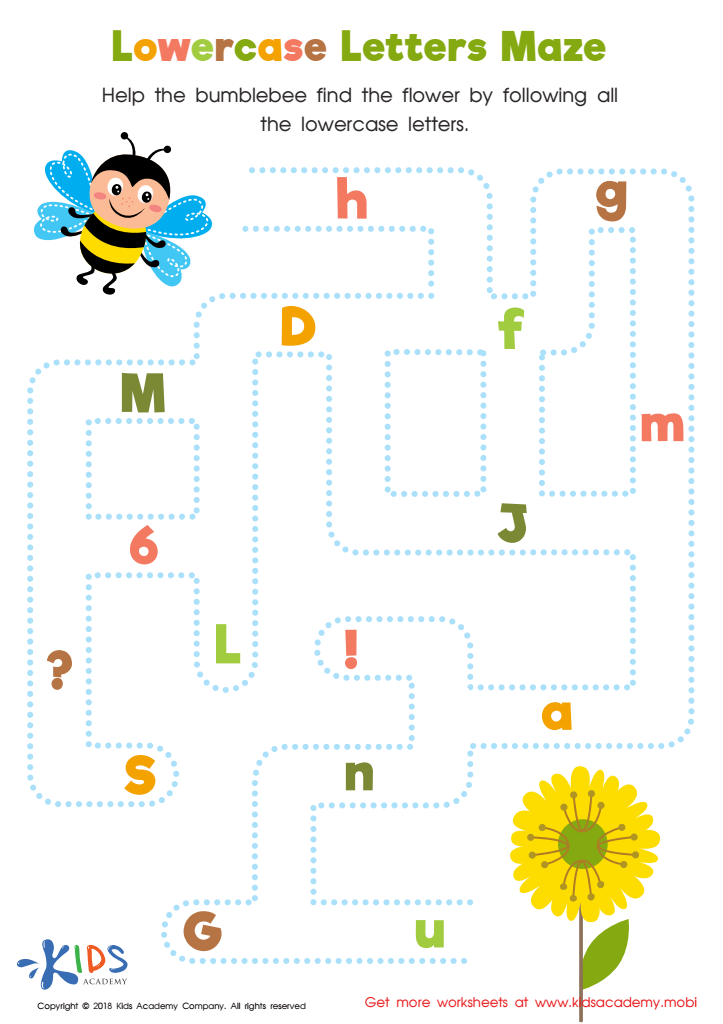
Lowercase Letters Maze Worksheet
Traceable pages can be great learning tools for children. For example, have them trace the path of lowercase letters to help a bumblebee pollinate flowers. Students will quickly learn the difference between uppercase and lowercase letters and numbers, and have fun doing it!
 Assign to My Students
Lowercase Letters Maze Worksheet
Worksheet

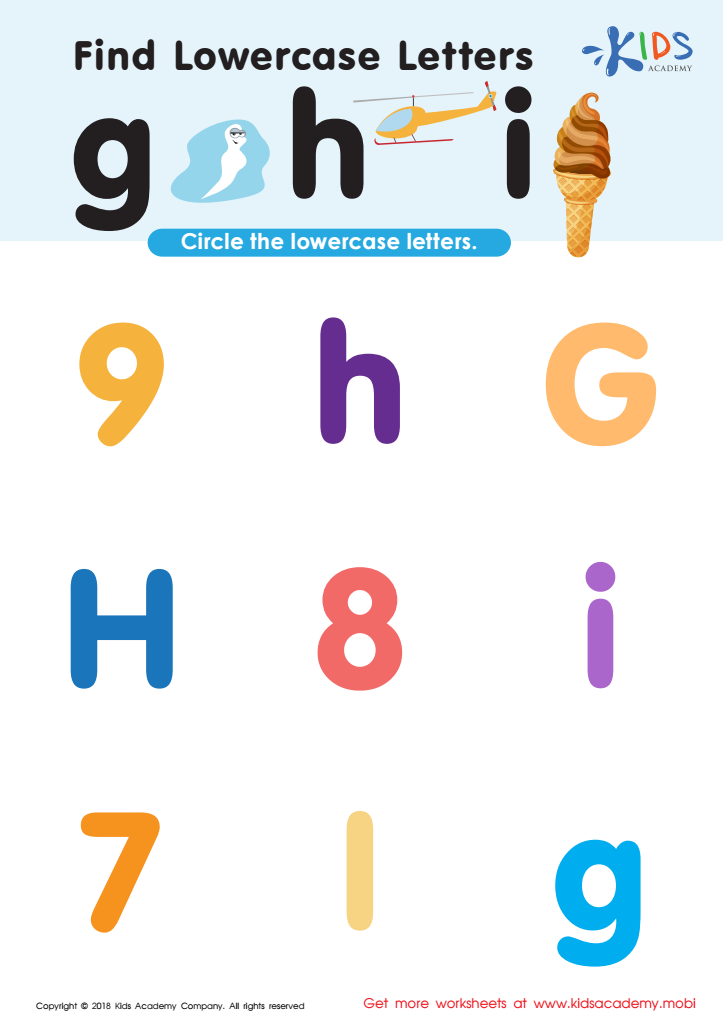
Find Lowercase Letters g h i Worksheet
Turn learning into a fun journey with your child! Use this free worksheet to find and circle the lowercase letters hidden amongst uppercase letters and numbers. Your child will understand what you're teaching them as they enjoy the search.
Find Lowercase Letters g h i Worksheet
Worksheet
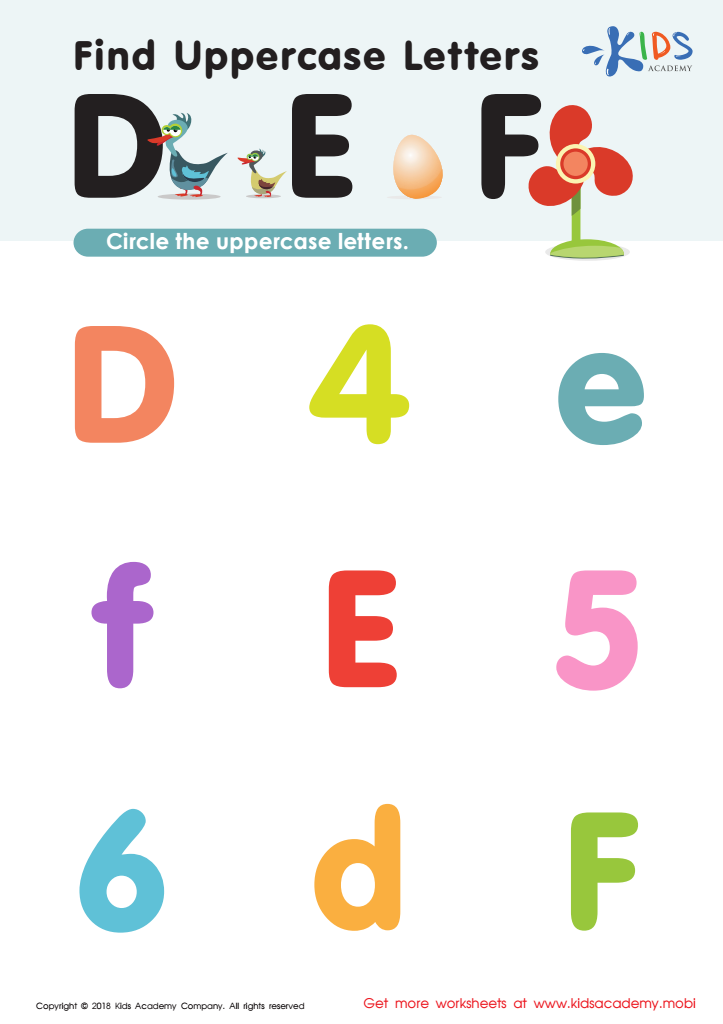
Find Uppercase Letters D, E, and F Worksheet
Follow the duckling and mom to find the capital letters D, E and F on this fun alphabet worksheet! Kids learn to read and recognize letters, while differentiating them from numbers. For extra challenge, don't let the numbers fool them. The pictures above remind them of each letter's sound. Have fun and get letter-savvy!
Find Uppercase Letters D, E, and F Worksheet
Worksheet
Join Kids Academy for Free
Who is primarily going to use this learning content?






Hand-eye coordination is a critical skill for children ages 4-8, influencing their academic and daily life activities. For early learners, mastering upper and lowercase letters is intertwined with this coordination, driving the need for parents and teachers to focus on fostering this skill.
Hand-eye coordination plays a fundamental role in writing. When children learn to recognize and differentiate between upper and lowercase letters, they must control pencil movements to replicate these forms accurately. This process enhances their fine motor skills, crucial for neat handwriting and classroom tasks such as cutting shapes or coloring within lines.
Furthermore, this coordination boosts literacy. Understanding the visual differences between 'A' and 'a' helps children read more efficiently, aiding in sentence construction and comprehension skills. Fluent readers can connect sounds to symbols quickly, fueling learning in all subjects.
Beyond academics, strong hand-eye coordination supports physical activities like playing sports, tying shoelaces, and using utensils, fostering independence and confidence. Initiatives that blend educational games, puzzles, and writing exercises are fun ways to enhance this skill.
In summary, caring about hand-eye coordination and letter mastery not only advances a child’s handwriting and reading capabilities but also contributes significantly to their overall cognitive and physical development, preparing them for future learning and everyday tasks.







