Lowercase letter writing Upper & Lowercase Letters Worksheets for Ages 4-8
3 filtered results
-
From - To
Unlock your child's writing potential with our engaging Upper & Lowercase Letters Worksheets designed specifically for ages 4-8! These worksheets focus on helping young learners master lowercase letter writing through fun, interactive activities. Each exercise encourages proper penmanship while reinforcing letter recognition skills. With delightful illustrations and varied tasks, children will enjoy practicing their writing as they develop confidence and essential literacy skills. Ideal for both classroom and home learning environments, these worksheets are the perfect tool to support your child’s early education journey. Explore our collection and make learning lowercase letters an enjoyable adventure!
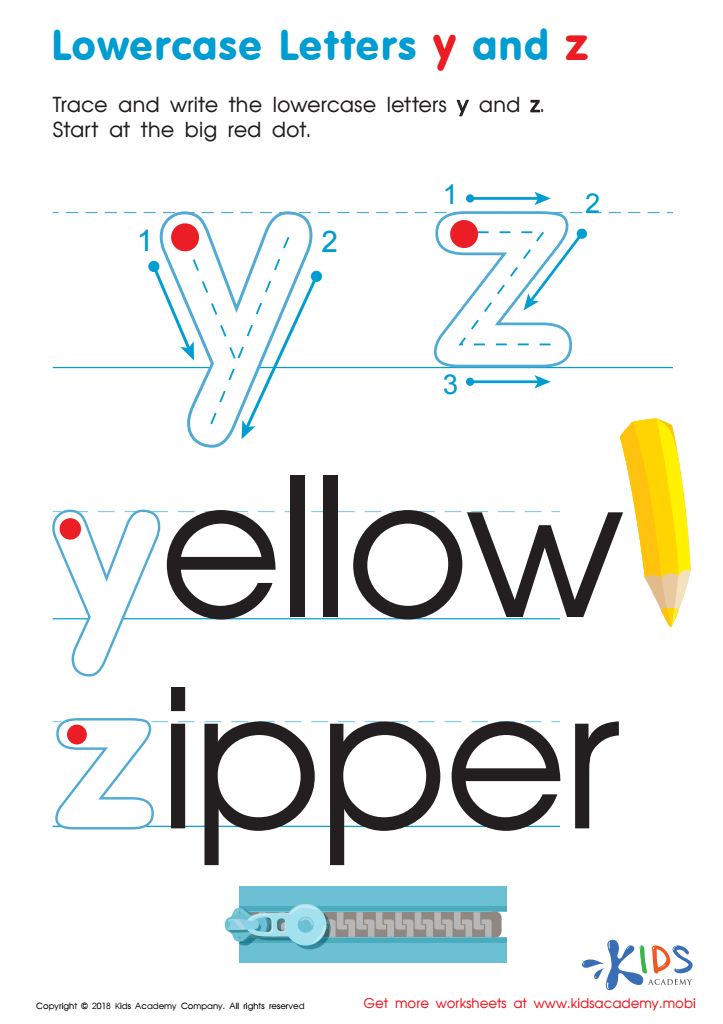
Lowercase Letters y z Worksheet
 Assign to My Students


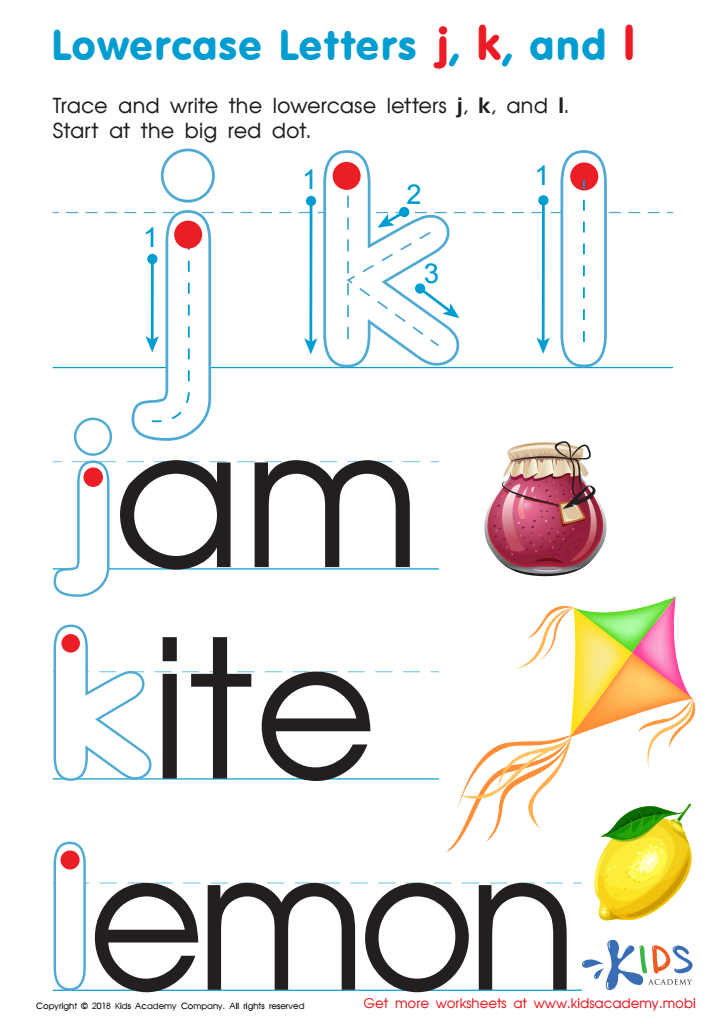
Lowercase Letters j k l Worksheet
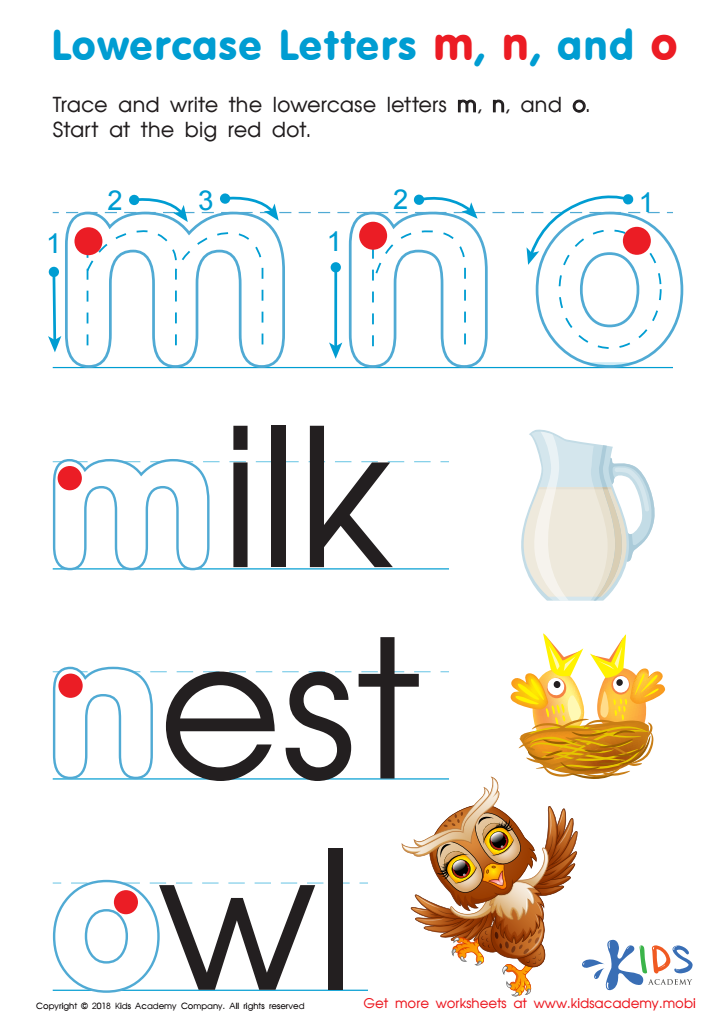
Lowercase Letters m n o Worksheet






Lowercase letter writing is a crucial skill for children aged 4-8, as it forms the foundation for their literacy development. Teaching them the difference between uppercase and lowercase letters helps improve their reading and writing skills. Understanding this distinction fosters word recognition, crucial for early reading proficiency. Children encounter more lowercase letters in text, so mastering their formation is vital for fluency.
Moreover, handwriting skills enhance fine motor development, which is essential in early childhood. Practicing lowercase writing aids in developing hand-eye coordination and dexterity, crucial for numerous everyday tasks. When children write lower case letters, they learn proper grip, posture, and techniques that reinforce overall motor skills.
Additionally, lowercase letter writing encourages creativity and self-expression. As children begin to write their thoughts, stories, and letters, they can communicate in ways beyond spoken language, fostering confidence.
For teachers and parents, understanding the significance of teaching lowercase letters is essential for creating a nurturing learning environment. It supports cognitive development, builds a solid foundation for future learning, and instills a love for writing and literature that can lasting effects. Therefore, investing time in teaching this skill can significantly benefit children's overall literacy journey.







