Uppercase identification Upper & Lowercase Letters Worksheets for Ages 4-8
5 filtered results
-
From - To
Introduce your child to the world of letters with our Uppercase Identification Worksheets, designed specifically for ages 4-8. These engaging activities help kids easily distinguish between uppercase and lowercase letters through various interactive exercises. Each worksheet is crafted to boost letter recognition, improving reading and writing skills while ensuring a fun learning experience. With colorful illustrations and creative tasks, young learners will enjoy mastering the alphabet in no time. Perfect for homeschooling or classroom integration, our worksheets are a valuable resource for nurturing early literacy skills. Explore the joy of learning uppercase letters today!
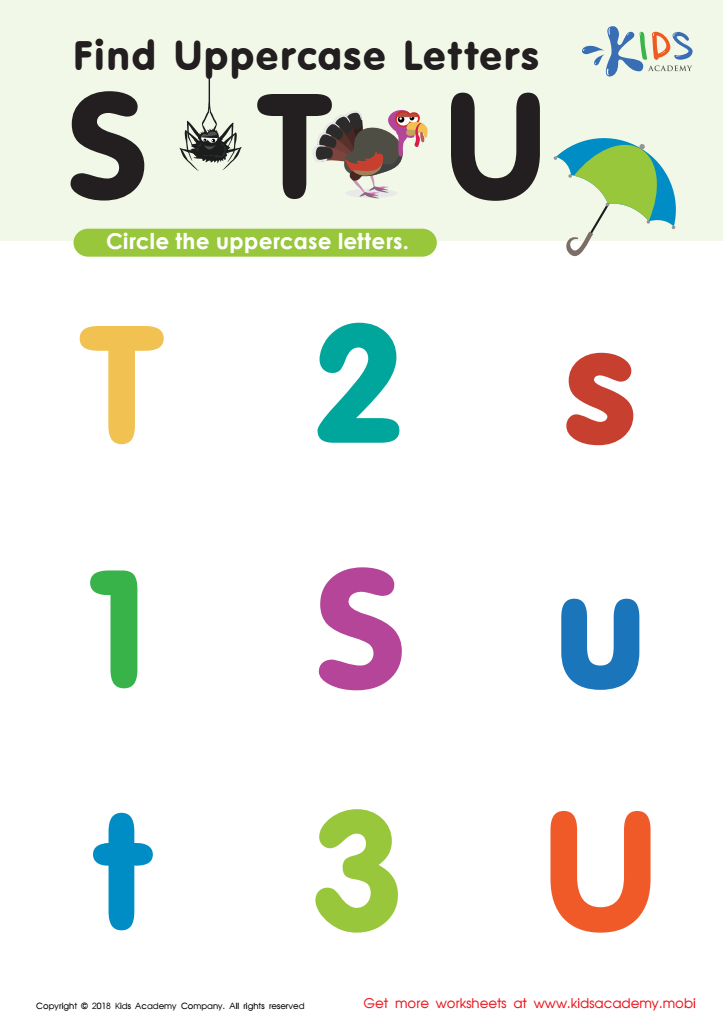
Find Uppercase Letters Worksheet
 Assign to My Students


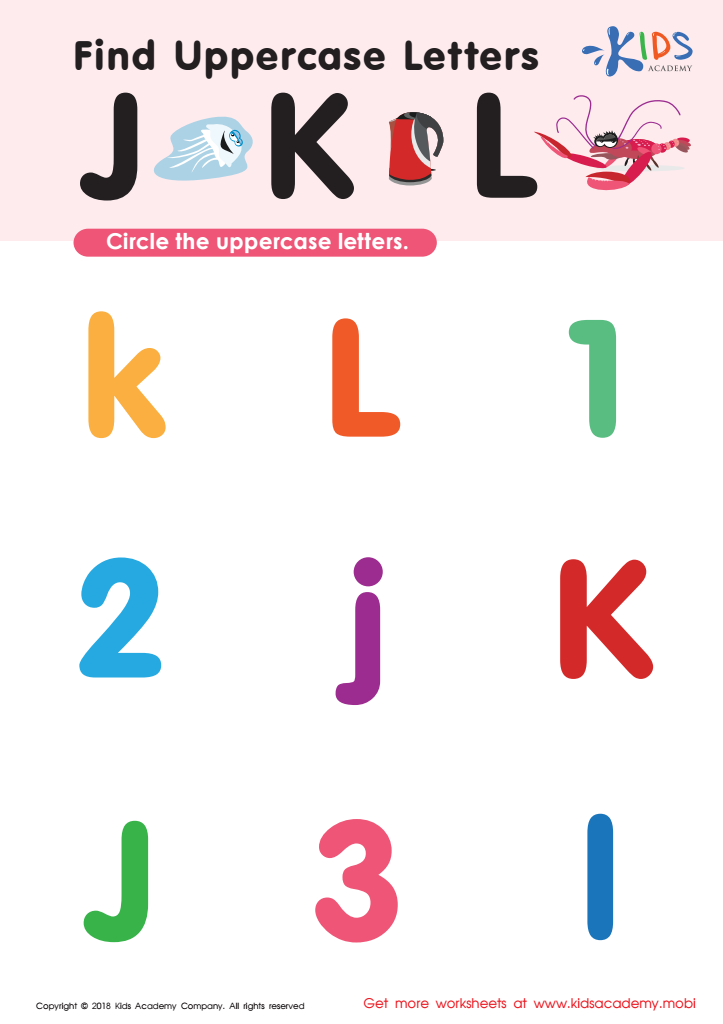
Find Uppercase Letters J, K, and L Worksheet
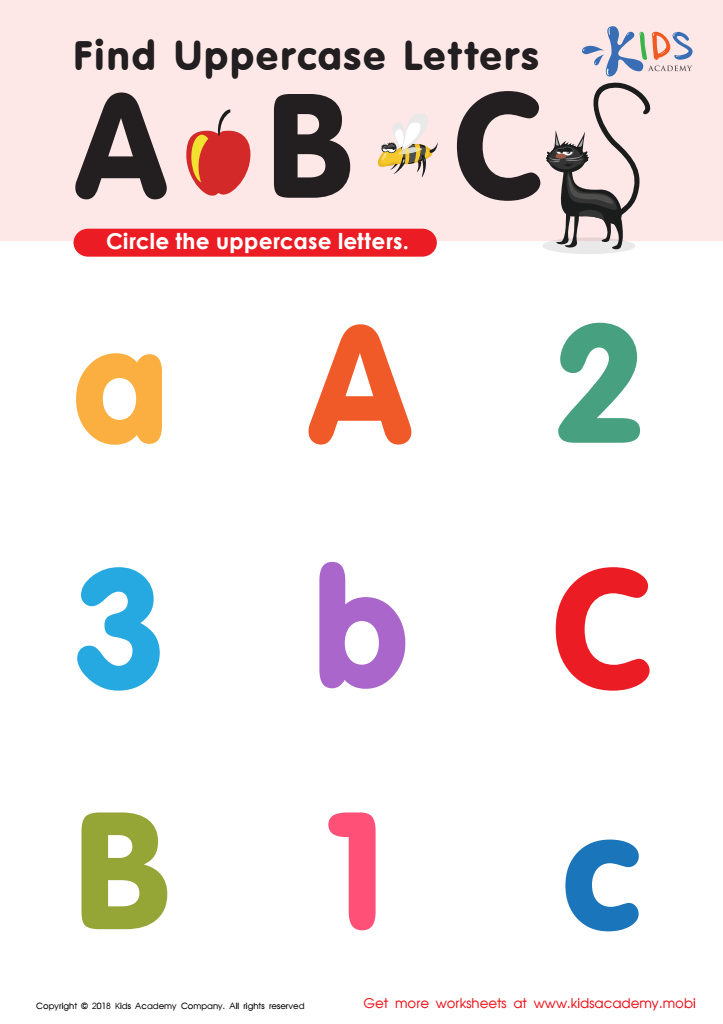
Find Uppercase Letters A, B, and C Worksheet
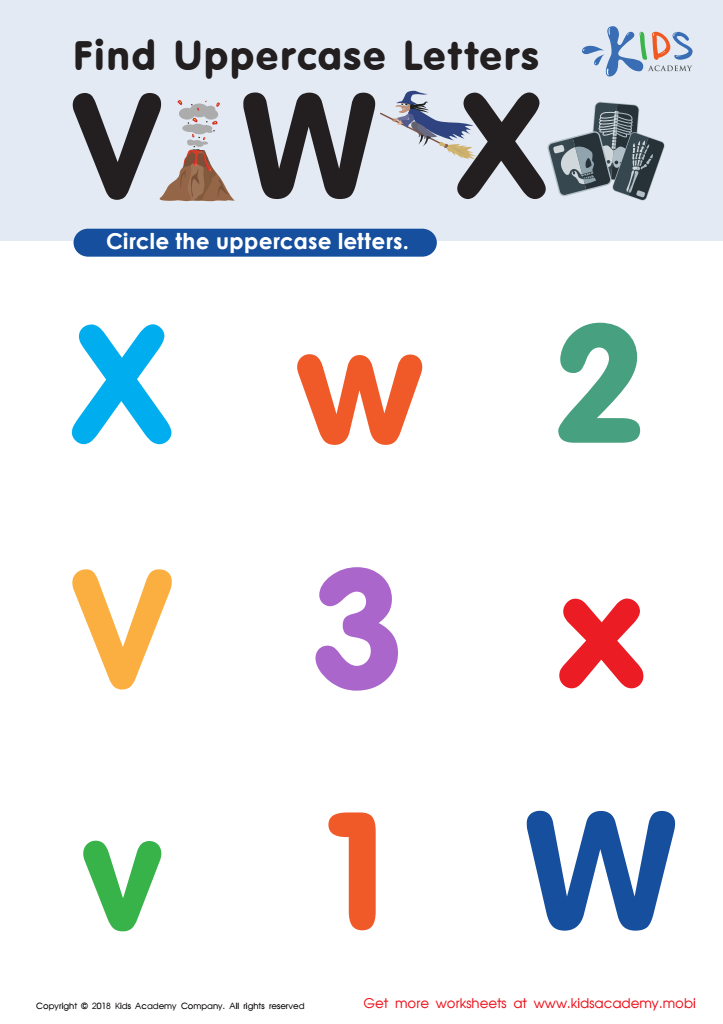
Find Uppercase Letters V, W, X Worksheet
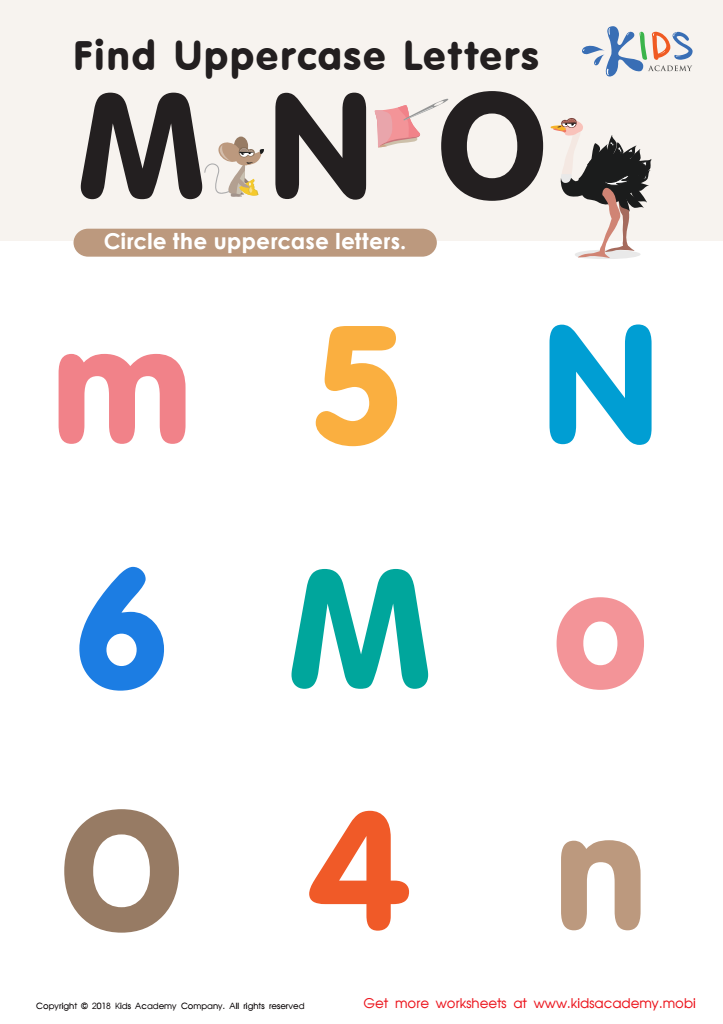
Find Uppercase Letters M, N, and O Worksheet






Understanding uppercase and lowercase letters is crucial for children aged 4-8 as they embark on their reading and writing journeys. Mastery of letter identification fosters literacy skills, enabling students to recognize and differentiate letters effectively. This foundational skill lays the groundwork for reading confidence, as students encounter diverse texts in various formats.
Uppercase letters are often used to signify the beginning of sentences, proper nouns, and titles, making their recognition critical for comprehension. Moreover, understanding the distinctions between uppercase and lowercase letters assists in spelling accuracy and handwriting development. Children learning to write benefit significantly from practicing both forms, which enhances their motor skills and fine motor control.
Parents and teachers play an essential role in this process by engaging children in fun and interactive activities that reinforce recognition skills. Games, songs, and storybooks featuring both uppercase and lowercase letters stimulate interest and retention. A strong grasp of letter identification helps children read earlier, increasingly build their vocabulary, and effectively communicate through writing. In essence, prioritizing uppercase and lowercase letter identification in early education leads to more confident, capable readers and writers, setting the stage for a lifelong love of learning.







