Filters

9 filtered results

Clear all filters
Favorites
With answer key
Interactive

9 filtered results

Difficulty Level

Grade


Discover the perfect spelling practice for your 4-8-year-old with our Vowels and Consonants Worksheets! These engaging, educational printables are expertly designed to help young learners master the fundamentals of spelling, focusing on distinguishing between vowels and consonants. Packed with fun activities, colorful illustrations, and age-appropriate challenges, these worksheets not only build essential language skills but also keep your little ones entertained. Ideal for early learners, our worksheets reinforce phonetic principles and improve reading and writing proficiency. Elevate your child's spelling abilities with Kid’s Academy and watch their confidence soar. Download now for endless learning fun!

Check out this FREE Trial Lesson on Vowels and Consonants for age 4-8!

Short and Long Vowel Sort

Favorites
With answer key
Interactive
  • 4-8
  • Spelling practice
  • Vowels and Consonants
Long Vowel Review Worksheet

Long Vowel Review Worksheet

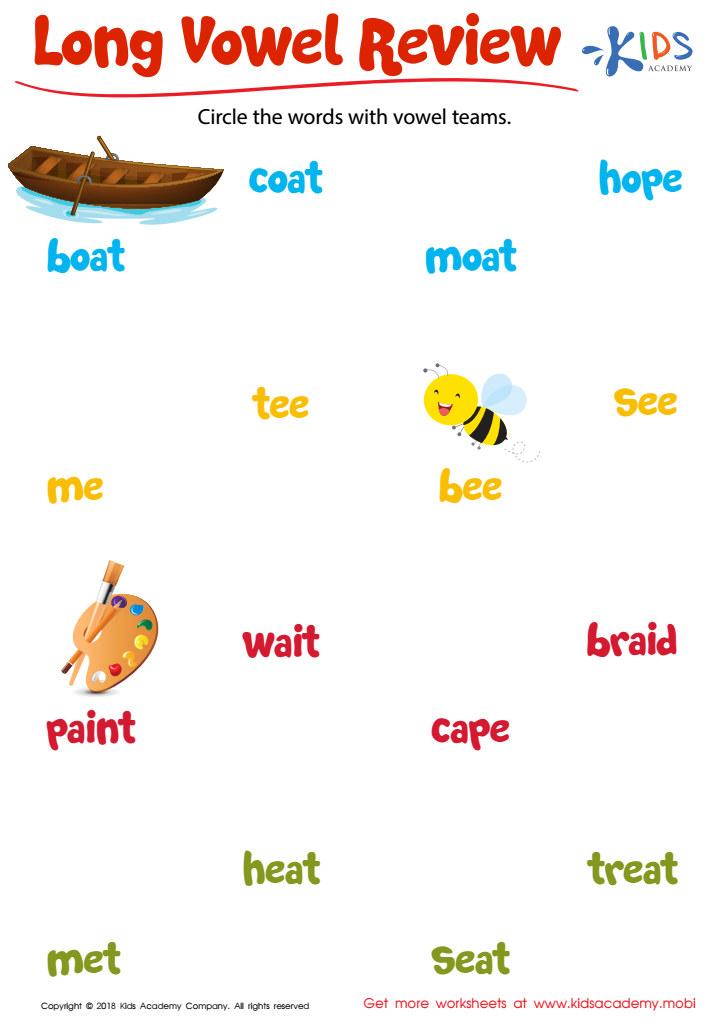
Vowel teams like "ea" and "ai" help us make words, and understanding these patterns aids emerging readers in becoming more fluent. This review worksheet has students finding words with vowel teams that make the long vowel sound, and helps them recognize high-frequency words.
Long Vowel Review Worksheet
Worksheet
Let's Check Long Vowels: Assessment Worksheet

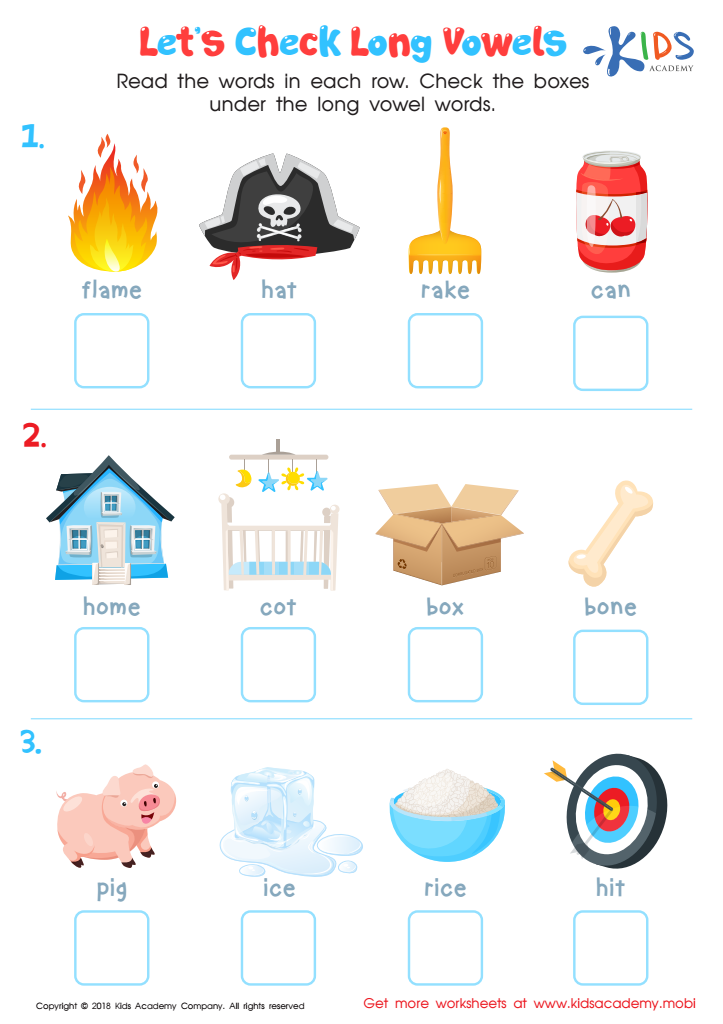
Let's Check Long Vowels: Assessment Worksheet

This worksheet helps your child identify objects and learn long vowel sounds. Ask them to say the names of the four objects in each row. Then, help them check the boxes to confirm they know the long vowel sounds. This will help them develop their reading skills.
Let's Check Long Vowels: Assessment Worksheet
Worksheet
Let's Look for Consonants Worksheet

Let's Look for Consonants Worksheet

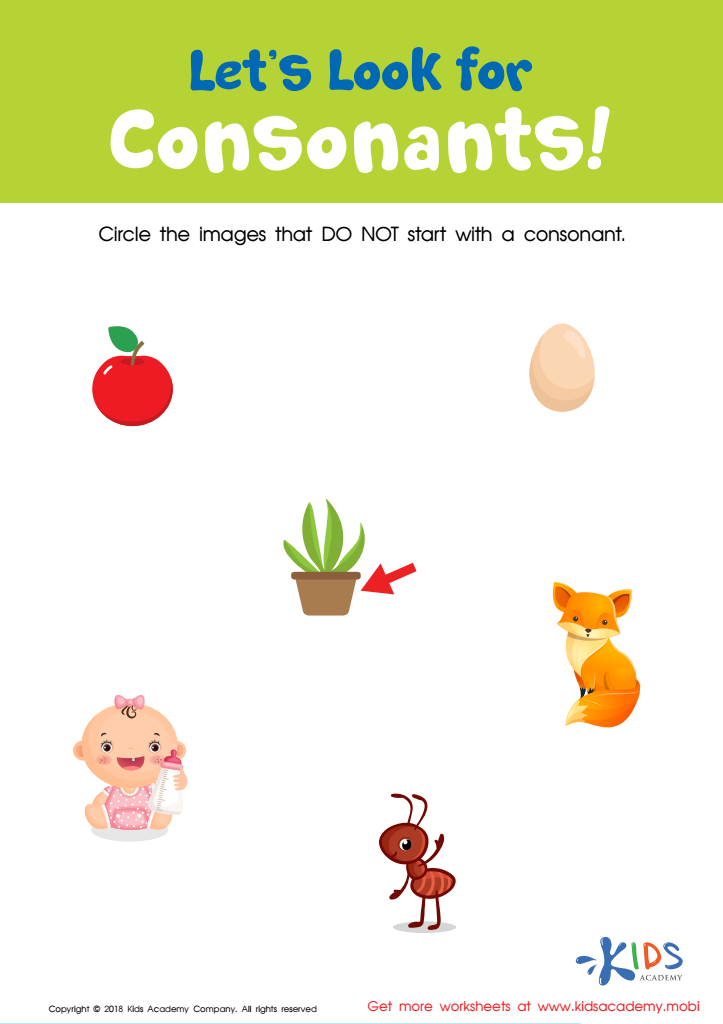
Help kids learn consonants and words that start with them. Ask them to recite the alphabet, then explain consonants are all letters but the 5 vowels. Use the worksheet to ask them to circle items without a consonant. Emphasize that's 21 consonants.
Let's Look for Consonants Worksheet
Worksheet
Short Vowels /e/, /i/, and /u/ Worksheet
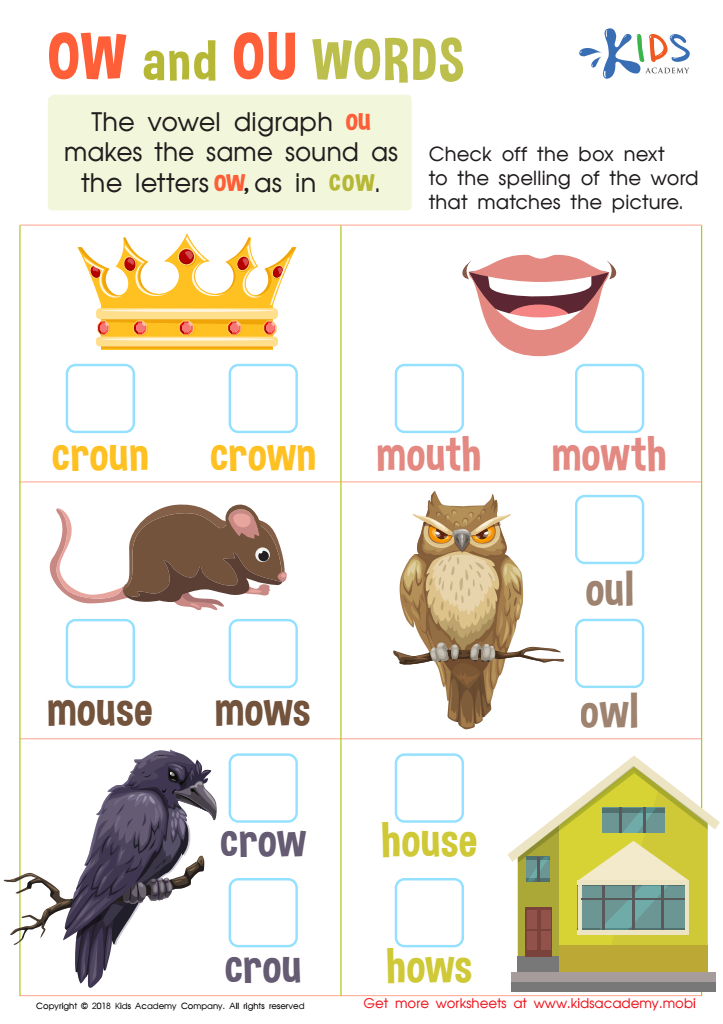

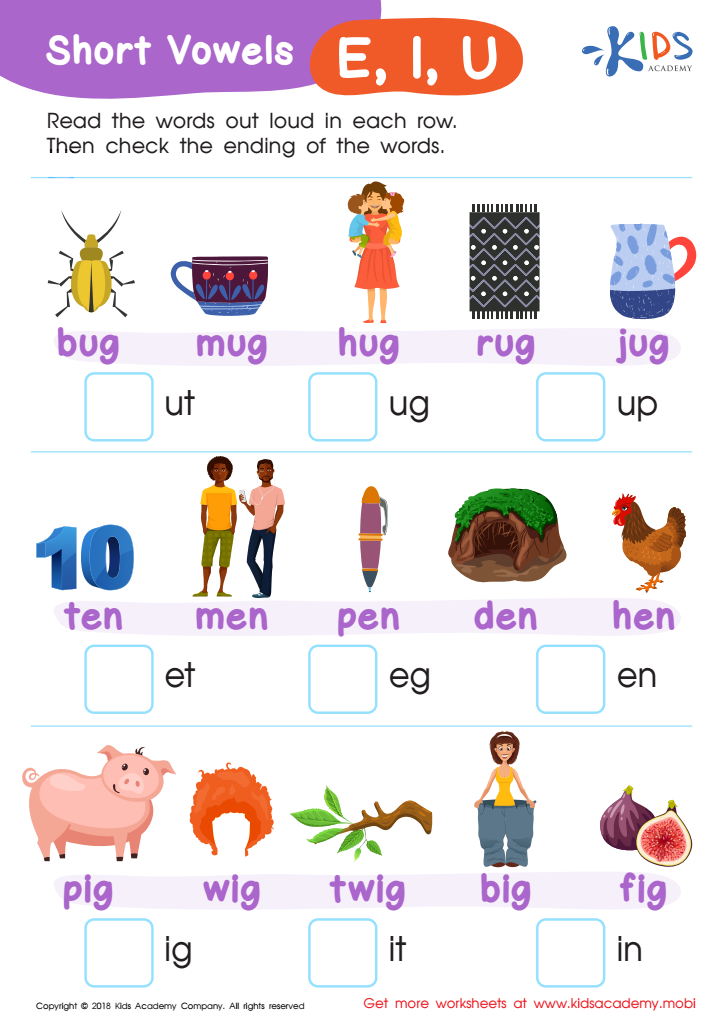
Short Vowels /e/, /i/, and /u/ Worksheet

Your emergent reader can have fun while practicing their short vowel sounds with this free, brightly colored worksheet. They'll identify one-syllable words by their pictures, then match the correct ending for each. They'll gain an understanding of how short vowel sounds vary in closed syllables with different endings, without even realizing it!
Short Vowels /e/, /i/, and /u/ Worksheet
Worksheet
Reading: OW and OU Words Worksheet
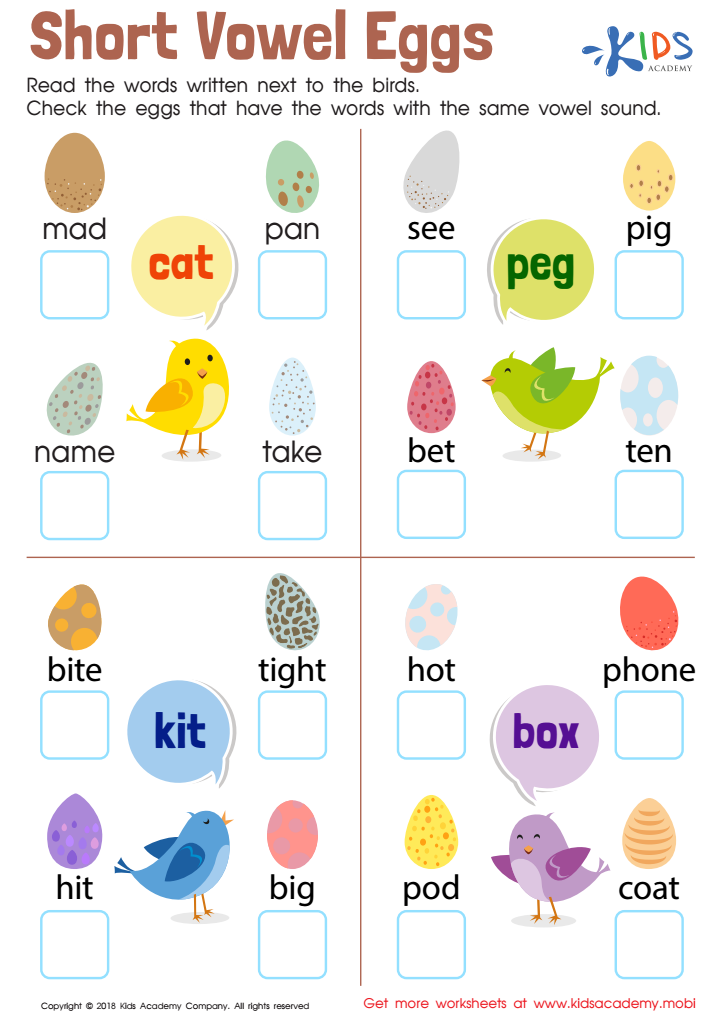

Reading: OW and OU Words Worksheet

Help your kids learn phonetics! Explain the different sounds and long/short variations. Emphasize that some vowel sounds are the same, e.g. ou = ow in cow. For practice, have them read aloud the words in the worksheet and check the box next to the spelling that matches the picture.
Reading: OW and OU Words Worksheet
Worksheet
Short Vowel Eggs Worksheet
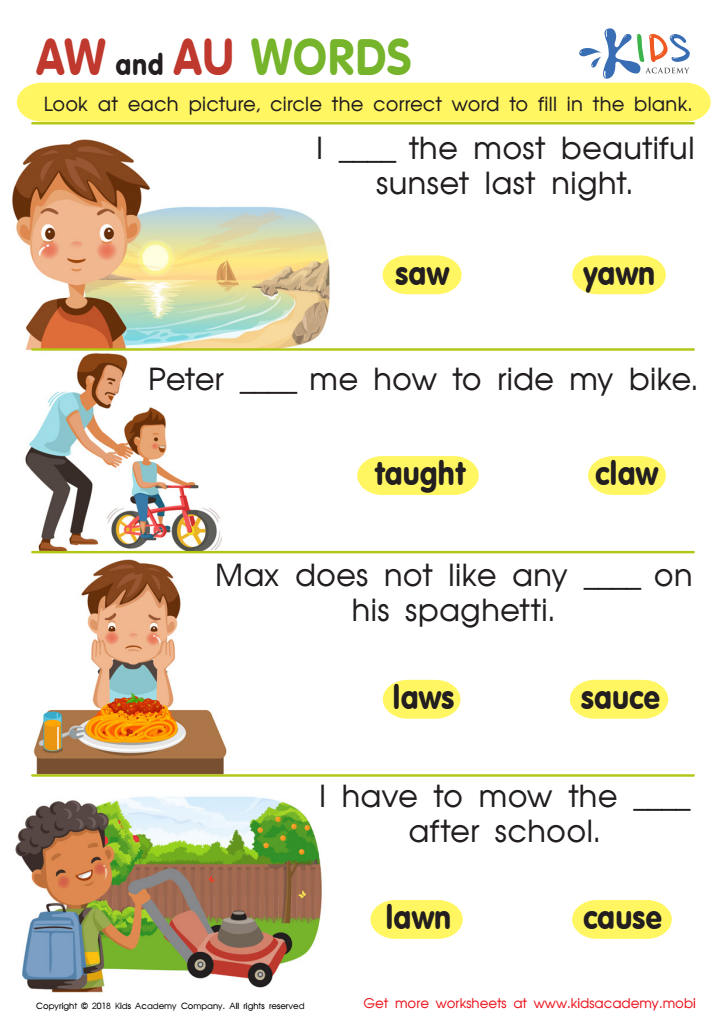
Short Vowel Eggs Worksheet

Your students will love helping these birdies pick the short vowel eggs! Have them read the words in the thought bubbles, then check off the boxes with the same short vowel sounds. The bright colors of this free Worksheet will draw them in and get them practicing their vowels!
Short Vowel Eggs Worksheet
Worksheet
Reading: AW and AU Words Worksheet

Reading: AW and AU Words Worksheet

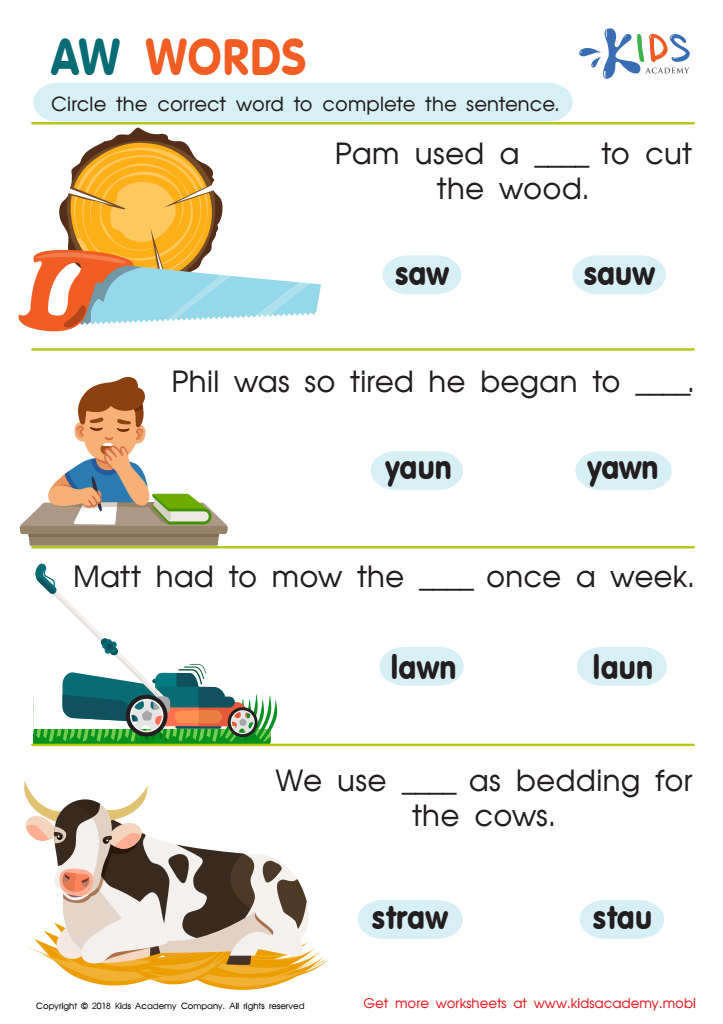
This worksheet helps kids recognize that /au/ and /aw/ can make the same sound. Students read sentences and pick the correct word with one of the digraphs. Understanding digraphs improves decoding and reading fluency. Perfect for reading and phonics classes.
Reading: AW and AU Words Worksheet
Worksheet
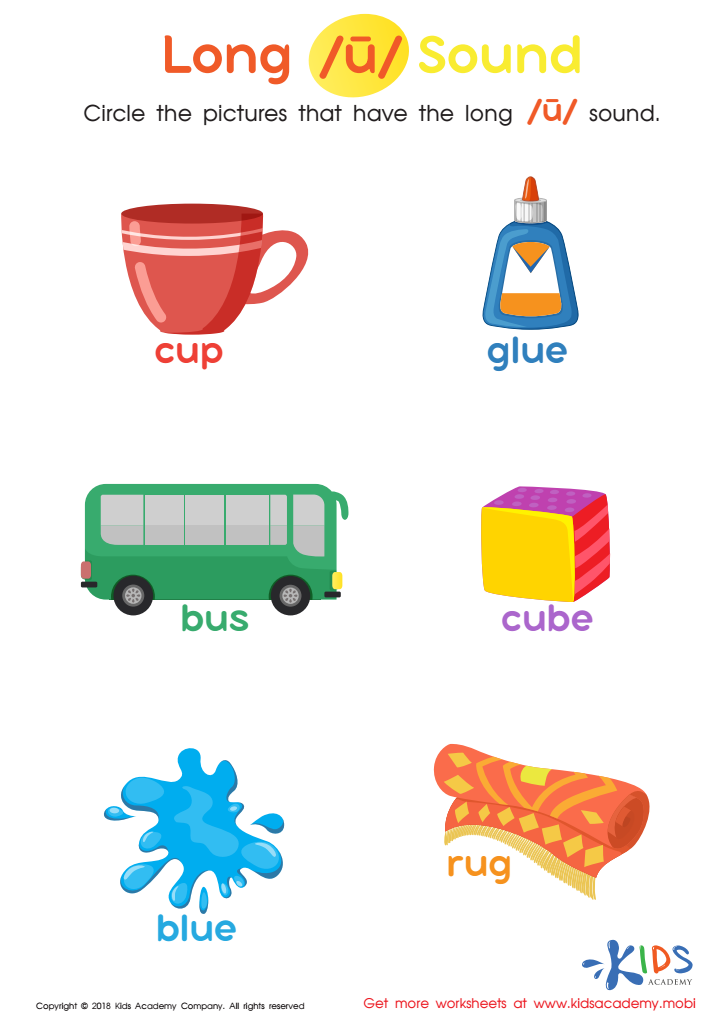
Long «u» Sound Worksheet

Long «u» Sound Worksheet

This fun and engaging free PDF worksheet teaches kids to differentiate between long and short «u» sounds. Through tracing circles around the correct words, they'll practice their fine motor skills while also recognizing patterns (silent-e for «ū» sound) in closed-syllable words. Bright and cheery pictures make it a great confidence booster for new readers!
Long «u» Sound Worksheet
Worksheet
Reading: AW Words Worksheet


Reading: AW Words Worksheet

Practice decoding the /aw/ digraph with this printable. Students read sentences and select the word with the correct spelling to complete each one. Note, /aw/ is sometimes spelled /au/, so this worksheet helps prevent confusion. Have fun, and practice hard!
Reading: AW Words Worksheet
Worksheet


Understanding vowels and consonants is fundamental for young children aged 4-8 as they embark on their literacy journey. These basic building blocks of language help children decode words, enhancing their reading and spelling skills. Consistent spelling practice of vowels and consonants can dramatically impact a child's ability to recognize sound-letter relationships, a critical component of phonemic awareness.

For parents and teachers alike, fostering proficiency in these areas means setting up children for future academic success. When children practice spelling, they improve their memory and pre-reading skills, allowing them to identify word patterns and phonetic rules—skills that are indispensable not only in reading but across all subjects that require textual comprehension.

Spelling practice also positively affects vocabulary growth. As children learn more words and understand their structures, they become more confident readers and writers. This newfound confidence is evident both in their academic performance and their willingness to engage with learning materials.

Furthermore, early mastery in language mechanics can lead to better verbal communication. When children know how words are constructed, they also articulate themselves more clearly.

In this crucial developmental period, parent and teacher involvement in spelling practice can provide a solid linguistic foundation, making learning more accessible and enjoyable for young learners. Investing time in these basic skills creates a ripple effect that will benefit children throughout their educational journeys and beyond.