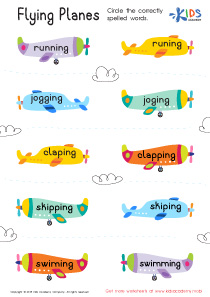
Vocabulary development Vowels Worksheets for Ages 4-8
6 filtered results
-
From - To
Discover our engaging Vocabulary Development Vowels Worksheets designed for children ages 4-8. These colorful, interactive resources aim to enhance your child’s understanding of vowel sounds and their usage in words. Each worksheet features fun activities that promote phonics skills, improve reading comprehension, and build vocabulary. With a focus on an enjoyable learning experience, children will practice identifying and using vowels in various words, making language learning enjoyable. Perfect for homeschooling or classroom settings, our worksheets provide a solid foundation for early literacy. Help your child unlock the world of words with these essential vowel practice resources!
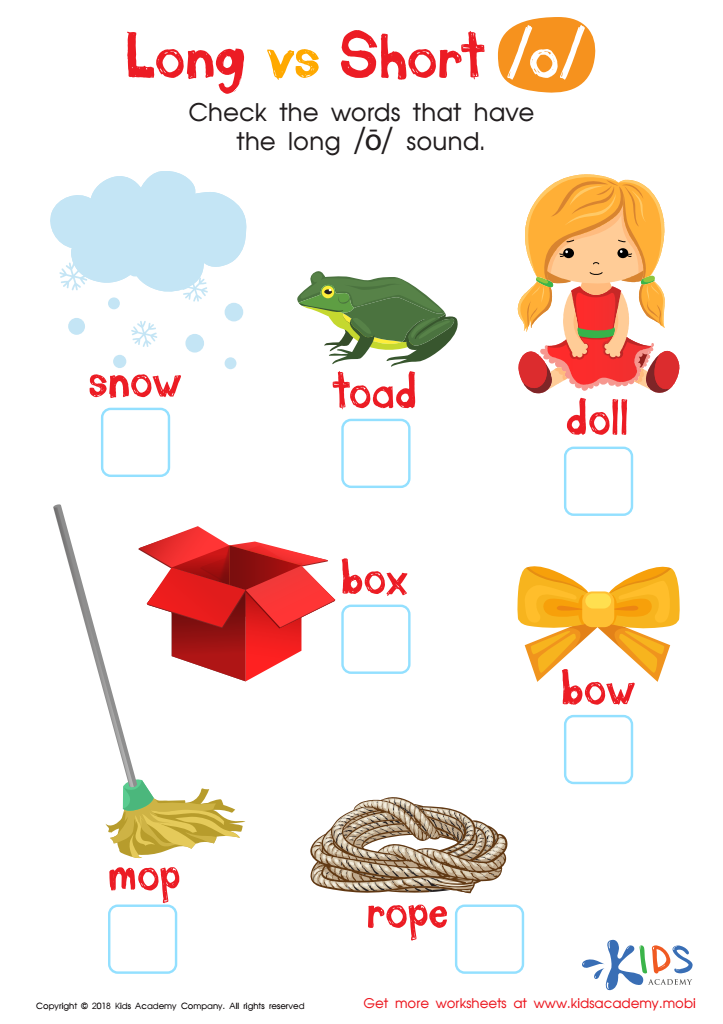
Long vs Short O Reading Worksheet
 Assign to My Students
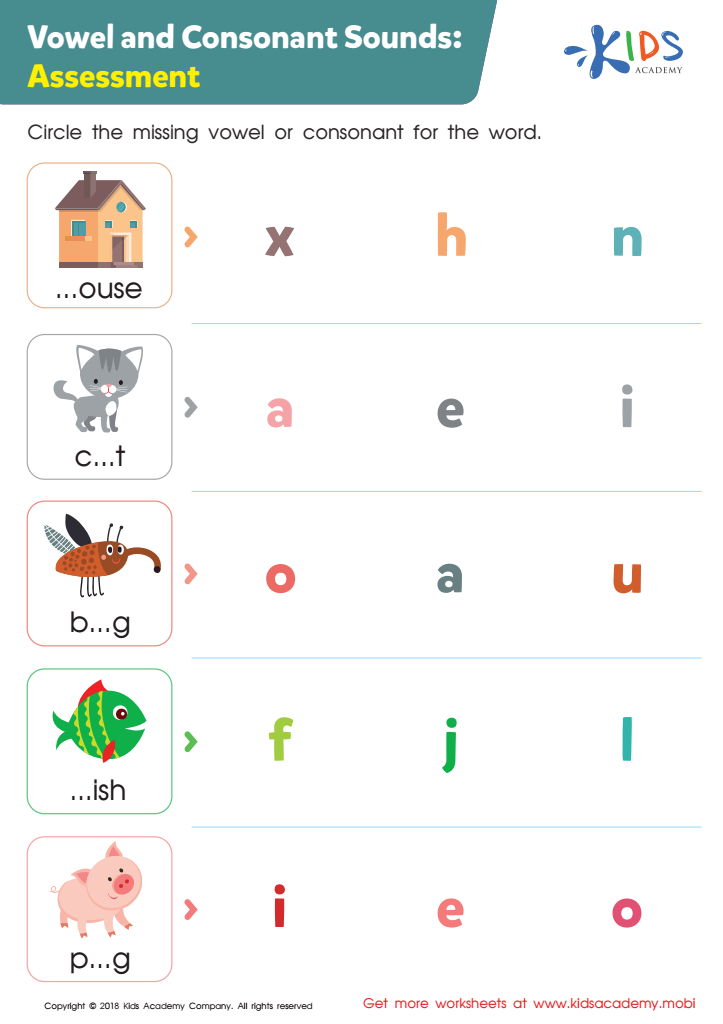
Vowel and Consonant Sounds: Assessment Worksheet
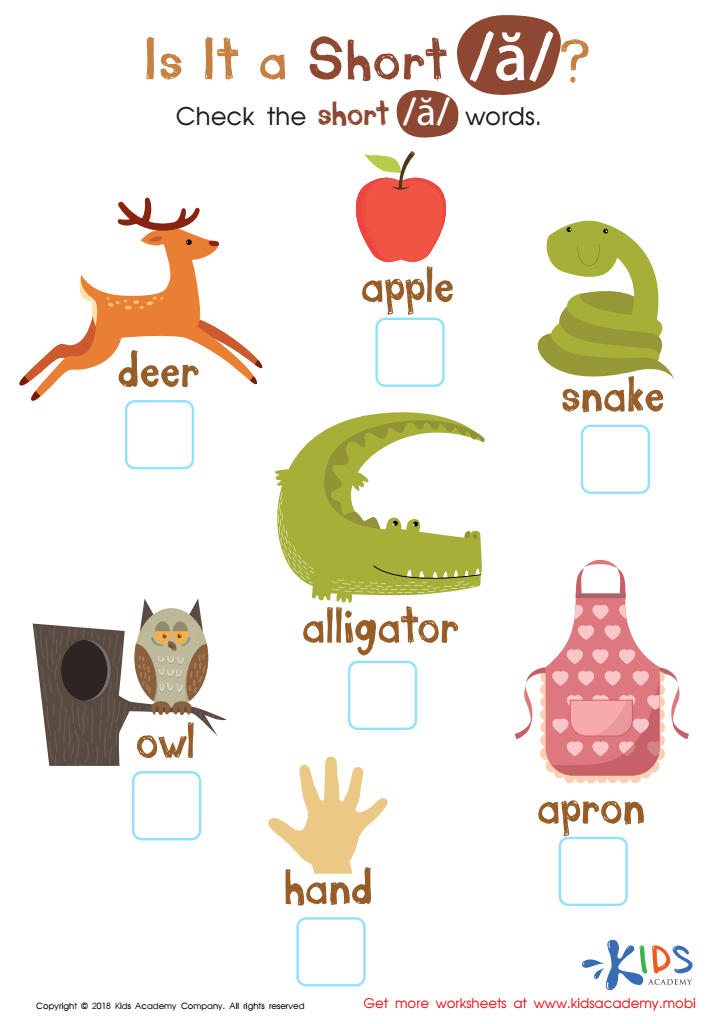
Is It Short A? Reading Worksheet
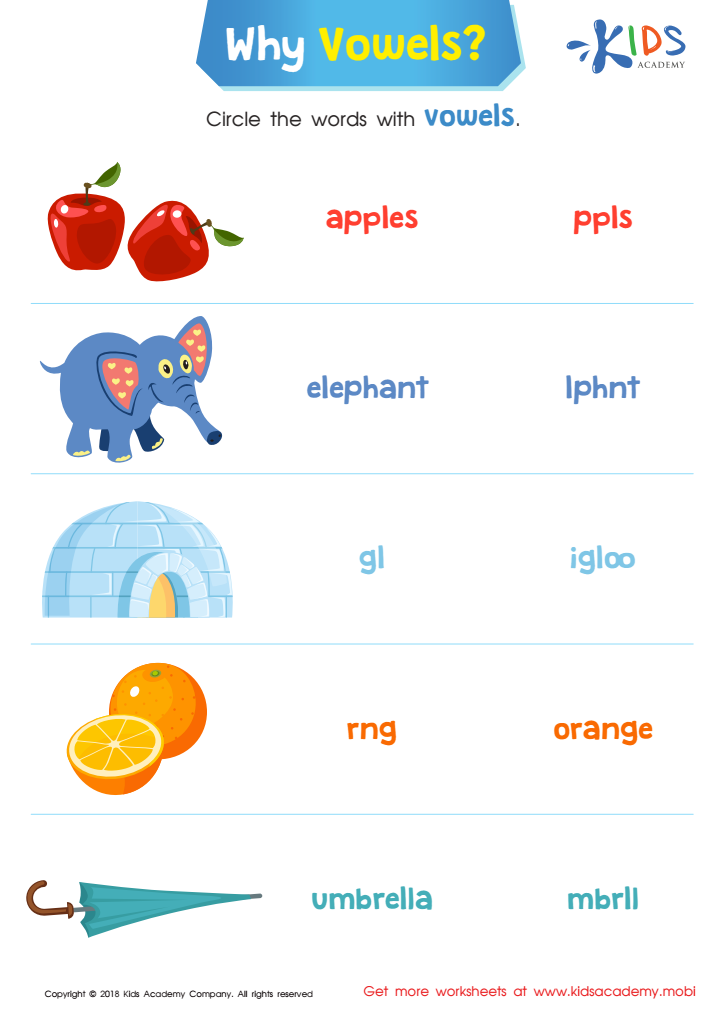
Why Vowels? Reading Worksheet
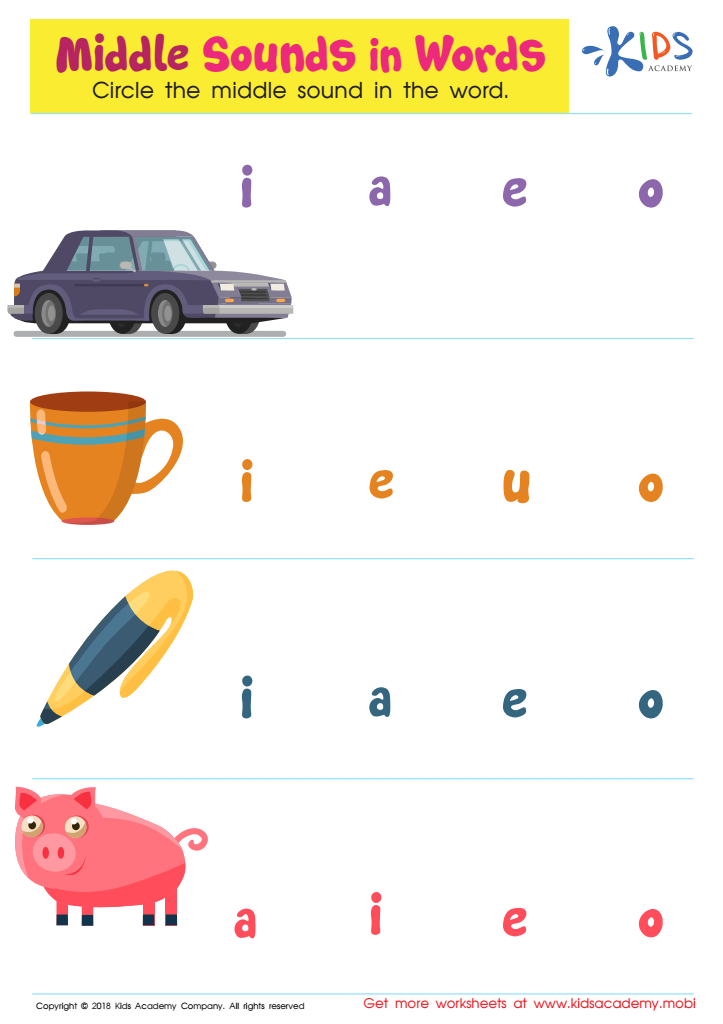
Middle Sounds in Words Worksheet
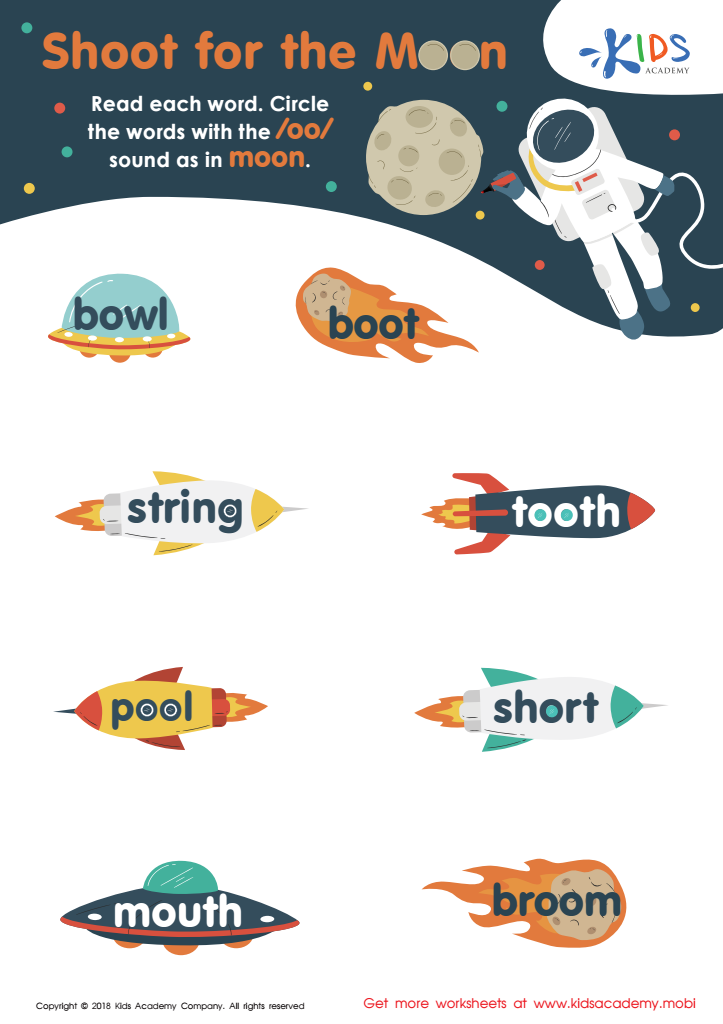
Reading: Shoot for the Moon Worksheet





Vocabulary development is critical for children aged 4-8 as it lays the foundation for their language skills and overall academic success. During these formative years, children are rapidly acquiring new words and sounds, which helps them express their thoughts and feelings clearly. Vowels play a significant role in vocabulary development since they form the core of most words. Understanding vowel sounds enhances phonemic awareness, helping children decode words when reading.
When parents and teachers emphasize vowel recognition and practice, they foster an environment that promotes literacy. Activities like rhyming games, singing vowel-rich songs, and reading aloud can enhance children's phonetic comprehension and enrich their vocabulary.
Moreover, a strong vocabulary correlates with better reading comprehension and writing skills, which are crucial as children progress in their education. By investing time in developing vocabulary through engaging activities focused on vowels, parents and teachers equip children with the necessary language tools to communicate effectively and succeed academically. This foundational skill not only boosts self-confidence but also paves the way for lifelong learning and curiosity, turning youngsters into enthusiastic readers and storytellers. Thus, prioritizing vocabulary development, especially focusing on vowels, is essential for every child's growth.