Letter tracing skills English for Beginners Worksheets for Ages 4-8
3 filtered results
-
From - To
Elevate your child's letter tracing skills with our engaging "Letter Tracing Skills English for Beginners Worksheets." Designed specifically for ages 4-8, these worksheets help young learners familiarize themselves with the alphabet while improving fine motor skills. Each sheet provides ample practice, with guided arrows to ensure proper letter formation. Perfect for English as a Second Language students, these resources make learning both fun and educational. Your child will love to trace letters and develop foundational skills essential for reading and writing. Visit Kids Academy to download your free letter tracing worksheets today and start learning with confidence!
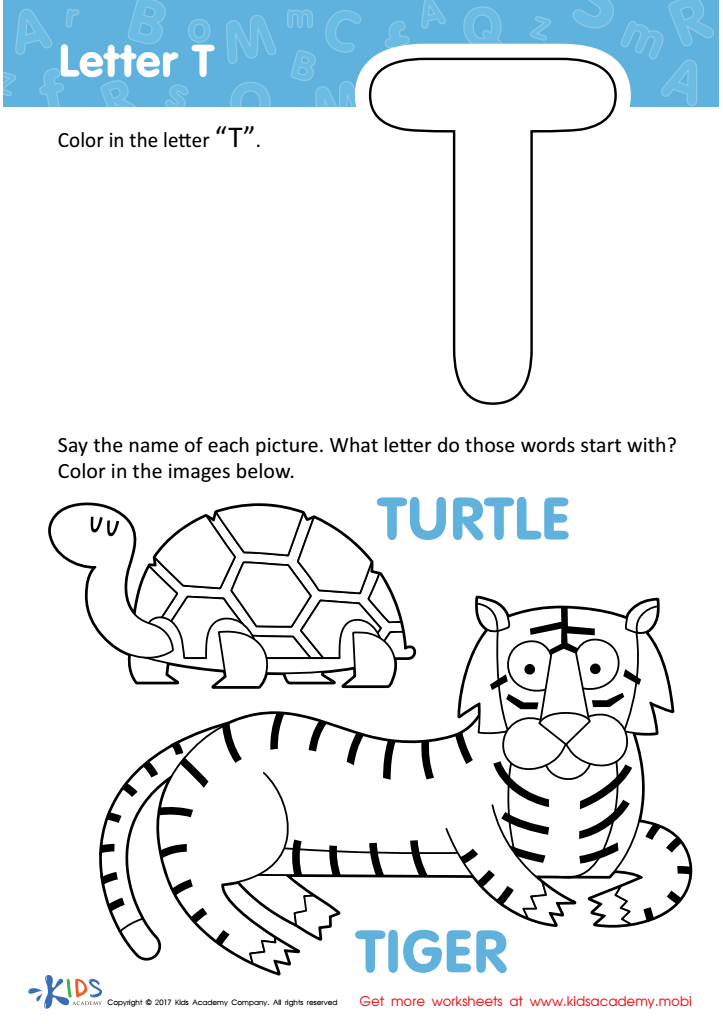
Letter T Coloring Sheet
 Assign to My Students
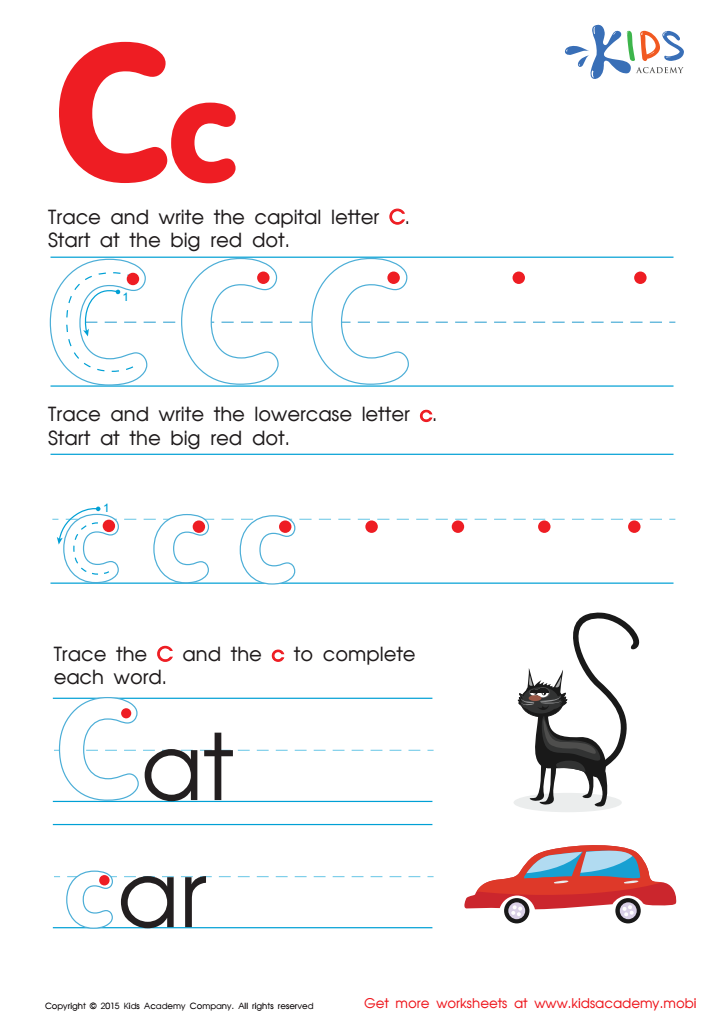
Letter C Tracing Page
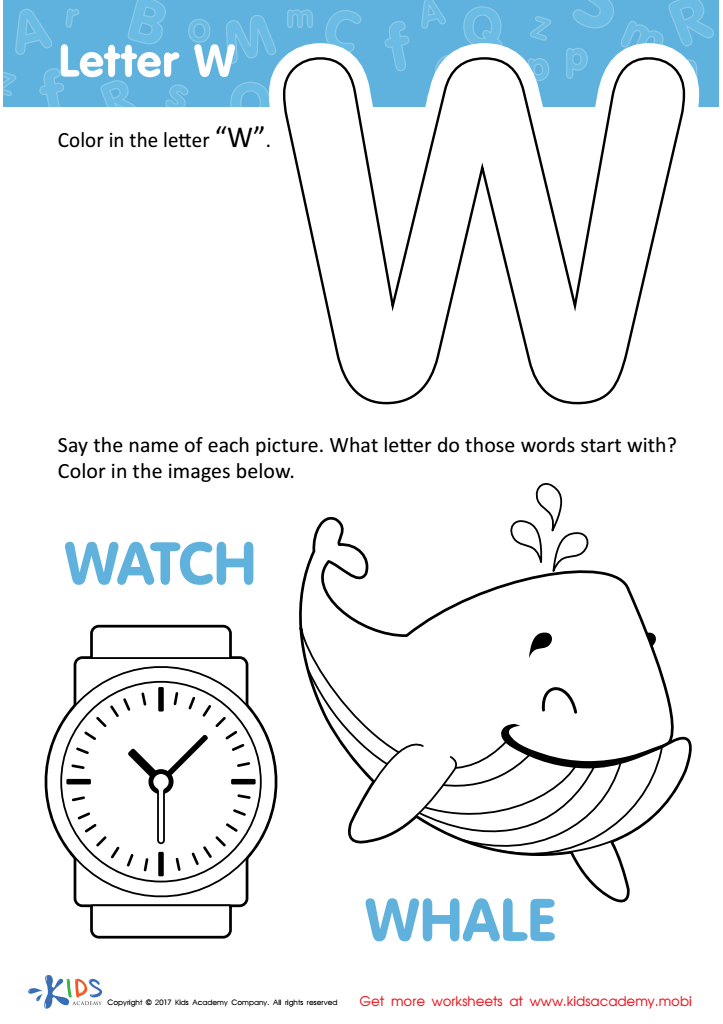
Letter W Coloring Sheet
Assign to My Students





Letter tracing skills are fundamental to early childhood education, particularly for children aged 4-8. Mastering these skills lays the foundation for literacy and academic success. Here’s why both parents and teachers should prioritize letter tracing:
Development of Fine Motor Skills: For young learners, controlling a pencil to trace shapes and letters helps develop fine motor skills. These skills are crucial for a child's ability to perform tasks such as buttoning shirts, tying shoelaces, and writing legibly in the future.
Letter Recognition: Tracing helps children memorize the form and structure of each letter, which is fundamental for reading and writing. Recognizing letters quickly and accurately aids in comprehending and producing text, essential for academic achievement.
Hand-Eye Coordination: Engaging in letter tracing activities enhances hand-eye coordination, beneficial not just for writing but for numerous other tasks requiring precision and control.
Building Confidence: As kids successfully trace letters, they build confidence in their ability to tackle more complex literacy tasks. Positive reinforcement from completing these exercises motivates them to keep learning.
Academic Preparedness: Strong letter tracing skills ensure children are better prepared for more advanced literacy activities, such as spelling and writing sentences, paving the way for long-term educational success.
Ultimately, investing time in developing tracing skills provides a robust foundation for literacy, benefiting children's overall cognitive and academic growth.