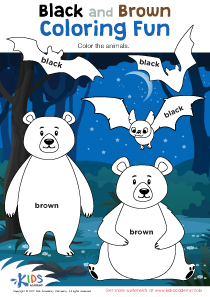
Reading comprehension Vocabulary Coloring Pages Worksheets for Ages 4-8
4 filtered results
Difficulty Level
Grade
Age
-
From - To
Subject
Activity
Standards
Discover our engaging Reading Comprehension Vocabulary Coloring Pages Worksheets designed for children ages 4-8! These fun resources make learning enjoyable while helping young learners build essential vocabulary and reading skills. Each coloring page features vibrant illustrations paired with simple vocabulary words, sparking imagination and reinforcing understanding. Ideal for both teachers and parents, these worksheets promote active participation and foster a love for reading. Perfect for ESL learners or as supplementary material, they support early literacy development through creative play. Download our colorful worksheets today and watch your child's reading comprehension skills soar while enjoying a fun, artistic activity!
Favorites
With answer key
Interactive
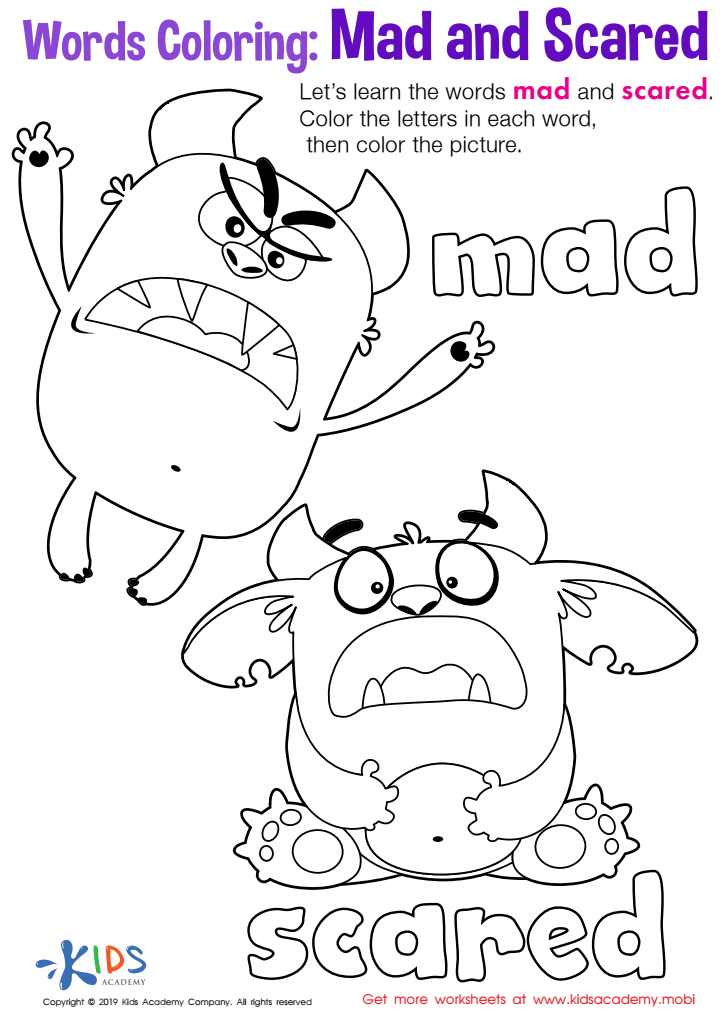
Mad and Scared Words Coloring Worksheet
This worksheet teaches "mad" and "scared" with fun monster pictures to color. Helping students learn by sight, it encourages sharing what makes them feel those strong emotions. Perfect for social studies, it expands student's vocabulary in an entertaining way.
Download (PDF)
 Assign to My Students
Assign to My Students
Mad and Scared Words Coloring Worksheet
Worksheet
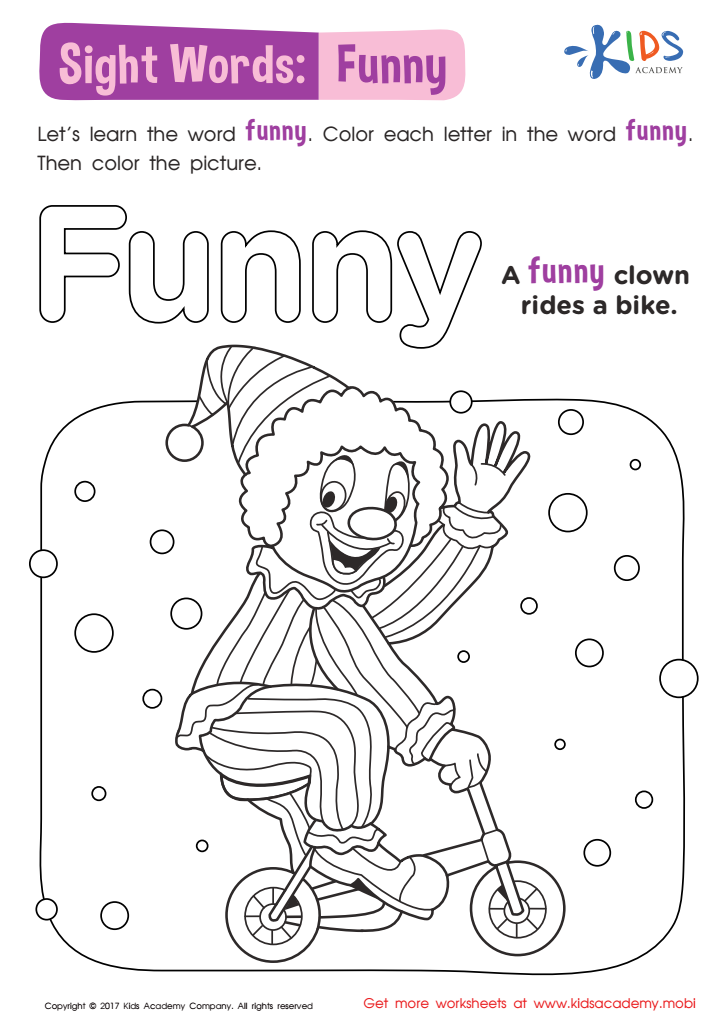
Funny Worksheet Sight Words Worksheet
Love humor? Introduce "funny" as a sight word with this fun worksheet! Have your child read the sentence then color the word in the center. Let them use their imagination to color the silly clown in any way they like!
Download (PDF)
Assign to My Students
Assign to My Students
Funny Worksheet Sight Words Worksheet
Worksheet

Long and Short E Worksheet
This fun printout makes learning phonics enjoyable for Grade 3 students. Get them to read the words “tree” and “bed” to recognize the different sounds of the letter “E”. After hearing the words they can color the words and the pictures to understand differences between long and short vowels.
Download (PDF)
Assign to My Students
Assign to My Students
Long and Short E Worksheet
Worksheet
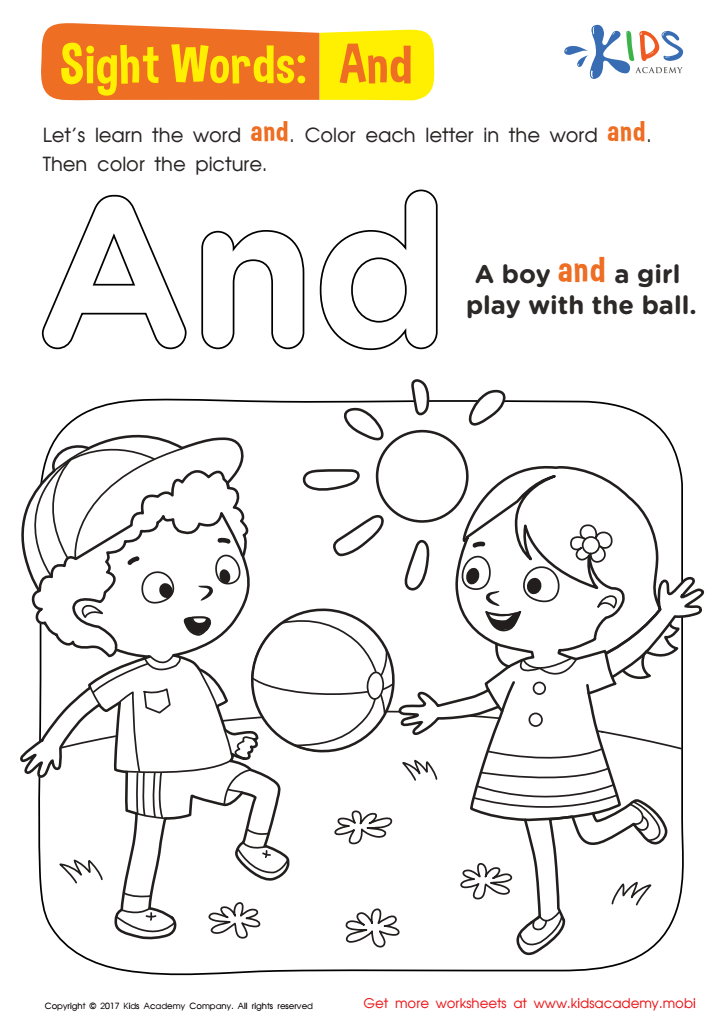
And Worksheet Sight Words Worksheet
Help your child get a jumpstart on reading with sight words! Print out this fun worksheet and get your child to read the sentence. Point out the word "and", then color the word and enjoy the rest of the scene! It's a great way to introduce sight words and get their early reading skills going!
Download (PDF)
Assign to My Students
Assign to My Students
And Worksheet Sight Words Worksheet
Worksheet
Join Kids Academy for Free
Who is primarily going to use this learning content?


Reading comprehension vocabulary coloring pages are a valuable tool for parents and teachers, particularly for children aged 4 to 8. These resources help young learners develop essential literacy skills in a fun and engaging manner. By integrating vocabulary practice with coloring activities, children can reinforce their understanding of new words while simultaneously enhancing their creativity.
Engaging with coloring pages allows young learners to visualize vocabulary in context, helping solidify meanings and improving retention. This multimodal approach addresses different learning styles, making it easier for children to grasp concepts. Moreover, coloring can soothe anxiety, making it a perfect introduction to more complex reading tasks.
Furthermore, these coloring pages serve as an opportunity for parents and teachers to bond with children over reading. Discussions can arise about the words being colored, enhancing communication skills and fostering a love for literature. Creating a positive environment around reading encourages children to seek additional opportunities to engage with text.
Investing time in reading comprehension vocabulary exercises early on lays the foundation for future academic success. Helping children become proficient readers ultimately opens doors to exploration, imagination, and lifelong learning. Thus, incorporating these activities is an effective strategy for nurturing literacy.