
Addition up to 5 Worksheets for Ages 4-8
4 filtered results
Difficulty Level
Grade
Age
-
From - To
Subject
Activity
Standards
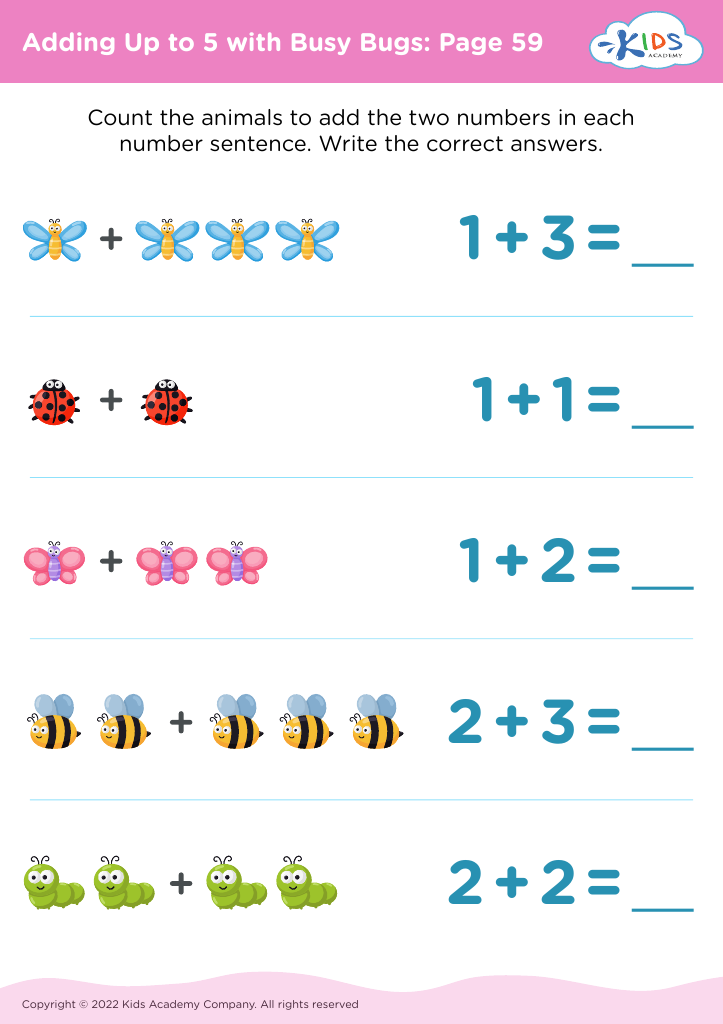
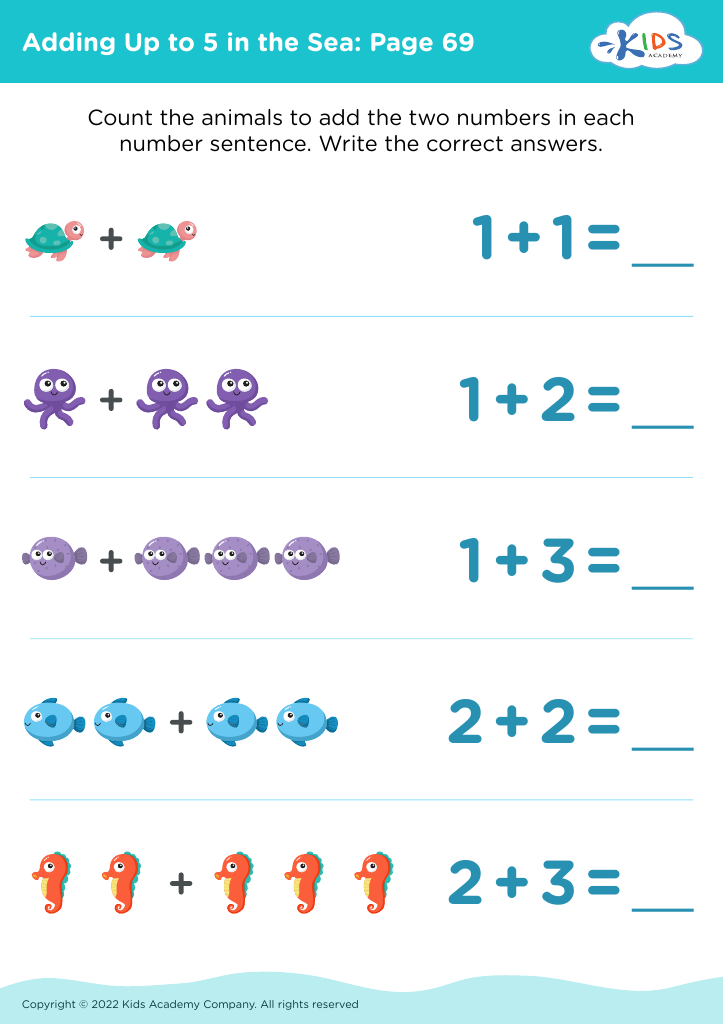
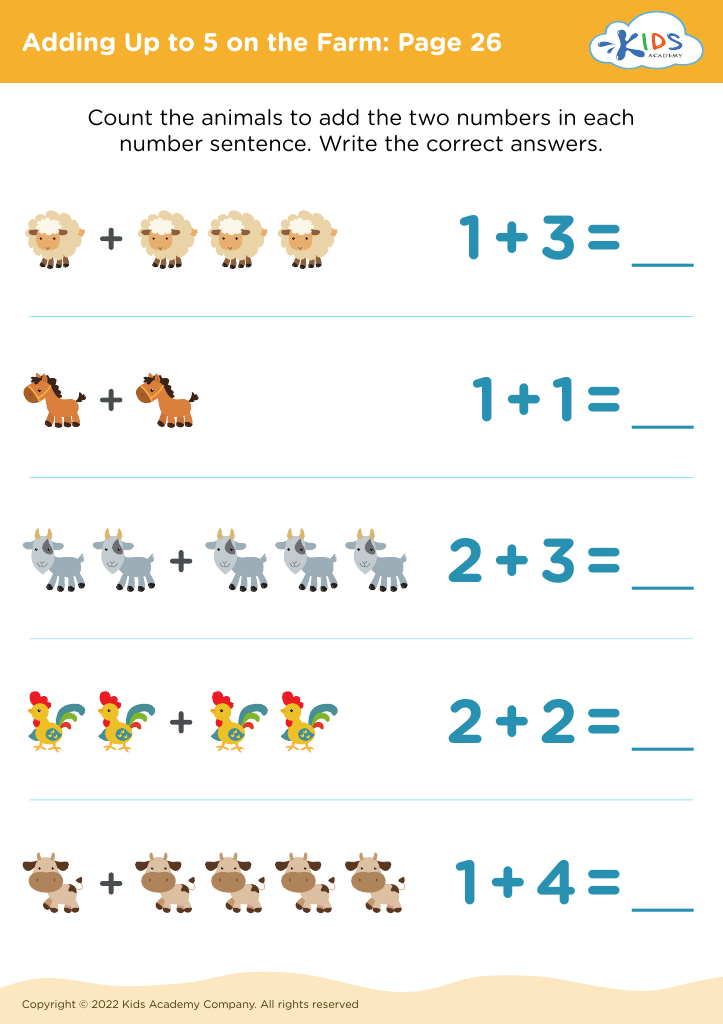
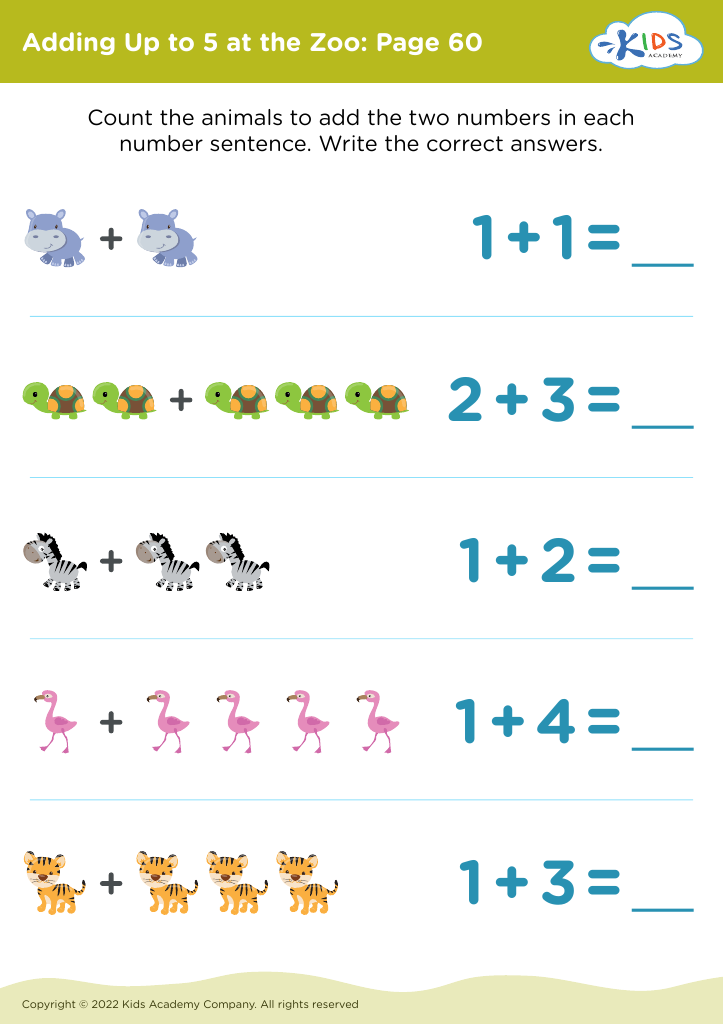
Looking for fun and engaging addition worksheets for kids aged 4-8? Explore our collection of "Addition up to 5" worksheets designed to introduce young learners to basic math concepts. These worksheets feature colorful graphics and interactive exercises that make learning addition enjoyable. Your child will practice adding numbers up to 5, enhancing their numeracy skills and building confidence in math. Perfect for classroom activities or home learning, our worksheets cater to various learning styles, ensuring every child can grasp the fundamentals of addition. Download for free and set your little ones on a path to math mastery today!
Favorites
With answer key
Interactive
Join Kids Academy for Free
Who is primarily going to use this learning content?






Addition up to 5 is a fundamental math skill that serves as a building block for a child's future mathematical understanding. For children aged 4 to 8, mastering this concept is essential for several reasons.
Firstly, early arithmetic skills, such as addition, foster cognitive development. When children engage with numbers, they improve critical thinking and problem-solving abilities, setting a solid foundation for later educational experiences.
Secondly, understanding addition up to 5 helps children develop confidence in their mathematical abilities. This foundational knowledge enables them to tackle more complex math concepts as they progress in their education. A strong grasp of basic addition also enhances their engagement in everyday activities, such as counting objects or understanding time.
Additionally, promoting early math skills fosters a positive attitude toward learning. When parents and teachers reinforce these concepts through interactive games or real-life applications, children become more enthusiastic about engaging with math.
Moreover, foundational addition skills are deeply integrated into other subjects and life skills, contributing to overall success. By prioritizing early math education, parents and teachers play a crucial role in equipping children not only with essential academic skills but also with the confidence and curiosity that lead to lifelong learning.








