Basic addition practice Worksheets for Ages 4-8 - Page 2
26 filtered results
-
From - To
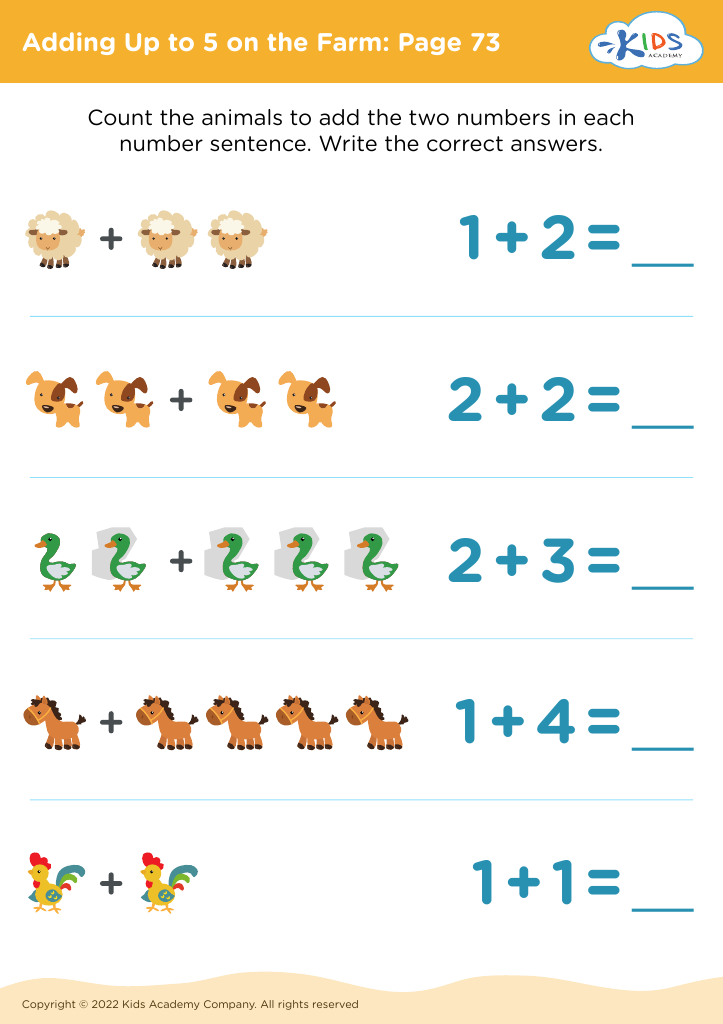








Basic addition practice is essential for children ages 4-8 as it lays the groundwork for their mathematical understanding and cognitive development. At this early stage, children are highly receptive to learning concepts through play and interactive activities, making it an ideal time to introduce foundational math skills like addition.
Understanding addition fosters critical thinking and problem-solving abilities, encouraging children to think logically about numbers and their relationships. These skills not only enhance math proficiency but also build confidence, as children enjoy the satisfaction of mastering new concepts.
Moreover, early addition practice develops children's perseverance and focus, as they engage in observed and structured learning environments, often shared with parents and teachers. This collaboration can strengthen the parent-child or student-teacher bond, reinforcing the concept that learning can be both fun and rewarding.
Additionally, as math becomes a core subject in later grades, a solid grasp of basic addition equips children with the necessary tools to tackle more complex arithmetic and problem-solving challenges, paving the way for success in future academic pursuits. In short, facilitating basic addition practice significantly impacts a child's educational journey and overall cognitive development.








