Basic counting skills Worksheets for Ages 4-8 - Page 2
28 filtered results
-
From - To
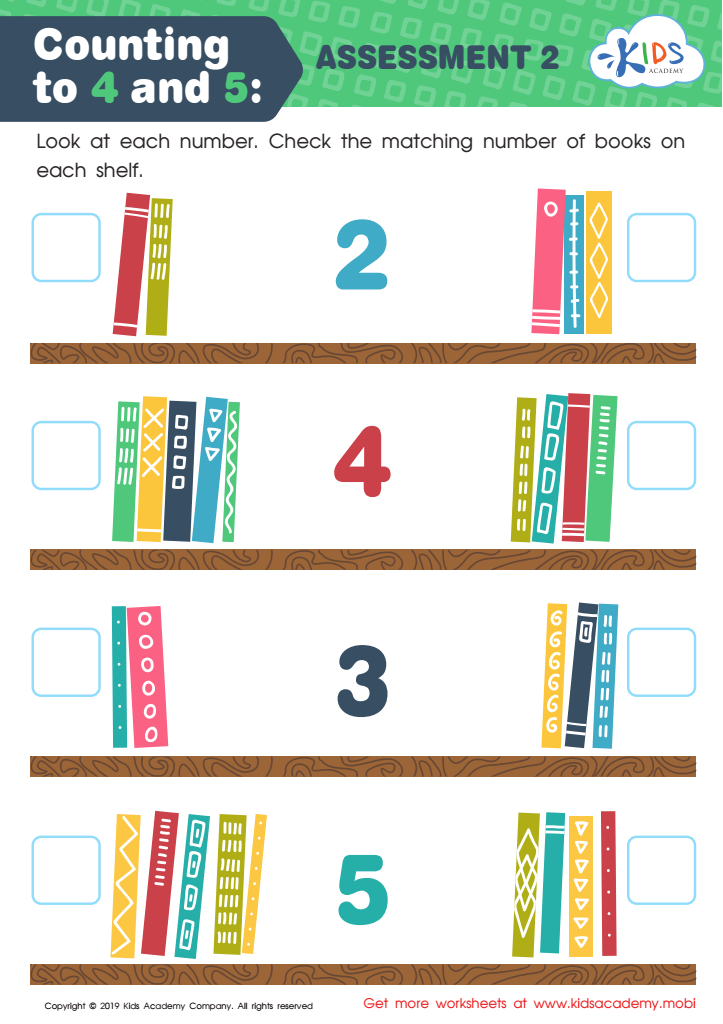
Counting to 4 and 5: Assessment 2 Worksheet
 Assign to My Students
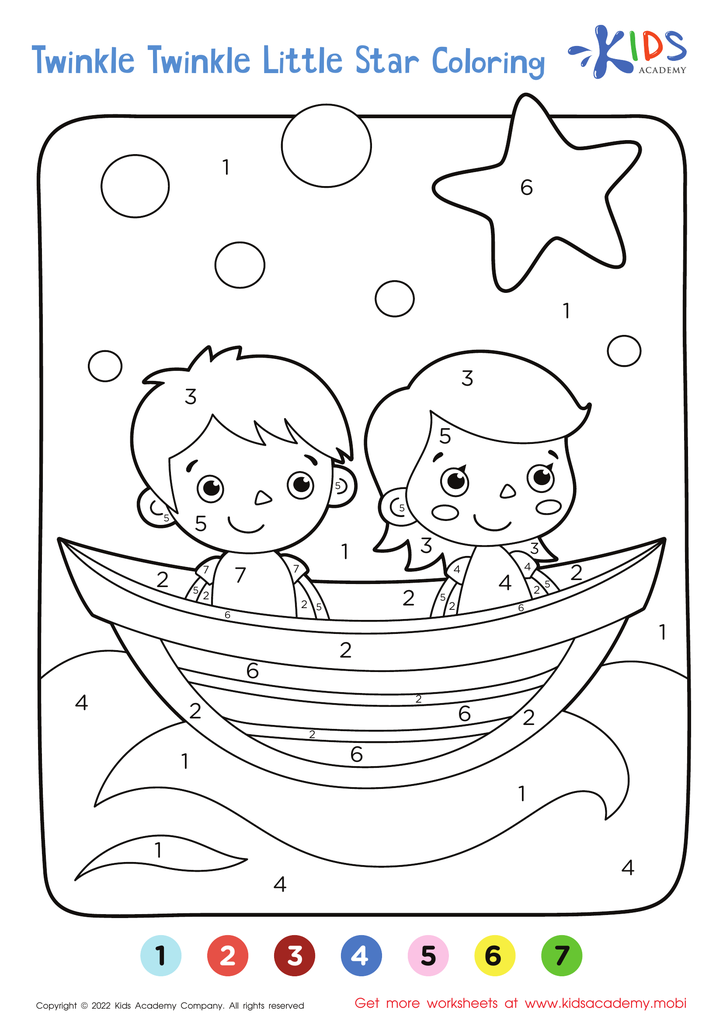
Twinkle, Twinkle, Little Star – Coloring by Numbers
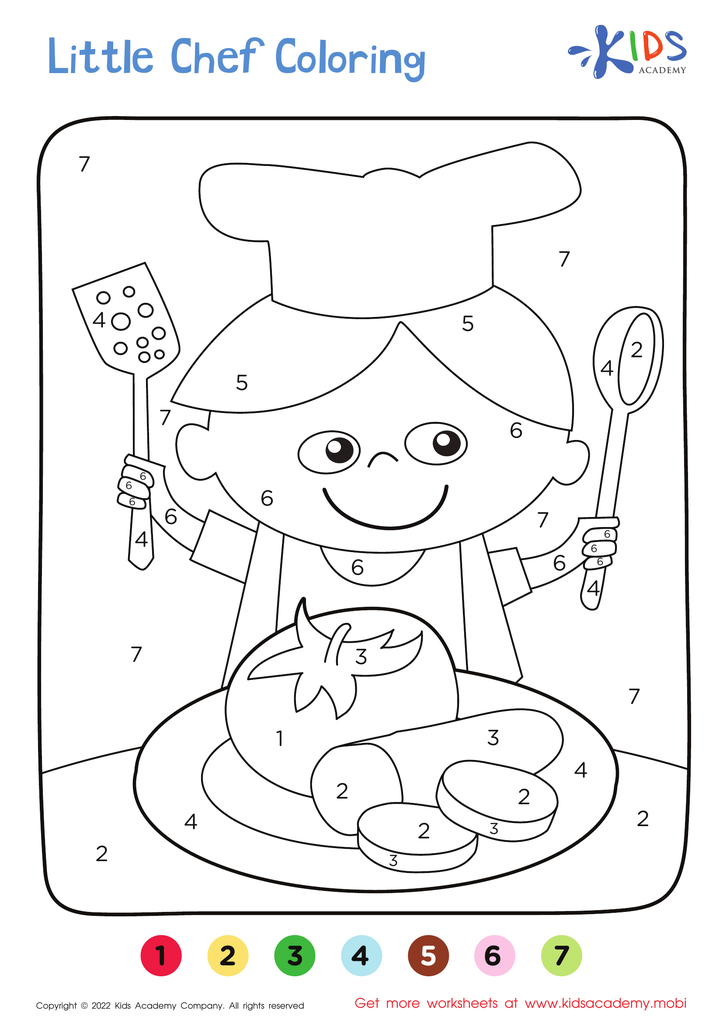
Little Chef – Coloring by Numbers








Basic counting skills serve as a foundational element in a child's early learning and development, especially between the ages of 4 and 8. At this stage, children are beginning to comprehend and interact with the world mathematically, making it crucial for parents and teachers to prioritize basic counting. These skills are essential for a variety of reasons.
Firstly, they facilitate the understanding of more complex mathematical concepts. Counting lays the groundwork for addition, subtraction, and eventually multiplication and division. Without a strong grasp of basic counting, children may struggle with these advanced topics later on.
Secondly, counting skills enhance cognitive abilities such as problem-solving and logical thinking. Engaging in counting activities helps children to develop their focus, attention to detail, and memory.
Moreover, early numeracy skills contribute to a child's confidence and curiosity in learning. Children who are comfortable with counting are more likely to enjoy math-related activities and perform better academically.
Additionally, counting is used in everyday situations. From dividing a snack between friends to understanding the days of the week, practical counting skills make daily tasks easier and more intuitive for young learners.
By prioritizing basic counting, parents and teachers help build a strong mathematical foundation that supports overall academic and cognitive development, fostering lifelong learning habits.








