
Chess piece identification Worksheets for Ages 4-8
3 filtered results
Difficulty Level
Grade
Age
-
From - To
Subject
Activity
Standards
Introduce young minds to the competitive world of chess with our "Chess Piece Identification Worksheets for Ages 4-8." Perfectly designed for young learners, these engaging and colorful worksheets help children master the names, movements, and characteristics of each chess piece. Suitable for ages 4-8, they develop critical thinking and knowledge while enhancing fine motor skills. As an introduction to the complexities of chess, our worksheets make learning fun and interactive. Boost your child’s confidence and interest in chess with these practical resources. Explore Kids Academy’s printable worksheets and set the foundation for future chess champions!
Favorites
With answer key
Interactive
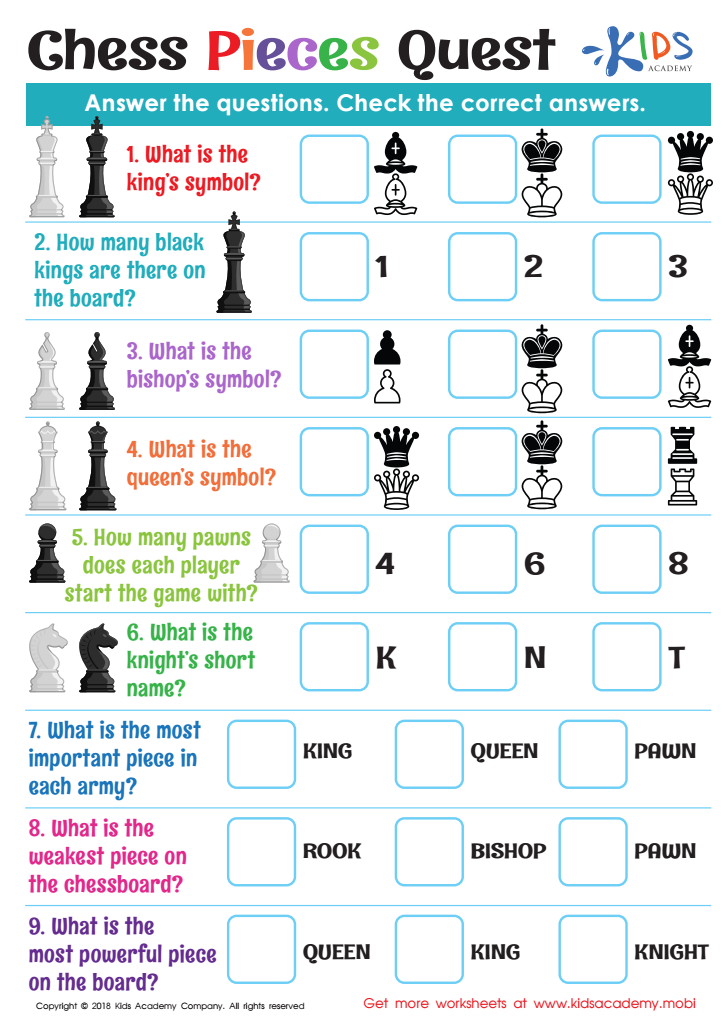
Chess Pieces Quest Worksheet
Help your child prepare for the chess quest by refreshing their knowledge of the symbols and characteristics of each chess piece. Then, have them try the 9 questions on this worksheet. These questions will assess their understanding of the symbols and how many pieces each player starts with.
 Assign to My Students
Chess Pieces Quest Worksheet
Worksheet
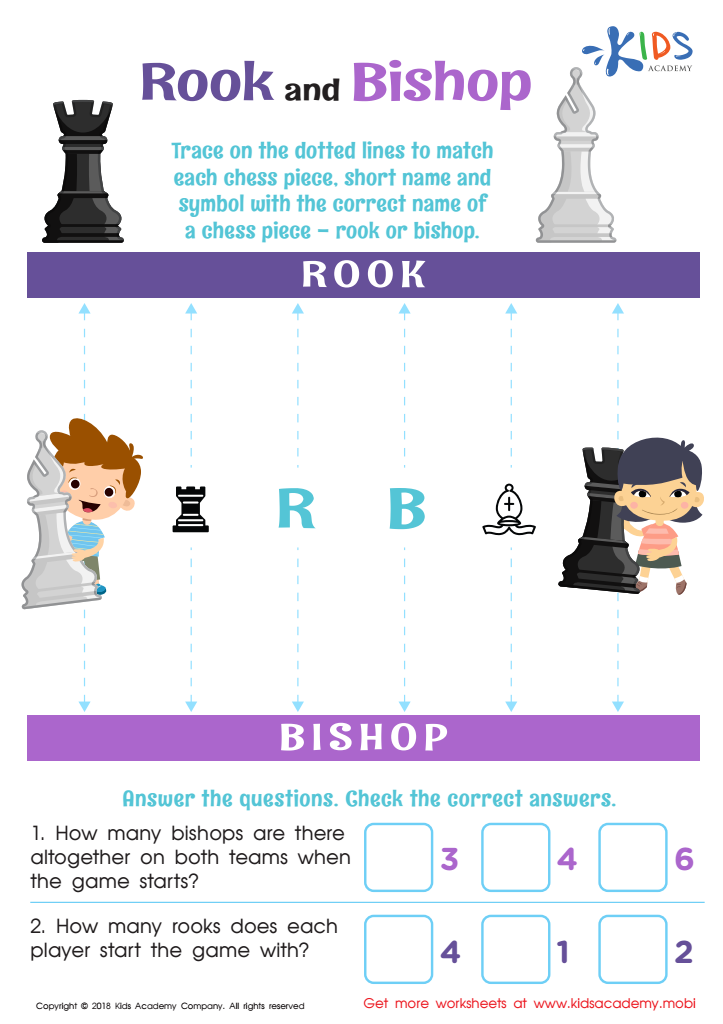
Rook and Bishop Worksheet
This tracing sheet helps your child learn chess pieces by matching each piece, short name and symbol to the correct name. After tracing, have them answer the questions and check their answers. It's a great way for them to become familiarized with chess.
Rook and Bishop Worksheet
Worksheet
Join Kids Academy for Free
Who is primarily going to use this learning content?






Learning chess piece identification for children aged 4-8 is a vital educational activity for several reasons. Firstly, it enhances cognitive development, promoting problem-solving skills, logical thinking, and foresight. Recognizing each piece and its unique movements requires memorization and strategic planning, which are fundamental skills in mathematics and science.
Secondly, chess teaches important life skills such as patience, concentration, and the value of forethought. In a fast-paced world, learning to focus on a task and think several steps ahead is invaluable. Children learn to anticipate the consequences of their actions, an essential part of developing emotional intelligence and decision-making capabilities.
Thirdly, understanding chess pieces and their roles encourages the development of fine motor skills and hand-eye coordination as children handle the pieces and place them accurately on the board.
Socially, chess invites interaction, cooperation, and communication. Players must learn to respect their opponents, follow rules, and exhibit sportsmanship, foundational elements of healthy social interaction.
Lastly, chess provides a sense of accomplishment and boosts self-esteem. Successfully identifying pieces and comprehending their functions build confidence and a willingness to tackle more complex problems. Thus, engaging children in chess is a comprehensive stride towards holistic development.








